Introduction
Retail media has outgrown banner ads. Best Buy Ads made that clear on September 16, 2025, when it hosted "We Got Next" — its first-ever Ads Showcase — unveiling a native advertising strategy that spans streaming television, physical store environments, editorial content partnerships, and programmatic audience activation.
The timing isn't accidental. U.S. retail media network ad revenue hit $53.7 billion in 2024, up 23% year-over-year per IAB/PwC — and EMARKETER projects that figure will climb to $58.79 billion in 2025. Best Buy is positioning itself to capture a larger slice by offering something most retail media networks can't: native formats backed by verified purchase data and in-house creative production built for each channel.
This article breaks down what Best Buy's native strategy looks like in practice, examines the Roku case study behind the pitch, and draws out what it means for media buyers mapping their contextual native investments into 2025 and 2026.
Key Takeaways
- Best Buy Ads launched its first-ever Ads Showcase in September 2025, revealing in-store takeover packages, expanded content partnerships, and programmatic audience tools
- A Roku case study generated 1.3M homescreen clicks, a 25% lift in brand fit, and a 13% increase in consideration intent
- Best Buy self-reports linking 93% of transactional revenue to a customer ID — the data layer that makes its native targeting credible
- First-party audiences outperform third-party alternatives by 2x, according to Best Buy's campaign data
- Native ads perform best when audience context matches purchase intent — across streaming, retail, and newsletter placements alike
What Best Buy Ads Is and Why It Matters Now
Best Buy launched Best Buy Ads on January 4, 2022, as a dedicated advertising business and in-house media company. By March 2023, it introduced My Ads — a self-service campaign management platform that gave brand partners direct access to campaign planning, purchasing, and near-real-time reporting for Onsite Display and Sponsored Products.
The 2025 announcements — including expanded native ad formats and offsite targeting — build directly on that self-service foundation.
The Scale Behind the Network
According to Best Buy's FY2025 10-K and its own advertising materials, the network's physical and digital footprint includes:
- ~969 stores across the U.S.
- 85,000 employees as brand touchpoints
- 43 million consumer interactions per week across digital properties
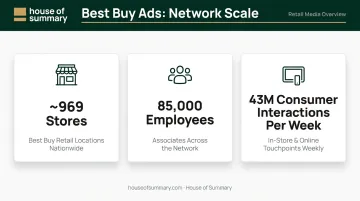
That reach is concentrated in consumer electronics — a category where purchase decisions involve research, comparison, and multiple touchpoints. Buyers aren't browsing casually — they're actively evaluating options.
Why RMN Budgets Are Shifting Here
Best Buy's differentiation among retail media networks is category depth. It owns the consumer tech shopping journey in a way that mass-market grocery or general merchandise retailers simply don't.
The contrast is concrete: a brand advertising on a grocery RMN gets broad reach across a diffuse audience. On Best Buy Ads, that same brand is reaching someone who searched for that specific product category on BestBuy.com — intent already established, purchase window already open. That's a meaningfully different signal for media buyers allocating budget.
Best Buy's Native Ad Formats: What's New in 2025
Native advertising in Best Buy's ecosystem means placements that fit the form and function of their surrounding environment — whether that's a TV wall in a store, an editorial article on a tech review site, or a homescreen unit on a streaming platform.
In-Store Takeover Packages
The most talked-about announcement at the "We Got Next" showcase was the in-store takeover format. Best Buy confirmed these packages would begin rolling out and include premium placements across:
- Exterior signage (windows, entrances)
- TV walls and PC monitor displays
- Interactive screens and digital walls
- Checkout counters and physical displays
The concept gives a single brand ownership of the entire in-store experience — from the entrance to the register. That's a different category from a sponsored product listing or a banner ad — it's environmental, not transactional.
Editorial Content Integrations
Best Buy's expanded content partnerships with consumer tech publishers are among the clearest signals of its native ad ambitions. The CNET integration — officially announced in April 2024 — weaves editorial recommendations across BestBuy.com, in-store environments, and the Best Buy app, combining curated advice with shared ad inventory.
The two properties together claim 50 million combined unduplicated unique visitors per month. Trade coverage from AdExchanger notes the partnership network also includes Ziff Davis publications, expanding Best Buy's native editorial reach into high-intent tech audiences.
Sports and Creator Partnerships
These aren't traditional sponsorships. Best Buy Ads is engineering contextually native brand moments — appearing as a natural part of content its target audience already watches:
- NFL Official Home Entertainment Retailer partnership, now expanded year-round (not just football season)
- TGL Season 2, a tech-infused primetime golf league
- Dude Perfect, integrated across NFL and holiday campaign moments
Best Buy Studios
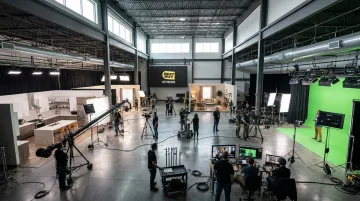
Behind all of this is Best Buy Studios — a 70,000-square-foot in-house creative facility in Bloomington, Minnesota. The team produced more than 3,000 campaigns in a single year, including the Microsoft Copilot+ PC campaign. For media buyers evaluating retail media networks (RMNs), this matters: creative production bottlenecks kill native campaigns. Best Buy's in-house studio eliminates that friction.
The Roku Integration: A Native Ad Strategy in Full
The clearest proof of Best Buy's native approach in action is its partnership with Roku on "Idea House: Mountain Modern" — a home improvement series following Jared and Amber Pfifer as they built a Rocky Mountain home.
How the Native Formats Worked
Best Buy became the premiere sponsor and integrated across multiple touchpoints:
- On-camera product integration — Best Buy's virtual and home experts appeared within the show's narrative, offering product and design advice organically as part of the story
- Homescreen native ads — Roku homescreen units drove viewers into a branded show playlist in a single click
- Custom co-produced vignettes — Best Buy and Roku Brand Studio created short-form content about Best Buy's virtual store offering that ran ahead of ad breaks
None of these formats feel like traditional advertising. The homescreen ad is native to the Roku UI. The vignettes blend into the content flow. The on-camera appearances are part of the editorial product.
The Results
Per the Roku Advertising case study, the campaign delivered:
| Metric | Result |
|---|---|
| Homescreen ad clicks | 1.3M Roku streamers |
| Brand fit lift | 25% increase in "Best Buy is a brand for someone like me" |
| Consideration intent | 13% increase among exposed audiences |
| Brand differentiation | 9% lift in "Best Buy is different from other retailers" |
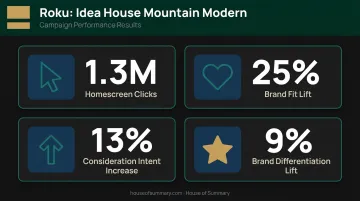
All measured among consumers in-market for electronics and appliances in the next six months — not a broad panel, but a verified purchase-intent audience.
The Strategic Lesson
Those numbers didn't come from reach alone — they came from alignment. Home improvement viewers who are actively building or renovating are, by definition, in-market for home tech. Best Buy matched its message to an audience already primed for exactly the purchase decisions its products address.
That's the practical standard for native advertising that actually works: not just blending into the content format, but choosing placements where the audience's existing intent overlaps directly with what you're selling.
First-Party Data: The Engine Behind Best Buy's Native Targeting
Native ad placement is only as valuable as the audience it reaches. Best Buy's data capabilities are what make its native formats distinctive — the audience quality is the actual product.
The 93% Figure
Best Buy self-reports that it can connect 93% of its transactional revenue back to a customer ID. Each matched ID represents a verified buyer with documented purchase history, category preferences, and shopping behavior. When a native ad reaches that audience, the brand is targeting someone whose intent is on record — not inferred.
How the Audience Graph Works
According to Best Buy's own reporting:
- First-party audiences outperform third-party audiences by 2x
- Custom audience models are built per campaign and refreshed in real-time based on live campaign results
- The approach avoids static data packages in favor of dynamic modeling
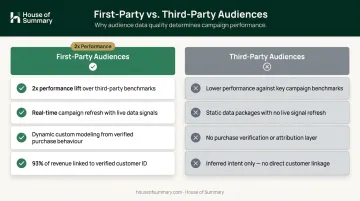
That real-time refresh matters for native campaigns specifically. Native ads require relevance to land well. An audience model that updates as the campaign runs is more likely to maintain that relevance than a fixed segment built before the campaign launches.
DSP Integrations and Meta Addressability
AdExchanger's 2025 trade coverage confirms Best Buy has audience segments uploaded to The Trade Desk, Google DV360, and Yahoo. Separately, Best Buy Ads launched Social+, which makes its first-party audiences addressable on Facebook and Instagram and integrates with Meta Advantage+ shopping campaigns.
Native campaigns powered by Best Buy's data aren't confined to Best Buy's owned properties — the verified audience travels with the brand into programmatic and social environments.
The ROI Claim
Best Buy self-reports an average incremental ROI of more than 3.75x on partner campaign investment. This figure is self-reported and not independently audited, which media buyers should factor in. What matters more than the headline number is the measurement mechanism: Best Buy can tie ad exposure directly to verified purchase behavior. Most native placements can't make that connection at all.
What Best Buy's Native Strategy Means for Advertisers and Media Buyers
The Full-Funnel Shift
Best Buy's expanded native strategy reflects a broader buyer expectation: retail media shouldn't only capture last-click attribution right before purchase. Brands want to build consideration earlier in the funnel, and native formats — in streaming content, editorial integrations, and contextually relevant sports partnerships — are the mechanism for doing that.
MediaPost identified Milena Krasteva as VP and head of product at Best Buy Ads, and AdExchanger's coverage frames Best Buy's programmatic push explicitly as a move beyond the last-click perception that has limited retail media's full-funnel credibility.
Self-Service Expansion
For media buyers who've found RMN buying processes cumbersome, Best Buy is expanding My Ads' self-service capabilities with off-site channel reporting planned for the coming year. That means more operational control over native campaigns running across both owned Best Buy environments and partner channels.
The Broader Native Advertising Principle
Best Buy's Roku case study illustrates something that applies across every native channel: contextual alignment is the variable that determines whether native advertising works. The format matters, but the match between audience, content, and brand message is what drives the 25% lift in brand fit and the 13% consideration increase.
The same logic applies to newsletter native advertising. Placements through House of Summary's network reach readers who opted in to specialized content — meaning the audience, the editorial context, and the brand message are already aligned before the ad loads.
For media buyers building multi-channel native strategies, that inbox environment offers structural advantages worth noting:
- Ads reach 500,000+ subscribers across Presidential Summary, Geopolitical Summary, Dubai Summary, and London Summary
- No ad blockers, no algorithmic filtering, no visual competition from surrounding content
- 254,866 daily email opens from subscribers who chose to be there
That combination — trusted editorial, high-intent audience, and distraction-free placement — fits naturally alongside the streaming and in-store native formats Best Buy is building out. For brands that want full-funnel native reach, the inbox is where consideration gets built between the awareness moment and the purchase decision.
Frequently Asked Questions
What are native ads in advertising?
Native ads are paid placements designed to match the look, feel, and function of the platform where they appear — rather than interrupting it. They can surface within editorial articles, streaming content, or physical environments, and typically outperform banner formats because they don't trigger the same avoidance response.
What is an example of a native ad?
Best Buy's Roku "Idea House: Mountain Modern" integration is a strong example. Brand experts appeared on camera within the show, homescreen ads drove viewers into a branded playlist with one click, and custom vignettes ran ahead of ad breaks — all within a single campaign.
What is Best Buy Ads?
Best Buy Ads is Best Buy's retail media network, launched in January 2022, enabling brands to reach verified consumer electronics buyers across owned digital properties, in-store environments, and partner channels. It's powered by first-party purchase data that links 93% of transactional revenue to individual customer IDs.
What are Best Buy's in-store takeover packages?
Announced at the September 2025 "We Got Next" showcase, these packages give a single brand premium placement across a store's exterior (windows, entrances), TV walls, PC monitor displays, interactive screens, and checkout counters — providing full-funnel brand visibility across the entire physical shopping journey.
How does Best Buy use first-party data in its ad targeting?
Best Buy self-reports linking 93% of transactional revenue to a customer ID, enabling real-time audience modeling the company says outperforms third-party data by 2x. These audiences are accessible via The Trade Desk, Google DV360, and Yahoo DSP integrations, plus the Social+ tool for Meta targeting on Facebook and Instagram.