B2B advertisers are shifting budget toward newsletter placements for good reason. Traditional digital channels face mounting challenges: 29.5% of internet users worldwide now use ad-blocking tools regularly. Display ads in B2B services average a 0.22% click-through rate—down from 44% when the first banner ad launched in 1994. Ad fatigue is real, and decision-makers have learned to tune out promotional noise.
Yet while B2B marketers know newsletter advertising exists, few understand what actually happens mechanically: how the ad gets placed, how it blends with editorial content, and what drives results inside this specific format.
Key Takeaways
- B2B native ads in executive newsletters are inline placements written to match editorial tone, not display banners
- Newsletter ads reach senior buyers while they're actively reading — focused, unhurried, and in decision-making mode
- These placements bypass ad blockers entirely and benefit from editorial trust transfer
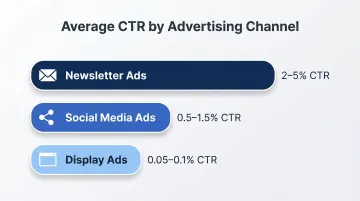
- Performance averages 2-5% CTR compared to 0.05-0.1% for display ads
What Is B2B Native Advertising in Executive Newsletters?
B2B native advertising in the newsletter context is a paid placement that adopts the voice, structure, and visual format of the newsletter's editorial content. It's labeled as sponsored but reads like part of the publication, not apart from it.
The difference from other native formats is structural. Paid social ads appear in feeds governed by algorithms. Programmatic discovery ads (Taboola, Outbrain) sit at the bottom of web articles. Newsletter native ads are inbox-based, editorially curated, and non-algorithmic — read in a private, distraction-free environment. The reader chose to be there.
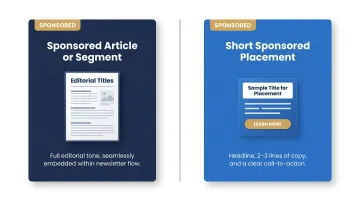
That context shapes how the two main formats are built:
- Sponsored article or segment — A fully written piece embedded in the newsletter body, matching the publication's editorial tone and structure
- Short sponsored placement — A headline, 2-3 lines of copy, and a CTA positioned between editorial sections
The IAB defines native advertising as "paid ads that are so cohesive with the page content, assimilated into the design, and consistent with the platform behavior that the viewer feels they belong there." In newsletters, this means the ad isn't visually distinct—it flows naturally within the reading experience.
How B2B Native Advertising Works Inside Executive Newsletters
Unlike programmatic web advertising, newsletter native placements follow a defined sequence: selection and alignment, content development, editorial integration, delivery, and measurement. Each stage shapes the final result.
Placement Selection and Advertiser-Publisher Alignment
The process begins when an advertiser identifies a newsletter whose readership matches their target buyer profile. Industry focus, seniority level, geography, and content category all factor into fit.
For example, House of Summary operates a network of specialized newsletters—Presidential Summary (global news), Geopolitical Summary (international politics), Dubai Summary (UAE business and culture), and London Summary (London-focused content)—reaching 500,000+ subscribers concentrated in wealth-dense metros: 66% USA, 18% UAE, 10% UK. The audience skews toward executives, policy professionals, and high-income decision-makers.
What gets decided at this stage:
- Placement position (top, middle, or standalone)
- Format (short sponsored segment vs. longer native feature)
- Frequency (one-time or recurring)
- Timing and editorial content guidelines the publisher enforces
Publishers like House of Summary enforce strict editorial standards, requiring that claims be verifiable and that content avoid sensationalism, sexually suggestive material, or unverified health claims. These standards protect advertiser credibility and reader trust in equal measure.
Content Development and Editorial Matching
Native ad content is developed to match the newsletter's editorial tone. The copy mirrors the style and sentence structure of the surrounding content — not a repurposed banner, but original writing built for that specific context. Many publishers offer guidance or co-write the placement entirely.
House of Summary provides co-writing and editorial support for sponsored placements, ensuring branded articles are written in the natural voice of each newsletter. This works especially well for brands that need storytelling or category education:
- Luxury brands establishing positioning
- Fintech products explaining complex value propositions
- Healthcare and wellness narratives requiring context
- Wearable tech and consumer hardware explainers
This stage determines campaign performance. Readers notice when branded content shifts into ad copy — and they stop reading. Content that genuinely informs earns both clicks and recall.
Research from Sharethrough and IPG Media Labs found that consumers looked at native ads 53% more frequently than display ads, and native ads drove an 18% higher lift in purchase intent.
Integration, Labeling, and Delivery
The placement is embedded inline within the newsletter body—typically following a natural editorial break—and labeled with a "sponsored" or "partner content" marker. Transparency here is non-negotiable, and well-labeled placements perform better, not worse.
House of Summary integrates sponsored content with clear advertiser disclosure — the label appears before the placement, and the writing style transitions naturally so the reading experience stays consistent rather than jarring.
Key operational advantage: Once sent to the inbox, the ad bypasses ad blockers entirely. Unlike web-based ads, newsletter content is delivered via email, which means ad blockers—browser extensions that filter web content—do not apply. The reader sees the placement in full, without suppression, pop-ups, or competing visuals.
Engagement and Measurement
After delivery, the publisher tracks open rates, click-through rates on the sponsored link, and sometimes scroll depth or dwell time depending on the platform. These metrics are reported back to the advertiser.
Because newsletters go to opted-in subscribers reading on their own schedule, engagement metrics reflect genuine interest rather than accidental clicks. The CTR gap across channels is significant:
| Channel | Average CTR |
|---|---|
| Newsletter ads | 2–5% |
| Social media ads | 0.5–1.5% |
| Display ads | 0.05–0.1% |
House of Summary tracks monthly ad clicks and email open rates (254,866+ daily), providing evidence-based campaign guidance. While specific CTR benchmarks are provided upon request to the sales team, the platform emphasizes its ability to deliver measurably higher engagement than traditional digital advertising channels.
Why Executive Newsletter Audiences Are Different From General Web Traffic
A reader who opens an executive newsletter is in an active, intentional reading state. They chose the publication, they opened the email, and they are consuming it with focus. Contrast this with a web reader skimming a content page while algorithms push ads alongside it.
Executive newsletter subscribers tend to be senior decision-makers—C-suite, VP-level, finance, policy, and strategy roles—who read to stay informed, not to browse. This self-selection creates an audience with higher purchase authority than typical web traffic. 55% of executives engage with curated email lists daily, and those lists achieve an 8-12% CTR among executive audiences.
Editorial trust transfer is another critical factor. When a reader trusts a newsletter's editorial judgment, that trust extends partially to the brands it chooses to feature. A sponsored placement in a respected publication carries more credibility than the same message delivered via a cold LinkedIn ad.
MarTech360 describes this as a "halo effect": sponsored content in trusted newsletters is perceived as relevant content rather than interruptions.
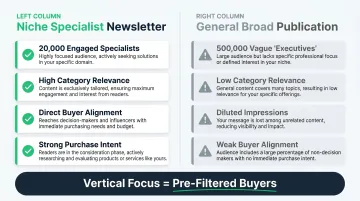
Specialized newsletter networks built around specific verticals—global affairs, geopolitics, or regional business news like those published by House of Summary—deliver audiences pre-filtered by subject matter. This makes audience-advertiser alignment more precise than general digital channels. The difference is measurable:
- A newsletter with 20,000 engaged specialists in finance or geopolitics reaches the right buyers directly
- A general publication with 500,000 vague "executives" dilutes every impression
- Vertical focus means readers already care about the category your brand operates in
What Makes a Strong B2B Native Ad in an Executive Newsletter
The most effective B2B newsletter native ads open with an insight, a data point, or a framing of a problem the reader is already thinking about—not with the brand name or product description. The value exchange must be clear before the commercial intent surfaces.
Structural requirements for a short-form newsletter native placement:
- Headline that reads like editorial (not a tagline)
- 2-4 sentences of substantive content that deliver a genuine takeaway
- Single CTA that is specific and low-friction (e.g., "Download the report" or "See how [X] works" rather than "Learn more")
Longer native features (200-400 words) work well for brand-building, but short, recurring placements in the same newsletter often build on each other in effectiveness. This aligns with the Rule of 7, which originated in the 1930s movie industry: prospects need to encounter a brand's message approximately seven times before taking action. Recurring placements build stronger B2B brand recall and buyer intent over time.
House of Summary enforces editorial standards across its newsletter network, requiring that sponsored placements meet the same clarity and factual standard as its editorial content. This protects advertiser credibility while maintaining reader trust.
That standard also determines who reads those placements. When sponsored content clears the same bar as editorial, the audience it reaches — senior executives across publications like Presidential Summary, Geopolitical Summary, Dubai Summary, and London Summary — engages with it the same way they engage with news.
The LinkedIn B2B Institute states that in B2B branding:
"Frequency is the best way to gain reach. There are no shortcuts."
Multi-week campaigns across several newsletter issues deliver brand frequency and category presence that one-time placements cannot achieve.
Conclusion
B2B native advertising inside executive newsletters works because the format earns its place. Placements land in the inbox, carry the newsletter's editorial credibility, and reach senior decision-makers when they've already chosen to pay attention — conditions no display banner can replicate.
Understanding the mechanics leads to better advertiser decisions. Brands that treat newsletter native ads as editorial contributions — built to inform first, convert second — outperform those that repurpose traditional ad copy into the format.
The practical implication is straightforward: the closer a placement feels to editorial, the harder it works. That's the standard worth holding every campaign to.
Frequently Asked Questions
What is the rule of 7 in B2B?
The rule of 7 is a marketing principle holding that a prospect needs to encounter a brand's message seven times before taking action. Consistent, recurring native placements in executive newsletters—rather than one-off sponsorships—build stronger B2B brand recall and buyer intent for exactly this reason.
How is a native ad in an executive newsletter different from a banner ad?
Banner ads sit outside editorial content and are easily ignored or blocked. Newsletter native ads are embedded inline, formatted to match the editorial voice, delivered to an opted-in reader in their inbox, and bypass ad blockers entirely.
How do B2B advertisers measure performance of newsletter native placements?
The three primary metrics are open rate (audience reach), click-through rate on the sponsored link (engagement), and downstream conversions tracked via UTM parameters or landing page analytics.
Are native ads inside newsletters blocked by ad blockers?
No. Because newsletter content is delivered via email—not rendered in a web browser—ad blockers do not apply. The full placement reaches the reader as sent, which is a structural advantage over web-based advertising formats.
What types of B2B brands perform best with executive newsletter advertising?
Brands selling to senior decision-makers—in finance, professional services, enterprise technology, consulting, and luxury sectors—tend to see the strongest results. Executive newsletters deliver an audience that matches their buyer profile directly, without the dilution of broad-reach channels.
How long should a B2B native ad placement in a newsletter be?
Short-form placements (one headline, two to four sentences, and a CTA) are standard for inline sponsorships, while longer native features of 200–400 words suit thought leadership goals. The format should follow the newsletter's editorial conventions and the advertiser's objective.