Introduction
You see them everywhere: "Sponsored," "Paid Partnership," "Presented by," "#ad." These labels appear in Instagram feeds, YouTube videos, podcast intros, email newsletters, and editorial sites. Most people scroll past without thinking twice. Yet behind these simple disclosures lies a marketing format that has outperformed traditional display advertising for nearly a century and keeps evolving alongside digital media.
Sponsored content is distinct from banner ads, billboards, or pre-roll video. It borrows the voice, format, and credibility of the publisher or creator who distributes it — making it less disruptive and more effective.
This guide defines what sponsored content is, what separates it from other native formats, why brands invest heavily in it, and how it plays out across nine real-world examples spanning YouTube, podcasts, newsletters, and beyond.
TLDR:
- Sponsored content is paid advertising where brands fund publishers to create content that matches the platform's natural look and feel
- It dates to the 1920s, when Procter & Gamble sponsored radio serials — coining the term "soap opera"
- Native ads are viewed 53% more than banner ads and generate 18% higher purchase intent
- Examples include YouTube integrations, podcast host reads, newsletter placements, and Instagram posts
- FTC rules require clear, prominent disclosure using terms like "Sponsored" or "#ad"
What Is Sponsored Content?
Sponsored content is paid advertising where a brand (the sponsor) funds a publisher, creator, or platform to produce and distribute content that promotes the brand while matching the natural tone, format, and style of the surrounding content. The goal is to make the message feel native, not intrusive.
The Origin: How "Soap Operas" Got Their Name
The concept dates back to the 1920s. Procter & Gamble pioneered the model by sponsoring daytime radio serials to market its soap products to homemakers. P&G underwrote NBC's "Radio Beauty School" in 1927 to promote Camay soap, followed by the highly successful "Ma Perkins" (often called "Oxydol's Own Ma Perkins"), which debuted on WLW in Cincinnati on August 14, 1933. These programs were funded by soap brands — which is how the term "soap opera" was coined.
This 100-year-old strategy now thrives across digital channels.
How It Works
Two parties are always involved:
- The advertiser — funds content creation and distribution
- The publisher or creator — produces the content and distributes it to their existing audience
The content is designed to match the platform's voice, format, and audience expectations.
What Sponsored Content Is NOT
The American Press Institute distinguishes sponsored content from:
- Advertorials — which hide commercial intent by mimicking editorial without clear disclosure
- Content marketing — which brands produce and distribute on their own platforms without a publisher partner
- Press releases — brand-centric announcements that lack broader public interest
Sponsored content serves the audience first, is clearly labeled, and leverages a publisher's credibility.
Sponsored Content vs. Native Advertising: What's the Difference?
Sponsored content is a subset of native advertising, not a synonym. All sponsored content is native advertising — but not all native advertising is sponsored content.
Native advertising is the broader category that includes any paid ad matching a platform's form and function — promoted search results, recommendation widgets, and in-feed social ads.
Sponsored content specifically refers to full content pieces created through a brand-publisher partnership, where the publisher's editorial voice and credibility are directly lent to the brand.
The IAB's Six Types of Native Advertising
The Interactive Advertising Bureau (IAB) officially classifies six native ad formats:
- In-Feed/In-Content Ads — paid content embedded directly within editorial article feeds
- Content Recommendation Ads — "You May Also Like" widgets that surface related branded content
- Branded/Native Content — full editorial pieces co-created with publishers
- Paid Search Ads — promoted listings appearing above organic search results
- Promoted Listings — e-commerce product placements within shopping platforms
- Custom Ads — bespoke formats negotiated directly with individual platforms
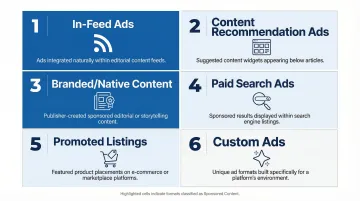
Sponsored content sits primarily in categories 1 and 3, where brands collaborate closely with publishers on creation and distribution.
Key Structural Difference
The distinction comes down to who creates the content and what gets transferred:
- Sponsored content — brand and publisher co-create the piece; the publisher's editorial credibility actively transfers to the brand's message
- Standard native advertising — the brand purchases a placement slot; the platform's format is matched visually, but no editorial relationship is involved
Why Sponsored Content Works: Key Benefits for Brands
Reach and Audience Expansion
Sponsored content allows brands to access audiences they would never reach through owned channels. By partnering with established publishers and creators, brands leverage the trust and followership already built.
Research by Sharethrough and IPG Media Lab found that consumers looked at native ads 53% more frequently than banner ads and registered an 18% higher lift in purchase intent. The format works because it meets audiences where their attention already exists.
Credibility by Association
When a trusted publisher or creator endorses your brand, their authority transfers. Audiences associate the brand with content they already enjoy, which builds familiarity and preference through the mere-exposure effect.
Ad-Blocker Immunity and Inbox Access
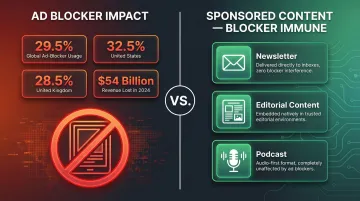
Traditional display ads have a reach problem. Ad blockers are used by 29.5% of global internet users — 32.5% in the US, 28.5% in the UK, and 28.4% in the UAE — costing publishers an estimated $54 billion in lost revenue in 2024 alone.
Sponsored content sidesteps these filters entirely:
- Newsletter sponsorships reach readers directly in their inbox with no algorithm interference and no ad-blocking software
- Editorial-hosted content is embedded natively on publisher sites, making it immune to browser-based blockers
- Podcast integrations cannot be skipped by software — listeners hear the message in the host's own voice, often mid-conversation, which makes the format feel less like advertising
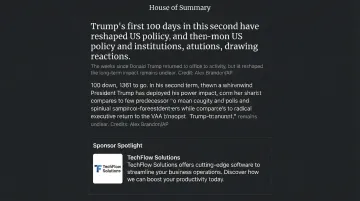
House of Summary, for instance, places brand messages directly in readers' inboxes across its network of newsletters covering global news, geopolitics, and business — no filters, no competing visual clutter. Sponsorships there deliver click-through rates up to 4x higher than Google AdWords.
Long-Term Value
Quality sponsored content — a well-written article, an evergreen video series, a podcast episode — continues to drive traffic and brand awareness long after its initial publication. Unlike display ads that go dark when a campaign ends, a sponsored article ranking in search or a podcast episode in a back catalog keeps working indefinitely.
9 Examples of Sponsored Content Across Channels
YouTube Video Integration
Brands integrate sponsorships into YouTube content as pre-roll ads, mid-video segments, or full episode sponsorships.
Case Study: Hot Ones and TUMS
In 2019, TUMS sponsored Season 9 of "Hot Ones," the popular First We Feast series where celebrities eat increasingly spicy chicken wings while answering questions. The partnership was a natural fit: hot food meets antacid. TUMS appeared both as a custom pre-roll ad and organically within the show during "Time for TUMS" moments when guests struggled with the heat.
Key lesson: Brand-content fit is everything. Relevance drives credibility.
Podcast Sponsorship
Podcast sponsorships typically appear as host-read segments (pre-roll, mid-roll, or post-roll) where the host personally endorses the brand in their own voice, lending immediate credibility.
Case Study: Shopify's "Vanguard" Podcast
Shopify Studios produced "Vanguard," a podcast exploring how subcultures and unexpected communities make money. The show was sponsored by Shopify — a platform that helps people make money. The fit was natural: entrepreneurial stories paired with entrepreneurial tools.
The podcast advertising market has grown sharply. U.S. podcast ad revenue reached $2.43 billion in 2024, growing 26.4% year-over-year.
Newsletter Sponsorship
Newsletter sponsorships are one of the most high-performing and often overlooked forms of sponsored content. A brand message is placed directly inside a curated email newsletter that a reader has voluntarily subscribed to, meaning the audience is high-intent and already engaged.
Why it works:
- Ads cannot be blocked by ad-blocking software
- Messages land in the inbox without algorithmic suppression
- No visual clutter competing for attention
- Readers have opted in and expect the content
Example: House of Summary
House of Summary operates a network of premium newsletters covering global news (Presidential Summary), international politics (Geopolitical Summary), UAE news and lifestyle (Dubai Summary), and London-focused content (London Summary). Each newsletter is written by people who know their field, delivering clear, factual, and useful summaries to serious readers.
Brands sponsoring House of Summary newsletters benefit from undivided attention in a high-trust environment. Ads integrate into the reading flow rather than sitting in banner sections — the company reports click-through rates 4x higher than Google AdWords, reflecting the difference between an engaged inbox audience and passive web browsing.
Sponsored Article or Listicle
Sponsored articles and listicles are content pieces published on third-party editorial sites that match the host site's style and tone while featuring a brand's message.
Case Study: BuzzFeed and Hot Wheels
In 2018, Hot Wheels sponsored a BuzzFeed listicle titled "10 Mind-Blowing Benefits Of Playtime That Every Parent Should Know About." The article was clearly labeled "Promoted By Hot Wheels" and matched BuzzFeed's signature listicle format. The brand was relevant, the format was native, and the disclosure was transparent.
Best practice: The content should serve the reader's interest first. If it reads like a product pitch, it fails.
Instagram Sponsored Post (Influencer Partnership)
Brands partner with individual creators for a sponsored post that appears on the influencer's profile feed. The influencer creates content featuring the brand in a way consistent with their established aesthetic and voice.
Key characteristics:
- Hashtags like #ad, #partner, or #sponsored are used for FTC compliance
- The audience trusts the influencer, so brand credibility is borrowed by association
- Content feels authentic to the influencer's usual style
Instagram Story Sponsorship
Instagram stories are short-form visual content that appears between organic stories a user has chosen to watch, making placement feel organic rather than interruptive.
Example: Regional Restaurant Campaign
A regional restaurant chain used Instagram Stories with location stickers and promo codes to increase foot traffic. The campaign increased walk-ins by 47% by integrating seamlessly into the daily story rotation of local followers.
Snapchat Sponsored Filter
Sponsored Snapchat filters are interactive sponsored content where a brand creates a camera lens or filter that users apply to their own photos and videos — turning users into organic brand ambassadors.
Case Study: Taco Bell Cinco de Mayo Filter
In 2016, Taco Bell's Cinco de Mayo Snapchat lens turned users' heads into tacos, generating a record-breaking 224 million views in a single day. The content added to the user experience rather than interrupting it, creating massive organic reach.
LinkedIn Promoted Content
LinkedIn's professional context makes sponsored posts feel more natural than on entertainment platforms. Posts are still labeled as sponsored, but the environment itself — industry peers sharing insights — aligns closely with what brands want to communicate.
Advantages:
- Brands can target by industry, job title, seniority, and company size
- Ideal for B2B sponsored content
- Posts link to the brand's profile rather than taking users off-platform, reducing friction
Sponsored Video Series (Brand-Publisher Partnership)
The highest-investment form of sponsored content: a brand co-produces an entire editorial video series with a media publisher.
Case Study: NowThis and BlackRock "Invest in Yourself"
In 2019, BlackRock partnered with NowThis to launch "Invest in Yourself," a video series focused on financial well-being and portfolio diversification. BlackRock sponsored the series, while NowThis produced and distributed it. The format built brand association over multiple episodes and created long-form, shareable content with genuine editorial value.
FTC Disclosure Rules and Best Practices
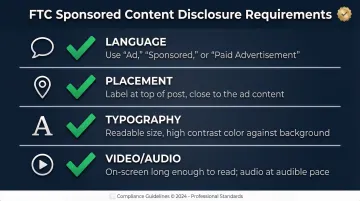
The Federal Trade Commission (FTC) requires that all sponsored content be clearly disclosed to prevent deceptive practices.
Core Disclosure Requirements
Language:
- Use clear, unambiguous terms: "Ad," "Advertisement," "Paid Advertisement," or "Sponsored Advertising Content"
- Avoid vague terms like "Promoted" without context
Placement:
- Disclosures must appear as close as possible to the ad
- In feeds, the label should appear at the top of the post, not buried at the bottom
Typography:
- Font size and color must be easily readable
- Text must contrast strongly against the background
Video and Audio:
- Visual disclosures must remain on screen long enough to be noticed, read, and understood
- Audio disclosures must be read at a pace the audience can follow
- If an endorsement is made visually and audibly, the disclosure should be made both ways
The FTC enforces these rules under Section 5 of the FTC Act. Non-compliance can result in orders, injunctions, and civil penalties for both the brand and the publisher or creator.
Best Practices for Effective Sponsored Content
Once you're compliant, execution quality is what separates forgettable placements from content that actually performs:
- Serve the audience first — content that reads like a product pitch loses readers immediately
- Choose partnerships where the relevance is obvious; mismatched pairings destroy credibility
- Use visuals and storytelling to make the content memorable, not just informational
- Maintain the publisher's editorial tone throughout
The Trust Equation
Well-disclosed, well-executed sponsored content builds more consumer trust than hidden or unclear sponsorships. Transparency signals confidence in the product. When the label is visible and the content delivers real value, engagement follows naturally.
Frequently Asked Questions
What does "sponsored content" mean?
Sponsored content is paid advertising where a brand funds a publisher or creator to produce content that promotes the brand while blending naturally with the surrounding editorial content, making it feel relevant rather than intrusive.
What is sponsored content marketing?
Sponsored content marketing uses brand-publisher partnerships to promote products or services through content that earns audience attention — articles, videos, podcasts, social posts, or newsletters — rather than through disruptive display advertising.
How much does sponsored content cost?
Costs vary widely by platform and publisher, ranging from a few hundred dollars for a micro-influencer post to $500,000+ for a major media video series. Pricing is typically based on audience size, engagement rate, and exclusivity terms.
Can sponsored content be trusted?
Sponsored content can be trustworthy when it is clearly disclosed and genuinely adds value. Readers should look for disclosure labels like "Sponsored" or "Paid Partnership" and evaluate whether the content itself is useful and aligned with the publisher's usual editorial standards.
What are examples of sponsored content?
Common formats include:
- Sponsored articles and listicles on editorial websites
- YouTube video integrations and host-read podcast sponsorships
- Newsletter ad placements and email sponsorships
- Influencer Instagram posts and Stories
- Co-produced video series between brands and media publishers
What are the 4 types of sponsorships?
Sponsorships generally fall into four categories:
- Financial: Monetary support in exchange for brand visibility
- Media: Brand placement within editorial content (the most common sponsored content format)
- In-kind: Product or service exchange in place of payment
- Promotional: Co-branded campaigns where both parties actively promote