Introduction
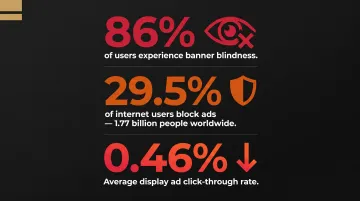
Marketers are pouring budgets into digital channels — display ads, social media, programmatic — yet the results tell a troubling story: click-through rates are collapsing, ad blocker adoption is accelerating, and attention is harder to buy than ever. As of Q2 2025, 29.5% of internet users worldwide (1.77 billion people) now use ad blockers, effectively erasing billions in display ad spend. Meanwhile, the average display ad click-through rate sits at just 0.46%, and social media marketing budgets have dropped to their lowest level in seven years as platforms fail to demonstrate real purchase attribution.
The tension is clear: high spend, low-quality engagement.
Premium executive newsletters operate on entirely different terms. Unlike web pages cluttered with competing elements or social feeds governed by opaque algorithms, newsletters land directly in subscribers' inboxes — bypassing ad blockers, skipping the algorithm, and reaching readers during intentional reading sessions when attention is undivided.
The sections ahead break down why this channel consistently outperforms, what to look for in a newsletter partner, and how to run placements that deliver results you can actually measure.
Key Takeaways
- Newsletter advertising puts your brand in front of engaged readers — no algorithms, no ad blockers, no competition for attention
- Executive newsletter readers are self-selected: business leaders and decision-makers who actively seek out information
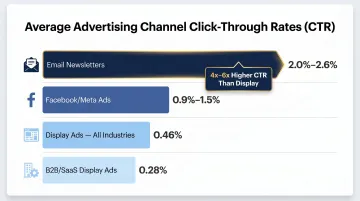
- Newsletter ads deliver CTRs 4x–6x higher than display ads (2.0%–2.6% vs. 0.46%)
- The right newsletter partner offers a specific audience, verified engagement data, and clear brand safety standards
Why Traditional Digital Advertising Is Losing Ground
Ad Blockers Are Erasing Display Ad Reach
Nearly 30% of global internet users now block ads, and that percentage continues to grow. According to Backlinko's 2026 analysis, 63.5% of ad blocker users cite "too many ads" as their primary motivation, while 53.5% say ads "get in the way." In the U.S., 32.5% of users block ads; in the U.K., 29% do so on computers. This means roughly one in three potential customers never sees your display or banner ads, regardless of how much you spend.
Newsletter ads delivered to native email clients bypass browser-based ad blockers entirely, preserving full impression delivery to every subscriber who opens the email.
Algorithms Control What Users See
Social media platforms use opaque ranking systems that determine which content — and which ads — appear in users' feeds. Even well-funded campaigns are subject to algorithmic prioritization that can deprioritize paid placements without explanation. Between spring 2023 and spring 2024, marketing budgets allocated to social media fell from 17% to 11%, the lowest level in seven years, as marketers struggled to demonstrate purchase attribution and ROI.
Attention Fragmentation Dilutes Impact
Web pages are loaded with competing elements: sidebars, notifications, multiple ad units, and auto-playing videos. Consumers encounter an estimated 6,000 to 10,000 ads per day — up from roughly 500 in the 1970s. That volume creates a structural problem: no single ad can hold attention long enough to build brand impression or purchase intent.
The consequences are measurable. An Infolinks study found 86% of internet users experience "banner blindness" — the reflexive tendency to ignore display ads entirely.
Brand Safety Risks in Programmatic
Programmatic advertising delivers efficiency at scale but carries significant brand safety risks. A Pixalate study found that 32% of programmatic mobile in-app ads appeared next to potentially brand-unsafe content, including adult material, gambling, violence, and profanity. For premium and luxury advertisers, these adjacency risks create real reputational exposure — and no programmatic system can fully prevent them.
What Defines a Premium Executive Newsletter Audience
Self-Selected, High-Intent Subscribers
Unlike social media users who encounter ads while scrolling entertainment, newsletter subscribers actively opted in to receive content. This signals intent and genuine interest in the source — not passive exposure. They aren't passively browsing; they're deliberately opening an email to read relevant information.
Demographics That Matter for B2B and Premium Brands
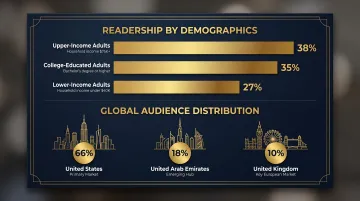
Executive newsletter readers skew toward higher income and decision-making authority. Pew Research Center data from February 2026 shows that:
- 38% of upper-income adults get news from email newsletters
- 35% of college-educated adults subscribe to newsletters
- 27% of lower-income adults do the same
This demographic profile directly translates to purchasing power and organizational budget control. House of Summary's newsletter network, for example, reaches an audience where 66% are based in the United States, 18% in the UAE, and 10% in the UK — concentrations of wealth and business decision-makers in major financial capitals like New York, Dubai, and London.
Geographic Reach Across High-Value Markets
Global executive newsletters provide advertisers with exposure across multiple high-value markets in a single placement. Rather than running separate campaigns for London, Dubai, and New York, one placement reaches readers across all three simultaneously.
That tri-market footprint matters for luxury brands, financial services, and B2B companies. Their customers — globally mobile professionals with a presence in multiple cities — don't fit neatly into a single geography.
Editorial Quality Drives Audience Quality
Newsletters built on verified, factual content attract readers who are discerning about their information sources. That same discernment shapes how they evaluate brands encountered in that editorial environment.
When a newsletter commits to accuracy, objectivity, and respect for readers' time — as House of Summary does with 100% human-written, fact-checked content — it creates an editorial trust that transfers to every advertiser in that inbox.
Undivided Attention During Focused Reading Sessions
A newsletter in someone's inbox is typically read during a focused, intentional session. Unlike a web page with a dozen competing elements, email reading environments minimize distractions. 88% of email users check their inboxes multiple times daily, with 39% checking 3-5 times per day. Readers are less likely to be multi-tasking or half-present, which directly affects how well advertising messages are absorbed and recalled.
Why Newsletter Ads Outperform Web and Social Advertising
The Inbox Advantage: 100% Ad Delivery
Newsletter ads are embedded directly in content that readers have chosen to open, meaning 100% delivery to every reader who opens the issue. Compare this to display ads, where ad blockers eliminate visibility for nearly 30% of users, or social media ads, where organic reach sits at just 2%-4%.
Click-Through Rates 4x-6x Higher Than Display
Industry data demonstrates the engagement gap clearly:
| Channel | Average CTR | Source |
|---|---|---|
| Email newsletters | 2.0%-2.6% | Mailchimp / MailerLite |
| Display ads (all industries) | 0.46% | WordStream / DigitalApplied |
| B2B/SaaS display ads | 0.28% | DigitalApplied |
| Facebook/Meta paid ads | 0.9%-1.5% | Adenslab / Birch |
House of Summary reports click-through rates 4x higher than Google AdWords for advertisers like BSH Hausgeräte, whose CEO noted that "the editorial tone aligned with high-intent readers, and the audience quality of Dubai Summary is good."
Trust Transfer from Editorial to Advertiser
When a reader trusts the editorial voice of a newsletter, that trust partially extends to the brands featured within it. A sponsored segment in that context carries credibility that a banner ad — surrounded by unrelated content and unfamiliar publishers — simply cannot.
Resistance to Ad Fatigue
The average consumer sees hundreds of digital ads daily and has learned to ignore most of them. Newsletter ads appear inside a reading flow the subscriber actively chose — integrated into content rather than interrupting it. That distinction makes them far harder to dismiss than a banner or a mid-scroll sponsored post.
Email Marketing's $36-to-$1 ROI Advantage
Email marketing delivers an average return of $36 for every $1 invested, according to Litmus. Newsletter advertising inherits that return — and often exceeds it, because placement within a trusted editorial environment raises both attention and conversion rates beyond what a standard email send achieves.
What to Look for in a Premium Executive Newsletter Partner
Audience Verification and Engagement Transparency
A quality newsletter partner should provide verifiable data on subscriber count, open rates, and audience demographics. Questions to ask:
- How is your subscriber list verified and maintained?
- What are your average open and click-through rates?
- Can you provide demographic breakdowns by geography, industry, and job seniority?
- How often do you clean your list and remove inactive subscribers?
Look for newsletters that report open rates above 40% and CTRs of 3%-5% — these represent active, responsive subscribers worth the investment.
Editorial Alignment and Brand Safety
The newsletter's editorial tone, topic focus, and factual standards should align with your brand's positioning. Advertisers in finance, luxury, or healthcare sectors need to appear alongside content that reflects similar values of accuracy, prestige, and credibility.
House of Summary, for example, prohibits certain advertising categories to maintain brand safety:
- Sexual content and suggestive material
- Sensationalist or exaggerated claims
- Social casino games
- Political campaign ads
- Religious advocacy
That kind of editorial discipline means your ad lands next to content your audience already trusts — not content they scroll past.
Audience Specificity Over Raw Subscriber Count
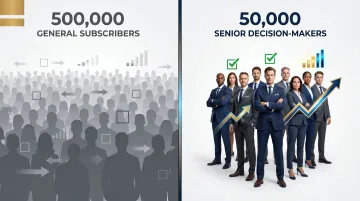
Broad, general-interest newsletters may have large subscriber counts but diluted audiences. Premium executive newsletters with specialized focus areas deliver more relevant readers and higher-intent engagement per reader reached. The difference becomes clear when you compare two realistic scenarios:
- A general news newsletter with 500,000 diverse subscribers
- A geopolitical analysis newsletter with 50,000 policy professionals and executives
For campaigns targeting senior decision-makers, that second list will routinely outperform the first on conversions — regardless of the subscriber count gap.
Geographic and Demographic Match
Verify that the newsletter's audience matches your target market. If you're launching a luxury product in Dubai or a fintech service in London, confirm the newsletter's geographic concentration aligns with your campaign objectives. Request specific data on where readers are based and what industries they work in.
Key data points to request before committing:
- Geographic breakdown by country and city
- Industry and job function distribution
- Percentage of C-suite or senior-level readers
- Audience growth trend over the past 6-12 months
How to Get Started with Advertising in an Executive Newsletter
Prepare Your Campaign Brief
Before reaching out to a newsletter partner, clarify:
- Target geography: Which markets are you prioritizing?
- Audience profile: What job titles, industries, or income levels?
- Campaign objective: Brand awareness, lead generation, or direct response?
- Creative format: Sponsored content, display placement, or full-issue sponsorship — each serves a different goal.
- Budget and timeline: What investment are you prepared to make, and over what period?
The clearer your brief, the faster a newsletter partner can match you with the right placement.
Understand Available Ad Formats
Newsletter advertising typically includes several placement options:
| Format | Best For | Key Advantage |
|---|---|---|
| Sponsored content | Education, trust-building | Written in the newsletter's voice; feels native |
| Dedicated placement | Brand awareness | Above-the-fold positioning for maximum visibility |
| Banner-style embed | Direct response | Bypasses ad blockers; appears in focused reading environments |
| Exclusive sponsorship | Product launches, rebranding | Full-newsletter takeover; sole advertiser attention |
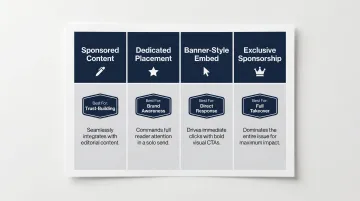
Match the format to the moment: sponsored content builds credibility over time, while an exclusive sponsorship concentrates impact for a single campaign.
Reach Out Directly to Start the Conversation
Once you know your format and objectives, the next step is finding the right audience. House of Summary's network of specialized publications gives advertisers direct access to high-intent readers across key global markets:
- Presidential Summary: Global news and U.S. politics for decision-makers
- Geopolitical Summary: International power dynamics for policy professionals
- Dubai Summary: UAE business, culture, and lifestyle for affluent readers
- London Summary: UK business and policy for London-based executives
These newsletters reach a combined audience of 500,000+ subscribers, with 254,866+ emails opened daily. Contact the sales team at sales@houseofsummary.com to discuss placement options, request a media kit, and explore how newsletter advertising can deliver measurable results for your brand.
Frequently Asked Questions
How much does it cost to put an ad on a website?
Website advertising costs range from a few dollars per day on self-serve platforms to thousands for premium placements. Display ad CPMs average $3.12 on the Google Display Network; private marketplace deals run $8–$12. Newsletter advertising — priced per-send or per-thousand subscribers — typically delivers stronger ROI, with CTRs of 2%–3% versus 0.46% for display.
What is on-site advertising?
On-site advertising refers to paid ad placements embedded within a website — including banners, display units, and native ads. These placements appear on webpages and compete with other content for attention. Newsletter advertising, by contrast, lives in the reader's inbox rather than on a webpage, giving it different delivery characteristics, zero ad blocker interference, and higher visibility during focused reading sessions.
What is newsletter advertising?
Newsletter advertising involves placing sponsored content, brand messages, or promotional placements within email newsletters sent directly to a subscriber list. Unlike web ads that can be blocked or ignored, newsletter ads are delivered to every recipient who opens the email, ensuring guaranteed visibility in a distraction-free environment.
Why do newsletter ads have higher engagement than display ads?
Newsletter readers subscribed by choice, read during focused sessions, and are never exposed to ad blockers — a combination that web placements simply can't replicate. The trust readers invest in their inbox extends to advertiser messages, driving CTRs 4x–6x higher than display ads.
What types of brands benefit most from advertising in executive newsletters?
Brands targeting business decision-makers, finance professionals, luxury consumers, or globally mobile professionals see the strongest results. This includes financial services, premium B2B tools, wealth management firms, fintech platforms, luxury goods, and high-end travel and hospitality brands.