
Introduction
Advertisers face a fragmentation crisis. Ad blockers suppress display reach, social media ROI continues to slide, and brand messages compete against endless scroll distractions. One channel cuts through that noise by delivering something increasingly rare: undivided reader attention. Newsletter advertising places brand messages directly into inboxes where readers have actively opted in, bypassing algorithmic interference and browser-based blockers entirely.
This article covers two sides of the newsletter advertising ecosystem. First, newsletters that keep advertising professionals informed—essential reading for media buyers, CMOs, and agency teams staying sharp on industry shifts. Second, newsletters that offer premium advertising placements, providing brands with direct access to engaged, high-intent audiences. By the end, you'll know which newsletters to read and which ones to advertise in.
Key Takeaways
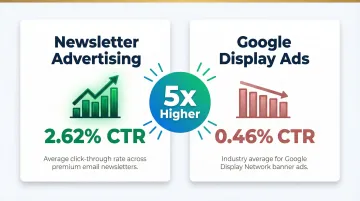
- Newsletter ads deliver a 2.62% average CTR, outperforming Google Display's 0.46% by roughly 5x
- Top picks — Marketing Brew, Ad Age, The Drum, Morning Brew, Stacked Marketer, and House of Summary — each serve distinct advertiser needs and audience profiles
- Premium newsletters bypass ad blockers entirely and reach readers in a receptive mindset — a combination few paid channels can match
- Evaluation criteria prioritize audience quality over size, editorial credibility, and transparent performance metrics
- First-party channels are gaining budget share as social platform volatility and privacy regulations reshape media planning
Why Newsletters Are One of Advertising's Most Powerful Channels
Newsletter advertising operates without the structural barriers that limit display and social channels. Messages land in the inbox with no competing visual clutter, no algorithmic suppression, and completely outside the reach of the 912 million active ad-blocking users who cost publishers an estimated $54 billion in 2024.
The Subscriber Psychology Advantage
Newsletter readers actively opted in, which means brand messages arrive in a receptive context rather than mid-scroll interruption. That difference in reader mindset explains why email newsletters consistently deliver 2.3% to 2.62% CTR while Google Display ads average just 0.46%. Readers expect content, and advertisers benefit from that attention.
Budget Shifts Toward Owned Channels
Brands are reallocating media budgets as social platforms become less predictable. Three factors are accelerating this shift:
- Unpredictable platform algorithms that suppress organic and paid reach without warning
- Brand safety concerns tied to content adjacency on open social feeds
- Tightening privacy regulations that erode third-party targeting precision
Newsletter advertising fits naturally here. Impressions are guaranteed, performance is measurable, and delivery doesn't depend on feed visibility or platform policy changes.
The Best Advertising Newsletters: Expert Picks
These picks cover two categories: industry publications essential for advertising professionals, and newsletters offering premium inventory for brands targeting engaged audiences. Each was selected on audience quality, editorial depth, and advertiser value.
Marketing Brew
Marketing Brew delivers daily industry intelligence for advertising and marketing professionals, produced by the Morning Brew media company. Coverage includes brand campaigns, media buying trends, agency moves, and ad tech developments—packaged with an editorial voice that treats advertising as a serious profession.
Its subscriber base skews heavily toward marketing decision-makers with real budgets. Daily delivery builds consistent engagement, and editorial authority keeps senior professionals coming back — which is what makes it a reliable placement for advertisers who want their message next to content those readers actually trust.
| Focus Area | Best For | Frequency |
|---|---|---|
| Advertising industry news, brand campaigns, agency moves, ad tech | Media buyers, CMOs, and brand managers seeking daily industry awareness | Daily (Monday–Friday) |
Ad Age Newsletter
Ad Age is one of the oldest and most authoritative voices in advertising, with a newsletter surfacing breaking news, creative rankings, and campaign analysis across global markets. Its newsletter portfolio reaches 752,000 registrants, with 47.4% from agencies and 35.3% from marketers.
The differentiator is legacy credibility backed by deep industry relationships. Senior advertising executives and agency leaders rely on Ad Age for a read on broader industry movements — which means advertisers placing here reach the people who set budgets and shape strategy.
| Focus Area | Best For | Frequency |
|---|---|---|
| Brand advertising, agency rankings, campaign analysis, industry data | Senior ad professionals, agency leaders, and brand strategists | Daily briefings with select deep-dives |
The Drum
The Drum covers the global advertising and creative industry from bases in London, New York, and Singapore. Editorial spans platform updates, creative effectiveness, diversity in advertising, and international market trends—making it valuable for teams operating across borders.
Strength lies in creative coverage: award-winning campaigns, creative innovation, and evolving industry standards sit alongside news. 69% of The Drum's 134,000 newsletter subscribers are senior decision-makers, with 65% from brands, agencies, and media companies.
| Focus Area | Best For | Frequency |
|---|---|---|
| Global advertising news, creative campaigns, industry culture, media trends | Creative directors, brand teams, and global marketing strategists | Multiple weekly editions |
Morning Brew
Morning Brew is a flagship business and finance newsletter with over 4 million active subscribers, offering one of the most established newsletter advertising ecosystems. Brands gain access to a premium audience: 53% Gen Z or Millennial, 57% holding manager titles or above, and 2x more likely than average consumers to have $150K+ household income.
Why advertisers value it: proven engagement metrics, a reader base with high disposable income and business influence, and a media team experienced in packaging sponsored content that performs. Morning Brew pioneered flat-fee sponsorship models that many premium newsletters now follow.
| Focus Area | Best For | Frequency |
|---|---|---|
| Business news, finance, tech, career — with integrated advertising placements | Brands targeting business professionals, finance audiences, and ambitious young executives | Daily |
Stacked Marketer
Stacked Marketer delivers daily performance marketing intelligence covering platform algorithm updates, paid social changes, Google Ads developments, and conversion optimization tactics. With 97,842 subscribers and a 3.15% CTOR, it filters general marketing noise and focuses on changes that directly affect ad spend.
Media buyers managing live campaigns rely on Stacked Marketer for platform updates that directly impact ROI. The audience skews heavily toward practitioners — people making daily decisions about where ad dollars go — rather than passive industry observers.
| Focus Area | Best For | Frequency |
|---|---|---|
| Digital advertising updates, paid social, Google Ads, performance marketing | Performance marketers, paid media managers, and growth teams | Monday, Wednesday, Friday |
House of Summary
House of Summary operates a network of specialized newsletters—including Presidential Summary, Geopolitical Summary, Dubai Summary, and London Summary—built on factual, noise-free reporting. Readers include executives, business professionals, and high-intent audiences across key global markets.
As an advertising vehicle, House of Summary reaches readers who are actively seeking curated, verified intelligence — not passively scrolling. Ads arrive directly in the inbox with no algorithmic interference and no ad blockers in the way.
That direct path matters for performance. Click-through rates run 4x higher than Google AdWords benchmarks, and the audience profile — executives, finance professionals, and business decision-makers across the UAE, London, and global markets — makes it the right fit for luxury brands, finance advertisers, and premium B2B campaigns.
| Focus Area | Best For | Frequency |
|---|---|---|
| Global news, geopolitics, UAE and London markets — specialized, verified reporting | Luxury brands, finance sector, global B2B advertisers, and media buyers targeting executive audiences | Regular editions across specialized verticals |
What to Look for in an Advertising Newsletter
Audience Quality Over Audience Size
A newsletter with 50,000 senior finance executives delivers more advertiser value than one with 500,000 passive readers. Evaluate reader demographics, open rates, and subscriber intent as primary selection criteria. Publishers should provide clarity on who subscribes, why they subscribe, and how actively they engage.
Editorial Credibility and Tone Alignment
Newsletters with strong editorial authority generate more engaged readers — sponsor messages benefit directly from the trust editors have built. Seek newsletters where editorial voice matches your brand positioning. A mismatch undermines performance regardless of audience size, so treat tone alignment as a non-negotiable filter, not an afterthought.
Ad Format Options and Transparency
The best newsletters offer clear sponsorship formats and upfront data to back them up. Before committing, verify:
- Format options: dedicated placements, native ads, and branded sections — not just one standard slot
- Historical performance data: open rates, click-through rates, and past sponsor results
- Editorial separation: clear labeling of sponsored content so readers (and your brand) aren't misled
- Audience verification: subscriber demographics, not just raw list size
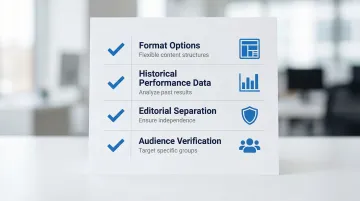
When publishers provide this detail without being asked, that's a strong signal they're worth working with.
How We Chose These Advertising Newsletters
This list prioritizes editorial depth, engagement quality, and practical value for advertising professionals and media buyers. We deliberately avoided the common mistake of chasing subscriber volume over subscriber intent.
Each newsletter was evaluated on whether its readers are predisposed to engage seriously — either consuming advertising industry knowledge or responding to brand messages with genuine attention. Our criteria focused on:
- Editorial credibility — consistent, well-sourced coverage with a clear editorial voice
- Reader intent — audiences who seek out the content, not passive scrollers
- Engagement quality — open rates, click behavior, and active readership over raw subscriber counts
- Practical value — actionable insight for media buyers and advertising decision-makers
Who the readers are matters far more than how many there are.
Conclusion
Newsletter advertising has earned its place as a primary media channel. For brands targeting high-intent, educated audiences, newsletters offer one of the most cost-effective and attention-guaranteed media placements available today.
If inbox-based advertising is underrepresented in your current media mix, that's worth revisiting. Advertisers should audit their channel allocation against engagement benchmarks — newsletters consistently outperform display and social on attention metrics.
For those looking to reach global executives, geopolitically engaged professionals, or business decision makers in markets like Dubai and London, House of Summary's network offers a direct and credible path. Reach out to the team at sales@houseofsummary.com to explore advertising opportunities.
Frequently Asked Questions
What is an advertising newsletter?
Advertising newsletters serve two roles: industry publications that keep advertising professionals informed about trends, campaigns, and media, and premium newsletters that offer advertising inventory for brands to reach engaged subscriber audiences.
Are newsletter ads better than social media ads?
Newsletter ads bypass ad blockers entirely, avoid algorithmic suppression, and land in the inbox with full reader attention. Social media ads offer broader reach and targeting granularity. Most brands find the two channels work best in combination, with newsletters driving higher-intent conversions and social ads handling top-of-funnel reach.
How much does it cost to advertise in a newsletter?
Pricing varies by newsletter size, audience quality, and placement type. Premium niche newsletters often charge £75–£150 CPM, while flat-fee sponsorships are common at scale — Ad Age's Wake Up Call, for example, runs $25,000 for a one-week 100% SOV placement.
What metrics should I track when advertising in a newsletter?
Track open rate, click-through rate, attributed conversions, and cost per acquisition. Request historical CTR data from publishers before committing budget — Apple Mail Privacy Protection inflates open rates by pre-fetching tracking pixels, making CTR a more reliable performance signal.
What types of brands benefit most from newsletter advertising?
Premium brands, B2B companies, finance and fintech services, luxury consumer brands, and SaaS products perform strongly in newsletters because their target audiences are habitual newsletter readers who value curated, trusted content.
How do I choose the right newsletter to advertise in?
Prioritize audience-brand fit over size, request engagement metrics and case studies from the publisher, and test with a single placement before scaling. Alignment between the newsletter's editorial focus and the brand's positioning is the single strongest predictor of ad performance.