](https://file-host.link/website/houseofsummary-bjb54o/assets/blog-images/e63ca7e5-0dd6-45d1-bf80-600d7ba73ace/1778527810535581_0f05bab257974c51a861a669509a3153/360.webp)
Introduction
Email newsletters rank among the highest-ROI advertising channels available, yet most brands approach them like display ads and wonder why results fall flat. With 4.48 billion email users worldwide and 35% of companies earning $10-$36 for every $1 spent on email marketing, the opportunity is massive.
Advertising in email newsletters is not as simple as submitting a creative and waiting for clicks. Results vary sharply based on newsletter selection, ad format, copy quality, and how well the offer matches the audience. A misaligned placement will waste budget no matter how polished the creative, while a perfectly matched newsletter can deliver significantly higher engagement than broad, general-interest lists.
This guide walks through the exact steps to advertise effectively in email newsletters, when the channel makes sense, what variables drive results, and the mistakes that quietly undermine campaigns.
Key Takeaways
- Newsletter ads reach opted-in, high-trust audiences — no algorithms, no ad blockers, higher ROI than display or social
- Match your offer to the right audience — list size alone doesn't predict quality
- Use the AIDA framework — lead magnets outperform direct pitches with cold audiences
- Ad placement position significantly affects both performance and cost
- Track downstream conversions and subscriber quality, not just CTR
How to Advertise Effectively in Email Newsletters
Step 1: Define Your Campaign Goal and Audience Profile
Clarify what outcome you're optimizing for — brand awareness, lead generation, direct sales, or event sign-ups. This decision determines the format, offer, and metrics you'll use to evaluate success.
Build a specific audience profile:
- Industry and seniority level
- Geography and location preferences
- Interests and purchasing behavior
- Income level and decision-making authority
Vague targeting leads to high spend and low conversion. A B2B SaaS company targeting "marketing professionals" will burn budget; targeting "VP+ marketing leaders in fintech companies with 100-500 employees" focuses spend where it converts.
Determine your budget range and preferred pricing model before approaching any newsletter:
- CPM (cost per thousand impressions)
- CPC (cost per click)
- Flat sponsorship fee (fixed rate per placement)
Knowing your preferred model upfront lets you compare deals on equal terms and negotiate confidently.
Step 2: Find and Vet the Right Newsletter
Newsletter selection is the single most important factor in campaign success. A mediocre ad in a perfectly matched newsletter will outperform a great ad in a misaligned one.
Evaluate these quality signals:
- Open rate: industry averages range from 35–42%, with B2B services at 39.48% and nonprofits at 46.49%
- Click-through rate: general benchmarks sit around 2.3–2.6%
- Subscriber growth: consistent month-over-month increases signal a healthy, engaged audience
- Publishing cadence: regular schedules and stable editorial quality indicate a professional operation
Look beyond vanity metrics. A 500,000-subscriber newsletter with a 10% open rate will almost always underperform a 50,000-subscriber newsletter with a 45% open rate. Assess whether the readership profile — profession, intent level, geographic focus — actually matches your buyer persona.
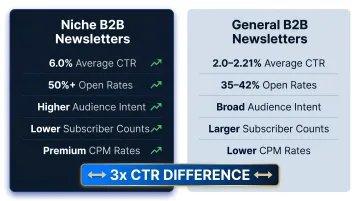
Niche newsletters routinely outperform general-interest lists. Research shows niche B2B newsletters average 6.0% CTR versus 2.0–2.21% for general B2B benchmarks — a 3x difference.
Premium, editorially rigorous newsletters tend to attract high-intent readers more receptive to relevant brand placements. Specialized publications covering business, geopolitics, or finance — such as House of Summary's network (Presidential Summary, Geopolitical Summary, Dubai Summary, London Summary) — offer clearly defined, premium readership that appeals to advertisers targeting global executives and decision-makers.
Step 3: Choose Your Ad Format and Placement
Primary newsletter ad formats:
Sponsored/Native Content blends with editorial tone and reading flow. It works best for brand storytelling, complex products, and trust-building — especially when readers need context before they'll consider purchasing. It also sidesteps ad blockers and banner blindness entirely.
Display-Style ads use visual callouts with clear branding. Use these for direct response, limited-time offers, or visually driven products where the offer is self-explanatory. They command attention, but can disrupt reading experience if overused.
Dedicated Sends give a single advertiser the full newsletter. Highest cost, maximum share of voice. Reserve these for major launches, exclusive partnerships, or high-ticket offers aimed at warm audiences.
Placement hierarchy matters:
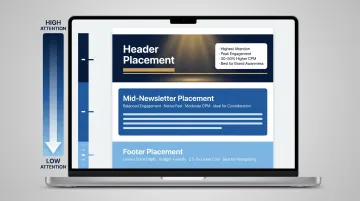
Header placements command 30–50% higher CPMs than mid-newsletter positions and 2.5–5x higher than footer placements. Match placement to campaign objective:
- Header: Peak attention, best for awareness and first impressions
- Mid-newsletter: Balance of engagement and native feel, ideal for consideration
- Footer: Budget-friendly, works for retargeting or familiar brands
When negotiating, push for one or two placements per issue — not more. Newsletters that clearly label sponsored content tend to build stronger reader trust, which directly benefits your ad's credibility.
Step 4: Write Ad Copy That Converts
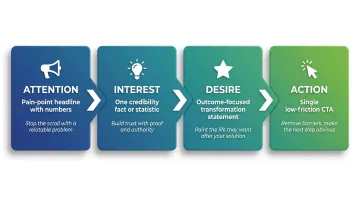
Structure your newsletter ad copy using the AIDA framework:
- Attention: Open with a headline that speaks to a specific pain point or desire — use numbers or concrete details tied to the newsletter's editorial context
- Interest: Follow with one fact, statistic, or case study result that builds credibility through specificity
- Desire: Communicate the outcome the reader gains — focus on transformation, not features
- Action: End with a single, low-friction CTA that makes the next step obvious and reduces perceived commitment
For cold audiences who don't know your brand, lead magnets (free guides, trials, case studies) generate far higher engagement than direct purchase asks. Newsletter ad CTRs average 2–5% compared to 0.05–0.1% for display ads — but only when the offer matches audience readiness. Use direct pitches after establishing awareness or when retargeting warm audiences.
Match the newsletter's editorial tone. Request previous ad examples from the newsletter operator and study the writing style. A mismatch in voice makes the ad feel disruptive and reduces clicks. If the newsletter uses conversational language, your ad should too. If it's formal and data-driven, adopt that style.
Step 5: Launch, Track, and Optimize
Before launching, set up proper tracking:
- UTM parameters for source attribution
- Dedicated landing page (or tagged URL)
- Conversion tracking for downstream actions
- CRM integration to measure lead quality
Track metrics beyond open and click rates:
- Cost per acquisition (CPA): Newsletter advertising CPA ranges from $10–$100+ depending on industry and offer complexity
- Lead quality: How many leads convert to customers?
- Landing page conversion rate: Measure post-click behavior
- Return on ad spend (ROAS): Revenue generated vs. cost
Run A/B tests systematically:
- Start with headline variations — this typically moves the needle most
- Test CTAs (button text, placement, color)
- Experiment with creative or image usage
- Adjust ad length and format
Change one variable at a time. Most newsletter advertising requires 2–3 placements before patterns become statistically reliable — treat early runs as calibration, not final verdicts.
When Should You Advertise in Email Newsletters?
Newsletter advertising isn't always the right channel. It works best when your audience maps to an existing engaged readership and your offer has enough niche appeal to justify the CPM.
Strongest use cases:
- B2B brands targeting specific industries or job functions
- Considered-purchase products where trust and credibility matter
- Businesses entering new markets where brand awareness needs building
- Offers that benefit from editorial endorsement in relevant context
Poor fit scenarios:
- Offers with no clear target audience definition
- Campaigns where the landing experience is weak or unconverted
- Brands that can't commit to running at least 2-3 placements
- Products requiring extensive visual demonstration
Single-issue ads rarely build the frequency needed for conversion. Readers need to see a brand more than once before they act — consistent placement across several issues is what turns awareness into consideration.
Key Parameters That Affect Results
Newsletter advertising outcomes are largely predictable — but even strong placements underperform when the wrong parameters are set. Understanding these four variables is what separates campaigns that convert from ones that don't.
Audience-to-Offer Alignment
The closer the newsletter's readership is to your ideal customer profile, the higher your conversion rate — regardless of list size. Niche audiences convert at significantly higher rates than broad ones.
Niche B2B newsletters average 6.0% CTR versus 2.0% for general B2B, demonstrating that specificity drives performance. An 8,000-subscriber B2B newsletter can command $2,000 per placement, while a 100,000-subscriber general lifestyle newsletter may only command $1,000 — audience quality matters more than quantity.
Ad Placement Position
Reader attention decreases as they scroll. Header placements capture users at peak attention, while footer placements depend on scroll depth and are often skipped entirely.
Pricing reflects this attention hierarchy: header placements cost 30-50% more than mid-newsletter and 2.5-5x more than footer positions. If your campaign objective is awareness or first impression, invest in header placement. If you're retargeting familiar audiences, mid or footer may deliver sufficient results at lower cost.
CTA Type and Offer Friction
The call to action determines how many readers follow through. The right CTA depends entirely on where the audience sits in the buyer journey:
- Low-friction CTAs (download a free resource, start a free trial) work well for cold audiences who need a reason to trust before they buy
- High-friction CTAs (buy now, schedule a demo) perform better with warm audiences or retargeting scenarios where familiarity already exists
Lead magnets outperform direct pitches in most first-placement campaigns. Reserve purchase CTAs for later in the sequence.
Frequency and Consistency Across Placements
A single ad placement rarely drives significant conversion. Readers typically need multiple exposures before acting — frequency builds familiarity, and readers who see your brand consistently are far more likely to click when they're ready to act.
Run at least 2–3 placements with the same newsletter before judging whether the channel works.
Negotiate repeat placement packages to secure better rates and build consistent presence. Growth Daily increased newsletter ad spending from 10% to 40% of their marketing budget after seeing sustained results from frequency-based campaigns.
Common Mistakes When Advertising in Email Newsletters
Choosing Newsletters Based on List Size Rather Than Engagement Quality
A newsletter with 500,000 cold subscribers and a 10% open rate will almost always underperform a newsletter with 50,000 engaged subscribers and a 45% open rate. Request engagement data before committing budget.
Look for these benchmarks:
- Average open rate across industries: 35-42%
- Average CTR: 2.3-2.6%
- Niche/loyal audiences: 50%+ open rates
If a publisher can't share open rate and CTR data upfront, that's a signal worth noting before you spend.
Writing Generic Copy That Ignores the Newsletter's Audience and Voice
Many advertisers recycle ad copy from other channels without adapting it to the specific audience or editorial tone of the newsletter. This creates friction, reads as off-brand, and drives readers to skip the placement.
Before writing a single word, review past issues and any existing sponsor examples. Then match your copy accordingly:
- Mirror the tone and level of formality the editor uses
- Cite statistics if the newsletter is data-driven
- Use narrative structure if the voice is conversational and story-focused
- Avoid brand language that would feel foreign to that specific readership
Tracking Only Click-Through Rate and Ignoring Downstream Results
CTR is a visibility metric, not a success metric. Optimize for what happens after the click:
- CPA: What does each customer acquisition cost?
- Conversion rate: How many clicks become customers?
- Lead quality: Do newsletter leads close at the same rate as other channels?
- Lifetime value: Are newsletter customers more valuable long-term?
Set up proper attribution before the campaign goes live. Use UTM parameters, dedicated landing pages, and CRM tracking to measure the full funnel.
Running a Single Placement and Concluding the Channel Doesn't Work
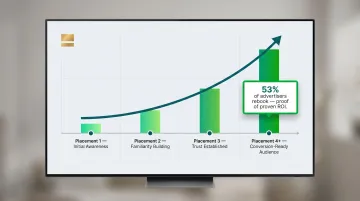
Newsletter advertising requires repetition to build brand recognition among an audience that doesn't yet know you. A single issue placement is insufficient to evaluate the channel. It takes consistent exposure over multiple issues to build the trust that converts readers into customers.
Publishers report 53% year-over-year increase in sponsorship rebooking, indicating that advertisers see value in sustained campaigns. Commit to at least 2-3 placements before making channel decisions.
Conclusion
Effective newsletter advertising isn't complicated — but it does require getting three things right: picking the right publication for your audience, writing copy that fits the reader's mindset, and measuring what actually matters rather than vanity numbers.
Most newsletter advertising failures stem from poor newsletter selection, mismatched offers, or premature conclusions drawn from single placements — not from the channel itself. Done right, newsletter advertising consistently outperforms social and display — House of Summary's placements, for instance, generate click-through rates 4x higher than Google AdWords.
That kind of performance depends on audience fit. For brands targeting global executives, finance professionals, or decision-makers in premium markets, House of Summary gives advertisers direct inbox access to over 500,000 subscribers across Presidential Summary, Geopolitical Summary, Dubai Summary, and London Summary — readers who are engaged, informed, and predisposed to act.
Frequently Asked Questions
How much does it cost to advertise in a newsletter?
Pricing depends on list size, engagement rate, niche, and placement — see newsletter advertising rate benchmarks for full data. CPM rates range from $15–$40 for consumer lifestyle newsletters to $50–$150+ for B2B decision-maker audiences. Flat sponsorship fees run $50–$250 for newsletters under 5,000 subscribers and $15,000–$50,000+ for lists above 500,000.
What makes a newsletter ad effective?
The most effective newsletter ads match the offer to the audience's specific interests, use clear AIDA-driven copy structure (Attention, Interest, Desire, Action), and include a single low-friction CTA. Audience fit matters more than creative polish — a simple ad in a perfectly matched newsletter will outperform a polished ad in a misaligned one.
How do I find the right newsletter to advertise in?
Look for newsletters whose readership profile matches your buyer persona, request engagement metrics (open rate, CTR) before committing, and prioritize editorially consistent publications over high-subscriber-count but low-engagement ones. Niche newsletters with engaged audiences deliver 3x higher CTRs than general-interest lists.
What is a good click-through rate for a newsletter ad?
Newsletter sponsorship CTR averages 0.2% when measured as unique clicks divided by total subscribers. Newsletter-level open-based CTRs range from 2–5% depending on industry and audience type. Niche newsletters targeting specific professional audiences regularly reach 6%+ CTR.
Should I use a lead magnet or a direct product pitch in my newsletter ad?
For audiences unfamiliar with your brand, lead magnets generate more engagement with lower friction — free guides, trials, and case studies outperform direct purchase asks. Direct pitches work better for retargeting warm audiences or when the brand already has awareness. Match the offer type to where the reader is in the buyer journey.
How do I measure the success of my newsletter ad campaign?
Track cost per acquisition, landing page conversion rate, lead quality, and return on ad spend — not just CTR. Set up UTM parameters and dedicated landing pages before the campaign goes live. Then compare newsletter leads against other channels using close rate and customer lifetime value.