: Complete Guide](https://file-host.link/website/houseofsummary-bjb54o/assets/blog-images/cfff73c8-516c-497b-8b34-ee6d828c0423/1776106816335470_72d25bd2ff864a26b2807f1ca1aeb673/360.webp)
Introduction
Digital advertising is getting harder. Ad blockers now suppress 32.5% of display impressions in the US, algorithm changes have throttled Facebook organic reach to roughly 1.5%, and banner blindness has become so severe that the average Google Display Network ad earns just a 0.46% click-through rate. For marketing decision makers and media buyers trying to hit ROI targets, traditional digital channels are delivering diminishing returns.
Community newsletters represent a distinct opportunity: inbox-direct placements that bypass ad blockers, algorithm suppression, and visual clutter. Because subscribers actively opt in, they approach newsletter content — including ads — with higher baseline attention than passive social media scrollers.
This guide covers the full picture: ad formats, copy strategy, newsletter selection, pricing, and measurement. It's written for marketing leaders, media buyers, and brand managers looking to diversify their paid media mix with a channel that reaches engaged, opted-in audiences.
TLDR:
- Newsletter ads bypass ad blockers and deliver directly to inboxes, guaranteeing impression delivery
- Newsletter CTRs average 2-5% — 4-10x higher than display ads (0.46%) and social ads (0.52-0.90%)
- Native sponsorships drive 18% higher purchase intent than display banners
- Pricing ranges from $15-$35 CPM for broad consumer lists to $50-$150+ for specialized B2B audiences
- Success depends on audience alignment, editorial quality, and rigorous UTM tracking
What Are Digital Ads in Community Newsletters?
Community newsletters are permission-based email publications serving specific audience segments defined by geography, profession, topic interest, or lifestyle. Unlike social media feeds or web browsing, subscribers actively opt in—meaning they've invited the content into their inbox and approach it with intent rather than passive scrolling.
Digital ads in community newsletters are paid placements integrated directly into the email itself. They appear in the reader's inbox alongside editorial content, not on a webpage where they can be blocked, skipped, or ignored. That structural difference matters: while display ads load on third-party sites and can be suppressed by ad blockers or buried by visual clutter, newsletter ads are delivered as part of the content package the reader requested.
Newsletter Ads vs. Mass Email Blasts
That structural advantage only holds when the underlying audience is the right one. Newsletter advertising earns its results through editorial trust and audience specificity—not raw list size. A curated newsletter with 10,000 engaged professionals in a specific industry will outperform a generic promotional blast to 100,000 cold contacts. Here's why:
- Readers subscribe because they trust the publisher's editorial judgment
- That trust transfers to the advertisers the publisher selects
- Engaged, opt-in audiences act on recommendations; cold lists rarely do
Why Community Newsletter Ads Outperform Other Channels
The Inbox Advantage
Newsletter ads are delivered directly to subscribers who invited the content into their inbox. This structural advantage means:
- No ad blockers: 32.5% of US internet users block web ads, but email newsletters bypass browser extensions entirely
- No algorithm suppression: Unlike social platforms that throttle organic reach and limit outbound link visibility, email delivery is direct
- No visual clutter: Newsletter ads appear in a linear reading environment, not competing with endless sidebar banners or auto-play videos
Audience Intent and Trust
Newsletter subscribers read because they chose to. This creates a different engagement dynamic:
- Higher attention baseline: Email read times average 10-13 seconds, compared to just 6.5 seconds Gen Z spends on a social media post
- Readers who trust a newsletter's editorial voice approach ads with far less skepticism than they bring to social media interruptions
- Subscribers arrive pre-primed: a finance newsletter reader is already thinking about money, and a geopolitics reader is already in a business and global affairs frame of mind
Click-Through Rate Performance
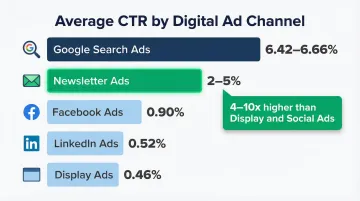
Newsletter ads consistently achieve 2-5% CTRs, compared to:
- Google Display Network ads average 0.46% CTR
- LinkedIn Sponsored Content averages 0.52% CTR
- Facebook ads average 0.90% CTR
House of Summary's newsletter ads deliver click-through rates 4x higher than Google AdWords, according to BSH Hausgeräte CEO Faik Serkan Ergun. This performance gap reflects both the structural advantages of inbox delivery and the quality of opted-in, high-intent audiences.
| Channel | Average CTR | Key Advantage |
|---|---|---|
| Google Search Ads | 6.42-6.66% | Highest intent, but expensive |
| Newsletter Ads | 2.00-5.00% | High engagement, trusted environment |
| Facebook Ads | 0.90% | Broad reach, fleeting attention |
| LinkedIn Ads | 0.52% | B2B targeting, low click engagement |
| Display Ads | 0.46% | Severe banner blindness |
Contextual Alignment
Ads placed in specialist newsletters reach readers in the exact mindset relevant to your offer. A luxury brand advertising in a global news digest read by executives benefits from both demographic fit and contextual relevance—readers are already consuming serious, professionally relevant content.
Longevity of Impression
Newsletters are often read in full, bookmarked, or forwarded, giving advertisers extended exposure well beyond a single page view. Unlike a social media ad that vanishes from the feed in seconds, a newsletter ad stays in the inbox until the reader actively removes it. That extended dwell time translates directly into stronger message recall.
Types of Digital Ads You Can Run in Community Newsletters
Sponsored Content / Native Ads
The advertiser's message is written in the same editorial tone as the newsletter, matching the newsletter's editorial voice and format. This performs well in high-trust publications because it draws on the publisher's credibility.
What it looks like:
- Branded byline or sponsor label
- Editorial-style copy addressing reader interests
- Contextual explanation of the product/service
- Clear CTA link
Native ads generate 53% higher attention and 18% higher purchase intent compared to standard display banners. By matching the newsletter's tone and format, native placements bypass banner blindness entirely.
Display Banner Placements
Image-based ads positioned in the header, body, or footer of the newsletter. These follow standard email design conventions:
- Typical width: 600 pixels (the email industry standard)
- Mobile optimization: Essential, as 42-55% of emails are opened on mobile devices
- Best use cases: Brand awareness campaigns, product launches, visually driven consumer products
One technical trap to watch: Gmail clips emails exceeding 102KB, hiding bottom-placed ads and preventing tracking pixels from firing. Request placements higher in the newsletter to avoid being cut off.
Dedicated Sends / Solo Emails
The advertiser sponsors an entire issue or receives a standalone send to the subscriber list. This premium format delivers:
- 100% share of voice
- Full editorial control
- Maximum reader attention
- Typically costs 2-5x standard inline placements
When it makes sense: Product launches, event promotions, or announcements requiring extended messaging that can't fit into a standard ad unit.
Classified or Short-Form Listings
Brief text ads used in digest-style newsletters where multiple advertisers appear in a "recommendations" or "partners" section.
Appropriate use cases:
- Event announcements
- Software tool launches
- Niche product promotions
- Resource recommendations
Format difference: These are typically 1-2 sentences with a link, not full editorial write-ups. Set reader expectations accordingly—this is a mention, not a deep dive.
Custom Bundled Packages
Many premium newsletters offer custom packages combining formats—for example, a native write-up + banner placement + social media mention. Bundled placements often deliver better cost-per-impression value than buying formats individually, and they reach the same audience through several different moments in one campaign.
How to Write Ad Copy That Works in a Newsletter
Lead with Reader Value, Not Brand Ego
Newsletter readers are conditioned to skip content that feels like an interruption. Effective newsletter ad copy mirrors the informative, useful tone of the editorial content around it.
Structure:
- Open with a problem, insight, or question that resonates with the audience
- Introduce your solution in context of that problem
- Explain the specific benefit or outcome
- Close with a clear, single CTA
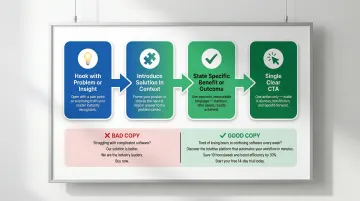
Bad: "XYZ Corp: Award-Winning Automation Solutions for Enterprise Teams."
Good: "Manual data entry costs finance teams 8+ hours per week. XYZ automates reconciliation in minutes—here's how it works."
Keep It Focused and Direct
A newsletter ad has one job: earn the click. Unlike a landing page where you can explain multiple features, newsletter copy should:
- Anchor everything to one clear CTA — not two, not three
- Use short paragraphs (2-3 lines maximum)
- Lead with a headline that telegraphs the benefit, not just the brand name
- Keep body copy under 60 words when possible
Example:
- Headline: "Cut reporting time by 60% with automated dashboards"
- Body: Brief explanation of the problem and how the product solves it
- CTA: "See how it works →"
Match the Audience's Sophistication
Readers of specialized newsletters — finance, geopolitics, business — are informed and skeptical. Generic, promotional copy undermines trust fast.
Research before writing:
- Read 3-5 recent issues of the newsletter
- Note the editorial tone, vocabulary level, and formatting style
- Write at the same level of sophistication
If the newsletter uses dry, direct language, match it. If it uses conversational asides, do the same. The best-performing newsletter ads are often indistinguishable in tone from the editorial content surrounding them — they earn attention rather than interrupting it.
How to Choose the Right Community Newsletter for Your Brand
Audience Alignment Over Raw Reach
A smaller newsletter with a tightly defined, high-intent audience will outperform a large general list for most B2B and premium B2C advertisers.
Key questions to ask:
- Who reads this newsletter? (Job titles, industries, demographics)
- What is their professional or lifestyle profile?
- Why did they subscribe? (What problem does the newsletter solve for them?)
A newsletter reaching 5,000 CFOs is more valuable to a financial software company than one reaching 50,000 general business professionals.
Evaluate Editorial Quality and Reader Trust
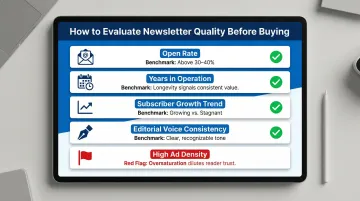
The newsletter's credibility directly transfers to your ad. Look for these signals:
- Open rates above 30-40%, which signals an actively engaged list
- Years in operation — longevity indicates consistent reader value
- Subscriber growth trend (growing vs. stagnant lists tell very different stories)
- A clear, consistent editorial voice that readers recognize and trust
Newsletters that verify content before publishing build readerships that act on recommendations. House of Summary, for example, verifies every story before it reaches inboxes — a standard that translates into click-through rates averaging 4x higher than Google AdWords for advertisers.
Assess Topic-Audience Fit
The most effective newsletter ads appear in publications where the subject matter naturally leads readers toward your category.
Examples:
- A luxury brand advertising in a global news digest read by executives benefits from both demographic fit and contextual relevance
- A financial services company advertising in a geopolitics newsletter reaches decision-makers already thinking about global markets
- A professional services firm advertising in a city-specific lifestyle newsletter (like Dubai Summary or London Summary) reaches affluent local audiences in the right geographic and contextual mindset
Once you've confirmed the audience and topic fit, the next step is verifying that the publisher can back their claims with real performance data.
Ask for Transparency on Performance Metrics
Legitimate newsletter publishers should share:
- Average open rate (though note that Apple Mail Privacy Protection has inflated this metric)
- Average CTR for past ad placements
- Subscriber demographics (job titles, industries, locations)
- List growth data (monthly subscriber additions/losses)
Questions to request before buying:
- What is your average ad CTR over the past 90 days?
- Can you share case studies or testimonials from similar advertisers?
- What percentage of your list is actively engaged (opened in the last 30 days)?
- How do you verify and clean your subscriber list?
Consider Exclusivity and Ad Load
Newsletters that limit the number of advertisers per issue protect ad visibility and reader experience. High ad density dilutes attention and signals a publisher prioritizing revenue over quality.
Red flags to watch for:
- 5+ ads in a single issue with no editorial content between them
- Overly promotional tone that dominates the reading experience
- No stated policy on advertiser fit or content standards
A well-run newsletter limits placements to 1-2 advertisers per issue, maintains clear separation between editorial and sponsored content, and turns down advertisers that don't fit the audience. That selectivity is a feature, not a limitation — it's what keeps the readership engaged.
How to Measure the Success of Your Newsletter Ad Campaign
Primary Metrics to Track
Click-Through Rate (CTR): The core engagement signal. Calculate as (clicks ÷ emails delivered) × 100. Well-targeted newsletter ads typically achieve 2-5% CTR, well above display and social averages.
Conversion Rate: Percentage of clicks that result in your desired action (sign-up, purchase, demo request). Track this in your analytics platform using UTM-tagged URLs.
Cost-Per-Click (CPC) or Cost-Per-Acquisition (CPA): Divide total ad spend by clicks or conversions to evaluate efficiency against other channels.
Setting Up UTM Parameters for Tracking
Use Google Analytics 4's required UTM structure:
- utm_source: Newsletter name (e.g.,
presidentialsummary) - utm_medium: Channel (always
email) - utm_campaign: Specific promotion (e.g.,
q4_product_launch)
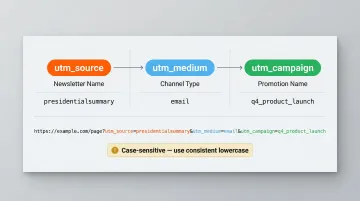
Example URL:
https://yoursite.com/landing-page?utm_source=presidentialsummary&utm_medium=email&utm_campaign=q4_product_launch
Critical: UTM parameters are case-sensitive. utm_source=Email and utm_source=email will create separate tracking rows. Use consistent lowercase formatting.
Secondary Signals
While UTM-tracked clicks are primary, also monitor:
- Open rate: If the publisher shares it (though Apple MPP has inflated this metric)
- Forward/share rate: Indicates brand awareness impact
- Direct traffic spikes: Check your analytics for traffic increases around send dates
These signals help measure brand awareness even when direct attribution is difficult. Once you have a clear measurement baseline, the next step is using that data to improve performance.
Optimization Over Time
Your first placement is data collection. Vary one element at a time:
- Test different headlines
- Try different CTAs (e.g., "Learn more" vs. "Get started")
- Experiment with offer positioning
Request performance data from the publisher after each placement before committing to long-term packages. Many publishers offer volume discounts for multi-month packages — worth pursuing once you've validated baseline performance.
If performance stays below 2% CTR after testing, revisit your creative, offer, or audience fit before scaling spend.
Frequently Asked Questions
What should a community newsletter include?
A strong community newsletter typically includes timely editorial content (news, stories, resources), clear calls to action, and—for monetized publications—a small number of well-matched ads or sponsored sections that complement rather than disrupt the reading experience.
What are some popular digital newsletter services?
Widely-used newsletter platforms include Beehiiv, Substack, Kit (ConvertKit), and Mailchimp. For advertisers, the platform matters less than the quality of the audience and the publisher's editorial standards—focus on readership engagement and content quality rather than the underlying technology.
What are some examples of digital ads?
The main formats are sponsored/native content (editorial-style placements), display banners (image-based ads), dedicated email sends (solo sponsorships), and short-form classified listings. In newsletter advertising, native and sponsored formats typically outperform banner-only placements because they match the surrounding editorial content and feel less intrusive to readers.
How much does it cost to advertise in a community newsletter?
Pricing varies widely based on list size, niche, and format—from a few hundred dollars for a small curated digest to several thousand for a premium placement in a large, specialized newsletter. Broad consumer newsletters charge $15-$35 CPMs, while hyper-targeted B2B newsletters command $50-$150+ CPMs.
What is a good click-through rate for newsletter ads?
Well-targeted newsletter ads in quality publications typically achieve 2-5% CTR, significantly outperforming display ads (0.46%) and social media ads (0.52-0.90%). Industry benchmarks vary by niche, but newsletter advertising consistently delivers 4-10x higher engagement than traditional digital channels.
Are newsletter ads better than social media ads?
Newsletter ads reach opted-in audiences with no ad blockers, no algorithm interference, and stronger contextual trust—advantages that matter most for high-intent or premium audiences. Social media offers broader reach and real-time targeting. The two channels serve different roles; newsletters consistently outperform on engagement for decision-makers in editorial environments.