Introduction
Reaching professional and executive audiences remains one of the most challenging objectives in digital advertising. Most advertising channels are designed for volume and mass reach, but executives filter aggressively, scroll less, and maintain high defenses against generic digital noise. Research from Backlinko shows that 43% of internet users employ ad blockers, with adoption rates notably higher among high-income professionals who engage with content on their own terms.
The platforms that work for general consumer targeting often fail with senior decision-makers, finance professionals, and global executives. Standard metrics like impressions and reach become misleading when the audience ignores most of what they see.
This article breaks down the platforms best suited for reaching professional audiences — covering LinkedIn, premium newsletters, programmatic display, and contextual channels — based on where executives actually give their attention.
Key Takeaways
- LinkedIn Ads offers the most precise targeting by verified job title, seniority, and company — ideal for B2B campaigns
- Google Ads captures executives during active research, bridging brand awareness and purchase intent
- Newsletter advertising lands directly in the inbox with click-through rates 4x higher than Google AdWords — and no algorithm filtering the audience
- Microsoft Advertising reaches older, higher-income demographics with unique LinkedIn Profile Targeting capabilities
- For scale, programmatic platforms place ads across premium publishers — useful when breadth matters as much as precision
Why Professional and Executive Audiences Are Harder to Reach
Professional and executive audiences don't behave like general consumers. They read selectively, guard their time closely, and are deeply skeptical of broad consumer advertising. Premium editorial content — trade publications, newsletters, business news, curated briefings — is where they actually spend attention.
Key characteristics of executive media consumption:
- Prioritize trusted sources over social discovery
- Read business news, financial publications, and industry journals
- Subscribe to curated newsletters rather than browsing open web
- Use ad blockers at rates 2-3x higher than general population
- Filter content based on relevance and source credibility
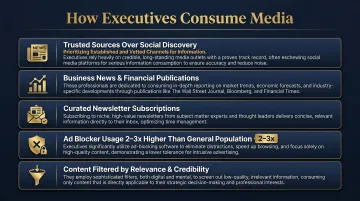
Standard advertising metrics like impressions and engagement rates mislead when targeting this audience. A campaign generating 500,000 impressions across consumer social platforms may deliver less actual attention than 5,000 newsletter opens from verified executives. Platform selection, ad context, and editorial environment matter more for executive audiences than raw reach numbers.
Volume is easy to find. Channels where executives are genuinely paying attention are not.
Best Advertising Platforms for Reaching Professional and Executive Audiences
These platforms were selected based on four criteria:
- Relevance to professional and executive targeting
- Targeting precision for job function, seniority, and industry
- Audience quality verified through platform data or editorial opt-in
- Demonstrated use by B2B and luxury-segment advertisers
Each offers a distinct path to decision-makers — the right choice depends on where your audience's attention actually is.
LinkedIn Ads
LinkedIn has over 1 billion members globally and is the only major platform where users self-report verified professional identity. Job title, company, seniority, industry, and years of experience are all accessible as targeting parameters. LinkedIn reports that 4 out of 5 members drive business decisions, giving B2B advertisers direct access to the people who control budgets and sign contracts.
Why it stands out for professional audiences:
Sponsored Content, Message Ads, and Lead Gen Forms allow advertisers to reach verified C-suite and VP-level professionals by function and decision-making role. Unlike other platforms that infer professional status from behavioral signals, LinkedIn's data is self-declared and continuously updated as users advance in their careers.
| Targeting Capabilities | Job title, seniority, company size, industry, years of experience, LinkedIn group membership |
|---|---|
| Ad Formats | Sponsored Content, Message Ads (InMail), Dynamic Ads, Document Ads, Lead Gen Forms |
| Best Fit For | B2B brands, professional services, luxury and high-value offers targeting decision-makers |
Google Ads
Google Ads captures professionals in active research mode. Executives searching for solutions, vendors, market data, or competitive intelligence are highly reachable through intent-based keyword targeting on Search and through premium placements on the Google Display Network. According to Google's research, 71% of B2B researchers start their research with generic search, making search the primary discovery channel for professional buyers.
Why it stands out for professional audiences:
Custom Intent audiences and Customer Match allow advertisers to layer job-function signals on top of search behavior. This combination of intent and identity reaches executives at the moment they're actively seeking solutions — not when they're passively browsing.
| Targeting Capabilities | Keyword intent, custom audiences, demographic layering, customer match, in-market segments |
|---|---|
| Ad Formats | Search ads, Display ads, YouTube pre-roll, Performance Max, Gmail Sponsored Promotions |
| Best Fit For | Brands targeting executives who are actively searching for solutions, vendors, or market insight |
Newsletter Advertising
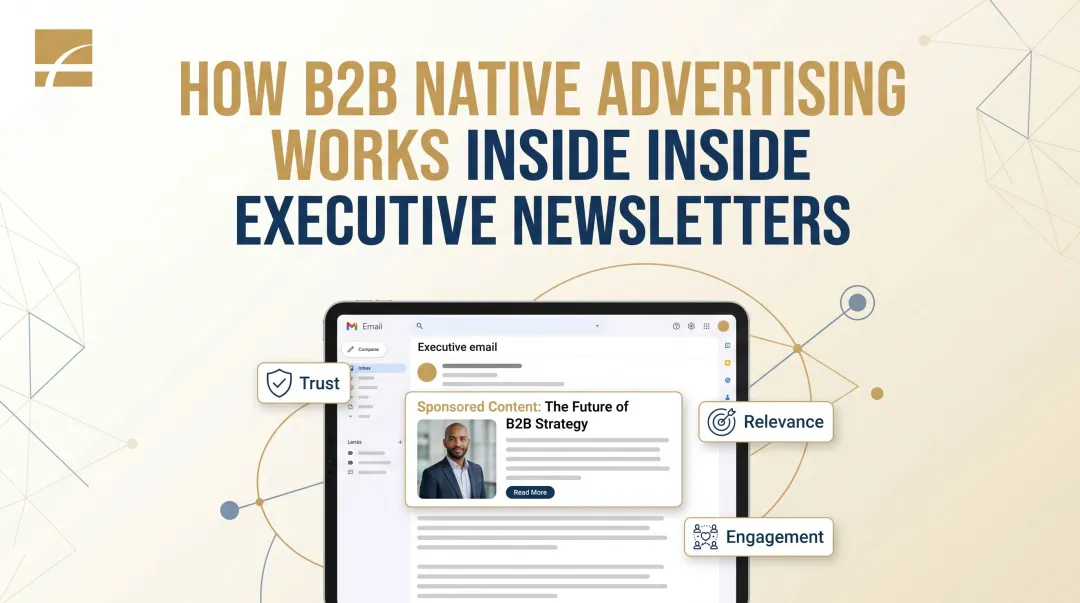
Newsletter advertising places brand messages directly inside editorial content that professional and executive readers have opted into receiving. Unlike display or social ads, newsletter ads land in the inbox, face no algorithmic suppression, and cannot be blocked by ad blockers.
House of Summary's network — Presidential Summary, Geopolitical Summary, Dubai Summary, and London Summary — reaches 500,000+ subscribers: senior professionals and global decision-makers. Advertisers on the network report click-through rates 4x higher than Google AdWords.
What sets newsletter advertising apart:
The editorial context of premium newsletters signals credibility by association. A brand appearing in a curated briefing read by executives is perceived differently than a banner ad on an open web page. Inbox placement ensures undivided attention in a low-clutter environment, and readers have actively chosen to receive the content, making them more receptive to relevant advertising messages.
Newsletter advertising benefits:
- Bypasses ad blockers entirely (email-based delivery)
- No algorithmic filtering or suppression
- High attention environment with minimal visual clutter
- Editorial credibility transfers to advertiser brand
- Direct access to verified professional audiences
| Targeting Capabilities | Audience niche by publication topic (global news, geopolitics, business, regional markets), reader geography, and editorial alignment |
|---|---|
| Ad Formats | Inline sponsored content, dedicated placements, branded mentions within editorial newsletters |
| Best Fit For | Luxury brands, finance sector, professional services, and B2B advertisers targeting globally mobile executives and informed readers |
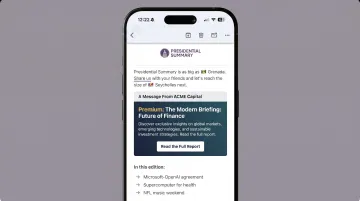
House of Summary offers premium advertising placements across its network, with custom campaign configurations available through sales@houseofsummary.com.
Microsoft Advertising (Bing)
Microsoft Advertising reaches users on Bing, Yahoo, AOL, and partner networks. While Bing's search volume is smaller than Google's, its user demographic skews meaningfully older, higher-income, and more professionally senior. According to Backlinko's research, Bing users have 35% higher household income than the average internet user, making it particularly effective for targeting affluent professionals and executives.
Why it stands out for professional audiences:
Microsoft Advertising's LinkedIn Profile Targeting feature is a genuine differentiator. It allows advertisers to layer LinkedIn job function, industry, and company data directly onto Bing search campaigns, combining search intent with professional identity. No other search platform offers this integration.
| Targeting Capabilities | Keyword targeting + LinkedIn Profile Targeting (job function, industry, seniority, company) |
|---|---|
| Ad Formats | Search ads, Shopping ads, Audience ads (native display) |
| Best Fit For | B2B advertisers who want professional demographic precision at lower CPCs than Google |
Programmatic Advertising (The Trade Desk)
Programmatic platforms like The Trade Desk allow advertisers to buy ad inventory across thousands of premium publisher websites — including financial publications, business news, trade journals, and editorial sites that executive audiences actively consume. eMarketer reports that programmatic ad spending reached $163 billion in 2024, with B2B programmatic advertising delivering sharper audience targeting and more precise contextual placement than ever before.
Why it stands out for professional audiences:
Premium private marketplace deals allow brands to serve ads exclusively within high-trust editorial environments. Rather than open-exchange inventory, advertisers can target executives by site category, content context, and verified third-party audience segments. This ensures brand messages appear alongside trusted business journalism, not user-generated content or low-quality sites.
| Targeting Capabilities | Contextual targeting, site allowlists, third-party audience segments, account-based marketing (ABM) data integration |
|---|---|
| Ad Formats | Display, native, video, connected TV (CTV), audio |
| Best Fit For | Enterprise advertisers and agencies running multi-channel campaigns targeting senior professionals across premium digital publishers |
How We Chose These Platforms
Platform selection for executive audiences requires a two-part framework. First, does the platform offer meaningful targeting precision for professional and executive audiences beyond broad demographics? Second, does the platform place ads in an environment that earns attention rather than interrupts it?
Why This Distinction Matters
High-trust, low-clutter contexts perform differently than high-volume, algorithm-driven feeds. An executive reading the Financial Times or opening their daily newsletter is in a different cognitive state than someone scrolling Instagram. The editorial environment signals that the content — including advertising — has been vetted and is worth attention.
Common Advertiser Mistakes
Many advertisers select platforms based on general reach or familiarity, defaulting to Meta or TikTok because of their massive user bases. Volume alone misleads when audience quality is the priority. Research shows that TikTok users skew 62% female and 60% under age 30 — demographics that rarely overlap with C-suite decision-makers.
Platform Combination Strategy
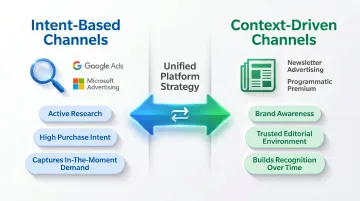
The most effective campaigns combine intent-based channels (Google, Microsoft) with context-driven channels (newsletters, programmatic premium placements). Intent channels capture executives during active research, while context channels build brand awareness in trusted editorial environments. Each platform evaluated below was scored against both criteria.
Conclusion
The right channel for executive audiences isn't the largest one — it's the one where decision-makers are already paying deliberate attention: curated newsletters, business publications, and active research moments.
Before allocating budget, map where your target executive spends deliberate reading time — not passive scrolling time. That distinction separates platforms that deliver results from those that merely generate impressions.
If that deliberate-reading environment is where you want your brand, House of Summary offers advertising placements across a curated network of newsletters covering global news, geopolitics, and business — reaching 500,000+ professional subscribers. To explore placement options, contact sales@houseofsummary.com.
Frequently Asked Questions
Which platform is best for reaching a professional audience?
LinkedIn Ads is the most widely used platform for professional targeting due to verified job-title data. Newsletter advertising and Microsoft Advertising with LinkedIn Profile Targeting also offer strong precision — often with less competition and better engagement in editorial contexts.
What is a platform in advertising?
An advertising platform is a digital or media channel through which brands purchase access to audiences. Platforms range from search engines and social networks to programmatic exchanges and newsletter networks, each using different pricing models and targeting methods.
What are the top social media platforms for reaching professionals?
LinkedIn dominates among social platforms for professional and executive audiences. Facebook and Instagram offer broad reach but lack verified professional identity targeting. X (Twitter) has a disproportionately news-engaged audience but lacks LinkedIn's demographic precision for job-function targeting.
Why is LinkedIn considered the best platform for executive targeting?
LinkedIn is the only major platform where users self-declare their professional identity: job title, company, seniority, and industry. That means you can target VP-level or C-suite audiences by function directly, rather than inferring professional status from behavioral proxies that are less reliable.
Is newsletter advertising effective for reaching C-suite executives?
Newsletter advertising consistently delivers higher engagement for professional audiences. Readers have actively opted in, the inbox is free from algorithmic interruption, and ads cannot be blocked. For executive targeting, that combination is hard to match on any other channel.
How do I measure ROI when advertising to a professional audience?
Evaluate professional campaigns on lead quality: seniority, pipeline contribution, and deal size — not just CTR and CPL. Executive audiences convert more slowly but at higher values, so a longer attribution window and CRM-connected tracking are essential for accurate ROI measurement.