
Introduction
Sponsored content budgets are growing — but the wrong platform wastes every dollar of them. Brands routinely pour money into high-reach channels only to find their content ignored, scrolled past, or blocked entirely. The tool you choose doesn't just determine where your content appears; it determines whether it converts.
Sponsored content performs differently depending on the channel. A LinkedIn feed, a publisher's article page, and an email inbox each attract readers in fundamentally different mindsets. Audience size matters far less than audience intent. High-reach campaigns that land in front of distracted or indifferent readers produce impressions — not pipeline.
Newsletter advertising is seeing a measurable shift in budget allocation. Digiday reported that newsletter-focused publishers continued posting double-digit year-over-year ad revenue growth even during broader market slowdowns — a signal that inbox-delivered content is earning serious media budget.
This article evaluates the best tools across the major sponsored content categories: social ad managers, native advertising networks, content research platforms, and newsletter placements — so you can match the right tool to your actual campaign objective.
Key Takeaways
- Sponsored content tools span four channel types: social ad managers, native networks, content research platforms, and newsletter advertising
- LinkedIn Campaign Manager is the strongest B2B option; Meta Ads Manager leads for broad consumer reach
- Outbrain places sponsored content on premium publisher sites including CNN, WSJ, and The Guardian
- BuzzSumo helps marketers validate content angles and identify publishers before committing budget
- House of Summary reaches opted-in inboxes with no algorithms or ad blockers, posting CTRs 4x higher than Google AdWords
What Are Sponsored Content Tools and Why Do They Matter?
Sponsored content tools are platforms that help brands plan, place, manage, and measure paid content that appears natively within a channel — whether a social feed, a news site, or an email inbox. They're distinct from traditional display advertising tools because the content is designed to match the format and editorial context of its environment, not interrupt it.
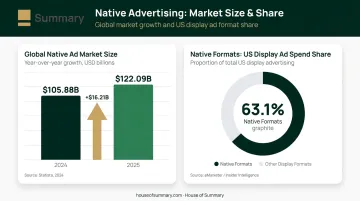
The market behind these tools is substantial. According to Grand View Research, the global native advertising market was estimated at $105.88 billion in 2024 and projected to reach $122.09 billion in 2025. Meanwhile, eMarketer estimates that native formats now account for 63.1% of total US display ad spend — a figure that reflects how completely content-integrated advertising has replaced traditional banner formats.
That scale spans multiple channels. Social media accounts for the largest slice, but publisher networks, email newsletters, and branded editorial placements are each capturing meaningful budget as marketers diversify away from social feed dependency.
Sponsored content now spans social, publisher, and inbox environments. The tools below are evaluated across each category on four criteria:
- Audience quality — who you're reaching and how engaged they are
- Targeting precision — how granularly you can define your audience
- Reporting depth — what performance data you get back
- Editorial fit — how well the platform supports native, content-style placements
Best Tools for Sponsored Content and Marketing
Tools were selected based on five criteria: audience reach and quality, targeting precision, content format flexibility, analytics depth, and cost-effectiveness for sponsored content specifically — not general advertising performance.
LinkedIn Campaign Manager
LinkedIn Campaign Manager is the native ad platform for LinkedIn's professional network of more than 1.3 billion members. Sponsored Content formats include single image, video, carousel, and document ads placed directly in the professional feed.
The targeting depth is what makes it valuable for sponsored content. Reach audiences by job title, seniority, industry, company size, and LinkedIn Groups — making it the strongest available tool for reaching decision-makers with thought leadership, case studies, or product education content.
| Details | |
|---|---|
| Best For | B2B marketers, SaaS brands, professional services, finance, and consulting sectors targeting decision-makers |
| Key Features | Sponsored Content, Message Ads, Lead Gen Forms, demographic targeting across 20+ professional attributes, campaign analytics |
| Pricing | Minimum daily budget of $10; Hootsuite's 2025 LinkedIn ads guide places CPC around $5.26–$6.59, though costs vary by audience, bid type, and objective |
The trade-off is cost. LinkedIn CPC runs significantly higher than Meta. Frame it as a precision channel — you're paying for verified professional context, not raw volume.
Meta Ads Manager
Meta Ads Manager is the central platform for running sponsored content across Facebook and Instagram, supporting feed posts, Stories, Reels, and carousel ads that reach billions of users across demographics and geographies.
Its core differentiator is audience sophistication. Interest- and behavior-based targeting, lookalike audiences built from your own customer data, and robust A/B testing infrastructure make it the best tool available for iterating sponsored content creatives at scale.
| Details | |
|---|---|
| Best For | B2C brands, e-commerce, lifestyle, consumer goods, and brands targeting broad demographic segments across age, interest, and geography |
| Key Features | All Meta ad formats, custom and lookalike audiences, A/B testing, detailed conversion tracking, cross-placement campaign management |
| Pricing | Flexible budget model; Hootsuite reports a 2024 average Facebook CPM of $5.61, with 2026 planning ranges of $5–$20 for Facebook and $5–$10 for Instagram; minimum budgets vary by country, objective, and bid strategy |
Outbrain
Outbrain is a native advertising network that places sponsored content as "recommended articles" on premium publisher sites — including CNN, Fast Company, Time, MSN, The Wall Street Journal, and The Guardian. Advertisers reach engaged readers inside editorial environments rather than social feeds.
That context matters. Readers on publisher sites are typically in a reading-intent mindset rather than a passive scroll. Outbrain's SmartBid automation and contextual targeting tools help optimize campaigns toward performance, while Nielsen's 2023 emerging media research identifies brand recall as the leading driver of brand lift — a metric that editorial-context placements tend to support well.
| Details | |
|---|---|
| Best For | Brands running long-form sponsored articles, thought leadership, or awareness campaigns needing placement on reputable publisher sites |
| Key Features | Native content recommendations on premium publishers, SmartBid automation, contextual and behavioral targeting, content performance analytics |
| Pricing | CPC-based pricing; Outbrain's official campaign creation flow recommends starting Traffic campaigns at $0.65–$0.85 CPC; minimum monthly budget of $600 ($20/day equivalent) |
BuzzSumo
BuzzSumo is a content intelligence platform — not an ad-buying tool. Its role in sponsored content is upstream: helping marketers figure out what to say, where to say it, and who to approach for placement before a single dollar goes to distribution.
Specifically, it lets you identify trending topics, analyze which content formats drive the most engagement in your category, track competitors' sponsored posts, and discover publishers and influencers whose audiences align with your campaign goals.
| Details | |
|---|---|
| Best For | Content strategists, agencies, and media buyers who need research-driven insights before selecting platforms or drafting sponsored content briefs |
| Key Features | Content trend analysis, competitor content tracking, influencer and publisher discovery, backlink research, keyword-based content alerts |
| Pricing | Content Creation plan starts at $199/month billed yearly (per BuzzSumo's official pricing page) |
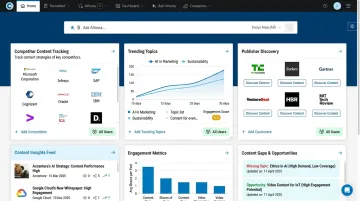
The value is in reducing wasted spend. Choosing a content angle and distribution channel based on data — rather than assumption — produces stronger results, especially for campaigns where production costs are significant. Once the research is done, the next question is where to place the content for maximum impact.
House of Summary
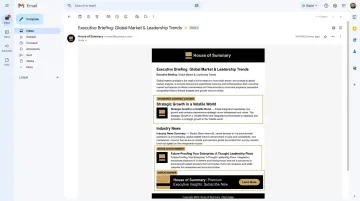
House of Summary is a network of specialized newsletters — Presidential Summary, Geopolitical Summary, Dubai Summary, and London Summary — offering brands direct sponsored content placements inside opted-in email inboxes. The combined network reaches 500,000+ subscribers, with 254,866+ emails opened daily.
The audience skews professional: C-suite executives, founders, senior policy professionals, and high-net-worth individuals. Geographically, 66% of readers are US-based (concentrated in New York and Los Angeles), with additional audiences in the UAE (18%) and UK (10%).
What makes newsletter placements through House of Summary different from social or display:
- No algorithmic interference — every subscriber chose to receive the newsletter
- No ad blockers — email-delivered ads are immune to browser-based blocking, which eMarketer reports affects 32.8% of internet users worldwide
- No visual competition — placements appear inline with editorial content, not alongside a dozen other ads
- Direct format options — sponsored editorial content, native ads, display banners, and full-issue takeover packages are all available
BSH Hausgeräte's CEO Faik Serkan Ergun reported that a Dubai Summary campaign delivered click-through rates 4x higher than Google AdWords. He attributed the result to editorial tone alignment and the quality of the newsletter's audience.
Sponsored content in House of Summary newsletters is written in the natural voice of each publication, with editorial disclosure. Formats that work particularly well include luxury brand storytelling, fintech product positioning, and B2B brand narratives that benefit from context rather than a banner.
| Details | |
|---|---|
| Best For | Finance brands, luxury brands, B2B companies, and marketers targeting global executives and business decision-makers who want high-intent, inbox-delivered sponsored content |
| Key Features | Sponsored editorial content, native ads, display banners, full-issue takeovers; opted-in audience; no ad blockers; inbox-direct delivery; post-campaign reporting on opens, clicks, and demographics |
| Pricing | Contact sales@houseofsummary.com for placement rates, media kits, and availability across newsletter properties |
How We Chose the Best Sponsored Content Tools
These tools were assessed specifically for sponsored content fitness — not general marketing software utility. The focus was on how well each tool places content natively within a trusted environment, reaches a relevant audience, and drives measurable engagement beyond impressions.
The Intent vs. Reach Mistake
The most common error marketers make when selecting sponsored content tools is prioritizing platform audience size over audience intent. A tool that reaches 50 million disengaged users will consistently underperform compared to a smaller channel where readers are actively consuming content in a relevant mindset.
eMarketer found that advertisers choose native inventory specifically to benefit from an engaged audience on a specific platform. That means placement context carries as much weight as targeting parameters — sometimes more.
Evaluation Criteria
Each tool in this list was assessed across four dimensions:
- Targeting precision — Can you reach the right professional or interest segment, not just a broad demographic?
- Content format flexibility — Does the platform support editorial-style placements, not just banner ads?
- Analytics depth — Can you measure engagement beyond clicks, including brand recall, time-on-content, or audience demographics?
- Channel trust — Are readers in a mindset to engage with content, or are they passively scrolling?
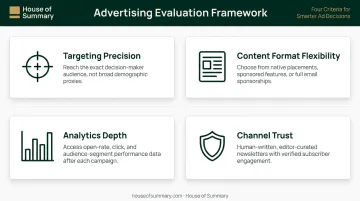
These criteria surface some counterintuitive rankings. A research tool like BuzzSumo belongs alongside ad-buying platforms for this reason. Newsletter inventory, despite smaller raw reach than social, consistently delivers higher time-on-content and click-to-open rates — the metrics that actually predict conversion.
Conclusion
The best sponsored content tool is the one that matches your audience's mindset to your content's format. Social platforms serve visual, broad-reach campaigns well. Native networks like Outbrain extend distribution into trusted editorial environments. Newsletter placements deliver focused, opted-in engagement — readers who chose to be there, without algorithms filtering who sees what.
Before consolidating budget into a single channel, pilot campaigns across two or three channel types and evaluate on engagement metrics — time-on-content, CTR, and conversions — rather than raw reach figures.
If that pilot includes a newsletter channel, House of Summary places sponsored content directly in the inboxes of global executives and business professionals — no ad blockers, no feed algorithms. Placements run alongside editorial content readers subscribed to read. Contact sales@houseofsummary.com to discuss placement options.
Frequently Asked Questions
What tools do content creators use?
Content creators typically combine research tools (BuzzSumo, Google Trends), creation tools (Canva, Jasper AI), distribution channels (social ad managers, newsletter platforms), and analytics (Google Analytics). The right combination depends on the channel they're producing for and whether the goal is organic reach or paid placement.
What are the 4 promotional tools?
The four classic promotional tools are advertising, personal selling, sales promotion, and public relations. Sponsored content bridges advertising and PR — it carries advertiser reach while borrowing editorial credibility, making it a hybrid that performs differently from either in isolation.
What is the 70/20/10 rule for social media?
The framework allocates 70% of posts to original value-driven content, 20% to curated or shared content, and 10% to promotional content. Sponsored content sits in that 10% bucket but performs best when it matches the quality of the 70% — native and newsletter formats are built around exactly that principle.
What is the 5/5/5 rule for social media?
The 5/5/5 rule is a community engagement guideline: respond to 5 comments, share 5 pieces of others' content, and engage with 5 new accounts daily. It applies to organic social management; sponsored content strategy is evaluated separately against reach, engagement rate, and conversion metrics.
What is the 50/30/20 rule for social media?
The 50/30/20 framework divides content into 50% educational or entertaining, 30% curated, and 20% promotional. Sponsored content performs best when it fits the educational 50% rather than reading like an ad — that's the core logic behind native and newsletter formats.