
The challenge isn't whether influencer marketing works. It's finding the right marketplace. Brands now have more platform options than ever, but choosing the wrong one — based on creator volume rather than audience fit, or missing integrations with their sales stack — is where most campaigns stall before they start.
This guide breaks down the top influencer marketplaces for sponsored content, what makes each one worth considering, and the criteria that actually matter when making the call.
Key Takeaways
- Influencer marketplaces connect brands with creators for paid sponsored content — cutting out manual outreach
- The best platform depends on your goals: audience type, content format, campaign scale, and budget all shape the right fit
- Social-native platforms like TikTok One suit discovery and reach; third-party platforms like Aspire, Grin, and Upfluence offer more control and multi-channel access
- Criteria that matter most: creator vetting quality, campaign management tools, pricing transparency, and audience alignment
- Newsletter placements, like those through House of Summary, offer a strong complement for brands reaching professional, high-intent audiences outside social media
What Is an Influencer Marketplace for Sponsored Content?
An influencer marketplace is a platform — either built into a social network or operated as a standalone tool — where brands discover, contact, and pay creators for sponsored content placements. Some marketplaces are native to a single platform (TikTok One); others operate across multiple channels simultaneously.
Sponsored content differs from traditional advertising because it's creator-produced, editorially styled, and native to the platform where it appears — making it read as content rather than an ad.
That format carries measurable weight. According to Nielsen's 2022 analysis of its Trust in Advertising study, 71% of consumers trust advertising, opinions, and product placements from influencers. A separate Matter study found that 69% of consumers are more likely to trust a recommendation from an influencer than information coming directly from a brand.
Each platform below was assessed on:
- Creator quality — depth and authenticity of available talent
- Audience targeting — how precisely you can reach specific segments
- Campaign tools — brief management, tracking, and reporting features
- Pricing — cost structure and value at different spend levels
Best Influencer Marketplaces for Sponsored Content
These platforms were evaluated across five dimensions:
- Creator network quality — size, authenticity, and niche coverage
- Audience targeting — filtering precision and demographic depth
- Campaign management — workflows, approvals, and payment handling
- Pricing accessibility — entry costs and contract flexibility
- Brand partnership track record — documented results and case studies
Aspire (AspireIQ)
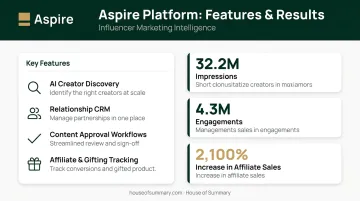
Aspire is a self-serve influencer marketing platform built for brands and agencies to discover, manage, and pay creators across Instagram, TikTok, YouTube, and Pinterest — with a clear emphasis on long-term brand-creator relationships rather than one-off campaigns.
What sets it apart is the combination of tools in a single workflow: AI-powered creator discovery, a built-in CRM for managing ongoing relationships, content approval workflows, and affiliate and gifting tracking. For brands running sustained sponsored content programs across multiple channels, that end-to-end infrastructure matters. One documented example: outdoor furniture brand Outer scaled from 50 to 300 influencers using Aspire, achieving 32.2M impressions, 4.3M engagements, and a 2,100% increase in affiliate sales.
| Attribute | Detail |
|---|---|
| Best For | Mid-to-large brands running multi-channel, ongoing influencer programs |
| Pricing | Not publicly disclosed; Capterra lists pricing starting at $2,499/user/month |
| Key Features | AI creator discovery, relationship management CRM, content approval workflows, affiliate and gifting tracking |
Grin
Grin is built specifically for e-commerce brands, with direct integrations into Shopify that connect influencer-driven content directly to sales data. Rather than tracking vanity metrics, Grin lets brands see the exact revenue each creator partnership generates.
Revenue attribution is what separates Grin from most platforms. Grin's ROI research reports an average 5.2x return on influencer spend, with the top 13% of marketers earning $20 or more per dollar. For DTC brands where performance accountability is non-negotiable, that precision matters.
| Attribute | Detail |
|---|---|
| Best For | E-commerce and DTC brands that need to connect influencer activity to product sales |
| Pricing | Not publicly disclosed; Capterra lists a Basic plan at $999/month |
| Key Features | Shopify integration, ROI tracking per creator, product seeding automation, contract management |
LTK (LikeToKnow.it)
LTK started as an affiliate link tool and evolved into a full creator commerce marketplace — with a curated network of lifestyle, fashion, home, beauty, and luxury creators who monetize through shoppable content. The audience is built around purchase intent, not passive scrolling.
The numbers support this. LTK reports 40M+ monthly global shoppers, over $5B in creator-driven sales in 2024, and a 3.1x conversion rate versus social ads. Brands set their own commission rates; LTK recommends around 14% to encourage organic creator linking. Self-serve pricing starts at $99/month (Launch tier), with Pro at $999/month and Enterprise at custom pricing.
| Attribute | Detail |
|---|---|
| Best For | Retail, fashion, beauty, and lifestyle brands targeting purchase-ready audiences |
| Pricing | Launch: $99/month; Pro: $999/month; Enterprise: custom |
| Key Features | Shoppable creator content, affiliate commission tracking, curated lifestyle creator network, campaign analytics |
TikTok One
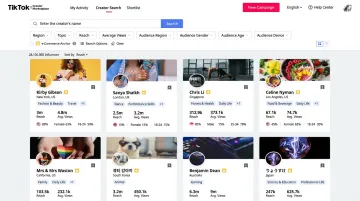
TikTok One is TikTok's current all-in-one platform for creator discovery, collaboration management, insights, and payments — replacing what was previously branded TikTok Creator Marketplace (TTCM). It operates natively within TikTok's business ecosystem and gives brands access to real creator performance data before committing to any deal.
Because it's native to TikTok's ecosystem, brands filter creators by region, audience, and engagement without relying on third-party data. Organic sponsored content can then be amplified via Spark Ads — TikTok reports that Spark Ads-boosted creator content achieved a 159% higher engagement rate than non-creator content in North America. Platform access is free; creator fees are negotiated directly.
| Attribute | Detail |
|---|---|
| Best For | Brands targeting Gen Z and millennial audiences through short-form video |
| Pricing | Free platform access; creator fees vary by deal |
| Key Features | Native TikTok performance data, Creator AI Search (up to 200 shortlisted creators), bulk invitations, Spark Ads integration |
Upfluence
Upfluence is a data-driven platform with a searchable database of 14M+ creators across YouTube, Instagram, TikTok, Twitch, Twitter, Pinterest, and blogs. Its Jaice AI campaign co-pilot lets brands filter by audience interests, location, brand affinity, and fake follower score — targeting specificity that generic marketplaces rarely offer.
Upfluence's fake follower audit tools span all major platforms, letting brands verify audience authenticity before committing budget. In a market where inflated follower counts are common, that's a concrete risk-reduction feature — not just a selling point.
| Attribute | Detail |
|---|---|
| Best For | Brands and agencies that prioritize data-backed creator selection across multiple platforms |
| Pricing | Custom pricing; minimum 12-month contract |
| Key Features | AI-powered creator search (14M+ database), fake follower detection, automated outreach, multi-platform campaign tracking, integrated payments |
How We Chose the Best Influencer Marketplaces
The platforms in this list were assessed on how well they help brands move from creator discovery to measurable results — not just the size of their creator database.
A common mistake: brands select platforms based on creator volume alone, ignoring audience quality metrics or picking tools that don't connect to their existing sales or analytics stack. Both choices drain budget without delivering returns.
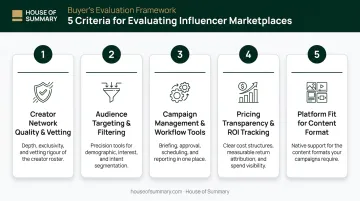
The five criteria used here:
- Creator network quality and vetting standards — Does the platform verify creator authenticity and engagement quality?
- Audience targeting and filtering capabilities — Can brands filter by specific demographics, interests, or location?
- Campaign management and workflow tools — Does the platform handle briefs, approvals, and payments in one place?
- Pricing transparency and ROI tracking — Are costs clear upfront, and can campaigns be tied to revenue?
- Platform fit for content format — Video, static, shoppable content, and newsletter placements each require different infrastructure
No single platform scores well across all five criteria for every business type — and that's where many brands go wrong. A DTC e-commerce brand has different needs than a B2B SaaS company or a luxury brand targeting executive audiences. Grin suits the first; Aspire or Upfluence suit the second; LTK serves the third.
None of them, however, reach professional audiences directly in the inbox — without algorithms, ad blockers, or visual noise competing for attention. For brands targeting decision-makers and global executives, newsletter-based sponsored content fills that gap.
Conclusion
No single influencer marketplace fits every brand. The right choice comes down to aligning the platform's creator network, audience demographics, and campaign tools with your specific content goals and customer profile.
When evaluating options, keep three priorities in mind:
- Prioritize audience quality over creator volume
- Confirm the platform integrates with your existing measurement tools
- Track performance beyond impressions — engagement rate, click-throughs, and attributed conversions tell you whether a campaign actually worked
For brands targeting high-intent professional audiences — executives, finance decision-makers, founders, and globally-minded business readers — social platforms have real limitations. Algorithms filter reach. Ad blockers eliminate display placements. Sponsored social posts compete with an endless content feed.
House of Summary offers a different model: inbox-direct sponsored content across a network of 500,000+ subscribers, with 254,866+ emails opened daily. No algorithms, no ad blockers, and no visual clutter competing for attention.
The audience skews heavily toward C-suite professionals, HNWIs, and senior decision-makers concentrated in the US, UK, and UAE — the exact profile that premium brands struggle to reach through conventional influencer channels.
If that audience matches your target customer, reach out to explore sponsorship opportunities at sales@houseofsummary.com.
Frequently Asked Questions
What is sponsored content?
Sponsored content is paid content — articles, videos, or social posts — created to promote a brand while matching the look and feel of organic editorial. Unlike display ads, it fits into the reader's natural content experience rather than interrupting it.
What are the 4 types of influencers?
The four tiers by follower count: nano (1K–10K), micro (10K–100K), macro (100K–1M), and mega/celebrity (1M+). Follower count matters less than engagement rate and audience relevance — a nano influencer with a loyal niche audience often outperforms a macro with passive followers.
What is the difference between an influencer marketplace and an influencer agency?
A marketplace is a self-serve platform where brands search for and contact creators directly. An agency manages the entire process on a brand's behalf. Marketplaces offer more control and lower fees; agencies provide more strategic support and hands-on execution.
How much does sponsored content through influencer marketplaces typically cost?
Costs vary widely. For Instagram posts, Business of Apps research indicates micro-influencers (10K–100K followers) typically charge $200–$1,000 per post, mid-tier creators (100K–500K) charge $1,000–$5,000, and macro influencers (500K–1M) charge $5,000–$10,000. Platform and content format also affect rates significantly.
Can small businesses or startups use influencer marketplaces effectively?
Yes. Several platforms cater to smaller budgets — LTK's Launch tier starts at $99/month, and TikTok One offers free platform access. Micro and nano influencer campaigns can be cost-effective for niche targeting, with creator fees paid directly rather than through platform subscriptions.
What metrics should brands track to measure sponsored content performance?
Key KPIs: engagement rate, reach, click-through rate, attributed conversions or sales, and cost per acquisition. Platforms like Aspire, Grin, LTK, and Upfluence include built-in dashboards to track these in real time.