The real variable isn't content quality. It's platform selection.
Sponsored content distribution is distinct from general content syndication. It's a deliberate, paid placement strategy that puts branded messages inside trusted editorial environments — where readers are already engaged, not interrupted. The result: credibility borrowed from the publisher, not stripped away by a banner format.
This guide covers six platforms where that kind of placement is actually possible, and what makes each one worth (or not worth) your budget.
Key Takeaways
- Sponsored content distribution pays for placement inside editorial environments — not beside them
- The six platforms covered span native discovery (Outbrain, Taboola), professional social (LinkedIn), paid social (Meta), premium publisher networks (Nativo), and newsletter advertising
- Audience quality beats raw reach — high-intent readers consistently outperform mass impressions on recall and conversion
- Newsletter advertising reaches readers directly in the inbox — no ad blockers, no algorithm, no competition for attention
- Platform choice should follow your audience profile, content format, and campaign goal — not brand recognition or starting budget
What Is Sponsored Content Distribution?
Sponsored content distribution is the practice of paying a third-party platform or publisher to place branded content (articles, videos, newsletters, or native ad units) within their editorial environment, so it reaches an engaged, relevant audience in a contextually native format.
It's different from display advertising or PPC. Display ads sit beside content. Sponsored content sits within it, matching the form, tone, and context of the surrounding editorial. The IAB's Native Advertising Playbook defines native advertising as paid media where the ad experience "follows the natural form and function of the user experience in which it is placed."
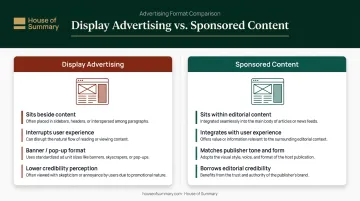
That distinction matters because readers process sponsored content differently than a banner — it doesn't interrupt; it integrates.
Within the PESO framework (Paid, Earned, Shared, Owned), sponsored content sits firmly in the Paid tier — yet it borrows the credibility feel of Earned. Readers encounter it in a trusted editorial context, not sandwiched between pop-ups.
The platforms below represent the most widely used options for distributing sponsored content across different audience types, formats, and budget ranges.
Top Sponsored Content Distribution Platforms to Know
These platforms were evaluated on audience quality, targeting capability, content format flexibility, brand safety, and measurable ROI — not just scale.
Outbrain
Outbrain is one of the oldest native content discovery networks, powering sponsored content placements across thousands of premium publisher sites — including CNN, and the Le Monde Group, with whom Outbrain has maintained a partnership extending toward 15 years.
How it works: Outbrain's Smartlogic technology automatically optimizes the native feed to match sponsored content with contextually relevant editorial environments using real-time behavioural signals. The platform also offers an AI-powered Image Optimizer tool that generates creative variants to improve performance. Brand safety controls and a transparent publisher list make it a reliable option for regulated industries.
| Best For | Mid-funnel content amplification; brand awareness on premium publisher sites |
| Content Formats | Native articles, video, carousel |
| Starting Budget | CPC billing; current minimum is $20/day ($600/month) per official documentation |
Taboola
Taboola operates one of the largest content discovery networks globally, with placements appearing across major publisher sites including USA Today, NBCUniversal News Group properties (NBC News, CNBC, MSNBC), and The Independent.
How it works: Taboola's Realize platform uses deep learning to predict which users are most likely to engage based on reading behavior, recency, and device, optimizing for specific actions beyond clicks. Motion Ads Studio, a free tool within Realize, converts static creatives into animated native ads without requiring video production resources. In one documented case, USA TODAY generated a 47% increase in CTR using Taboola's platform.
| Best For | Top- and mid-funnel sponsored article and video distribution at scale |
| Content Formats | Native articles, video, motion ads, app install ads |
| Starting Budget | Self-serve minimum of $10/day; $50/day recommended for algorithm optimisation |
LinkedIn Sponsored Content
LinkedIn Sponsored Content is the dominant paid channel for B2B brands distributing thought leadership, whitepapers, and product content to professional audiences. With over 1 billion members, it offers the most precise firmographic targeting available in the sponsored content landscape.
How it works: LinkedIn's targeting by job title, seniority, company size, industry, and intent signals allows advertisers to reach buying committee members with precision no other platform matches for B2B. Three formats make it particularly powerful for authority-building:
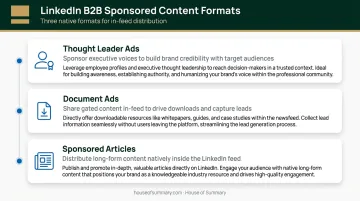
- Thought Leader Ads — sponsor posts attributed to a specific executive's voice, with permission from that member
- Document Ads — share gated content in-feed with Brand Awareness, Engagement, or Lead Generation objectives
- Sponsored Articles — long-form content distributed natively within the LinkedIn feed
| Best For | B2B brand awareness, lead generation, and thought leadership targeting senior professionals |
| Content Formats | Single image ads, video ads, document ads, sponsored articles, thought leader ads |
| Starting Budget | Self-serve; minimum daily budget starts at $10 (auction-based CPC — actual costs vary by audience seniority and geography) |
Meta (Facebook & Instagram) Sponsored Content
Meta's ecosystem — spanning Facebook, Instagram, and the Audience Network — remains the largest paid social sponsored content platform by reach, making it the default channel for B2C brands distributing visually rich content at scale.
How it works: Meta's Advantage+ campaign automation uses AI to dynamically manage budget allocations across ad sets, while Advantage+ Audience finds the right audience without manual targeting parameters. Instagram's native formats — Reels, Stories, Feed — allow sponsored content to blend into editorial and social content, reducing the perception of advertising.
| Best For | B2C brand awareness, product-led content, lifestyle and luxury brand storytelling |
| Content Formats | Image, video, carousel, Reels, Stories, collection ads |
| Starting Budget | No formal campaign minimum; practical floor is ~$5–$10/day for meaningful delivery |
Newsletter Advertising Networks
Newsletter advertising has become one of the fastest-growing sponsored content channels, driven by audience fatigue with social feeds, the erosion of third-party cookies, and the premium engagement that inbox-based reading commands.
Why it's different: According to Eyeo's Ad Filtering Report, over 912 million users worldwide actively block ads in browsers. Newsletter advertising bypasses that entirely. There are no ad blockers in the inbox, no algorithmic suppression, no competing visual clutter, and no feed algorithms deciding who sees what. Readers who open a newsletter are in a focused, low-distraction environment — and that changes what a brand message can accomplish.
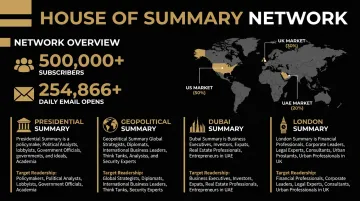
House of Summary is a network of specialized newsletters covering global news, geopolitics, business, and regional markets. It offers advertisers direct inbox access to over 500,000 subscribers, with 254,866+ emails opened daily. Its publications — Presidential Summary, Geopolitical Summary, Dubai Summary, and London Summary — reach decision-makers, executives, and policy professionals across the US, UK, and UAE. The audience is 66% US-based, concentrated in New York and Los Angeles, with strong professional readership in London and Dubai.
Available ad formats include:
- Sponsored content segments
- Native editorial placements
- Display banner ads
- Full-issue takeovers
All placements run within a human-written, editorially controlled environment. One advertiser, BSH Hausgeräte CEO Faik Serkan Ergun, reported click-through rates 4x higher than Google AdWords from a Dubai Summary campaign.
| Best For | Premium brand positioning, B2B and luxury brand campaigns, reaching high-intent professional audiences |
| Content Formats | Sponsored newsletter placements, native editorial segments, display ads, full-issue takeovers |
| Starting Budget | Custom rate card based on placement, newsletter selection, and campaign scope — contact sales@houseofsummary.com |
Nativo
Nativo is a premium native advertising platform focused exclusively on publisher-quality sponsored content. Rather than distributing headline-and-image widgets, Nativo enables brands to place full articles, branded content pages, and interactive story formats hosted within premium editorial sites.
How it works: Nativo's distinguishing feature is that sponsored content is hosted and rendered on the publisher's own domain — not redirected to a landing page — which reduces bounce rates and improves time-on-content. The platform is built for enterprise brands that prioritize editorial alignment and depth of engagement over reach volume. A documented case study showed a pharmaceutical brand achieving 104% greater CTR using Nativo's Predictive Audiences targeting.
| Best For | Premium brands wanting deep-read, on-site native content experiences on trusted publisher domains |
| Content Formats | Native articles, branded content, video, interactive formats |
| Starting Budget | Enterprise and managed pricing; no public self-serve minimum — contact Nativo directly |
How We Chose These Platforms
Every platform on this list was evaluated against four criteria:
- Audience quality and targeting precision — can you reach the right people, not just a large number of people?
- Content format flexibility — does the platform support formats that allow branded content to read natively?
- Measurable ROI — does the platform provide attribution data that ties spend to outcomes?
- Brand safety — are there controls ensuring sponsored content appears in contextually appropriate environments?
The most common mistake brands make: choosing platforms based on name recognition or raw reach rather than alignment with their audience profile and content type. A platform with 100 million monthly users is worthless if your buyers aren't among them — or if your content format doesn't fit how those users consume information.
That's why audience quality beats audience size at every stage of the funnel. A high-intent reader in a distraction-free environment — think a curated newsletter inbox versus a crowded social feed — consistently delivers better engagement and conversion. Start with fit, not follower count.
Conclusion
The sponsored content distribution landscape spans native discovery networks, professional social platforms, premium publisher networks, and email-based newsletter advertising. Each suits different audience profiles, content formats, and campaign objectives. Choosing the wrong platform drains budget and puts your message in front of the wrong people.
Before committing spend, audit your strategy against three questions:
- Is my target audience actually present on this platform?
- Does this platform's editorial environment elevate or dilute my brand?
- Can I measure what actually matters — not just clicks, but genuine engagement and downstream conversion?
If those questions point toward executives, finance professionals, and high-intent news readers, newsletter advertising deserves a serious look. Unlike display and social, it delivers editorial credibility, bypasses ad blockers entirely, and lands directly in the inbox — no algorithm standing between your message and the reader.
Explore sponsored content opportunities with House of Summary — a network of specialized newsletters built for serious readers and smart brands. Reach out at sales@houseofsummary.com to learn more.
Frequently Asked Questions
What is a content distribution platform?
A content distribution platform is a software system or network that enables brands to publish, amplify, and measure content across paid, earned, shared, and owned channels. Sponsored content platforms focus specifically on paid placements within third-party editorial environments, where brand messages appear alongside relevant publisher content.
What are the four types of content distribution?
The four types follow the PESO framework:
- Paid: sponsored placements, native ads
- Earned: press coverage, organic shares
- Shared: social media, community platforms
- Owned: brand website, email newsletter, blog
Sponsored content operates within the Paid tier while carrying the credibility of Earned media.
What is the difference between sponsored content and native advertising?
Native advertising refers broadly to paid ads designed to match the look and feel of the platform they appear on — like a "recommended article" widget. Sponsored content is more specific: it refers to branded editorial pieces (articles, newsletters, videos) that are disclosed as paid but deliver genuine informational value to the reader.
How much does sponsored content distribution typically cost?
Costs vary widely. Taboola starts at $10/day (self-serve), Outbrain requires a $20/day minimum per current documentation, and LinkedIn carries higher costs due to B2B targeting precision. Premium newsletter networks and platforms like Nativo use CPM or flat-rate models and require direct contact for custom pricing.
Which sponsored content platform works best for B2B brands?
LinkedIn Sponsored Content is the strongest option for reaching professional buying committees by job title, seniority, and industry. Newsletter advertising within specialized B2B publications also delivers strong engagement with senior decision-makers in a low-distraction, editorially credible environment.
Are newsletter ads better than social media ads for sponsored content?
It depends on the goal. Newsletter ads typically deliver higher engagement and zero ad-blocker interference in a focused reading environment — strong for brand trust and deeper messaging. Social ads offer broader reach, faster deployment, and more dynamic creative formats, making them better suited for high-volume awareness campaigns.