Yet brands still need reach. They still need to build trust. They still need to convert.
That tension is exactly why the debate between branded content and traditional advertising matters. This article breaks down what each approach actually is, where they genuinely differ, and how to decide which belongs in your strategy — with a framework built for finance, luxury, and B2B marketers who can't afford to waste budget on audiences that aren't paying attention.
Key Takeaways
- Branded content earns attention by delivering genuine value — entertainment, education, or useful information — with the brand woven in naturally
- Traditional advertising places explicit promotional messages in paid slots, interrupting audiences on the advertiser's schedule
- Advertising drives short-term reach and conversions; branded content builds trust, recall, and long-term affinity
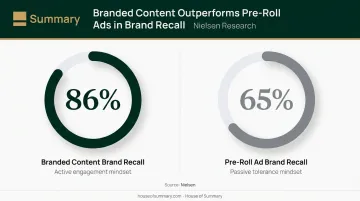
- 86% brand recall for branded content vs. 65% for pre-roll ads in the same campaigns (Nielsen)
- Smart strategies combine both: advertising for scale, branded content for depth and staying power
Branded Content vs Traditional Advertising: At a Glance
| Dimension | Branded Content | Traditional Advertising |
|---|---|---|
| Primary Goal | Brand awareness, trust, affinity | Reach, conversions, direct response |
| Audience Experience | Chooses to engage with content | Interrupted by the message |
| Format | Articles, videos, podcasts, newsletters | Display ads, TV/radio spots, pre-roll, OOH |
| Brand Control | Shared with publisher/creator | Fully brand-controlled |
| Measurement Focus | Engagement, time-on-content, brand lift | Impressions, CPM, CTR, ROAS |
| Cost Model | Higher upfront production; compounds over time | Volume-based (CPM/CPC); stops when budget stops |
| Disclosure Requirement | Required — "Sponsored," "Paid Partnership" | Self-evident; no disclosure needed |
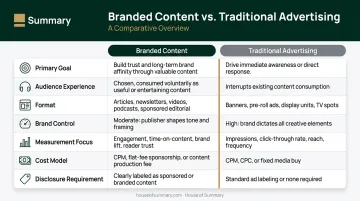
One note on disclosure: the FTC requires branded content to be clearly labeled. FTC guidance confirms that undisclosed sponsored content risks legal consequences — but proper disclosure doesn't kill engagement. Quality content does the work.
What is Branded Content?
Branded content is marketing where a brand funds or co-creates content — articles, videos, podcasts, sponsored newsletters — that stands on its own as genuinely useful or entertaining. The brand's presence is woven in, not bolted on as a sales message.
The spectrum is wide. A financial services firm sponsors a weekly business briefing. A luxury brand co-produces a travel documentary. In both cases, the audience would engage with the content regardless of which brand attached its name to it.
Why Publisher Partnerships Amplify the Effect
When brands distribute content through established publishers rather than their own channels, the results improve significantly. Nielsen found that brands partnering with publishers saw 50% higher brand lift on average versus brands publishing content independently — because the publisher's existing audience trust transfers to the brand.
Readers trust the publication they've chosen to follow. When that publication carries branded content, it implicitly vouches for the brand — and that transferred credibility is what makes editorial sponsorships work in ways paid placements elsewhere don't.
The Newsletter Sponsorship Advantage
Newsletter sponsorships represent one of the most effective modern forms of branded content. A reader has actively subscribed, opens the email by choice, and reads in an environment with no competing content fighting for their attention. There are no banner ads, no social feed distractions, no algorithmic interference — just the editorial content they signed up for.
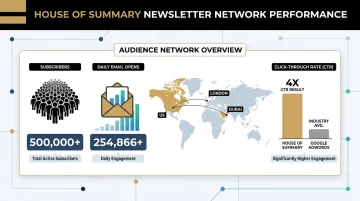
House of Summary's network of specialized newsletters — Presidential Summary, Geopolitical Summary, Dubai Summary, and London Summary — puts brand messages directly in front of 500,000+ subscribers, with 254,866+ emails opened daily. Because ad blockers don't work on email, every impression paid for is actually delivered. For advertisers measuring reach against spend, that delivery guarantee matters more than most metrics on a dashboard.
Where Branded Content Fits in the Funnel
Branded content belongs primarily at the awareness and consideration stages. It's not designed to close a sale immediately — it's designed to make audiences receptive when the time to buy arrives.
Best use cases:
- Entering a new market where the brand isn't yet known
- Reaching professionally sophisticated audiences who have filtered out interruptive formats
- Building trust in regulated categories (financial services, healthcare, luxury) where credibility precedes conversion
- Positioning alongside editorial content that reflects the brand's values and target reader
What is Traditional Advertising?
Traditional advertising is any paid, explicitly promotional communication placed in front of an audience through purchased media. The commercial intent is transparent, the message is brand-controlled, and the audience didn't ask for it.
Formats include display/banner ads, TV and radio commercials, print, out-of-home, paid social (Meta, LinkedIn), search ads (Google), and pre-roll video. Search ads catch buyers actively looking; display ads cast a wider net.
Core Strengths
Traditional advertising does certain things better than anything else:
- Speed — a campaign can reach millions within hours of launch
- Precision targeting — digital paid media allows audience segmentation by behavior, demographics, intent signals, and purchase history
- Measurable direct response — clear attribution from ad click to conversion, with rapid A/B testing feedback
- Retargeting — re-engaging warm audiences who have already shown purchase intent
For product launches, seasonal promotions, and retargeting campaigns, these strengths are hard to match. But the model has real cracks.
The Growing Limitations
Nielsen Norman Group's research confirms that users have learned to ignore content that looks like ads, appears near ads, or sits in traditionally ad-heavy positions. Display CTRs averaging 0.05% tell that story numerically.
Three structural problems now erode traditional advertising's reach:
- Banner blindness — audiences have conditioned themselves to filter out ad-shaped content, regardless of creative quality
- Ad blocking — YouGov's 2024 data shows 25% of consumers use ad blockers in their browsers, with additional mobile usage on top; for display-heavy strategies, a meaningful share of paid impressions simply never render
- Algorithmic platform risk — Meta's 2018 News Feed update explicitly deprioritized brand content in favor of personal connections; organic reach has declined steadily since, making paid spend increasingly necessary just to hold the visibility brands once had for free
Key Differences That Matter for Modern Marketers
Audience Mindset: Interruption vs. Earned Attention
This distinction changes everything about how a message is received.
Traditional advertising reaches people who weren't looking for it. Pre-roll ads play before the video someone actually wants to watch. Display banners appear at the edge of content someone is reading about something else entirely. The brand message is tolerated, not welcomed.
Branded content reaches people already engaged in content they chose to consume. That mindset shift — from passive tolerance to active engagement — dramatically affects retention. This is why the recall data is so striking: Nielsen reported 86% average brand recall for branded content versus 65% for pre-roll advertising when comparing the same brand in both formats.
Brand Control vs. Editorial Credibility
Traditional advertising: total brand control. Every word, every image, approved before it runs.
Branded content: shared creative direction with a publisher. Brands accustomed to controlling every message often hesitate here. The trade-off is worth it: credibility that brand-controlled content simply cannot generate on its own. When a trusted editorial voice carries the brand's story, readers extend that trust to the brand.
Cost Structure and Long-Term Value
| Factor | Traditional Advertising | Branded Content |
|---|---|---|
| Upfront cost | Lower per placement | Higher production cost |
| Ongoing cost | Continuous spend required | Content compounds over time |
| Visibility | Stops when budget stops | Continues to be shared and consumed |
| Brand safety | Programmatic placement risk | Human-curated editorial environment |
Traditional ads require perpetual spend to maintain visibility. The moment the budget pauses, the exposure stops. Branded content — particularly evergreen editorial content — continues generating value as it gets shared, referenced, and discovered by new readers.
Ad Avoidance and Platform Risk
Those cost dynamics matter even more when factoring in ad avoidance. Over half of consumers globally have some form of ad blocking deployed, and algorithmic changes on major social platforms can halve organic reach with a single policy update.
Newsletter advertising bypasses both problems structurally:
- Email isn't filtered by ad blocking software
- Newsletters aren't subject to platform algorithm changes
- A subscriber who opens an email sees the sponsored content — no technical barrier between the brand and the reader
The result: every dollar spent on newsletter placements reaches its intended audience.
Which Should You Choose?
Choose Traditional Advertising When:
- The goal is fast, measurable reach — product launches, seasonal promotions, flash sales
- Retargeting warm audiences who've already shown intent
- Running direct-response campaigns with clear conversion KPIs
- Budget is performance-based and needs rapid A/B testing feedback
- The audience is broad and can be reached efficiently through programmatic targeting
Choose Branded Content When:
- Building brand equity in a market where trust doesn't yet exist
- Reaching audiences who have already filtered out interruptive formats
- Positioning a premium or complex brand that requires narrative context
- Launching in a category where credibility precedes conversion (finance, luxury, B2B)
- Seeking an editorial environment that reflects the brand's values and reader profile
For Finance, Luxury, and B2B Marketers
High-intent professional audiences — C-suite executives, wealth managers, founders, senior decision-makers — are notoriously difficult to reach through standard programmatic or social channels. This is the group most likely to run ad blockers, scroll past banners, and distrust interruptive formats by default.
House of Summary's newsletter network was built for exactly this reader. With 66% of subscribers based in the US (concentrated in New York and Los Angeles), plus significant reach in London and Dubai, the network puts brands in front of decision-makers and HNWIs in three of the highest-income markets globally. For brands like Gaggenau and BSH Hausgeräte, the editorial environment has delivered measurable results: BSH reported click-through rates 4x higher than their Google AdWords campaigns.
The question isn't which format is universally better. It's which format fits the goal, the audience, and where they sit in the customer journey. The strongest marketing strategies use both: advertising to drive scale and speed, branded content to build the trust that sustains it.
Frequently Asked Questions
What is the difference between branded content and advertising?
Traditional advertising places explicit promotional messages in paid media slots — display ads, TV spots, pre-roll — interrupting audiences. Branded content earns attention by delivering genuine entertainment, information, or education with the brand woven in naturally. One pushes; the other pulls.
Is branded content more effective than traditional advertising?
Effectiveness depends on the goal. For brand recall and trust-building, branded content consistently outperforms : Nielsen found 86% brand recall for branded content versus 65% for pre-roll ads in the same campaigns. For short-term direct-response outcomes like clicks, conversions, or ROAS, traditional advertising typically wins on speed and measurability.
Does branded content need to be disclosed?
Yes. FTC guidelines require branded content to be clearly labeled as sponsored or paid. Research shows proper disclosure doesn't significantly reduce engagement when content delivers genuine value — readers who trust the publication tend to extend that trust to the brand.
How is branded content different from native advertising?
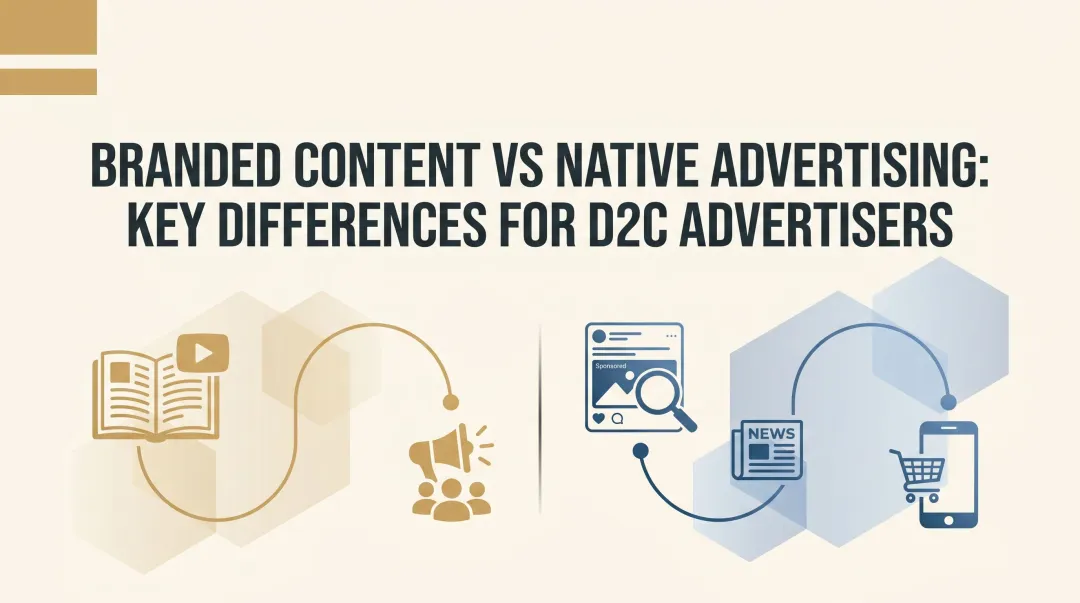
Native advertising is a format: paid content designed to match the look and feel of the surrounding media. Branded content is a broader strategy focused on value-driven co-creation with a publisher. The distinction matters because not every native ad qualifies as branded content — many are simply display ads dressed to look editorial.
What are the main disadvantages of branded content?
Three primary drawbacks: higher upfront production costs compared to buying ad placements, longer lead time before ROI becomes measurable, and the need to share creative direction with a publisher — which requires comfort with editorial collaboration over full message control.
How do you measure branded content success?
Core metrics: time spent with content, scroll depth, click-through rate, social shares, brand lift survey results, and return visit rates. Unlike display ads, which live or die by impressions and clicks, branded content is better evaluated through engagement quality and downstream shifts in brand perception.