
Introduction
Reaching capital markets professionals — institutional investors, fund managers, C-suite executives, wealth advisors — is genuinely difficult. Not because they're hard to find, but because they've built professional-grade filters against irrelevant messaging.
Standard digital advertising playbooks break down fast in this space. Display ads get blocked or ignored. Social campaigns hit platform restrictions that make compliant financial messaging nearly impossible — and programmatic targeting delivers impressions, not attention. Budgets get spent. Audiences stay unmoved.
This guide covers why traditional formats underperform with capital markets audiences, what sponsored content does differently, how to craft it effectively, and why newsletter placements — particularly through specialized newsletter networks like House of Summary — consistently outperform display and social for this demographic.
TLDR
- Capital markets readers consume content with professional intent; standard ad formats don't match that mindset
- Sponsored content in premium editorial environments borrows publication credibility and creates compliant space for financial messaging
- Newsletter placements bypass ad blockers, reaching high-intent subscribers without algorithmic interference
- Effective capital markets content leads with genuine insight, not brand messaging
- Compliance is non-negotiable: clear labeling, balanced claims, and proper disclosures are required
Who Capital Markets Audiences Are and Why They're Different
The Professional Reader Profile
Capital markets readers aren't casually scrolling. When an institutional investor or wealth manager opens a financial newsletter, they're working. They're scanning for information that affects decisions — portfolio allocations, client conversations, regulatory responses, market positioning.
This audience includes:
- Institutional investors and fund selectors
- C-suite executives with real purchasing authority
- Wealth managers and financial advisors
- Policy professionals and business decision-makers
- High-net-worth and ultra-high-net-worth individuals
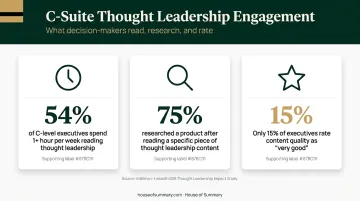
Their consumption habits reflect professional obligation, not leisure browsing. Research from LinkedIn and Edelman in 2024 found that 54% of C-level executives spend at least one hour per week reading thought leadership, and 75% have researched a product or service after reading a specific piece. Nine in ten decision-makers say they're more receptive to outreach from firms that produce high-quality thought leadership — but only 15% rate the quality they currently consume as "very good."
That gap matters. The bar is high, and most content doesn't clear it.
The Tolerance Gap
This audience has spent careers evaluating claims, reading financial analysis, and distinguishing signal from noise. They bring the same scrutiny to advertising that they apply to investment pitches.
Hyperbolic language, vague performance claims, irrelevant messaging — all categorized and dismissed in seconds. What cuts through is content grounded in specifics: a concrete data point, a regulatory implication, a positioning argument that actually holds up. Anything that reads like a pitch dressed as insight gets filtered out fast.
Precision, in other words, isn't optional. It's the cost of being read at all.
Why Traditional Digital Advertising Underperforms in Capital Markets
Three structural problems make standard digital formats a poor fit for capital markets professionals.
Ad Blocking and Algorithmic Suppression
Ad blocking is widespread among professional audiences who value clean, distraction-free information environments. A study from IAB found 34% of U.S. adults used ad-blocking technology, with 77% of those users expressing discomfort with cross-site ad tracking — behavior patterns that skew heavily toward technically savvy, high-information audiences.
Social media compounds the problem differently. Platforms like Meta and X impose financial services restrictions, require verification for certain product categories, and subject financial content to algorithmic deprioritization. The result is that even compliant campaigns face reduced distribution, approval friction, and audience skepticism about the platform context.
The Trust Gap
In capital markets, trust is the operating currency. A banner ad on a financial website carries no editorial endorsement — it's visually associated with the publication but borrows none of its authority. A sophisticated investor sees a display ad and registers it as an interruption, not information.
This isn't irrational. The ad exists because someone paid for placement, not because the publication vouches for the content. Institutional investors recognize that distinction immediately, and no amount of better creative changes the underlying dynamic.
The Compliance-Format Mismatch
Character-limited social platforms create a structural problem for regulated financial advertising. The UK's FCA guidance FG24/1 is explicit: financial promotions on social media must still display required risk warnings clearly within the text, even in character-limited formats. FINRA's Rule 2210 applies similar standards in the US — communications must be fair, balanced, and not misleading.
A 280-character post cannot carry a balanced risk disclosure, sponsor identification, and substantive messaging simultaneously. The format is structurally incompatible with what regulated financial advertising requires.
What Is Sponsored Content and Why It Works in Capital Markets
Defining Sponsored Content in a Financial Context
Sponsored content is branded editorial material — articles, newsletter features, analysis pieces — that appears within a trusted publication, is clearly labeled as sponsored, and delivers genuine informational value while advancing brand positioning. Unlike traditional advertising, it integrates rather than interrupts.
For capital markets, this format carries a structural advantage that display and social can't match. Long-form sponsored content provides the space to include:
- Proper sponsor disclosure and identity
- Balanced risk/return language
- Substantiated claims with appropriate context
- Forward-looking statement qualifications
These aren't optional additions for regulated financial content — they're requirements. Sponsored content is the only common digital format that accommodates them without sacrificing the message.
Why This Format Earns Attention From Financial Audiences
The mechanism is trust transfer. When sponsored content appears in a publication a reader actively chose and respects, a portion of that publication's credibility extends to the sponsor.
The editorial environment sends a signal that display ads can't: this content is worth your professional time.
IAB Europe's 2021 guide to native advertising found that native ads on premium publisher sites were 44% more likely to be trusted, 21% more likely to be clicked, and 24% more likely to lead to future purchases than ads on social platforms. Across formats, native advertising achieved CTRs 8.8x higher than banner ads and increased purchase intent by 18%.
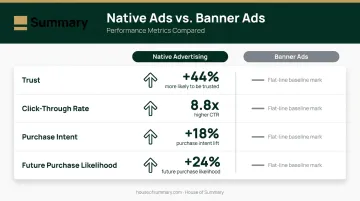
These figures come from general market research — but the trust dynamics they measure are exactly what drives decision-making among professional financial audiences, who scrutinize credibility signals more deliberately than most consumers.
Crafting Sponsored Content That Earns Trust in Financial Contexts
Lead With Value, Not the Pitch
Capital markets sponsored content must open with genuine professional insight — market trends, macroeconomic shifts, geopolitical implications for investment, sector analysis. Content that leads with brand messaging is categorized as an ad within the first paragraph and disengaged from.
A practical structure that works:
- 70–80% of the piece: standalone informational value the reader would seek out independently
- 20–30%: natural, contextually relevant brand introduction or call to action
The logic is straightforward: demonstrate value first, then make the connection. Readers who've learned something useful from sponsored content are far more receptive to the brand that provided it.
Match the Tone and Credibility Standards of the Publication
Capital markets readers calibrate trust against editorial quality signals instantly. Sponsored content using consumer-marketing enthusiasm, vague performance language, or unverified superlatives signals immediately that the sponsor doesn't understand the audience. That impression is difficult to recover from.
Write as a seasoned financial journalist would write:
- Cite specific data from credible institutions (central banks, academic research, regulatory bodies)
- Avoid unverifiable claims or cherry-picked performance periods
- Use precise, measured language — not promotional adjectives
- Present balanced perspectives, including relevant risks
Compliance frameworks reinforce this standard. Content that passes SEC, FINRA, and FCA review is, almost by definition, the content that earns genuine attention from this audience.
Align Content With Audience Intent
That compliance-and-credibility standard only holds if the content is reaching the right reader in the right context. A reader of a geopolitical newsletter arrives primed for macroeconomic and global investment content — currency risk, cross-border capital flows, sanctions implications. A reader of a capital markets brief expects sector-specific analysis and policy implications for specific asset classes.
Generic brand messages running across every available channel fail because they don't match what the reader came for. Match the editorial context of the specific publication, and sponsored content reads as useful information. Miss it, and even well-written content gets dismissed.
Choosing the Right Channel: Why Newsletter Advertising Leads for Capital Markets
The inbox environment is distinct from every other digital channel. A newsletter subscriber actively opted in to receive content from a specific source, on a regular schedule, on topics they selected. That's a different attention state than encountering an ad mid-scroll or on a news aggregator.
The Ad-Blocker Immunity Advantage
Newsletter-based sponsored content is delivered directly to the inbox. Browser ad blockers — which affect display ads across the web — cannot intercept email delivery. Every impression is a real delivery to a real subscriber. There's no inflated count masking blocked or ignored placements.
For advertisers who've watched display campaigns report thousands of "impressions" while struggling to demonstrate any actual audience contact, that gap between reported and real reach has real budget consequences.
Email Engagement Benchmarks
Email as a channel consistently delivers measurable engagement. The DMA's 2025 Email Benchmarking Report, using 2024 data, reported a 35.9% open rate and 2.3% unique click rate across email generally. For business and finance content specifically, Mailchimp's benchmarks show a 31.35% open rate and 2.78% click rate for Business + Finance categories.
These figures represent broad averages. Specialized professional newsletters with opted-in subscribers routinely outperform them — which matters when evaluating placement value for capital markets campaigns.
House of Summary: A Purpose-Built Channel for Capital Markets Reach
House of Summary operates a network of four specialized newsletters: Presidential Summary, Geopolitical Summary, Dubai Summary, and London Summary. Combined, they reach 500,000+ subscribers with 254,866+ emails opened daily.
The network is built specifically for the audience capital markets advertisers want to reach:
- C-suite executives, founders, and senior professionals
- High-net-worth and ultra-high-net-worth individuals
- Policy professionals and business decision-makers
- 66% US-based (concentrated in New York and Los Angeles), with additional reach in London and Dubai
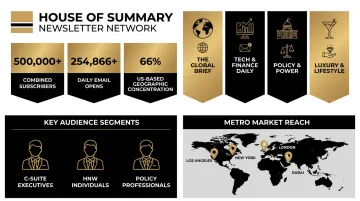
Sponsored placements appear inline with editorial content — bypassing algorithms and ad blockers entirely. Advertisers can select individual newsletters based on geographic or editorial fit, or run coordinated multi-newsletter campaigns across the full network.
The network reports click-through rates 4x higher than Google AdWords. For capital markets advertisers targeting finance professionals, executives, and wealth managers across the network's three key metro markets, reach out to sales@houseofsummary.com to discuss placement options.
Compliance Essentials for Capital Markets Sponsored Content
Regulatory compliance is the starting point for any capital markets sponsored placement — not a final review step. Every ad that goes out carries legal and reputational weight, and the standards are explicit.
Baseline Requirements
Regardless of format, sponsored content for capital markets products and services must be:
- Truthful and balanced — no overstated returns, no cherry-picked performance periods, no implied regulatory endorsement
- Clearly labeled — "Sponsored" or "Advertisement" must appear prominently, not buried in small print or limited to a separate landing page
- Free from misleading omissions — material information that would affect a reader's understanding must be included
The governing rules across major markets set the floor for what's acceptable:
- FINRA Rule 2210 (US) — communications must be fair, balanced, and provide a sound basis for evaluating facts
- SEC Investment Adviser Marketing Rule (US) — prohibits unsubstantiated material claims and misleading performance presentations
- FCA COBS 4.2 (UK) — financial promotions must be fair, clear, and not misleading, with risks presented fairly and prominently
Performance data and forward-looking statements demand an additional layer of scrutiny beyond these baseline standards.
Special Care for Performance Data and Forward-Looking Statements
Any historical returns, forecasts, or competitor comparisons included in sponsored content require particular attention:
- Historical figures must be accurate, currently verifiable, and accompanied by appropriate risk disclosures
- Forward-looking statements must be clearly qualified and not create unrealistic investor expectations
- Comparisons must be fair, balanced, and based on verifiable data
Before any capital markets sponsored placement goes live, run through this checklist:
- Sponsor label confirmed and prominently placed
- Issuer identity disclosed
- All claims substantiated
- Risk disclosures present and prominent
- Performance data reviewed for accuracy
- Forward-looking statements clearly qualified
- Compliance approval documented
- Archive copy retained
Frequently Asked Questions
What are the four types of capital markets?
The four main types are equity markets (stocks and shares), debt markets (bonds and fixed income), derivatives markets (options, futures, and instruments derived from underlying assets), and foreign exchange markets (currency trading). Each connects capital suppliers with those who need funding through distinct instruments and mechanisms.
What are examples of capital markets products and services?
Common products include stocks, government and corporate bonds, ETFs, mutual funds, structured products, and derivatives. Services include underwriting, investment advisory, brokerage, and asset management. These are typically what capital markets advertising promotes — and what compliance rules are specifically designed to govern.
Why is sponsored content more effective than display advertising for capital markets audiences?
Capital markets professionals are heavy ad-blocker users who trust editorial context over visual interruptions. Sponsored content borrows publication credibility, provides space for compliant financial disclosure, and reaches readers in a high-intent consumption state rather than catching them in passive browsing mode.
What compliance rules apply to sponsored content in capital markets?
Advertising for capital market products must be truthful, balanced, and clearly identified as promotional. In the US, FINRA Rule 2210 and the SEC Marketing Rule apply; in the UK, FCA COBS 4.2 governs. Risk disclosures, fee transparency, and performance claim accuracy are all required — and must be prominent, not buried.
How do I measure the ROI of sponsored content targeting capital markets professionals?
Key metrics include click-through rate, branded search lift, lead quality (job title and seniority), content engagement depth, and downstream pipeline influence. For capital markets audiences, cost-per-qualified-contact matters far more than raw impressions. One engaged institutional investor carries more value than thousands of unqualified clicks.