Introduction
Traditional advertising is losing its grip. GWI data compiled by Backlinko shows 29.5% of global internet users — roughly 1.77 billion people — now use ad blockers.
That trust gap runs deeper than avoidance. Nielsen's 2021 Trust in Advertising Study found consumers are 50% more likely to trust recommendations from people they know than online banner ads.
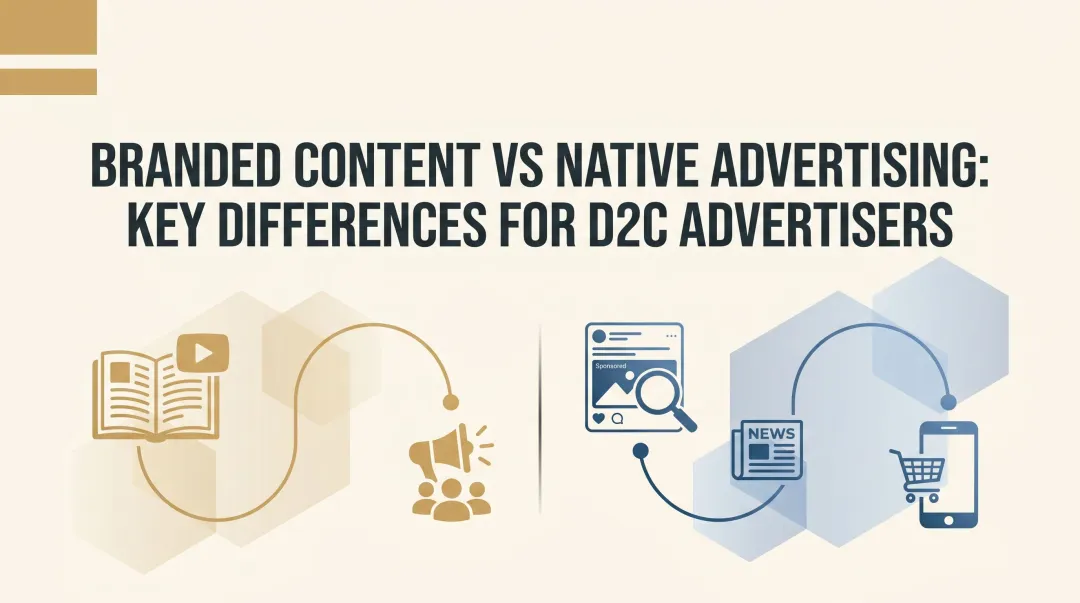
This trust deficit has pushed marketers toward content marketing and native advertising. Yet many use these terms interchangeably — two strategies that differ sharply in ownership, cost structure, and how long they take to pay off. Choosing the wrong one wastes budget, reaches the wrong audience, or delivers results on a timeline that doesn't match your goals.
This guide defines both strategies, compares them across dimensions like media ownership and ROI, and shows when — and how — they work best together.
Key Takeaways
- Content marketing is an owned-media strategy; native advertising is paid media on third-party platforms
- Native advertising delivers faster, targeted exposure — content marketing builds compounding SEO authority over time
- Native ads carry higher upfront placement costs; content marketing demands sustained investment across months or years
- Neither is universally better—the right choice depends on your goals, timeline, and budget; high-performing brands often use both
- For brand awareness at speed, native advertising wins; for long-term audience ownership, content marketing compounds
What is Content Marketing?
Content marketing is a long-term, owned-media strategy focused on creating and distributing valuable, relevant content—blogs, videos, email newsletters, podcasts, whitepapers—to attract and retain a clearly defined audience. The goal is driving profitable customer action over time, not immediate sales.
The Content Marketing Institute defines it as "a strategic marketing approach focused on creating and distributing valuable, relevant, and consistent content to attract and retain a clearly defined audience—and, ultimately, to drive profitable customer action."
High-quality content builds domain authority, improves organic search rankings, and compounds in value over time. A piece published today can drive traffic for years — unlike a paid ad that stops the moment spend stops.
HubSpot research illustrates this clearly: compounding blog posts represent only 10% of all posts but generate 38% of total blog traffic. One compounding post delivers the same traffic as six regular posts.
Common formats span the full funnel:
- Long-form articles and SEO-optimized blog posts
- Email newsletters building owned subscriber lists
- Case studies and whitepapers for decision-stage buyers
- Video tutorials and explainer content
- Infographics and visual data
- Social media content nurturing community
Each format serves different funnel stages—awareness at the top, education in the middle, decision-making at the bottom.
Use Cases of Content Marketing
Content marketing works best where trust and education precede purchase. That covers a wide range of industries:
Where content marketing dominates:
- B2B SaaS companies explaining technical solutions
- Financial services firms building trust through thought leadership
- Healthcare brands navigating regulatory constraints on advertising
- Professional services demonstrating expertise
Editorial trust matters more than immediate exposure. A CFO researching enterprise software will read a 2,000-word comparison guide; they'll ignore a banner ad.
Measurable outcomes:
According to DemandMetric data cited by CMI, content marketing:
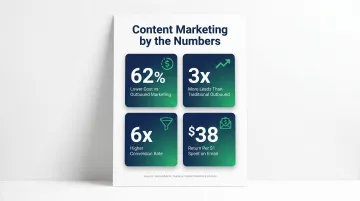
- Costs 62% less than outbound marketing
- Generates 3x more leads than traditional outbound
- Delivers conversion rates nearly 6x higher than non-adopters
- Drives 7.8x more site traffic for leaders vs. non-leaders
Email marketing specifically returns $38 for every $1 spent. These numbers don't appear overnight — most programs hit their stride between 6 and 12 months, which is part of what makes content marketing structurally different from native advertising.
What is Native Advertising?
Native advertising is a paid media strategy where ads match the look, feel, and editorial tone of the platform they appear on—integrating naturally into the user's content experience rather than interrupting it. Native ads are labeled ("Sponsored," "Promoted") but blend structurally with surrounding content.
Main formats:
- In-feed social ads: Facebook, Instagram, LinkedIn posts that appear in user feeds
- Sponsored articles: The New York Times' Paid Post, BuzzFeed partner content
- Recommendation widgets: Taboola, Outbrain placements at the bottom of articles
- Newsletter-native placements: Ad copy matching editorial tone, delivered directly to inboxes—bypassing ad blockers
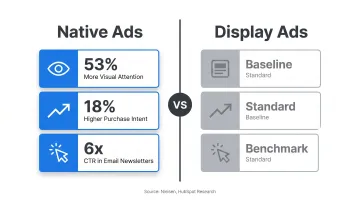
Native advertising reaches audiences that already exist on trusted platforms, delivering faster brand exposure without the months needed to build an owned audience. Research from Sharethrough and IPG Media Lab (4,770 consumers) found native ads received 53% more visual attention than display ads and drove 18% higher purchase intent.
Transparency is non-negotiable. The FTC's Native Advertising Guide requires clear labels like "Ad," "Advertisement," or "Sponsored Advertising Content"—avoiding ambiguous terms like "Promoted" that may suggest endorsement rather than payment.
The best native campaigns maintain credibility despite the "sponsored" label by delivering genuinely useful content where readers are already paying attention—which is exactly what the use cases below illustrate.
Use Cases of Native Advertising
Native advertising fits best when brands need immediate awareness, want to reach a specific readership they don't own, or run time-sensitive campaigns like event promotion or lead generation.
Where it excels:
- Product launches requiring immediate market awareness
- Targeting niche professional audiences (a sponsored piece in a financial newsletter read by CFOs)
- Time-bound campaigns with defined start and end dates
- Reaching new markets where you lack an owned audience
Consider a B2B fintech company placing a sponsored article in a curated email newsletter like those in the House of Summary network—Presidential Summary, Geopolitical Summary, Dubai Summary, London Summary. It reaches an engaged, high-intent subscriber base that reads without distraction. LiveIntent reports native ads in email newsletters drive 6x the CTR of standard display ads, with no risk of ad blockers.
That performance gap comes down to attention: users spend 321 minutes per day in email versus 147 minutes on social media, giving the inbox an edge that web environments simply can't replicate.
Content Marketing vs Native Advertising: Key Differences
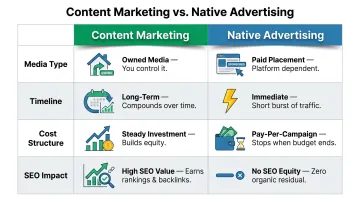
| Dimension | Content Marketing | Native Advertising |
|---|---|---|
| Media Type | Owned media (your blog, email list, YouTube channel) | Paid media (third-party platforms) |
| Timeline | Long-term compounding (6-24 months for full ROI) | Short-term campaign (immediate visibility) |
| Cost Structure | Ongoing creation/distribution costs | Upfront per-placement fees |
| SEO Impact | Earns backlinks, improves rankings, compounds over time | Links typically rel="sponsored" (no SEO equity per Google guidelines) |
Content marketing builds an audience you own and control—your email list, blog readership, YouTube subscribers. CMI's B2B 2024 report shows 79% of B2B marketers use blogs and 73% use email newsletters, with email producing the best results for 44% of respondents.
Native advertising gives you access to someone else's audience—effective for reach, but it creates dependency on third-party platforms and their pricing structures.
Content marketing isn't labeled as advertising—it's genuinely editorial, which builds deeper credibility over time. Native advertising must disclose its paid nature, which skeptical readers notice immediately. That said, relevant native content placed in the right context (a curated newsletter versus a clickbait sidebar) can still earn strong reader trust.
How they relate: Native advertising is one paid-distribution tactic within the broader content marketing discipline—not a synonym for it. Treating them as interchangeable is where most strategy documents go wrong.
Which Should You Choose?
Primary decision factors:
- Budget availability: Native requires upfront placement spend; content requires consistent creation investment
- Timeline urgency: Native delivers faster results; content compounds over time
- Audience ownership goals: If building a proprietary audience is a priority, content marketing is essential
Choose content marketing if:
- You're building long-term brand authority
- You target organic search traffic
- You need to educate complex buyers over multiple touchpoints
- You have 6-12 months to see meaningful ROI
Choose native advertising if:
- You need immediate visibility
- You want to reach a specific external audience quickly
- You're running a time-sensitive campaign
- You lack owned distribution channels
Consider combining both when budget allows:
Use content marketing to build your owned audience while using native placements to accelerate reach into new markets. CMI data shows 86% of B2B content marketers use at least one paid distribution channel, with 35% specifically using native advertising.
For brands targeting high-intent professional audiences:
Executives, finance decision-makers, and global business readers rarely click banner ads. Native placements within premium editorial newsletters combine the credibility of content marketing with the precision of paid targeting — delivered directly to inboxes where ad blockers and algorithms don't apply.
Conclusion
Content marketing and native advertising aren't rivals — they serve different jobs at different points in the growth cycle. Content marketing builds trust and audience ownership over time. Native advertising puts your message in front of the right readers now, without waiting for organic momentum to develop.
Before choosing, align on three variables:
- Goals: Are you building authority over time, or driving reach for a specific campaign?
- Timeline: Can you wait months for organic traction, or do you need visibility in weeks?
- Budget: Is your spend sustained (content production, SEO) or burst-based (a placed feature, a newsletter sponsorship)?
If your audience includes busy professionals who read curated newsletters and won't click a banner ad, a well-placed native piece in the right publication often delivers more qualified attention than months of organic content alone.
Neither strategy wins universally. The smartest approach is knowing which one your current situation actually calls for — and being willing to run both when the timing is right.
Frequently Asked Questions
What is the difference between content marketing and native advertising?
Content marketing is an owned-media strategy focused on building a brand's audience through valuable content over time, while native advertising is a paid strategy placing branded content on third-party platforms to reach existing audiences quickly. Native advertising is a subset of content marketing, not a synonym.
What is the difference between content marketing and advertising?
Traditional advertising is overtly promotional and interrupts the user experience (banner ads, pre-roll videos), while content marketing provides genuinely useful or entertaining content that earns audience attention. The intent and format differ fundamentally, even if both ultimately serve brand or sales goals.
What is native content marketing?
"Native content marketing" refers to using native advertising as a distribution tactic within a broader content marketing strategy. In practice, this means promoting a brand's editorial content through paid native channels so it reaches a targeted audience beyond the brand's owned platforms.
What is an example of native advertising?
Common examples include a sponsored article on a major news site labeled "Paid Post," a promoted post in a LinkedIn feed styled like organic content, or a branded segment in a curated email newsletter where the ad copy matches the publication's tone and voice.
What are the 5 C's of content marketing?
The 5 C's are a practitioner framework widely referenced across the industry: Content, Context, Connection, Community, and Conversion. Together, they cover what you create, where and when you deliver it, how it resonates, the audience you build, and how that audience becomes customers. These principles apply to both owned channels and native placements.