
The distinction matters more now than it did three years ago. As privacy regulations tighten under GDPR and CCPA, and as the third-party cookie landscape continues to shift, advertisers need a clear mental model for what each approach actually controls.
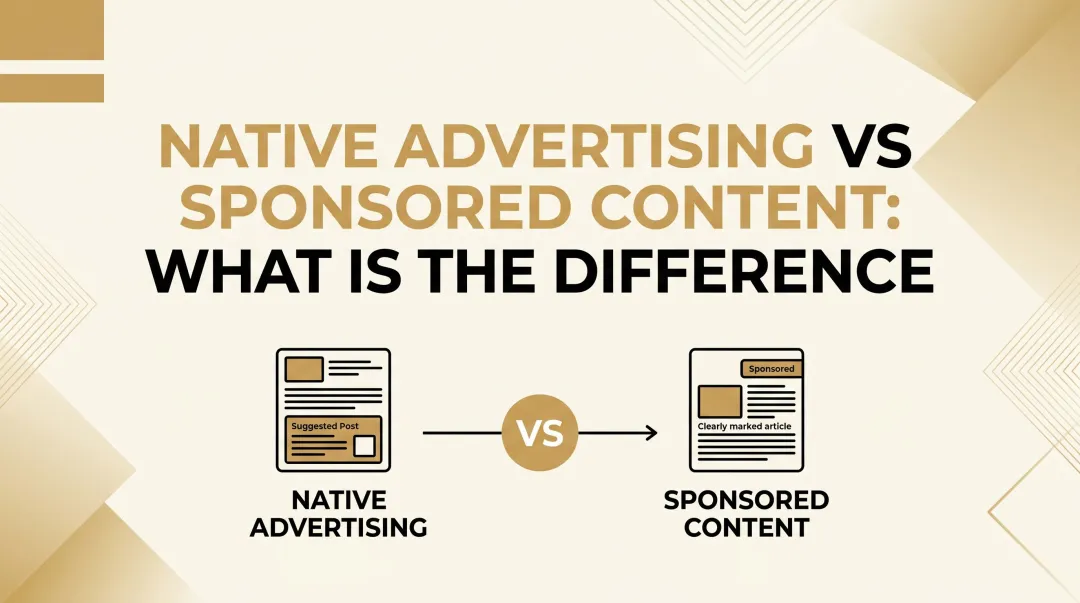
Here's the core insight: contextual advertising is a targeting method — it determines where and why an ad appears. Native advertising is an ad format — it determines how an ad looks and feels. These aren't competing choices. They operate at different layers of strategy, and the strongest campaigns use both.
Key Takeaways
- Contextual advertising = a targeting method; ads are placed based on page content, not personal user data
- Native advertising is an ad format — ads designed to match the editorial look and feel of the platform
- One governs placement logic, the other governs presentation — they are not mutually exclusive
- Contextual excels at privacy-compliant relevance and brand safety; native excels at engagement and trust-building
- Combining native format with contextual targeting is best practice for cookieless, high-performance campaigns
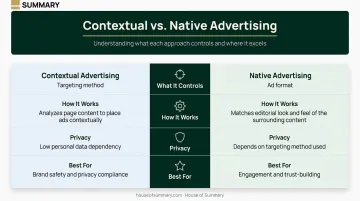
Contextual vs. Native Advertising: At a Glance
| Dimension | Contextual Advertising | Native Advertising |
|---|---|---|
| Core definition | A targeting method based on page content | An ad format designed to match surrounding editorial |
| Primary mechanism | Crawls page keywords, topics, and themes to match ads | Designs ad creative to visually integrate with platform style |
| What it controls | Placement logic — where and why the ad appears | Ad presentation — how the ad looks and feels |
| Privacy requirements | Analyzes content, not people; low personal data dependency | Depends on the targeting method used behind the format |
| Typical ad formats | Display, video, search, newsletter sponsorships | In-feed social posts, sponsored articles, recommendation widgets, newsletter ads |
| Best used for | Brand safety, privacy compliance, relevance without surveillance | Engagement, trust-building, bypassing ad fatigue |
The comparison above is intentionally asymmetrical. Contextual and native operate at different layers — one is a why and where, the other is a how. Treating them as substitutes means optimizing for the wrong variable — one shapes where your ad lands, the other shapes whether anyone engages with it.
Neither format relies on interruption to earn attention. That makes them particularly suited to today's privacy-conscious, ad-fatigued audiences.
What Is Contextual Advertising?
Contextual advertising places ads based on the content of the page being viewed — its keywords, topics, themes, and categories — rather than tracking the individual user's browsing history. It analyzes the page, not the person. This stands in direct contrast to behavioral or retargeting advertising, which relies on user-level data collected across sessions.
How It Works
Automated systems crawl webpage content and categorize it using standardized taxonomies. The IAB Tech Lab's Content Taxonomy 3.1 (released December 2024) provides a common classification language across news, video, podcasts, and apps — enabling advertisers to match campaigns to specific content categories across publishers. A personal finance article triggers a financial planning ad; a travel guide triggers a travel insurance placement. The content context does the targeting work.
Why It's Growing
According to the IAB State of Data 2024, 66% of current contextual ad buyers planned to increase contextual spend in 2024, with agencies (73%) and medium-to-large companies (70%) leading the charge. As third-party cookies become less reliable and privacy regulations demand data minimalism, contextual targeting offers a direct path to relevance without personal data.
The ICO specifies that contextual advertising is more readily privacy-compliant because "personal data is not used to determine the advert" — though storage technologies used in online advertising may still require consent depending on implementation.
Core Benefits
- Brand safety — advertisers control which content categories their ads appear alongside
- Privacy compliance — no behavioral data required; content analysis only
- Relevance without surveillance — topic alignment signals intent without tracking individuals
- Cookieless by design — works within modern privacy frameworks from the ground up
Where Contextual Advertising Fits
Contextual targeting works naturally across display advertising on content sites, programmatic campaigns using topic segments, search engine ads triggered by keywords, and newsletter sponsorships within topic-specific publications. A fintech ad running in a finance-focused newsletter is contextual by nature — the reader's subscription to that publication is itself a contextual signal.
The format tends to perform strongest when content environment and audience intent are tightly aligned:
- B2B campaigns running on trade publications
- Finance and legal brands targeting high-intent research content
- Luxury brands requiring close editorial environment control
What Is Native Advertising?
Native advertising is a format decision, not a targeting decision. An ad is "native" when it's designed to visually and functionally match the platform it appears on. Per FTC and IAB guidelines, native ads are always labeled as "sponsored" or "promoted," but the labeling doesn't disrupt the reading experience the way a banner or pop-up does.
Main Native Ad Formats
- In-feed social ads — sponsored posts on LinkedIn, Instagram, or X that appear within the organic feed
- Sponsored content on publisher sites — branded articles on Forbes or the New York Times written in the publication's editorial style
- Recommendation widgets — "You Might Also Like" placements at the bottom of articles
- Newsletter ads — sponsored messages embedded within the editorial body of an email, matching the surrounding tone and layout
Newsletter advertising occupies a unique position within native formats. Readers have actively subscribed to the content, so there's no algorithm deciding who sees what, no ad blocker intercepting the message, and no visual clutter competing for attention. Ads delivered this way reach an opted-in audience in a distraction-free environment.
Why Native Outperforms Display
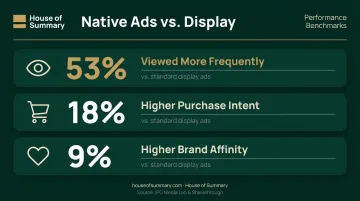
Research from IPG Media Lab and Sharethrough found that consumers viewed native ads 53% more frequently than standard display ads. The same study found native generated 18% higher purchase intent and 9% higher brand affinity compared to display. Nielsen Norman Group's research on banner blindness explains why: users systematically ignore content that looks like a traditional ad, appears near traditional ad zones, or occupies familiar ad positions on the page.
Core Benefits
- Higher engagement rates from non-disruptive format design
- Resistance to ad blockers when delivered via email (newsletter ads bypass browser-level blocking entirely)
- Enhanced brand credibility through editorial association
- Better conversion rates driven by reader trust rather than interruption
Where Native Advertising Fits
Native performs best when the target reader is in a content consumption mindset — learning, exploring, or staying informed — rather than actively searching for a solution. Strong use cases include:
- Content marketing amplification across premium publisher networks
- Brand awareness campaigns requiring editorial association
- Lead nurturing through sponsored articles and newsletters
- High-consideration categories where trust precedes conversion
Luxury brands, fintech firms, and healthcare companies in particular benefit from this format. Building a category narrative takes space and credibility — both of which native placements provide in ways that display ads cannot.
Contextual vs. Native Advertising: Key Differences
Different Questions, Different Answers
Contextual advertising answers: "Where should this ad appear, and why?"
Native advertising answers: "How should this ad look and feel?"
One governs logic. The other governs presentation. Running a native ad with contextual targeting isn't a contradiction — it's exactly how these two tools are meant to work together.
User Experience
Contextual ads can appear in any format as long as the topic aligns with the surrounding content. Native ads are specifically designed to feel seamless regardless of the targeting method used.
In practice, the difference shows up clearly in newsletters: a contextual ad about financial software placed inside a markets briefing feels relevant because of the content match; a native ad in that same newsletter feels natural because it mirrors the editorial tone and layout. Contextual reduces friction through topic match; native reduces friction through visual integration.
Privacy Posture
Contextual advertising analyzes the page, not the person — making it inherently less dependent on personal data.
Native advertising's privacy footprint depends entirely on what's driving the targeting behind the format. A native ad served via behavioral retargeting still requires user data. A natively formatted ad placed contextually in a newsletter is data-light by design.
Performance Characteristics
These formats serve different goals, so comparison requires context:
- Contextual tends to deliver relevance-driven efficiency — the right ad in the right content environment
- Native tends to deliver higher engagement and brand lift — the right ad presentation for an attentive audience
Neither is universally superior. If you're optimizing for reach efficiency, contextual targeting wins on cost and scale. If you're building brand recall with a specific audience, native format earns more attention per impression.
Cost and Execution
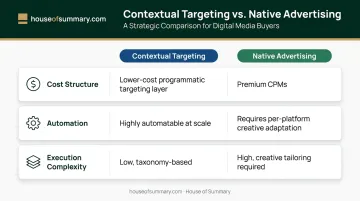
| Factor | Contextual Targeting | Native Advertising |
|---|---|---|
| Cost structure | Typically lower-cost; often a targeting layer in programmatic buys | Commands premium CPMs due to inventory quality and creative requirements |
| Automation | Highly automatable at scale | Requires creative adaptation to match each platform's editorial style |
| Execution complexity | Lower; taxonomy-based matching handles most of the work | Higher; creative must be tailored per platform |
Sharethrough's platform guidance suggests starting bids in the $4–$6 CPM range for native placements, with some inventory clearing at $3–$4 CPM — though costs vary significantly by publisher, vertical, and placement quality.
Which Should You Choose?
Choose Contextual When:
- The priority is placing ads in relevant environments without relying on user data
- Brand safety and editorial adjacency are non-negotiable (finance, legal, luxury, healthcare)
- The campaign runs programmatically at scale and requires automated relevance
- Privacy compliance is a hard requirement, not just a preference
Choose Native When:
- The goal is deep engagement and trust-building, not just impression delivery
- The target reader is in a content consumption or discovery mindset
- The brand needs editorial association to build credibility alongside response
- The product requires narrative — context, story, or category education — to convert
The Case for Both Together
The strongest campaigns run contextual and native together. A native-format ad placed using contextual targeting delivers relevance and resonance simultaneously. The ad matches the editorial environment visually and topically. It minimizes ad fatigue, maximizes relevance, and operates entirely within a cookieless framework.
Newsletter advertising through House of Summary's network of specialized publications is one channel where both advantages are built in from the start. Readers self-select into specific topic publications — Presidential Summary, Geopolitical Summary, Dubai Summary, and London Summary — which creates a direct contextual signal about their interests and professional focus.
Ads appear within curated, human-written editorial content in a native format, delivered directly to the inbox of 500,000+ subscribers with 254,866+ emails opened daily. No ad blockers, no algorithmic interference, no visual clutter.
For brands targeting decision-makers and executives who consume news for work, that combination of contextual alignment and native format is rare to find in a single channel. Reach the House of Summary sales team at sales@houseofsummary.com to request the media kit.
Use contextual targeting to solve a placement problem. Use native format to solve a presentation problem. Build the campaign to solve both at once.
Frequently Asked Questions
What is the difference between native and contextual advertising?
Contextual advertising is a targeting method — ads are placed based on the topics and keywords of the surrounding content. Native advertising is a creative format — ads are designed to visually match the platform's editorial look and feel. They operate at different layers of strategy and can be used together.
What does contextual advertising mean?
Contextual advertising means placing ads based on the content of the page being viewed — its themes, keywords, and categories — rather than tracking user behavior across sessions. Because it analyzes the page rather than the person, it's less dependent on personal data and more compatible with privacy regulations.
What is an example of contextual advertising?
A travel insurance ad appearing within an article about international travel tips. Or a financial planning ad placed inside a personal finance newsletter. The ad is relevant because of the content context, not because of the reader's tracked history.
Can native and contextual advertising be used together?
Absolutely, and the combination is sometimes called native contextual advertising. A native-format ad placed using contextual targeting delivers both visual integration and topical relevance, without relying on personal user data.
Which is better for brand awareness: native or contextual ads?
Native advertising is generally stronger for brand awareness and recall, since its non-disruptive format earns more attention than interruptive display. Contextual targeting adds brand safety by keeping placements within appropriate editorial environments. For brand campaigns, the two work best together.
Are native ads more expensive than contextual ads?
Native ads typically command higher CPMs due to premium inventory and the creative work of matching each platform's editorial style. Contextual targeting is generally more cost-efficient at scale, though final costs vary by platform, placement, and audience quality.