Key Takeaways
- Femtech addresses health conditions unique to or disproportionately affecting women; the market ranges from $39–61 billion today with 15–18% annual growth projected through 2034
- AI diagnostics, menopause wearables, and fertility innovation are gaining FDA validation as clinical tools
- 84% of femtech businesses have ads rejected on Meta, 66% on Google—creating a structural marketing disadvantage unique to women's health
- Newsletter ads deliver 2.3–2.8% CTR vs. 0.05–0.1% for display, bypass ad blockers, and carry trusted editorial context
- For femtech brands shut out of social platforms, newsletters provide direct inbox access to engaged, high-intent readers
What Is Femtech and Why Is It Having a Moment?
Femtech refers to technology-enabled products and services designed to address health conditions unique to or disproportionately affecting women—spanning menstrual health, fertility, pregnancy, menopause, maternal care, mental health, and cardiac health. The term was coined in 2016 by Ida Tin, co-founder of Clue, a menstrual cycle tracking app.
The category exists because of a profound research gap. Until the NIH Revitalization Act of 1993, women were largely excluded from clinical trials. This created decades of medical knowledge built primarily on male physiology—a gap femtech is now racing to close.
Market Size and Economic Opportunity
Market estimates vary based on scope, but all converge on substantial growth:
| Research Firm | Current Value | Target Year | Projected Value | CAGR |
|---|---|---|---|---|
| Grand View Research | $39.29B (2024) | 2030 | $97.25B | 16.37% |
| Straits Research | $45.58B (2025) | 2034 | $178.76B | N/A |
| Precedence Research | $60.89B (2025) | 2035 | $140.64B | N/A |
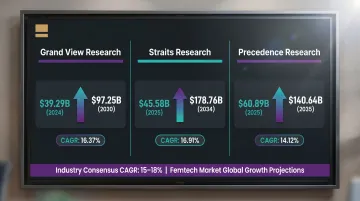
The spread reflects differing definitions—narrower scopes covering only technology products land around $7–11 billion, while broader definitions covering all women's health services reach $39–61 billion. All firms project CAGRs between 15–18%.
The growth story extends beyond market sizing. McKinsey Health Institute's 2024 report found that closing the women's health gap could add $1 trillion to global GDP annually by 2040. A follow-up WEF/McKinsey report put a nearer-term figure at $400 billion per year through a larger, healthier workforce. For brands in this space, that scale means the addressable market is growing faster than most categories—and the window to establish audience relationships early is now.
Clearing Up Terminology
Femtech is often confused with adjacent terms:
- Femtech vs. Fintech: Despite the similar names, these are unrelated industries. Fintech covers banking, payments, and investment tools—femtech doesn't overlap with any of it.
- Femtech vs. General HealthTech: Healthtech covers all digital health broadly. Femtech is the subset focused on female physiology and conditions that mainstream medical research has historically underserved.
The Future of Femtech: Key Trends Shaping the Industry
AI-Driven Personalization and Diagnostics
Artificial intelligence is transforming women's health from reactive symptom management to predictive diagnostics. Clairity Breast received FDA De Novo authorization as the first AI platform to predict five-year breast cancer risk using only a standard 2D mammogram—no family history, genetic testing, or questionnaires required. In a study of over 30,000 mammograms, the tool identified 37% of women in their 40s as intermediate risk and 16% as high risk, analyzing imaging patterns invisible to human observation.
In fertility, AI has moved from experimental to clinically validated. Alife Health's randomized controlled trial across seven U.S. IVF centers showed AI-assisted embryo selection achieved 72.9% clinical pregnancy rates versus 68% with traditional morphology-based selection. The AI arm exceeded 70% pregnancy rates across all subgroups with no safety concerns—demonstrating that machine learning can meaningfully improve reproductive outcomes.
As femtech companies now aggregate large-scale female-specific data, AI models trained on women's physiology are finally matching tools that were historically built on male-dominated clinical research—and in some areas, outperforming them.
Wearable Health Monitors for Women
The wearable category has expanded far beyond fitness trackers into clinical-grade monitoring designed specifically for female physiology:
Cardiac Monitoring: BloomerTech's smart bra integrates textile-based ECG sensors into the garment's band, collecting continuous cardiac activity data including heart rate, irregularities, and cardiovascular factors influenced by menstrual cycles. The device won an NHLBI Small Business Innovation Research Phase 2 award and is currently in an NHLBI-supported clinical trial for cardiac rehabilitation.
Menopause Tracking: Peri, a wearable sensor worn under the breast, uses AI algorithms trained exclusively on continuous data from perimenopausal women. It monitors vasomotor symptoms (hot flashes, night sweats) during exercise, sleep, and showering, while identifying potential cardiovascular, bone density, and cognitive health risk factors.
Both devices feed continuous, female-specific data into clinical workflows—giving physicians longitudinal insight that point-in-time office visits have never provided.
Menopause as a Commercial Category
Menopause has shifted from taboo topic to major investment vertical. Grand View Research values the menopause market at $17.79 billion (2024), projected to reach $24.35 billion by 2030. AARP research found that 90% of women experience menopause symptoms, with women spending an estimated $13 billion annually on treatments. Critically, 73% of employers agree they need to do more to support menopausal workers—signaling that employer benefits and workplace wellness programs are becoming distribution channels for menopause solutions.
Digital platforms, symptom-tracking wearables, and hormone therapy alternatives now address vasomotor symptoms, sleep disruption, and hormonal transitions that affect women for 5–15 years—turning what was once handled by a single prescription into a multi-product consumer category.
Fertility Innovation Beyond Period Tracking
Fertility femtech has moved well past calendar-based tracking. Non-hormonal contraceptive development, ovarian reserve testing, and fertility preservation platforms now address the full reproductive timeline—not just conception. Companies like Oviva Therapeutics are developing non-hormonal drugs targeting ovarian aging, while egg freezing platforms are helping women make preservation decisions years before traditional fertility treatment becomes relevant.
The commercial opportunity extends to reproductive longevity: tools that help women understand fertile windows, assess ovarian reserve, and plan around biology rather than react to it.
Global Expansion and Equity
Femtech's future isn't confined to high-income markets. UNICEF's Femtech Ventures initiative received 1,100+ submissions from 85 countries for its first cohort, with more than half coming from Africa. The initiative provides up to $100,000 in equity-free capital per startup alongside technical support, addressing the reality that femtech receives only 2% of global investment despite women representing half the population.
The first cohort includes:
- Dotoh (Benin): Low-bandwidth teleconsultations for women's health access
- Nurtura by Doto (India): AI maternal vital monitoring for facilities in low-/middle-income countries
- DawaMom by Dawa Health (Zambia): Multilingual chatbot for maternal, neonatal, and sexual health services
- HLlama by Umbaji (Togo): Open-source WhatsApp chatbot for antenatal/maternal health
Solutions built for low-resource settings, such as low-bandwidth teleconsultations and WhatsApp-based care chatbots, are also informing product design in wealthier markets where accessibility and cost remain real barriers.
The Femtech Marketing Problem Nobody Talks About
Sensitive Content Restrictions on Major Ad Platforms
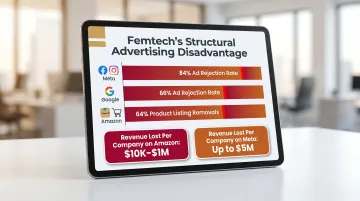
Femtech faces systematic advertising suppression. A 2025 report by the Center for Intimacy Justice found:
- 84% of femtech businesses had ads rejected on Meta (Facebook, Instagram)
- 66% had ads rejected on Google
- 64% had product listings removed on Amazon
- Estimated annual revenue losses: $10,000 to $1 million per company (Amazon), up to $5 million (Meta)
The CensHERship Survey, which engaged 100+ businesses over three years, found 100% of women's health startups surveyed had adverts rejected on both Instagram and Facebook—even when content was clinical and educational.
Real examples include HANX (sexual wellness brand) having its Meta account suspended for six days in December 2024, blocking all customer access, and Daye (period care) filing dozens of appeals throughout 2024 regarding misapplied content policies. Six leading femtech startups filed formal complaints with the European Commission under the Digital Services Act in March 2025.
This isn't an edge case. It's a structural barrier that companies in other health sectors don't face to the same degree — and it pushes femtech brands toward channels that actually work.
Display Ads and Social Ads Fail to Reach the Right Audience
For the brands that do clear those censorship hurdles, a second problem waits: ad blindness. Nielsen research found 67% of consumers admit to banner blindness, while 41% actively tune out social media ads. The global average CTR for display ads sits at 0.05-0.1%—healthcare and pharma perform better at approximately 0.59%, but this still represents fewer than 6 clicks per 1,000 impressions.
Display ads compete in cluttered feeds where users scroll reflexively. For femtech brands trying to build trust around intimate health decisions, interruptive formats in noisy environments are a poor match for how women research and purchase health products.
The Trust Gap
Femtech operates in a category where consumer trust is non-negotiable. These brands ask women to share intimate health data, track menstrual cycles, and make personal health decisions — the bar for credibility is higher than in almost any other consumer category.
Trust-building requires the right environment. Newsletter advertising delivers that environment in ways display and social cannot:
- Opted-in audience: readers chose to be there — no interruption, no resentment
- Editorial credibility transfer: appearing alongside verified, fact-checked content signals legitimacy
- No quality-control gap: unlike social feeds, newsletters don't place ads next to unvetted user-generated content
The Investment Gap Compounds the Marketing Gap
Silicon Valley Bank's 2025 report shows $2.6 billion in VC investment in women's health in 2024—a 55% year-over-year increase. Yet UNICEF notes femtech receives only 2% of global investment. Many femtech companies operate on lean budgets, meaning every marketing dollar must deliver measurable ROI. High-CTR, low-waste channels aren't a preference — they're a budget requirement. That's exactly where newsletter advertising has a structural advantage over programmatic and social.
Why Newsletter Advertising Works for Femtech Companies
Direct Inbox Access with No Algorithm Interference
Email newsletters are delivered directly to subscribers who opted in. Unlike social feeds (controlled by algorithms that suppress femtech content) or search results (where ad placements depend on bidding wars), a newsletter placement reaches every subscriber who opens that issue. The audience is self-selected and high-intent—they chose to receive this content.
Ads That Cannot Be Blocked
29.5% of internet users globally use ad blockers (32.5% in the U.S.), representing approximately 1.77 billion users. Ad blockers eliminate display ads on websites, but they don't apply to email content. Newsletter ads are embedded in editorial content and travel with it—readers see the ad because it's part of the email itself, not served through an ad network.
This structural advantage means femtech brands don't lose 30% of their potential reach before the message even loads.
Significantly Higher Click-Through Rates
Mailchimp's 2025 benchmarks show:
| Channel | Average CTR |
|---|---|
| Email (Health & Wellness) | 2.8% |
| Display Ads (Healthcare/Pharma) | 0.59% |
| Display Ads (Global Average) | 0.05-0.1% |
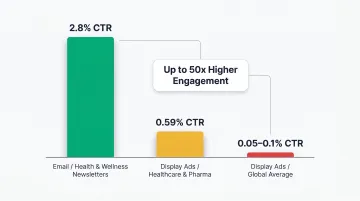
Email newsletter CTRs of 2.3-2.8% outperform display ads by 4-50x depending on format. For femtech brands where every click represents a potential customer overcoming platform restrictions, this performance gap directly impacts campaign ROI.
House of Summary's newsletter network—covering global news, geopolitics, and city-specific content—reaches over 500,000 subscribers with 254,866+ emails opened daily. The platform reports engagement rates substantially higher than industry averages, making it particularly effective for health-sensitive brands seeking credible editorial environments.
Audience Alignment
Femtech brands gain a specific edge from advertising in newsletters whose readers are already health-conscious, educated, and engaged with credible information. A subscriber who reads a curated news digest daily is qualitatively different from someone served a programmatic ad based on browsing behavior.
Newsletter audiences choose to stay informed. They open emails intentionally, read carefully, and act on recommendations from trusted sources — making them precisely the high-intent buyers femtech products require.
Editorial Credibility Transfers to the Brand
When a femtech brand appears in a well-curated, fact-checked newsletter, it benefits from association with a trusted editorial voice. This is especially valuable for a category where consumer trust is a purchase barrier.
House of Summary's network delivers brand messages within verified, high-quality content. The platform's editorial standards—no sensationalism, no guessing games, verification of all facts—create an environment where femtech advertisers can present clinical, educational messaging without triggering platform restrictions or brand-safety concerns. For women's health brands that face routine rejection on paid social and search, that kind of safe, credible placement isn't a nice-to-have — it's a functional requirement.
How to Get Started With Newsletter Advertising as a Femtech Brand
Identify the Right Newsletter Audience
Look for newsletters with high engagement rates, clear editorial standards, and subscriber demographics matching your target customer—whether that's health-conscious professionals, women in midlife, or decision-makers in healthcare and wellness.
Key metrics to request before committing:
- Open rates (Health & Wellness newsletters average 40% per Mailchimp)
- Click-through rates (aim for 2%+)
- Subscriber demographics (age, gender, professional role, geography)
- Audience verification method (opt-in vs purchased lists)
House of Summary's network reaches decision-makers, executives, and affluent professionals concentrated in the U.S. (66%, primarily New York and Los Angeles), UK (London), and UAE (Dubai). A substantial share of that audience is made up of health-conscious, high-income professional women aged 25-55—the core demographic femtech brands are competing to reach.
Design Ads for the Inbox Format
Newsletter ads work best when clear, concise, and built around a single compelling call to action—not repurposed from social media or display formats. The inbox environment rewards brevity and directness.
Your ad should feel like a natural extension of the newsletter's editorial tone. Avoid:
- Exaggerated claims or curiosity-bait headlines
- Overly promotional language
- Multiple CTAs competing for attention
- Design elements that clash with editorial formatting
That alignment matters especially in health-related categories, where trust is everything. Brands working with House of Summary benefit from placements designed to match the fact-first editorial voice readers expect—so ads integrate naturally into the reading experience while meeting the compliance standards health advertising demands.
Test, Measure, and Scale
Start with a focused test before scaling budget:
- Track click-through rates using newsletter-specific landing pages or UTM parameters
- Measure conversions (sign-ups, purchases, consultation bookings) attributed to newsletter traffic
- Compare performance across different publications or placement types
- Calculate cost per acquisition relative to other channels
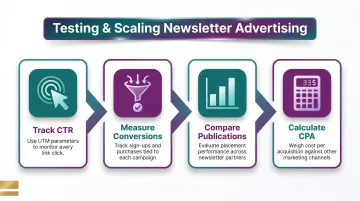
Newsletter advertising delivers trackable, attributable results. Unlike brand awareness campaigns where ROI is harder to measure, newsletter ads generate direct traffic and conversions—giving femtech marketers the data to prove performance and make the case for continued budget.
Frequently Asked Questions
Frequently Asked Questions
What is the future of FemTech?
Femtech is expanding well beyond period tracking into FDA-validated AI diagnostics, menopause wearables, fertility innovation, and employer benefit programs. The market sits between $39-61 billion today, with 15-18% annual growth projected through 2034, driven by rising investment and long-overdue recognition of how underserved women's health has been.
What is FemTech in healthcare?
Femtech covers technology-enabled products, apps, and services addressing health conditions unique to or disproportionately affecting women—menstrual health, fertility, pregnancy, menopause, mental health, and cardiac care. It closes gaps left by decades of male-focused medical research, operating at the crossover between consumer health tech and clinical medicine.
What is the difference between fintech and FemTech?
Fintech (financial technology) focuses on banking, payments, and investment tools, while femtech focuses specifically on women's health and biology. The only similarity is the naming convention; they operate in entirely different industries.
Why do femtech companies struggle to advertise on social media and search platforms?
Major platforms frequently restrict or reject ads referencing menstruation, vaginal health, or fertility—even when content is clinical and educational. 84% of femtech businesses have had ads rejected on Meta, 66% on Google, creating a structural advertising disadvantage that pushes brands toward alternative channels like newsletters.
What makes newsletter advertising a good fit for femtech brands?
Newsletters deliver direct, algorithm-free access to opted-in readers in a trusted editorial context, bypassing ad blockers, platform censorship, and ad blindness. With CTRs 4-50x higher than display ads, they're especially valuable for femtech brands that need to build trust around sensitive health topics.
How big is the femtech market?
The femtech market is valued between $39-61 billion (2024-2025), with consistent projections of 15-18% annual growth through 2033-2035 across research firms. McKinsey estimates closing the women's health gap could add $1 trillion to global GDP annually by 2040.