This article examines the specific principles, formats, and channels that earn trust with HNW audiences, drawing on behavioral data, engagement metrics, and the mechanics of editorial credibility.
TLDR:
- HNW individuals spend 36% less time on social media than mass affluent consumers and prioritize newsletters over feeds
- Thought leadership content outperforms marketing materials by 73% when executives evaluate brand credibility
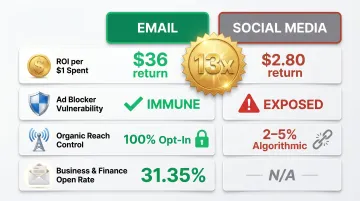
- Email advertising generates $36 per $1 spent versus $2.80 for social media — a 13x performance advantage
- Newsletter subscribers in business and finance show 32% lower churn than general email audiences
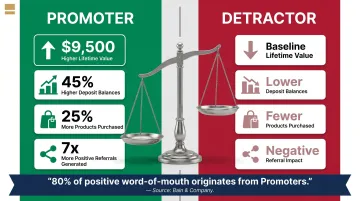
- Loyal HNW customers are worth approximately $9,500 more than detractors over their lifetime
What Makes High Net Worth Audiences Different as Content Consumers
They Consume Less, But More Strategically
Research from TBJ Intelligence reveals that ultra-high-net-worth individuals (those with $5M+ in investable assets) spend just 2.64 hours per week on social media, compared to 4.14 hours for the mass affluent. More significantly, email newsletters rank above social media in their total time allocation. When you're managing multiple businesses, investment portfolios, and global responsibilities, you optimize for signal over noise — not because of digital resistance, but out of efficiency.
The same research shows UHNW individuals spend 5.52 hours weekly on traditional television and 65% use online news sources as their primary channel for national updates. The pattern is clear: curated, editorial-quality information sources win attention, while algorithm-driven feeds lose it.
Peer Networks Trump Social Proof
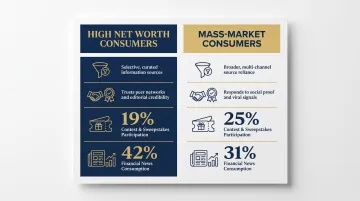
According to Provoke Insights research surveying 1,501 Americans, 22% of HNW individuals (household income $250K+) are "greatly influenced" by friends and family when making purchasing decisions — nearly double the 12% among mass-market consumers. Yet only 28% say they won't buy without checking online reviews, versus 34% of the general population.
This divergence reveals something fundamental about how affluent consumers evaluate credibility. They apply what behavioral economists call a "credibility discount" to mass-market social signals while placing a premium on trusted peer and editorial endorsement. Brand names matter more to this group (60% versus 49% for the mass market), confirming that established reputation — not viral momentum — drives HNW brand evaluation.
The Trust Architecture Differs by Income
The 2025 Edelman Trust Barometer documents a 12-point trust gap between high-income (top 25% of earners, Trust Index 62%) and low-income (bottom 25%, Trust Index 50%) populations. The gap is widest for business institutions: high-income individuals trust business at 68% versus 52% for low-income individuals — a 16-point difference. This gap has widened from 9 points in 2012 to 13 points in 2025.
Key behavioral differences:
- HNW readers are more selective about information sources
- They rely on peer networks and editorial authority over virality
- They are less susceptible to contests, sweepstakes, and promotional gimmicks (19% participate versus 25% of those earning under $250K)
- They follow financial news at higher rates (42% versus 31%)
Time Scarcity Shapes Content Preferences
Harvard Business School research on CEO time allocation found that 61% of CEO work time involves face-to-face interactions, 24% is devoted to electronic communications, and 15% to phone calls. This leaves very little room for passive content consumption.
HNW professionals have less discretionary time, which means a brand earns more by saving their time than by demanding it. Content that summarizes, contextualizes, or distills complex information carries disproportionate value for this group. By contrast, these tactics consistently backfire with affluent audiences:
- Clickbait headlines that overpromise and underdeliver
- Aggressive lead magnets that gate basic information
- Social media volume plays that trade quality for frequency
Each violates the same principle this audience applies everywhere: respect for time.
The Content Marketing Principles That Earn HNW Loyalty
Substance Over Volume
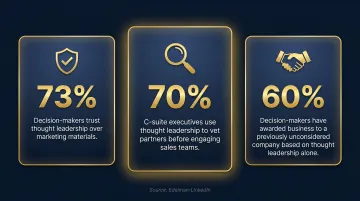
For HNW audiences, publishing frequency matters far less than the quality of insight. A single piece of genuinely useful analysis will outperform ten generic blog posts. According to Edelman-LinkedIn research surveying nearly 2,000 professionals globally, 73% of decision-makers say thought leadership is a more trustworthy basis for assessing a company's capabilities than its marketing materials or product sheets.
This isn't surprising. HNW readers can quickly distinguish between content designed to educate and content designed to sell. The former builds trust. The latter triggers skepticism.
The brands that earn this audience's loyalty become the source they return to for clarity — not just awareness. That shift starts with a single question: what do they need to understand that they don't already?
Editorial Credibility and Verification
HNW readers are sensitive to factual errors, vague sourcing, and overconfidence. The same Edelman-LinkedIn research reveals the downside risk: 50% of decision-makers state that poor-quality thought leadership can actively damage a company's reputation. Compounding this, 70% say most thought leadership they consume is "uninspired" or lacks original thinking.
Committing to accuracy means:
- Citing verified sources with clear attribution
- Correcting errors publicly when they occur
- Taking clear positions grounded in evidence
- Avoiding hedged language that signals uncertainty masked as authority
House of Summary's editorial process exemplifies this standard: every claim is validated before publication, sources are traced, and if a claim cannot be confirmed, it is excluded from the newsletter. This commitment to verification — prioritizing accuracy over speed — builds the kind of trust that translates to long-term loyalty.
Speak to Their Actual Context
HNW audiences typically operate at a global, cross-sector, or executive level. Content that references geopolitics, macroeconomics, regulatory shifts, or leadership strategy speaks directly to their world. Context-aware content outperforms generic lifestyle or motivational content because it acknowledges the complexity of their decision-making environment.
A newsletter covering geopolitical developments — conflicts, power shifts, diplomatic negotiations — resonates with executives whose operations span multiple countries. For them, international politics isn't background noise; it directly shapes markets, supply chains, and regulatory exposure. Content that connects those dots earns a permanent place in their reading rotation.
Consistency of Voice and Perspective
A consistent editorial identity functions like a brand fingerprint for HNW readers. They may not consciously articulate it, but they notice when a publication or brand sounds like itself every time. This consistency builds trust through predictability — readers know what to expect, and that expectation is reliably met.
The Financial Times Global Reader Survey 2024 demonstrates what decades of editorial consistency produce: 74% of readers identify the FT as their most trusted news source, and 29% of the audience are C-suite executives who have been reading for an average of 16 years. This 16-year average tenure illustrates the "consistency premium" — audiences reward predictable quality with long-term attention allocation.
Respect for Their Intelligence
For HNW audiences, oversimplification is as damaging as unnecessary complexity. The goal is clarity without condescension — presenting sophisticated ideas accessibly without stripping out the nuance.
HNW readers don't need concepts explained from first principles. What they need is:
- The analysis behind the headline
- The implications for their sector or portfolio
- The connections between disparate developments
Content that delivers at this level earns repeated attention. Content that talks down to them gets unsubscribed.
Content Formats That Resonate With High Net Worth Readers
Long-Form Editorial and Analysis
While short-form dominates mass-market content, HNW audiences have appetite for depth when the topic warrants it. The Edelman-LinkedIn research establishes that 50% of decision-makers spend at least 1 hour per week reading thought leadership content, with a significant portion of the C-suite reporting more than 4 hours weekly on deep-dive industry insights.
Long-form pieces — market analysis, geopolitical briefings, sector deep-dives — signal that a brand has genuine analytical depth, not just a content calendar. That appetite directly contradicts the common assumption that executive audiences want only brief, easily digestible content.
The FT data reinforces this: 53% of C-suite readers specifically consume the Life and Arts section — content that is notably long-form, analytical, and culturally oriented rather than strictly financial.
Curated Newsletters and Briefings
The newsletter format has particular resonance with HNW readers because it arrives in the inbox, requires no algorithmic discovery, and communicates a sense of selectivity and editorial curation. Brands and media companies that filter the world's information into a reliable, trustworthy briefing become indispensable to time-pressed high-value readers.
Reuters Institute research found that 17% of people globally use email newsletters weekly for news, with the US at 22%. Critically, email news is valued primarily by "richer and more educated" consumers, with over 80% of email news users in the US aged 35 or older. Among email news users, 65% value convenience, 24% value unique content not available elsewhere, and 23% receive specialist media emails specifically useful for work.
House of Summary's network of specialized newsletters exemplifies this model:
- Presidential Summary: Delivers truthful summaries of key events in politics, business, culture, and sports Monday through Saturday
- Geopolitical Summary: Provides daily overviews of global conflicts, power shifts, and diplomacy
- Dubai Summary: Covers Dubai's business, culture, and policy developments on weekdays
- London Summary: Offers insights into London's markets, policies, culture, and daily life on weekdays
Each edition is written by subject-matter experts, fact-checked before delivery, and designed to give serious readers exactly what they need with no noise or sensationalism. Brands that advertise within such environments benefit from the trust halo the editorial context provides.
Thought Leadership and Expert Commentary
First-person insight from genuine subject-matter experts — rather than ghostwritten brand content — carries more weight with HNW audiences. These readers have seen enough polished brand content to recognize when expertise is genuine versus constructed for appearances.
The Edelman-LinkedIn research reveals that 70% of C-suite executives specifically use thought leadership to vet potential partners and service providers before engaging with sales teams. Perhaps most significantly, 60% of decision-makers report having awarded business to a company they had not previously considered, purely on the strength of its thought leadership — a "challenger opportunity" that bypasses incumbency advantages.
In finance, geopolitics, and global business, strong thought leadership typically includes:
- Analysis grounded in proprietary data or research
- Expert commentary from individuals with verifiable domain expertise
- Clear positions on industry developments with supporting evidence
- Transparent acknowledgment of uncertainty where it exists
House of Summary facilitates this through sponsored content written in the natural editorial voice of their publications, with clear advertiser disclosure. This approach works particularly well for brands requiring context or narrative — luxury brand storytelling, fintech product positioning, healthcare narratives, and category education.
Exclusive or Access-Oriented Content
Perceived exclusivity reinforces value for HNW audiences. Content framed around early access, private briefings, invite-only events, or insider perspectives signals that the brand understands this segment's preference for access over abundance.
When a reader receives information that feels curated specifically for them — or for a select group with shared interests and responsibilities — it communicates respect for their judgment. That perception matters. Full-issue sponsorships and dedicated brand features in premium newsletters routinely outperform broad-reach social campaigns precisely because the context signals selectivity, not scale.
Why the Channel Matters as Much as the Content
The Fundamental Problem With Algorithm-Dependent Channels
Algorithm-dependent channels create three compounding problems: unpredictable reach, uncontrolled brand adjacency, and a cluttered visual environment that devalues even high-quality content. An executive who reads financial analysis in a newsletter inbox experiences it very differently from stumbling across branded content in a social feed.
The channel shapes the perception of the message. When content appears in a curated, opt-in environment like a newsletter, it signals editorial judgment and selectivity. An algorithmically served feed puts that same content in direct competition with thousands of other stimuli — most of which the reader is actively trying to ignore.
Ad Blockers Create a Structural Barrier
According to SQ Magazine's 2026 compilation citing DataReportal and Statista, approximately 40% of US internet users earning over $75,000 annually have installed an ad blocker, compared to roughly 25% among lower-income users. College-educated users adopt ad blockers at a rate of 44%, versus 30% for those without a degree.
Higher income, higher education, and heavier digital device usage are precisely the traits that correlate with ad blocker adoption — which means HNW and professional audiences are disproportionately invisible to traditional display and programmatic advertising. Email newsletters bypass this barrier entirely because they operate within the inbox, an environment where the subscriber has explicitly opted in and ad blockers do not apply.
Direct-to-Inbox ROI Outperforms Social by 13x
Litmus research found that email marketing ROI falls between $36 and $50 per $1 spent for 30% of companies. In the media, publishing, and events sector specifically, email ROI reaches 32:1. Multiple industry compilations estimate email delivers approximately $36 per $1 spent versus $2.80 for social media — a roughly 13x performance advantage.
| Channel Metric | Email/Newsletter | Social Media | Performance Ratio |
|---|---|---|---|
| ROI per $1 spent | ~$36 | ~$2.80 | 13x |
| Ad blocker vulnerability | None | Moderate-high | Immune vs. exposed |
| Organic reach control | 100% (opt-in) | 2-5% (algorithmic) | 20-50x |
| Business+Finance open rate | 31.35% | N/A | - |
When a reader opts into a newsletter, they're granting deliberate attention — something HNW audiences give sparingly and algorithmic feeds cannot manufacture.
Channel Selection Signals Brand Positioning
Brands that invest in curated, editorial-quality newsletter placements are communicating something implicit but powerful: that they belong in the same context as readers doing serious thinking. That contextual fit is what converts a single impression into a recurring association.
House of Summary's network reaches 500,000+ subscribers with 254,866+ emails opened daily. The audience composition includes decision-makers, executives, policy professionals, and high-income consumers across the USA (66%), UAE (18.2%), and UK (10.47%). By advertising within this environment, brands signal that they understand where HNW audiences spend their attention.
Measuring Loyalty With a High Net Worth Audience
Standard Vanity Metrics Are Poor Proxies
Impressions, follower count, and viral shares tell you almost nothing about loyalty with HNW audiences. The more meaningful signals include:
- Repeat open rates for newsletters
- Direct replies and substantive responses
- Subscriber retention over time
- Unsolicited referrals
- Quality of inbound engagement (substantive questions, not generic comments)
Mailchimp benchmark data provides a structural indicator: the Business+Finance category shows an unsubscribe rate of just 0.15% per campaign, versus the all-industry average of 0.22% — approximately 32% lower churn per touchpoint. This suggests that subscribers to financial and business content demonstrate measurably higher commitment than general email audiences.
The Long-Term Value Orientation
A brand that earns a place in a high net worth reader's trusted information diet may not show dramatic short-term conversion spikes, but the lifetime relationship value spans purchase decisions, brand advocacy, and influence within peer networks — and it compounds over time.
Bain & Company's foundational research on loyalty economics quantifies this gap. In an affluent banking study, a single promoter is worth approximately $9,500 more than a detractor over the customer lifetime. Promoters maintain deposit balances that are 45% higher than detractors, purchase 25% more products, and their product mix skews toward more profitable offerings.
The referral data is just as striking. Promoters generate nearly 7 times as many positive referrals as detractors, and more than 80% of all positive word-of-mouth originates from promoters. Their attrition rates average only one-third those of detractors.
Applied to newsletter audiences, this means the gap between a highly engaged subscriber and a passive one is not incremental but multiplicative. The FT's 16-year average tenure among C-suite readers illustrates the endpoint of this compounding: decades-long relationships that no social media platform can replicate.
Loyalty measurement framework for HNW audiences:
- Track 12-month retention — what share of subscribers remain active after a full year?
- Monitor repeat open frequency — how many editions does the average subscriber open per month?
- Watch for substantive replies — are readers responding with questions, not just clicking?
- Measure peer forwarding — are subscribers sharing content with colleagues and contacts?
- Calculate lifetime relationship value — total relationship worth across purchases, referrals, and influence
Acquiring a loyal HNW reader costs more upfront than mass-market acquisition. But the return is measured in decades, not quarters — and that time horizon changes the entire calculus.
Frequently Asked Questions
What is the role of content marketing in building brand loyalty?
Content marketing builds loyalty by consistently delivering value that earns trust over time, shifting the brand relationship from transactional to relational. It gives audiences a reason to return before they're even ready to buy, creating a trust foundation that influences future decisions.
Why is it harder to build loyalty with high net worth audiences?
HNW individuals are more experienced at filtering out generic marketing, have higher standards for credibility and editorial quality, and are less susceptible to social proof or volume-based tactics than mass-market audiences. They encounter far more branded content, making them better at dismissing it.
What types of content resonate most with high net worth readers?
Analysis-driven content, curated briefings, expert commentary, and access-oriented formats outperform entertainment or lifestyle-driven content with this demographic. HNW readers prioritize verified insight and efficiency, not volume.
How does newsletter marketing compare to social media for reaching HNW audiences?
Newsletters reach the inbox directly without algorithmic interference, ad blockers, or competing visual noise, making them a higher-trust, higher-attention channel. Email delivers roughly 13x better ROI than social media ($36 vs. $2.80 per $1 spent) — and 40% of affluent users run ad blockers that email bypasses entirely.
What mistakes do brands make when marketing to high net worth individuals?
The most common errors include oversimplifying the message, prioritizing reach over relevance, using clickbait tactics, and appearing in low-quality content environments that undermine brand credibility.
How do you measure content marketing success with a high net worth audience?
Focus on loyalty-aligned metrics like newsletter retention rates, repeat engagement, quality of responses, and referral behavior rather than surface-level metrics like impressions or follower growth. Behavioral shifts — subscriptions retained, referrals generated, deals initiated — are what distinguish genuine loyalty from passive exposure.