The core tension is this: fashion brands are flooding social media with content designed to chase algorithmic engagement, while their most valuable potential customers are reading curated newsletters, financial press, and editorial publications where none of that content exists. A six-month study of 1,500 HNWIs across four regions found "growing trust in credible domain experts over mainstream media brands" and actively declining visibility for brands relying on traditional advertising channels.
This article covers how HNW audiences think and consume content differently, which content formats earn their trust, which channels actually reach them, and how to measure success when your target audience filters out 95% of marketing signals.
Key Takeaways
- Executive and HNW audiences respond to credibility and provenance — not virality or trend participation
- Reach them through curated inboxes, premium publications, and professional networks — not open social feeds
- Content that signals exclusivity, craftsmanship, and cultural authority consistently outperforms discount-driven or urgency-based messaging
- Long-form editorial storytelling outperforms short-form content with this audience
- Measure success through brand perception shifts and qualified inquiries, not follower counts
How Executive and HNW Buyers Actually Consume Fashion Content
High-net-worth consumers are time-poor, ad-averse, and trained to filter out mass marketing signals. Nielsen research shows that 92% of consumers trust earned media — editorial coverage, peer recommendations, and expert endorsements — over all other forms of advertising. This trust gap is even wider among HNWIs, who demonstrate active avoidance of traditional advertising. A 2023 Nielsen study found that 64% of consumers intentionally take actions to avoid ads on streaming platforms.
Their Information Diet
These individuals rely on curated, high-signal channels rather than open social feeds driven by algorithmic recommendation. Their media consumption includes:
- Financial and lifestyle press
- Private newsletters from trusted sources
- Industry-adjacent publications
- Professional networks and peer groups
This contrasts sharply with mass-market fashion audiences, who discover brands through influencer content, platform recommendations, and viral trends. According to Jasper Colin research, HNWIs prioritize "credibility, privacy, and relevance over mass visibility" and show a clear preference for "gated digital ecosystems" and "low-tracking digital environments."
Purchase Decisions Driven by Trust, Not Influencers
At this level, purchase decisions are driven by trust, heritage, and peer validation — not influencer endorsement. The reference group for HNW buyers is lateral (peers and respected institutions), not aspirational (celebrities they follow on social media). While ultra-high-net-worth individuals spend an average of three hours daily on social media, they use these platforms for research rather than discovery.
The Risk of Mass-Market Tactics
Deploying mass-market content tactics to reach an executive audience signals that the brand doesn't understand them. That misalignment actively damages brand prestige.
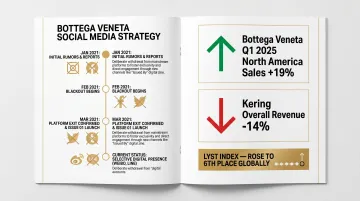
The Bottega Veneta case illustrates this directly. The house deleted its Instagram, Twitter, and Facebook accounts in early 2021. By Q4 2024, it had risen to 6th place on the Lyst Index. In Q1 2025, sales rose 19% in North America — even as parent company Kering reported a 14% overall revenue decline.
For fashion brands targeting this segment, the measure of success isn't audience size. It's precise placement in the channels these buyers already consult — earned through editorial quality, not advertising volume.
Content Formats That Build Trust With Affluent Fashion Consumers
Heritage and Craftsmanship Storytelling
Long-form editorial content about provenance, materials, artisan relationships, and production philosophy resonates with HNW audiences because these readers want to understand what they are buying at a level of depth that justifies the price and the identity association.
Brunello Cucinelli's content-first strategy contributed to first-half 2024 revenues up approximately 15% at constant exchange rates, outperforming the broader luxury slowdown. Founder Brunello Cucinelli stated: "We do not wish to grow fast. Rapid, sudden growth isn't rational and it isn't sustainable."
Thought Leadership and Cultural Positioning
Fashion brands can publish authoritative content — trend analysis written for sophisticated readers, commentary on craft and design history, perspectives on the intersection of fashion and culture — that positions the brand as intellectually credible, not just aesthetically desirable. The dynamic mirrors research showing that 75% of C-suite executives say thought leadership leads them to research products they weren't previously considering: credibility opens doors that advertising cannot.
Exclusivity-Signaling Content
Members-only previews, private editorial lookbooks, early access communications, and invitation-framed content reinforce the perception of scarcity and selectivity. This contrasts sharply with public-facing content drops designed for maximum visibility.
Effective exclusivity tactics include:
- WhatsApp invite strategies for product launches
- Private client portals with bespoke content
- Invitation-only digital previews
- Strategic absence from mass channels
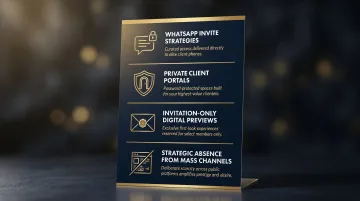
Designer Phoebe Philo demonstrated this principle by vanishing from public view for six years and amassing 300,000 Instagram followers without posting a single time.
In-Depth Access Journalism
Substantive behind-the-scenes content — atelier visits, designer interviews with real depth, supply chain transparency at a craft level — builds a different kind of brand equity than trend-chasing content designed for TikTok. One earns loyalty; the other chases reach.
Hermès positions products as "investment pieces rather than a purchase," treating items as appreciating assets. The brand generated $12.4 billion in revenue in 2023 without ever running sales, discounting products, or relying on significant traditional advertising.
Editorial Press and Third-Party Credibility
Being written about in respected publications carries more weight with HNW audiences than owned content. Press mentions, awards, and critical recognition function as social proof for this audience in a way influencer posts do not. Brands can use editorial coverage as content fuel — republishing excerpts, highlighting recognitions, and leveraging third-party validation in owned channels.
Channels That Actually Reach Executives and HNW Readers
Premium Newsletters and Curated Inbox Channels
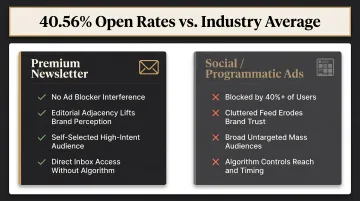
The inbox is the dominant attention channel for executives. Unlike social media, newsletters bypass algorithms, reach the reader in a private and focused context, and carry no visual clutter competing for attention.
Luxury goods email campaigns achieve approximately 40.56% open rates and 2.98% click-through rates, well above cross-industry averages. This performance gap widens further when comparing luxury email to programmatic or social advertising for high-income audiences.
Premium newsletter networks provide direct, uninterrupted access to audiences that actively chose to be informed. House of Summary, for example, delivers verified, curated content to 500,000+ global executives and business professionals across wealth-dense metros including New York, Los Angeles, London, and Dubai. Fashion brands advertising within such networks reach decision-makers in contexts where click-through rates outperform traditional digital advertising. One advertiser reported rates four times higher than Google AdWords.
Newsletter advantages for fashion brands:
- No ad blockers interfere with delivery
- Editorial adjacency enhances brand perception
- Audience self-selects for business and cultural content
- Direct path to inbox without algorithmic mediation
Financial and Lifestyle Press Partnerships
Editorial partnerships, sponsored content, and advertising placements in trusted publications carry far more weight than the same content served programmatically — placement in premium publications functions as implicit editorial endorsement.
Publications worth targeting include:
- Business and financial press (titles executives read for decision-making, not leisure)
- Luxury lifestyle supplements attached to major broadsheets
- Global affairs and current events publications with HNW readership demographics
- City-specific luxury titles in wealth-dense markets like London, Dubai, and New York
LinkedIn and Professional Networks
LinkedIn reaches executives in a professional context, making it more appropriate than Instagram or TikTok for fashion brands targeting C-suite buyers. CEO content gets four times more engagement than content from other LinkedIn members, and CEOs see a 39% increase in followers after consistent posting.
What works on LinkedIn:
- Thought leadership articles from founders and creative directors
- Designer perspectives on craft and culture
- Brand positioning content tied to industry developments
- Commentary on fashion's intersection with business and sustainability
Avoid product promotion. This platform rewards substantive perspective, not catalogue content.
Private and High-Touch Digital Experiences
Where LinkedIn and newsletters prioritize reach, private experiences prioritize depth. Invitation-only content — private client portals, bespoke styling consultations, digital previews for existing high-value clients — function as content channels for this segment. The exclusivity of access is itself a content signal. These experiences reinforce relationship depth rather than audience breadth.
What to Deprioritise
High-volume social media channels (TikTok, mass Instagram campaigns, UGC amplification) deliver low ROI for reaching executive and HNW audiences. This isn't because they don't work for fashion — they work exceptionally well for mass-market and Gen Z segments. But this specific audience is not primarily reachable there, and overexposure in these channels actively undermines premium positioning.
Tone, Aesthetics, and Brand Voice for Discerning Audiences
Understated Confidence Over Hype
HNW audiences respond to restraint in language and visual presentation. Superlatives, urgency language ("limited time," "best ever"), and trend-chasing phrasing signal mass-market intent. The right tone is authoritative, precise, and calm.
As luxury brand language specialist Mike Reed notes: "Having the confidence not to sell is perhaps the most authentic luxury trait of all." This principle applies directly to content: restraint signals confidence in the product's inherent value.
Editorial Precision in Language
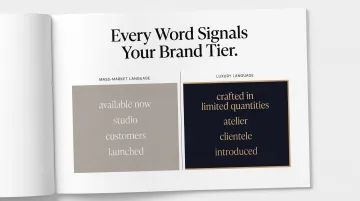
Every word choice matters in luxury communication. The language itself communicates the brand's tier and understanding of its audience. Small substitutions carry significant weight:
- "Crafted in limited quantities" vs. "available now"
- "Atelier" vs. "studio"
- "Clientele" vs. "customers"
- "Introduced" vs. "launched"
HNWIs "abhor the hard sell and aggressive advertising," according to Matteo Atti, Global CMO of Vista. Content should make the customer feel they chose the brand rather than being targeted.
Visual Standards That Signal Quality
For this audience, visual content must meet an editorial photography standard — not UGC quality, not aspirational lifestyle imagery that looks mass-produced, but genuinely considered art direction. That standard applies across every touchpoint: photography, layout, typography, and the white space around them.
Bottega Veneta's rise after deleting its social media accounts illustrates what this looks like in practice. The brand hid logos inside products and allowed fan-run accounts to serve as "unofficial curators." The result was organic reach with a "halo of exclusivity that no ad spend could replicate" — proof that controlled visual narrative outperforms volume every time.
Visual content for HNW audiences should meet three non-negotiable criteria:
- Purposeful art direction with clear creative intent, not stock-photo aesthetics
- Consistency across every format — no visual mismatches between channels
- Restraint in composition: negative space and silence communicate quality as much as imagery does
Measuring Content Success With High-Value Audiences
Shift Away From Vanity Metrics
Likes, follower growth, and viral reach are the wrong success indicators for this strategy. The relevant signals are:
- Email open and click-through rates within premium channels
- Qualified inbound inquiries from target segments
- Press coverage in target publications
- New client acquisition from high-value segments
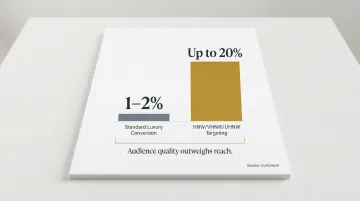
CustomerX reports that standard luxury conversion rates range from 1% to 2%, but can reach up to 20% when targeting HNWIs, VHNWIs, or UHNWIs specifically. That gap reflects why audience quality outweighs reach in this segment.
Brand Perception and Share of Editorial Voice
Beyond traffic and clicks, track whether the brand is appearing in the right publications and conversations. Editorial mentions, award recognition, and share of voice in premium media serve as proxies for brand positioning with executive audiences.
Content quality is itself a measurable differentiator here. According to the Edelman-LinkedIn B2B Thought Leadership Impact Report, only 15% of decision-makers rate the thought leadership they consume as "very good" — which means quality alone separates brands that earn attention from those that don't.
Account for Long Conversion Cycles
HNW fashion purchases are rarely impulsive. Between 2019 and 2023, luxury achieved 5% CAGR, with price increases accounting for more than 80% of growth while volume gains were more moderate. This indicates HNW buyers respond to value and heritage signals through extended consideration periods, not volume or discount incentives.
Content marketing in this space operates on longer attribution timelines. Brand familiarity, repeated trust-building touchpoints, and relationship cultivation all precede purchase — sometimes by months.
The LinkedIn 95-5 Rule offers useful framing: only 5% of potential customers are in-market at any given time, meaning 95% of content value accrues over multi-quarter or multi-year horizons. Measurement frameworks must account for these realities rather than defaulting to last-click attribution.
Frequently Asked Questions
What type of content resonates most with high-net-worth fashion buyers?
Long-form editorial content, heritage storytelling, and third-party credibility signals (press mentions, award recognition) resonate most. Trend-driven or UGC-style content typically underperforms with this audience, as it signals mass-market positioning rather than exclusivity and craft.
Is social media effective for reaching executive and HNW fashion audiences?
While LinkedIn has utility for thought leadership, open social platforms like TikTok and mass Instagram campaigns have limited reach into executive and HNW segments. These audiences spend more time in curated inbox environments and premium publications than in algorithmically driven feeds.
How is content marketing for luxury fashion different from mass-market fashion?
Luxury content marketing favours restraint over urgency, editorial depth over viral brevity, and audience quality over reach. Where mass-market content optimises for conversion speed, luxury content prioritises brand perception and long-term relationship building.
What channels work best for reaching C-suite fashion consumers?
Premium curated newsletters, financial and lifestyle press partnerships, LinkedIn thought leadership, and private digital experiences are the most effective channels. These environments provide the editorial context and audience quality that C-suite decision-makers trust.
Should luxury fashion brands use influencer marketing to target HNW audiences?
Traditional influencer marketing is low-signal for HNW audiences. Editorial endorsements, respected columnists, and peer-level cultural figures carry far more credibility — domain expertise and lateral peer status matter here, not follower count.
How long does it take for content marketing to convert an HNW fashion customer?
HNW conversion cycles run months to years. Content marketing builds trust through repeated, credible touchpoints, and measurement frameworks should reflect this timeline rather than expecting fast attribution or immediate ROI.