This disconnect creates a critical challenge: 65% of top luxury clients feel overwhelmed by brand communications they find irrelevant, while luxury beauty brands continue pouring budgets into the same digital tactics that erode their positioning. The result? The luxury market lost 50 million customers between 2022 and 2024, according to BCG's analysis.
This guide provides a practical framework for beauty and luxury brands to rethink their content strategy—from messaging and format to distribution channels—to genuinely connect with affluent consumers who research extensively, disengage quickly from inauthentic brands, and treat luxury purchases as identity investments rather than transactions.
TLDR:
- HNW consumers approach luxury beauty as identity expression, not product performance—over 65% of HNWIs admit emotional factors drive purchase decisions
- Standard influencer campaigns and high-frequency social content backfire by signaling accessibility over exclusivity
- Effective luxury content includes heritage storytelling, owned editorial platforms, and values-led cultural partnerships
- Premium newsletter advertising, prestige print, and invite-only experiences reach HNW audiences in trusted environments
- Success metrics focus on brand equity indicators—press quality, search volume, and audience quality signals—not vanity metrics
What Sets HNW Beauty Consumers Apart
HNW consumers approach luxury beauty purchases as identity investments, not transactions. According to the Capgemini World Wealth Report 2024, more than 65% of HNWIs acknowledge that emotional biases influence their decisions—they buy brands whose values and worldview align with their self-image, not just products that perform well. The psychology runs deeper than preference: 78% of ultra-high-net-worth individuals (those with $30 million+) consider value-added services essential to their brand relationships. They consume experiences, not just products. A brand earns budget only after it earns psychological alignment.
The HNW Relationship With Media
HNW consumers tend to be highly educated, time-scarce, and deeply resistant to feeling marketed to. Their media consumption patterns reflect this: they gravitate toward editorial, long-form content, and curated sources over algorithmic feeds and paid placements.
These preferences create structural challenges for standard digital marketing:
- Affluent consumers are 32% more likely than the general population to use ad-blockers and 35% more likely to use private browsers
- They receive 40-60 brand messages per month but find most lack personalization and relevance
- Awareness is driven by word of mouth and peer networks, while consideration focuses on evaluating authenticity and brand performance
- They research extensively online before purchasing, but only 10% of HNW respondents shop for luxury goods exclusively online
The takeaway: HNW audiences want content that carries expertise and tells a compelling story. They'll engage deeply with brands that respect their intelligence, but disengage instantly from content that feels transactional or intrusive.
Geographic and Lifestyle Concentration
Where HNW consumers live shapes what content resonates with them. These audiences concentrate in specific global cities — and effective luxury content reflects those cities' cultural references, pace, and lifestyle realities. According to the Knight Frank Wealth Report 2024, the global UHNW population (individuals with net worth of $30 million+) reached 626,619 in 2023, with clear geographic patterns:
Regional distribution:
- North America: 253,000 UHNWIs
- Asia: 165,000 UHNWIs
- Europe: 155,000 UHNWIs
- Middle East: 18,700 UHNWIs
Key metropolitan markets:
- New York City: 349,500 millionaires (ranked #1 globally)
- Singapore: 244,800 millionaires (#4)
- London: 227,000 millionaires (#5)
To be in the top 1% requires $12.8 million in Monaco, $5.2 million in Singapore, and $3 million in Hong Kong. Luxury beauty content should speak to readers in Dubai, London, Monaco, Singapore, and New York — their lifestyle, cultural references, and daily realities — not a flattened portrait of "global luxury consumers."
Trust as Primary Currency
HNW audiences are quick to disengage from brands that feel inauthentic or opportunistic. Building credibility through content isn't optional—it's the foundation of conversion.
The decision journey for this segment has three distinct phases. In the consideration phase, buyers research brand heritage, ingredient sourcing, formulation history, and ethics. In the validation phase, they consult peer networks, dermatologists, and trusted editorial sources before committing. Post-purchase, they continue evaluating whether the brand experience matches its positioning.
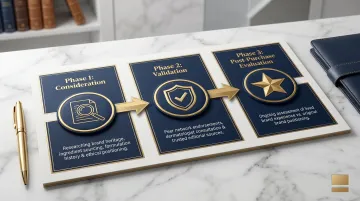
Brands that shortcut this process — through aggressive retargeting, promotional discounting, or volume-based campaigns — signal a fundamental misreading of luxury psychology. That misreading rarely gets a second chance.
Why Standard Beauty Content Marketing Falls Flat With Luxury Audiences
High-frequency social media content and influencer-heavy campaigns drive strong results for mass-market beauty brands. For HNW audiences, they actively backfire.
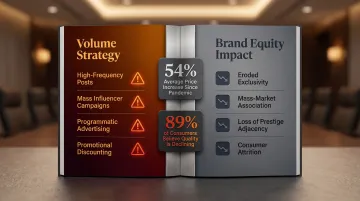
The volume signals inaccessibility in reverse. When a brand publishes multiple daily Instagram posts, collaborates with dozens of mid-tier influencers, and runs continuous promotional campaigns, affluent consumers read this as evidence the brand serves a mass market — not an exclusive one.
Heavy influencer association dilutes brand prestige, while aggressive targeting feels intrusive to an audience accustomed to controlling their media environment.
According to Vogue Business's January 2026 analysis, 97% of CMOs plan to increase creator marketing budgets, with roughly 25% of brand marketing budgets currently allocated to influencer engagement. But consumers are growing tired of being sold to — over-indexing on creators as "commercial salespeople" drives consumer fatigue, particularly among affluent audiences who associate heavy influencer activity with mid-market brands.
Pay-to-post influencer deals no longer cut through. Customers reject content that feels scripted or distant from a creator's natural voice, and traditional aesthetic stills paired with affiliate links have stopped generating meaningful engagement. This problem only deepens when you factor in where that content actually lives.
The Algorithm Problem
Algorithm-driven platforms like Instagram and TikTok structurally undermine luxury positioning. Content sits alongside competitors, discount brands, and mass-market products, eroding the brand environment that luxury depends on.
This adjacency problem explains why luxury brands are wary of programmatic advertising. When algorithmic feeds control what appears next to your content, brand environment becomes impossible to manage.
A carefully crafted film about artisan ingredient sourcing can appear directly after a discount retailer's flash sale post — and the editorial curation that justifies a premium price point disappears instantly.
The pursuit of scale through these channels has created what BCG describes as an "ouroboros effect" — a self-defeating loop where growth strategies built on volume and frequency undermine the exclusivity that sustains luxury brand equity. Brands increased prices by an average of 54% since the pandemic, but 89% of consumers believe quality standards are sliding, partly because content volume signals mass accessibility.
Ad-Blocking and Digital Ad Avoidance
Research on digital ad avoidance confirms what luxury marketers suspect: HNW audiences actively avoid traditional digital advertising. Beyond being 32% more likely to use ad-blockers, affluent consumers employ multiple strategies to avoid commercial messaging online.
An estimated 29.5% of internet users worldwide use ad-blocking tools — and this figure skews significantly higher among high-income demographics. When the majority of your target audience has systematically blocked your ability to reach them, paid digital display rarely justifies the spend.
This creates a fundamental challenge: the digital advertising infrastructure that powers mass-market beauty marketing is structurally incompatible with reaching HNW audiences at scale.
Content Strategies That Actually Work for HNW Beauty Audiences
The core framework shift: luxury beauty content earns prolonged attention by offering depth, intellectual substance, and genuine beauty — not by broadcasting at scale. Each piece should invite the audience into a world rather than interrupt them with a message.
Heritage and Craft Storytelling
HNW audiences want to understand the "how and why" behind luxury products: the provenance of ingredients, the artisan techniques, the decades of formulation history that justify premium pricing and positioning.
Bottega Veneta's "Craft Is Our Language" campaign provides the model. Launched to celebrate the 50th anniversary of the brand's signature Intrecciato leather weave, the campaign comprised still images and films in a black-and-white aesthetic, photographed by Jack Davison. A campaign book featured essays on the weaving technique, plus introductions to Milanese artist Bruno Munari and co-founder Renzo Zengiaro.
The brand positioned itself as recognized not by a logo, but by the exceptional quality and understated elegance of its signature craft. No direct product promotion — just deep storytelling about technique, history, and the artisans behind the work.
This content works best in long-form formats:
- Brand films and documentary-style video series
- Brand-owned editorial publications with recurring cadence
- In-depth written features exploring single ingredients or formulation processes
- Print editorial partnerships in prestige publications
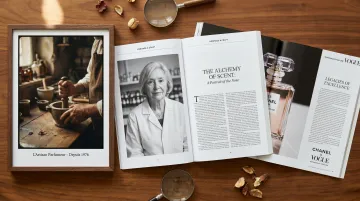
The goal is not virality — it is brand equity compounded over time. Each piece of content should deepen brand reverence among those who engage, not maximize impressions across audiences who'll never convert.
Exclusive Editorial and Owned Media Platforms
Net-a-Porter's PORTER magazine demonstrates how owned editorial blurs the line between content and commerce. Launched in February 2014 as a bimonthly paid subscription print magazine, PORTER employed 49 dedicated staff and reached 170,000 circulation globally with average reader household income of $178,000 per year.
The model: build a lifestyle world around products rather than simply promoting them. PORTER featured traditional third-party advertising (Chanel, Dior) alongside approximately 500 directly shoppable items per issue, with "scan-to-shop" technology enabling seamless purchase. A 2015 survey showed 85,000 scans, representing a 78% interaction rate — readers engaged deeply because the content earned their attention first.
Beauty brands can replicate key elements:
- Distinct editorial voice: Content that sounds like journalism, not marketing copy
- Recognizable aesthetic: Visual consistency that feels premium and intentional
- Consistent publication cadence: Monthly or quarterly releases that become anticipated rituals
- Exclusive access content: Early reveals of new formulations, behind-the-scenes ritual guides, expert-authored deep dives on ingredients or techniques
Owned editorial also creates a durable asset: a content library that compounds in authority, something a paid campaign cannot replicate.
Values-Led Partnerships and Cultural Alignment
HNW consumers are highly sensitive to partnership authenticity. Collaborations that feel forced or commercially convenient erode trust instantly.
Charlotte Tilbury's partnership with the Dallas Cowboys Cheerleaders demonstrates what genuine alignment looks like. As the first official beauty partner in DCC history and Charlotte Tilbury's first-ever US sports partnership, it worked because the values overlap was real: empowerment, female confidence, and breaking barriers in male-dominated industries. Charlotte Tilbury put it plainly: "I am incredibly passionate about women pursuing their dreams, feeling their most confident and thinking limitlessly."
The partnership went well beyond a logo placement. Execution spanned dedicated social content series, stadium touch-up stations, locker room branding, and pop-up events — creating an integrated brand world rather than a transactional presence. The DCC's expanded global footprint from their Netflix docuseries added substantial earned media reach.
For luxury beauty brands, the most effective partnerships align with:
- Cultural institutions (museums, galleries, conservancies)
- High-prestige events (art fairs, film festivals, private galas)
- Figures who embody genuine authority in their field — not just follower count
- Organizations whose values demonstrably align with brand positioning
The Right Channels to Reach HNW Audiences
HNW audiences cannot be reached effectively through the same channels as mass consumers. Luxury content distribution is about selective placement in trusted, editorially credible environments—not broad reach.
Premium Newsletter Advertising
Newsletters represent a channel uniquely suited to HNW audiences for structural reasons:
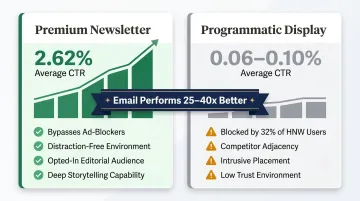
- Bypass ad-blockers entirely (email delivery isn't subject to browser-based blocking)
- Arrive in a focused inbox environment without visual clutter or competitor adjacency
- Reach readers who have actively opted in to a trusted editorial voice
- Enable deeper storytelling through editorial-style sponsored content
The engagement advantage is substantial. Average email click-through rates across industries reach 2.62%, while programmatic display CTRs hover around 0.06-0.10%—email performs 25-40 times better. For business and finance sectors closely aligned with HNW audiences, email click rates reach 2.78%.
Beyond the numbers, newsletters carry genuine qualitative weight. According to MAGNA Media Trials research, newsletters are a vital daily ritual for 75% of readers, with 91% feeling informed, grounded, and motivated after reading.
Among decision-makers specifically, 76% felt ready to take on the day and 78% felt empowered after their newsletter reading. Those are exactly the psychological states that make audiences receptive to premium brand messaging.
Publications like House of Summary's London Summary and Dubai Summary deliver this environment for luxury beauty brands. London Summary covers UK business, culture, and city life; Dubai Summary provides daily insights into UAE business and lifestyle. Both reach globally-minded, affluent readers in wealth-concentrated markets where brand messages land with undivided attention.
The newsletters reach decision-makers and executives across key metropolitan markets, with formats including sponsored content written in natural editorial voice, native ads integrated seamlessly into reading flow, and full-issue takeovers for major campaigns. Social feeds place luxury content alongside discount offers and unrelated interruptions. Newsletter placements don't — the inbox is a controlled, distraction-free environment.
High-End Print and Digital Editorial Partnerships
Despite digital advertising growth, luxury brands continue investing in premium print because it provides brand environment legitimacy that programmatic cannot replicate.
Vogue's 2026 shift from monthly to eight premium issues per year—timed to tentpole moments, printed on thicker paper, with more substantial editorial—reflects what luxury advertisers want. "For luxury advertisers, more hefty, but less frequent, magazine issues are an alluring offer," Vogue Business reported. Vogue's head of editorial content emphasized: "We want our shoots and cover stories to live in a place that feels substantial and that people want to keep."
The prestige editorial environment matters:
- Architectural Digest, Vogue, and regional luxury titles curate brand adjacency
- Print publications become keepsakes, extending brand exposure over time
- Editorial partnerships signal brand seriousness and cultural legitimacy
- The physical format bypasses all digital ad-blocking and avoidance behaviors
Private Event Content and Experiential Activations
Bespoke brand events, concierge gifting moments, and invite-only experiences generate word-of-mouth among tight-knit HNW peer networks in ways no paid campaign can manufacture.
This distribution strategy works because:
- Exclusivity creates social currency among attendees
- Peer-to-peer recommendations carry more weight than any brand messaging
- Experiences become content through attendee social sharing and earned media coverage
- Events enable demonstration of product quality and brand values in controlled environments
Effective formats include private salon demonstrations, invitation-only launch dinners, gifting suites at cultural events brands sponsor, and experiences that extend beyond product trial to lifestyle alignment.
Selective Social Media Presence
Quality and deliberateness matter far more than frequency for HNW-oriented beauty brands. That means:
- Fewer, more cinematic posts that reward attention
- Alignment with cultural moments rather than trending audio
- Brand ambassador selection based on cultural prestige rather than engagement metrics
- Platform-appropriate content (Instagram for visual storytelling, not viral chasing)
Every post should feel intentional and substantial — something an HNW audience encounters and remembers, rather than scrolls past.
Measuring What Matters in Luxury Content Marketing
Standard content metrics—impressions, likes, follower growth—are poor proxies for luxury content performance because HNW audiences engage silently and convert slowly.
Brand Equity Indicators
Track metrics that reflect brand strength rather than campaign volume:
Press quality and editorial placements:
- Mentions in tier-one prestige publications
- Editorial coverage (not paid placement) in Vogue, Harper's Bazaar, Financial Times
- Quality of headline and context in which brand appears
Search volume for brand terms:
- Direct brand name searches indicate consideration and recall
- Searches for "[brand] + review" or "[brand] + where to buy" signal intent
- Year-over-year search growth reflects expanding awareness in target segment
Time-on-page for editorial content:
- Average session duration on brand-owned content
- Scroll depth on long-form storytelling pieces
- Return visitor rates to editorial platforms
Direct referral traffic from premium placements:
- Traffic from prestige editorial partnerships
- Visits from newsletter sponsorships
- Referrals from cultural institution partnerships
Qualitative Audience Signals
Pay attention to who engages and how they discuss the brand:
- Demographics of content consumers (are they the intended HNW audience?)
- Sentiment and sophistication of brand community discussions
- Peer-to-peer recommendations in luxury forums and communities
- Consultation requests from wealth managers, personal shoppers, and concierge services
Media Impact Value (MIV)
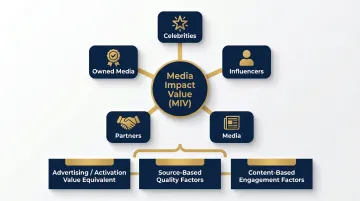
Launchmetrics' Media Impact Value (MIV) is a proprietary machine learning algorithm that assigns monetary value to every post, interaction, and article about a brand — giving luxury marketers a consistent framework for earned media assessment.
MIV measures impact across five "Voices":
- Celebrities
- Influencers
- Media
- Partners
- Owned Media
Calculations draw on three pillars: advertising/activation value equivalent, source-based quality factors, and content-based engagement factors. This lets brands benchmark performance against competitors, compare results across regions and time periods, and build a defensible ROI case for PR investment in fashion, lifestyle, and beauty.
Long Time Horizons
HNW content marketing ROI operates on a longer time horizon than mass-market campaigns — and internal expectations need to reflect that. Research from BCG and Bain confirms that brands maintaining consistent investment through market downturns outperform those that cut budgets chasing short-term metrics.
Set internal expectations for six to eighteen months of consistent brand-building before measurable revenue attribution. The personal luxury market totaled approximately €1.48 trillion in 2024, with the top 2% of customers accounting for outsized value. Reaching this concentrated, high-value audience requires patience and commitment to quality over volume.
Frequently Asked Questions
What type of content resonates most with high-net-worth beauty consumers?
HNW consumers respond to editorial depth, heritage storytelling, and exclusive access content that demonstrates brand substance rather than promotional messaging. Long-form content exploring ingredient provenance, artisan techniques, and brand history builds the credibility that drives conversions in this segment.
Why doesn't standard influencer marketing work for luxury beauty brands?
Mass-market influencer campaigns signal accessibility and volume, which conflicts with the exclusivity positioning that luxury brands depend on. HNW consumers associate heavy influencer activity with mid-market brands, not prestige ones, and interpret aggressive creator partnerships as evidence a brand serves a mass audience rather than an exclusive clientele.
What channels are most effective for reaching HNW audiences?
The premium channel mix includes high-trust newsletter advertising, prestige editorial partnerships, private events, and selective social presence. These environments bypass ad-blocking, deliver brand-safe adjacency, and reach readers in focused attention states free from competitive noise.
How do luxury beauty brands balance exclusivity with building content reach?
Luxury brands should protect exclusivity at the product and event level while using content to create world-building accessible to aspirational audiences. Content can be visible and educational, but pricing, distribution, and event access must remain selective — broader awareness without sacrificing prestige.
How should luxury beauty brands measure content marketing ROI?
Track brand equity indicators: search volume for brand terms, editorial placement quality, time-on-page for owned content, and direct channel attribution. Frameworks like Launchmetrics' Media Impact Value help quantify earned media. Avoid impressions and follower counts, which don't correlate with HNW purchase behavior.
What mistakes do beauty brands most commonly make when targeting luxury consumers?
The top mistakes: over-relying on paid social, choosing influencers based on reach rather than prestige alignment, publishing too frequently without editorial intention, and neglecting premium newsletter and print channels where HNW audiences actually spend their reading attention. Brands also err by measuring success with mass-market metrics rather than brand equity indicators appropriate for luxury positioning.