

Introduction
Dubai's advertising market demands more than deep pockets. Despite 99% internet penetration and billions in annual ad spend, most businesses still struggle to convert exposure into revenue. The core challenge is structural: over 88% of Dubai's population is expatriate, spanning 200+ nationalities — a fragmented audience where one-size-fits-all campaigns fail spectacularly.
Layer on the world's second-highest Google Ads costs and strict regulatory compliance requirements, and the risk of wasted spend becomes substantial.
This guide delivers an ROI-first framework for advertising in Dubai. You'll learn which channels convert in this hyper-competitive market, how to build culturally intelligent campaigns that actually perform, what legal permits you need before your first campaign goes live, and how to measure what matters. If you're tired of paying premium CPCs for mediocre results, the strategies below shift the advantage to your side.
Key Takeaways
- Dubai's 88.5% expat population demands targeted, multicultural campaigns — broad mass-reach strategies consistently underdeliver
- Top-performing channels pair high-intent platforms (Google Ads, SEO) with engaged audiences like newsletter advertising and LinkedIn
- Skip NMC permits and you risk campaign suspensions and fines reaching AED 1 million
- ROI tracking infrastructure must be in place before launch — UTM tags, GA4, conversion pixels, and SMART goals are baseline requirements
- Arabic-localized ads generate 3.5x more attention than standard formats; cultural adaptation is an ROI multiplier, not a nice-to-have
Why Dubai's Advertising Market Is Unlike Any Other
Dubai operates as one of the world's most digitally saturated environments. As of 2025, internet penetration reached 99%, with 11.3 million users actively online. Social media penetration stands at 110% of the total population — 12.5 million active identities — reflecting multi-account usage and temporary residents. The UAE maintains 23 million cellular connections, representing 202% of the population, with mobile devices accounting for nearly 70% of all web traffic. Residents average 3 hours and 6 minutes daily on social media platforms.
This digital intensity creates both opportunity and complexity. With such universal connectivity, reach is not the bottleneck — relevance is. Your ad will be seen. The question is whether it will mean anything to the person seeing it.
The Multicultural Complexity That Breaks Generic Campaigns
Dubai's population of 4.24 million is 88.5% expatriate, with over 200 nationalities represented. A campaign that performs well with Indian professionals may fail completely with European executives or GCC nationals. Language, cultural references, holidays, and purchasing triggers vary dramatically across segments.
Single-language, single-creative campaigns rarely perform uniformly here. Advertisers who segment by nationality, language preference, and lifestyle triggers consistently outperform those running broad English-only messaging. Effective Dubai advertising requires layered targeting: geo-location (Business Bay vs. Dubai Marina), language (English vs. Arabic vs. Hindi), income bracket, and behavioral triggers. Without that segmentation, you get high impressions and low conversions — visibility without returns.
The Regulatory Trust Advantage
Legal compliance is not just a box to check — it's a market differentiator. Businesses that secure National Media Council (NMC) advertiser permits and e-Media licenses gain credibility advantages on major platforms like Meta and Google. These platforms prioritize verified, licensed businesses in ad delivery and account support. Brands that skip licensing face account suspensions, campaign rejections, and consumer distrust. In a market this dense with ad spend, a verified status is one of the few low-cost ways to stand out.
Advertising Channels With the Strongest ROI in Dubai
Not all channels deliver equal returns. The highest-performing approach layers channels by intent: high-intent platforms like search convert faster, while engagement channels — social, newsletters — build pipeline over time. The five channels below are ranked by where they consistently generate measurable ROI in the Dubai market.
Paid Search and SEO
Google Ads and organic SEO remain Dubai's highest-converting channels because users are actively searching with purchase intent. However, the UAE is the second most expensive Google Ads market globally, with CPCs averaging 8% higher than the US. High-value industries pay steep premiums:
- Legal Services: AED 15–40 per click
- Real Estate: AED 8–25 per click
- Finance/Insurance: AED 10–35 per click
- Healthcare: AED 5–15 per click
Use geo-specific keywords tied to Dubai neighborhoods and business districts—"digital marketing agency in Business Bay" outperforms generic "digital marketing Dubai." A verified Google Business Profile amplifies local visibility at near-zero cost. Given the high CPC environment, Target CPA and ROAS bidding strategies are essential to prevent runaway spend.
Social Media Advertising
Platform selection must align with where your target segment actually spends time:
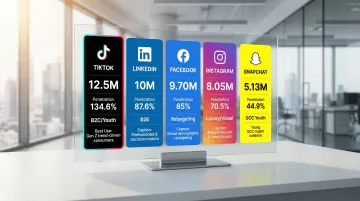
TikTok: 12.5 million adult users (134.6% of the adult population). Best for B2C lifestyle, product brands, and younger demographics. High engagement but requires culturally resonant creative to break through.
LinkedIn: 10 million users (87.6% penetration). The go-to platform for B2B campaigns targeting professionals and decision-makers. Higher CPCs than consumer platforms, but superior lead quality.
Instagram: 8.05 million users (70.5%). Strong for visual brands, luxury, fashion, F&B, and aspirational lifestyle marketing.
Facebook: 9.70 million users (85%). Broad demographic reach, effective for retargeting and community-building.
Snapchat: 5.13 million users (44.9%). Ideal for reaching younger GCC audiences, particularly UAE nationals and regional youth.
Once you've identified the right platform, the next question is whether to run paid placements, partner with creators, or both. For many Dubai brands, influencer marketing layers on top of paid social — but it comes with compliance requirements that can catch advertisers off guard.
Influencer Marketing
Influencer marketing performs well in Dubai's trust-driven consumer culture, but compliance is critical. All influencers must hold a valid NMC Advertiser Permit, and brands are liable if they collaborate with unlicensed creators. Penalties for violations can reach AED 1 million.
Pricing benchmarks:
- Nano-influencers (1k–10k followers): AED 500–2,500 per post
- Micro-influencers (10k–100k followers): AED 2,500–12,000 per post
- Macro-influencers (100k–1M followers): AED 12,000–60,000 per post
Micro-influencers deliver higher engagement rates and more cost-efficient ROI, especially for SMEs and niche brands. Always verify permit status before contracts are signed.
Newsletter Advertising
Newsletter advertising is one of Dubai's most underutilized high-ROI channels. Unlike social or display ads, newsletter placements land directly in the inbox—no algorithms, no ad blockers, no visual clutter competing for attention. Subscribers have opted in, creating inherently higher audience quality than passive scroll-based social ads.
Dubai Summary, part of the House of Summary network, delivers sponsored placements inline within editorial content — reaching high-net-worth, globally mobile professionals across Dubai, with secondary audiences in London and New York. Advertisers report click-through rates 4x higher than Google AdWords.
BSH Hausgeräte CEO Faik Serkan Ergun put it directly: "One of the smartest ad buys we made this year. The editorial tone aligned with high-intent readers, and the audience quality of Dubai Summary is good."
Because newsletter ads bypass ad blockers and algorithm shifts, they offer stable, predictable reach — particularly valuable in a market where digital ad costs continue to climb.
Outdoor Advertising
Digital out-of-home (DOOH) advertising in the UAE generated USD 82.1 million in 2024 and is projected to reach USD 126.7 million by 2030. Billboards and digital screens work best in high-traffic corridors like Sheikh Zayed Road and Dubai Marina, but they function primarily as brand-building layers, not direct conversion drivers. OOH requires larger budgets and is harder to attribute to direct ROI. It works most effectively when combined with a digital retargeting strategy—use DOOH for visibility, then retarget exposed audiences via social or search ads.
How to Build a Dubai Advertising Strategy That Delivers Measurable Returns
Building a strategy that returns measurable results means getting five fundamentals right: audience definition, goal-setting, budget allocation, localization, and pricing structure. Miss one, and the rest underperforms.
Start With Precise Audience Definition
Poor audience targeting is the single most common reason Dubai advertising fails. Profile your Dubai customer by:
- Nationality/Language: Indian expats, European executives, GCC nationals
- Age and Income Bracket: 25–45, AED 15k+ monthly income
- Lifestyle Trigger: Luxury buyer, pragmatist, investor, early adopter
- Online Behavior: Instagram scrollers, LinkedIn researchers, newsletter subscribers
Different segments require different platforms and creative approaches. A campaign targeting Filipino healthcare workers will fail if designed for British finance executives.
Define Measurable Objectives Before Spending
Vague goals ("increase brand awareness") cannot be measured or optimized. Use the SMART framework — but apply it specifically to your Dubai campaign:
- Specific: Name the audience segment, platform, and action (not just "awareness")
- Measurable: Attach a number — leads, clicks, cost-per-acquisition
- Achievable: Benchmark against Dubai CPCs before setting targets
- Relevant: Tie the goal to a real business outcome (pipeline, revenue)
- Time-bound: Set a 30, 60, or 90-day window with a review date

Example: "Generate 50 qualified leads from Dubai-based SMEs in 30 days via LinkedIn Ads with a cost-per-lead under AED 200."
The goal determines the channel, the budget, and the success metric.
Allocate Budget Across Channels for Balanced ROI
A tiered allocation approach reduces risk and maximizes returns:
Recommended monthly ad budget benchmarks:
- Google Ads (ad spend): AED 5,000–25,000 (SME) | AED 25,000–75,000+ (mid-market)
- Meta Ads (ad spend): AED 3,000–15,000 (SME) | AED 15,000–50,000+ (mid-market)
- SEO Retainer (agency): AED 3,000–10,000 (SME) | AED 10,000–25,000+ (mid-market)
- Influencer (micro 10k–100k): AED 2,500–12,000 per post | AED 20,000–35,000 (campaign package)
Allocation strategy:
- 60–70% to proven high-intent channels (paid search, SEO)
- 20–30% to engagement channels (social ads, newsletter placements)
- 10% to testing new channels or formats
Reallocate based on performance data every 2–4 weeks.
Localization as an ROI Multiplier
Campaigns adapted for Dubai's cultural context outperform generic English-only messaging. Arabic contextual ads generate approximately 3.5x more attention per 1,000 impressions than standard formats. A Meta case study for Kérastase Middle East showed that localized ads drove a 29% incremental lift in organic search visits and a 56% incremental sales lift.
Localization best practices:
- Include Arabic copy alongside English
- Time campaigns around Ramadan and Eid (consumer spend increases 53% during Ramadan)
- Use culturally resonant visuals and messaging
- Adapt offers to local purchasing behavior
The data is clear: brands that localize capture significantly more attention and convert at higher rates than those running identical global creative.
Performance-Based Ad Models Reduce Risk
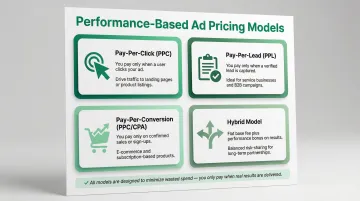
Flat-fee media buys — paying for exposure regardless of outcome — carry far more risk than performance-based models. In Dubai's high-CPC environment, inefficient campaigns burn through budgets fast. When working with agencies or media partners, negotiate pricing tied to results wherever possible.
Common performance-based structures to request:
- Pay-per-click (PPC): You pay only when someone clicks your ad
- Pay-per-lead (PPL): Fees tied to verified lead submissions
- Pay-per-conversion: Costs linked directly to sales or sign-ups
- Hybrid models: Fixed base fee plus performance bonus on results
The Legal Requirements Every Dubai Advertiser Must Know
Before you run a single ad in Dubai, you need the right paperwork. The UAE enforces advertising regulations across both online and offline channels, and gaps in compliance can freeze campaigns, trigger fines, or lock you out of ad platforms entirely. Here's what every advertiser operating in the UAE must have in place.
The NMC Advertiser Permit (Mu'lin)
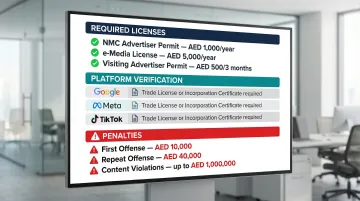
All businesses running commercial advertising in the UAE—online or offline—must obtain an Advertiser Permit from the UAE Media Council (NMC). The permit costs AED 1,000 per year, though natural persons (citizens and residents) are exempt from the fee for the first three years. Without this permit, campaigns can be suspended and businesses fined. Non-compliance is not a gray area—regulators enforce actively.
Visiting Advertiser Permits and Agency Accountability
Non-resident creators must obtain a Visiting Advertiser Permit, valid for 3 months (extendable to 6 months) for AED 500. You must submit applications through NMC-accredited advertising or talent management agencies. Brands are liable for collaborations with unlicensed influencers, so verify influencer licensing status before any deal is signed.
e-Media License for Businesses
Legal entities running online ad campaigns must hold an e-Media license, which costs AED 5,000 per year. This applies to any business placing paid digital content targeting UAE audiences.
Influencer collaborations require disclosure in both Arabic (#إعلان) and English ("Sponsored" or "Paid Partnership"). Skipping disclosure — even on a single post — exposes the brand, not just the creator, to regulatory action.
Data and Privacy Compliance (PDPL)
Businesses collecting user data through advertising—lead forms, email sign-ups, retargeting pixels—must comply with the UAE Personal Data Protection Law (PDPL). Requirements include clear cookie consent, opt-in mechanisms for email and WhatsApp marketing, and secure data storage. Violations carry financial penalties, and the PDPL applies regardless of where your servers are located if you're targeting UAE residents.
Platform Verification: Trade Licenses Are Non-Negotiable
Ad platforms enforce strict verification for UAE targeting:
- Google Ads: Certificate of incorporation, certificate of good standing, or trade license required
- TikTok Ads: UAE government-issued certificate of incorporation or trade license accepted
- Meta Business: Official business registration or license document needed to unlock full account verification
Without these documents, your campaigns will be rejected or suspended before they launch.
Penalties for Non-Compliance
Operating without a license incurs a first-time fine of AED 10,000, rising to AED 40,000 for repeat offenses. Violating content standards can result in fines up to AED 1 million. The NMC conducts active monitoring of both digital and print advertising, including social media — so gaps in licensing get caught faster than most businesses expect.
How to Track and Optimize Your Advertising ROI in Dubai
Establish the Measurement Foundation Before Launch
ROI tracking requires proper setup from day one:
- UTM parameters on all ad links to track source and campaign
- GA4 installed and configured on your website
- Meta Pixel and Google Tag Manager deployed correctly
- Conversion events clearly defined (form submission, purchase, enquiry, phone call)
Without this infrastructure, spend cannot be accurately attributed. Set it up before the first ad runs.
Define Core KPIs Every Dubai Advertiser Should Monitor
| KPI | What It Measures | Benchmark to Watch |
|---|---|---|
| CTR | Creative strength and targeting relevance | Low CTR = weak messaging or wrong audience |
| CVR | Landing page effectiveness | Real estate: 3.28% (Google), 9.53% (Meta); B2B: 5.14% / 9.34% |
| CPL/CPA | Channel efficiency vs. customer value | CPL above 30% of LTV signals unsustainable spend |
| ROAS | Campaign profitability | 3:1 is baseline; 5:1+ indicates strong performance |
Dubai's competitive auction environment drives CPCs above global averages. That makes conversion rate optimization — not just traffic volume — the primary lever for profitability here.
The Role of A/B Testing in Sustaining ROI
Hitting your CVR benchmarks is only half the challenge — keeping them there is the other. Creative fatigue and shifting audience behavior erode performance faster than most advertisers expect. Meta analytics show conversion likelihood drops 45% after just four repeated exposures. Test systematically across:
- Ad copy variations
- Visual creative (images vs. video)
- Audience segments
- Landing page variants
Dubai's consumer market cycles through trends quickly. Advertisers who refresh creative on a rolling schedule and reallocate toward what the data confirms is working will consistently outperform those running static campaigns.

The Optimization Loop: Review → Reallocate → Scale
Review campaign performance weekly or bi-weekly. Cut underperforming channels or creative, reallocate budget to top performers, and scale what's working. If a channel is delivering strong ROAS, moving quickly to increase spend before competitors react is a legitimate strategic advantage. In Dubai's high-competition verticals — real estate, finance, luxury — ad auctions tighten fast, and the brands that scale winning campaigns first capture disproportionate share.
Frequently Asked Questions
How do I advertise my business in Dubai?
Obtain the required NMC Advertiser Permit and e-Media license, then choose channels based on your target audience—paid search, social media, newsletter advertising, or influencer marketing. Set measurable SMART goals and track ROI from day one using UTM parameters and conversion pixels.
What license do I need to advertise in Dubai?
Businesses need an NMC Advertiser Permit (AED 1,000/year) for commercial advertising, an e-Media license (AED 5,000/year) for digital campaigns, and a valid UAE trade license—which Meta, Google, and TikTok require for ad account verification.
What is the most cost-effective way to advertise in Dubai?
SEO and newsletter advertising offer strong long-term ROI at lower ongoing costs, while Google Ads delivers high-intent reach with measurable results. Starting with performance-based pricing models reduces risk for budget-conscious advertisers.
How much should I budget for advertising in Dubai?
SMEs typically allocate AED 5,000–25,000 monthly for Google Ads, AED 3,000–15,000 for Meta Ads, and AED 3,000–10,000 for SEO retainers. Mid-market businesses often spend AED 25,000–75,000+ monthly across channels.
How long does it take to see results from advertising in Dubai?
Paid digital campaigns (Google Ads, Meta Ads) can generate leads within days or weeks. SEO and content-driven channels typically take 3–6 months to show measurable gains. Expect to run weekly bid adjustments and monthly creative refreshes to maintain performance.
Which industries see the best advertising ROI in Dubai?
Real estate, finance, luxury goods, professional services, F&B, and e-commerce tend to see strong returns due to Dubai's high-spending consumer base and high concentration of relevant buyers.