Introduction
Luxury travel brands face a dilemma: the market overflows with beautiful imagery and aspirational copy, yet most content fails to convert high-net-worth travelers. Why? Because polished visuals alone don't address what affluent consumers demand before committing to a $20,000+ booking: editorial authority, strategic distribution, and a genuine understanding of the luxury buyer mindset.
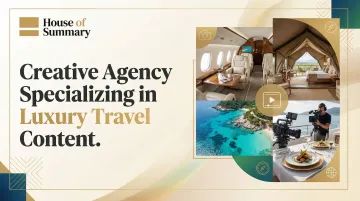
A creative agency specializing in luxury travel content works differently from a general travel marketing firm. Rather than chasing clicks and impressions, these agencies build editorial-grade narratives that educate, establish trust, and convert high-consideration travelers into actual bookings — not just engaged audiences.
Key Takeaways:
- Luxury travel content must meet premium editorial standards — think Condé Nast Traveler, not generic marketing copy
- High-net-worth travelers research for months before booking, making trust-building content essential at every stage
- Email and newsletter channels deliver 4.24% conversion rates versus social media's 0.59%
- Agencies must demonstrate category depth, editorial quality, and channel fluency across email, video, and social
- The right distribution channel matters as much as the content itself — reaching the right executive audience at the right moment drives results
What Is a Creative Agency Specializing in Luxury Travel Content?
A creative agency specializing in luxury travel content serves as a strategic and editorial partner that develops, produces, and distributes content specifically designed to reach affluent travelers. These agencies don't just inspire visually—they move readers toward bookings and long-term brand relationships through credible storytelling and strategic distribution.
Luxury-focused agencies operate on different terms than general travel content shops. Where a mainstream agency optimizes for reach and frequency, a luxury travel content partner optimizes for authority, specificity, and trust. That requires a working understanding of brand exclusivity, heritage storytelling, high-consideration decision cycles, and the psychology of discretionary ultra-premium spending.
Those strategic differences show up directly in who these agencies serve. Clients typically include:
- Private aviation brands and charter operators
- Ultra-luxury hotel groups and boutique properties
- Bespoke travel operators and concierge services
- Destination management organizations
- Premium cruise lines
Each requires editorial voice, channel selection, and content cadence calibrated to how high-net-worth individuals actually research and book premium experiences — a process that looks nothing like how the average leisure traveler shops for a vacation package.
Why Luxury Travel Content Demands a Different Strategy
The Luxury Buyer's Research Behavior
High-net-worth and ultra-high-net-worth travelers conduct far more independent research before booking high-value experiences than average travelers. Sophisticated luxury travelers often plan major milestone trips three to five years in advance, requiring travel advisors to develop multi-year strategic portfolios rather than transactional bookings. Content must do more than inspire—it must educate, build trust, and signal authority over extended decision cycles.
In the Americas, 59% of wealthy travelers plan to use travel advisors for more than half of their holiday bookings. Affluent consumers rely on expert human curation to navigate complex itineraries — and your content must meet the same standard of expertise these travelers expect from their advisors.
The Brand Mystique Challenge
Luxury travel brands must create desire and aspiration without overexposing the product. Content volume and frequency strategies that work for mainstream travel brands can actively dilute luxury positioning. High-net-worth individuals receive 40 to 60 instances of brand outreach monthly, leaving 60% feeling overwhelmed by excessive marketing and a lack of personalization.
The democratization of luxury and aggressive branding strategies—such as excessive logo use and hyper-commercialization—reduce the perceived exclusivity and authenticity foundational to luxury value. To combat luxury fatigue, brands must abandon hyper-commercialization and refocus on heritage, craftsmanship, and identity coherence. This means publishing less frequently but at higher editorial quality, and prioritizing depth over reach.
Editorial Quality vs. Promotional Messaging
Luxury travel content must meet the quality threshold of premium editorial media, not just be aesthetically polished. There's a meaningful difference between editorial-grade storytelling and marketing copy: editorial content educates and informs without overt promotion, while marketing copy pushes for immediate conversion.
According to the 2024 Edelman Trust Barometer, 81% of consumers state they must trust a brand before making a purchase. For luxury travel, that threshold is higher still.
A joint study by Edelman and LinkedIn found that 54% of decision-makers purchased from a company not previously on their radar after engaging with its thought leadership content. Transactional marketing that pushes for quick sales risks alienating luxury consumers. Content that educates, reveals insider knowledge, and withholds the hard sell is what actually converts this audience.
Longer Conversion Timelines
High-value travel bookings are high-consideration decisions that can take months. A luxury travel content strategy must be built for relationship nurturing, not quick clicks. This makes content channel choice critical: platforms that optimize for immediate engagement (like social media algorithms) work against the long conversion timelines inherent to luxury travel.
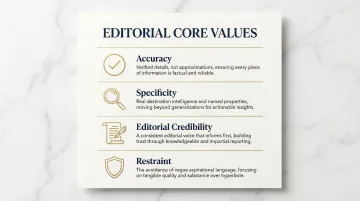
Affluent travelers are skeptical of promotional content — and quick to recognize when it's superficial. What earns their trust instead:
- Accuracy — verified details, not approximations or stock descriptions
- Specificity — real destination intelligence, authentic insider access, named properties and routes
- Editorial credibility — a consistent voice that informs first and sells second
- Restraint — vague aspirational language reads as inexperience to discerning readers
Generic copy doesn't just underperform with this audience. It actively signals that a brand doesn't understand the traveler it's trying to reach.
Core Services Offered by Luxury Travel Content Agencies
Destination and Brand Storytelling
Luxury travel content lives or dies on narrative — the capacity to convey not just what a destination looks like, but what it costs emotionally and financially to be there, and why that cost is worth it. This requires:
- Extensive destination research and on-the-ground knowledge
- Editorial-grade writing that mirrors premium publications
- Photography direction that reflects the experience's production values
- Content curation that maintains brand voice consistency
The best agencies develop a distinct voice for each client rather than applying a generic "luxury template." That voice must hold across every touchpoint — website copy, email newsletters, social captions — so the brand feels coherent wherever a prospective traveler encounters it.
Video and Visual Content Production
Cinematic video plays a central role in luxury travel content. Visual production must reflect the production values of the experience itself, spanning multiple formats:
- Short-form social content: Instagram Reels, TikTok, and YouTube Shorts optimized for aspirational discovery
- Long-form brand films: Destination documentaries and immersive storytelling for website and newsletter content
- Aerial and immersive footage: Drone cinematography and 360-degree experiences that showcase scale and context
- Format-specific editing: Content adapted to each platform's viewing behavior and technical specifications
While short-form video reaches aspirational travelers scrolling social feeds, long-form video builds brand depth and provides the detailed visual storytelling that high-consideration buyers need during extended research cycles.
Email and Newsletter Content Marketing
Email and newsletter content has become a critical channel for luxury travel brands because it reaches high-intent subscribers directly in the inbox, without algorithmic interference, ad blockers, or the visual clutter of social feeds. Email marketing continues to drive significantly higher conversion rates (4.24%) compared to social media (0.59%).
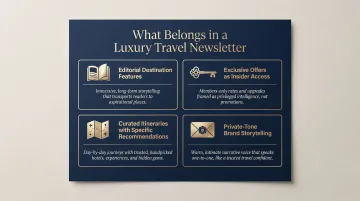
Effective luxury travel newsletter content includes:
- Editorial-style destination features that read like premium magazine content
- Exclusive offers framed as insider access rather than promotional discounts
- Curated itineraries with specific recommendations that demonstrate genuine expertise
- Brand storytelling that feels like a private communication rather than a mass broadcast
There's also a significant opportunity for luxury travel brands to reach engaged, pre-qualified audiences by advertising within established premium newsletter networks. House of Summary's network of specialized publications, including Dubai Summary and London Summary, delivers content to global executives and business professionals in the very markets luxury travel brands most want to reach. These readers consume serious news and geopolitical analysis — the same high-intent, globally minded demographic that books ultra-luxury travel experiences.
That inbox-first thinking extends naturally into social — but the strategic logic shifts when algorithms, discovery feeds, and influencer relationships enter the picture.
Social Media and Influencer Strategy
Social platforms serve distinct roles in luxury travel content strategies:
- Instagram and Pinterest: Aspirational visuals and destination discovery
- TikTok: Immersive destination storytelling and experience previews
- LinkedIn: Reaching business travelers and corporate decision-makers
Select platforms based on where your target affluent audience actually spends time — not follower counts or platform hype. A luxury safari lodge targeting UHNW American retirees requires a fundamentally different social strategy than a business hotel targeting European executives.
Luxury travel influencer strategy demands nuance:
- Reach and credibility pull in opposite directions — macro-influencers amplify, micro-influencers convince
- Genuine travel experience consistently outperforms polished sponsored-content aesthetics
- Strong agencies vet influencers for brand value alignment, not just audience size
- Disclosure and authenticity standards must align with luxury brand positioning
What Defines High-Quality Luxury Travel Content
The Specificity Principle
Great luxury travel content is hyper-specific—naming the villa, the chef, the thread count, the viewpoint at sunrise—rather than vague and aspirational. Specificity signals authority and builds trust with discerning readers who can identify generic promotional language instantly.
Generic (weak): "Experience world-class dining at our resort's signature restaurant."
Specific (strong): "Chef Marco Vannini, formerly of Osteria Francescana in Modena, leads the kitchen at Villa Serenissima, where the 12-course tasting menu features hand-foraged porcini from the Dolomites and line-caught branzino from the Adriatic."
That level of detail doesn't happen by accident — it signals that a brand has done the research and earns the premium price it charges.
Cultural and Contextual Accuracy
Luxury travel content about Dubai, London, Tokyo, or the Maldives must reflect genuine local knowledge, not superficial descriptions. Agencies with on-the-ground networks or regional editorial expertise produce stronger content for these markets because they understand cultural nuances, seasonal considerations, and local insider access that generic travel writers miss.
That gap shows up in the details. A London-focused piece that fails to mention transport strikes during peak season, or a Dubai guide that doesn't account for Ramadan timing, signals inexperience and damages credibility with readers who know these markets well.
Personalization and Segmentation
The best luxury travel content feels like it was written for a specific reader, not a broad demographic. Widely cited hospitality research, including findings aggregated by Zigpoll, points to personalized offers boosting conversion rates by up to 4x in the hospitality sector.
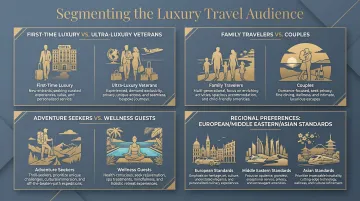
Segmentation, audience persona development, and tailored messaging lift content performance for luxury brands. This means developing different content tracks for:
- First-time luxury travelers versus seasoned ultra-luxury clients
- Family travelers versus couples
- Adventure seekers versus wellness-focused guests
- Regional preferences (European versus Middle Eastern versus Asian luxury standards)
Editorial Consistency and Quality Control
Luxury brands build perception cumulatively. A single piece of off-brand, poorly edited, or factually inaccurate content can do disproportionate damage to a luxury positioning that took years to build.
Protecting that positioning requires process discipline at every stage:
- Multi-stage editorial review before publication
- Fact-checking for destination details, pricing, and availability
- Brand voice guidelines enforced across all writers and channels
- Consistency checks across touchpoints to ensure unified messaging
How to Choose the Right Creative Partner for Your Luxury Travel Brand
Three Core Evaluation Criteria
1. Category Depth
Has the agency worked with brands at a comparable price point and positioning? An agency experienced with boutique bed-and-breakfasts will struggle with ultra-luxury private island positioning. Ask for case studies from clients in your price tier.
2. Editorial Quality
Does their existing content meet the standard of the publications your target audience reads? If your clients subscribe to Condé Nast Traveler and Monocle, your agency's work should match that editorial bar.
3. Channel Fluency
Do they understand how to adapt content for email, social, video, and editorial? A strong agency tailors messaging to each platform's context while keeping the brand voice coherent across every touchpoint.
Red Flags to Watch For
- Lead with volume promises ("we'll post 30 times a month") rather than positioning strategy
- Drop the word "luxury" repeatedly without showing they understand what that buyer actually wants
- Can't point to specific engagement or conversion results for premium travel clients
- Apply the same creative framework to every client rather than building a unique voice for each one
Questions to Ask Before Hiring
Once you've screened for red flags, these questions will separate strong candidates from the rest:
- Can you show examples of content you've created for a brand in our price tier?
- How do you measure content performance beyond vanity metrics like follower count and impressions?
- What is your editorial review and fact-checking process?
- How do you stay current on the destinations and experiences you're writing about?
- What is your approach to balancing content volume with brand exclusivity?
- Can you provide references from luxury travel clients regarding conversion outcomes?
Where Luxury Travel Brands Are Finding the Most Engaged Audiences
The Social Media Conversion Gap
Luxury travel brands increasingly find that social media reach alone does not translate to high-quality bookings. Social platforms optimize for broad engagement, not for reaching the specific HNWI segment that converts on $20,000+ travel experiences.
A 2024 Phocuswright study found that while 62% of social media users made a specific trip decision based on social content, the actual conversion rate for social media across industries lags at just 0.59%, compared to 4.24% for email. Viral moments generate massive awareness but rarely drive immediate high-ticket bookings.
The Case for Newsletter and Email as Premium Channels
The inbox is one of the few remaining spaces where a brand message receives undivided attention from a pre-qualified reader. Curated newsletter networks—particularly those focused on global news, geopolitics, business, and lifestyle for executives—place luxury travel content directly in front of the decision-making demographic, without algorithmic competition.
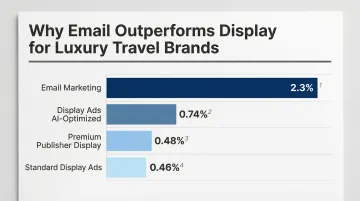
Email marketing significantly outperforms standard display advertising in engagement:
| Channel | Average CTR | Source |
|---|---|---|
| Email Marketing | 2.3% | Campaign Monitor, 2024 |
| Display Ads (Standard) | 0.46% | Nielsen/Wordstream, 2024 |
| Display Ads (AI-Optimized) | 0.74% | Nielsen/Wordstream, 2024 |
| Premium Publisher Display | 0.48% | Financial Times, 2021 |
Newsletter networks like House of Summary deliver content to serious, globally minded readers in key luxury markets. The platform's specialized publications reach global executives and business professionals who regularly consume geopolitical analysis and business intelligence—the same demographic that books ultra-luxury travel experiences. This creates a natural adjacency: readers who seek clarity and depth in their news consumption apply the same standards when researching high-value travel.
The Integrated Approach
The most effective luxury travel content strategies combine owned content (brand editorial, email), earned media (PR, influencer), and paid newsletter distribution—using each channel for what it does best:
- Owned email nurtures existing relationships and moves high-intent prospects through extended decision cycles
- Premium newsletter placements reach new affluent audiences inside trusted editorial environments
- Social media drives aspirational discovery and keeps the brand visible between purchase moments
- Influencer and PR campaigns build third-party credibility and expand reach within target demographics
For luxury travel brands, the real opportunity lies in matching message depth to channel. High-consideration purchase decisions—the kind that involve $20,000+ itineraries—require more than a scroll. They require trust, context, and the right editorial environment to convert.
Frequently Asked Questions
What makes luxury travel content different from standard travel content?
Luxury travel content prioritizes editorial authority, specificity, brand voice consistency, and trust-building over volume or broad reach. It must meet the quality standard expected by high-net-worth audiences who regularly consume premium editorial media like Condé Nast Traveler and Financial Times.
What services should a creative agency specializing in luxury travel content offer?
A well-rounded agency covers:
- Destination storytelling and editorial content
- Visual and video production
- Email and newsletter marketing
- Social media strategy and influencer programs
- Performance measurement suited to long purchase cycles
- Brand voice development across formats
How do luxury travel brands measure content marketing ROI?
Luxury travel ROI goes beyond clicks to include engagement quality, branded search lift, inquiry volume, lead quality, and customer lifetime value. Agencies should track assisted conversions and multi-touch attribution — not cost-per-click metrics built for mass-market campaigns.
Which content channels are most effective for reaching high-net-worth travelers?
Email newsletters, premium editorial placements, and select social platforms (Instagram, LinkedIn) are most effective for reaching affluent travelers. Newsletters reach engaged audiences directly — no algorithms, no filters. Social platforms play a supporting role, primarily for discovery and brand awareness.
How much does working with a luxury travel content agency typically cost?
Boutique retainers typically start between $5,000–$20,000 per month for content strategy and production. Premium video, influencer programs, and full multi-channel campaigns push costs higher depending on production scale and distribution scope.
What should luxury travel brands look for when evaluating a creative agency's portfolio?
Assess whether the portfolio demonstrates genuine luxury positioning (not just aesthetic polish), editorial quality that matches premium publications, and evidence of results for clients at a comparable price point and audience demographic. Look for specificity in storytelling, cultural accuracy, and a consistent voice from first impression to final booking.