
Introduction
Digital ad fatigue has fundamentally changed how D2C advertisers must approach audience engagement. Traditional banner ads, social media placements, and display units have become easy to ignore, skip, or block — 86% of internet users now experience banner blindness, and approximately 1.77 billion people worldwide use ad-blocking tools. Brands that keep relying on these formats are paying for impressions no one sees.
Paid editorial content emerged as a direct response. It appears across major publications, newsletters, and media platforms as sponsored features, branded articles, and editorial-style brand stories — sitting within the reading flow rather than interrupting it. The format borrows the credibility of the publication while delivering brand messaging in a narrative structure readers already recognize and trust.
That distinction trips up a lot of D2C marketers. Paid editorial content is neither press coverage you happened to earn nor a display ad in a trench coat. Understanding what it actually is — and how the buying process works — changes how you evaluate it as a channel.
Key Takeaways
- Paid editorial content is brand-funded content published within a media outlet's editorial format — it reads like journalism but is paid for by the advertiser
- Unlike a banner ad, it delivers real information in a narrative format — funded by the brand, shaped around the publication's editorial voice
- The process covers publisher selection, content creation, editorial alignment, disclosure, and performance tracking
- For D2C brands, it builds trust with cold audiences by borrowing the publication's credibility
- Formats include sponsored articles, newsletter editorial placements, branded content features, and in-content product integrations
What Is Paid Editorial Content?
Paid editorial content is brand-funded content published within a media outlet's editorial environment — written in the style of a news feature, opinion column, or informational article rather than as an obvious advertisement. Unlike a display banner that interrupts reading, paid editorial content appears in the same format and tone readers already trust.
Consumers now look at native ads 53% more frequently than display ads, and native placements register an 18% higher lift in purchase intent versus banner ads. For D2C brands, that difference in attention translates directly to conversion — which is why paid editorial content has become a serious channel, not a workaround.
What Paid Editorial Content Is NOT
To correct common D2C misconceptions:
- It is not earned media or organic press coverage — journalists don't write it unprompted; a brand pays for placement
- It is not a standard display ad or banner — there is no visual ad unit, and the format mimics genuine editorial writing
- The FTC requires clear disclosure labels such as "Sponsored," "Paid Content," or "Advertisement" — so readers are never misled
Two Main Orientations
Paid editorial content typically takes one of two forms:
- Traditional advertorial — reads like an article but exists primarily to promote a product, with little independent value for the reader
- Modern sponsored editorial — provides genuinely useful information to the reader while weaving brand messaging into a context that's relevant to their life or problem
Most D2C advertisers seeing real ROI from paid editorial are running the second type. The content earns attention before it asks for anything.
How Paid Editorial Content Works for D2C Brands
Paid editorial content operates through a defined workflow between the advertiser and the publisher. Each stage shapes whether the final piece earns reader attention or gets ignored.
Campaign Setup and Publisher Selection
D2C brands identify and approach media outlets whose audience profile matches their target customer. Key evaluation factors include:
- Readership demographics and audience quality
- Engagement rates (newsletter open rates, time on page, click-through activity)
- Editorial tone alignment with brand voice
- Geographic reach and concentration
The commercial negotiation stage covers:
- Purchasing a placement slot (article feature, newsletter segment, or content series)
- Agreeing on format specifications and deadlines
- Establishing disclosure requirements
- Content review rights (negotiated case by case)
For newsletter placements specifically, brands should prioritize publications with open rates above 30%. Email marketing averages 35.63% open rates and 2.62% click rates across all industries — far higher than the 0.46% average CTR for Google Display Network ads.
Content Creation
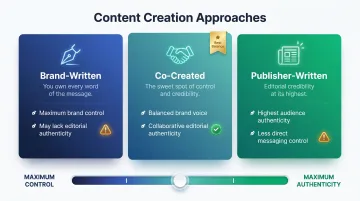
Content can be created in three ways:
- Written by the brand and submitted to the publication — gives maximum control but may lack authentic editorial voice
- Co-created between brand and editorial team — balances control with authenticity
- Written entirely by the publication's editorial staff using a brand brief — highest authenticity but less control over messaging
Effective paid editorial leads with audience value — a problem solved, a trend explained, an insight delivered — before or alongside brand messaging. Content that reads purely as an ad in article format gets spotted immediately by readers and loses its effect.
Publication and Disclosure
The content goes live within the media outlet's regular feed, newsletter edition, or content section alongside organic editorial content. Sitting next to trusted editorial content is precisely what drives reader attention — and why disclosure handling matters.
FTC guidelines mandate clear disclosure, requiring labels such as "Ad," "Advertisement," "Paid Advertisement," or "Sponsored Advertising Content." Labels like "Promoted" or "Presented by [Brand]" are considered ambiguous and discouraged. The disclosure must appear near the headline or focal point, visible before the reader clicks.
In newsletter formats specifically, placement often appears as a featured section within the edition. Readers see it in the same inbox context as the trusted newsletter, which maintains high attention levels. Newsletter ads enjoy structural immunity from browser-based ad blockers, ensuring delivery to every opted-in subscriber.
Performance and Measurement
D2C brands track paid editorial content outcomes through:
- Click-through rates to landing pages or product pages
- Traffic from UTM-tagged URLs
- Conversion rates and average order value
- Time-on-site metrics that indicate genuine reader engagement
- Post-read purchase attribution
Unlike a social ad optimized for instant conversion, paid editorial content often builds consideration over time. D2C brands should set measurement windows appropriate to their purchase cycle length — typically 14-30 days for most D2C categories.
Types of Paid Editorial Content D2C Advertisers Use
Sponsored Articles in Digital Publications
A brand pays a media outlet — a news site, lifestyle magazine, or trade publication — to publish an article matching its editorial format. This format works well for D2C brands entering a new market or launching products that need context before a customer commits to buying.
What makes this format effective:
- Fits naturally within the publication's existing editorial voice
- Reaches readers already engaged with that outlet's content
- Builds trust for product categories where context drives purchase decisions
Newsletter Editorial Placements
One of the highest-engagement formats available. Brands pay to be featured within a curated newsletter edition, reaching an audience that has actively subscribed and opted in to receive that content.
House of Summary's network of specialized newsletters places brand content directly in the inboxes of high-intent readers — no algorithmic filter, no ad blockers, and undivided attention. Newsletter advertising typically delivers 2-5% CTR, approximately 5.7x the Google Display Network average of 0.46%.
Key structural advantages:
- Immune to the 1.77 billion ad blocker users worldwide
- Delivered directly to opted-in inboxes
- Read in a distraction-free environment
- Algorithmically unfiltered, ensuring guaranteed delivery
Branded Content and Long-Form Sponsorships
A brand funds an entire content piece — a guide, a research report, or a feature story — published under the media outlet's brand with clear sponsorship disclosure. This format suits D2C brands in categories where depth sells: supplements, health tech, and financial services are common examples.
Typical use cases include:
- Category education pieces that explain why a product works, not just what it does
- Comparison guides that position the brand within a broader solution space
- Expert-backed reports that establish credibility ahead of a purchase decision
Paid Editorial vs. Organic Editorial: What D2C Marketers Get Wrong
The core distinction: organic editorial coverage is initiated and written by a journalist or publication without payment; paid editorial is funded by the brand. The format may look identical, but the origin and control differ entirely.
Many D2C founders assume that good PR and paid editorial are interchangeable, but they serve different strategic moments.
The Trust and Control Trade-Off
Paid editorial gives the brand control over messaging, placement timing, and narrative. Organic editorial carries higher inherent credibility because readers know no money changed hands.
The data reflects this tension directly:
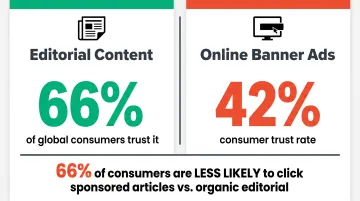
- Editorial content is trusted by 66% of global respondents, compared to only 42% for online banner ads
- 66% of consumers are less likely to click on a brand-sponsored article than on regular editorial content
For D2C brands, organic coverage is unpredictable and unguaranteed. Paid editorial, by contrast, can be planned around product launches, seasonal campaigns, or market entry — which is where the trade-off becomes a strategic choice rather than a limitation.
When D2C Brands Should Use Each
- Organic editorial is ideal for building long-term brand reputation and credibility when you have a genuinely newsworthy story
- Paid editorial fits better when a brand needs to reach a specific audience at a specific time with a controlled message
Use organic editorial to build authority, and paid editorial to scale reach and control timing.
Why Paid Editorial Content Works for D2C Advertisers
The D2C Trust Problem
Unlike brands sold in retail stores where customers can see, touch, or test products, D2C brands must build purchasing confidence entirely through digital touchpoints. Paid editorial content, placed within a publication or newsletter readers already trust, shortens the time it takes readers to trust a brand — something no banner ad can replicate.
Research from IAB shows that 84% of news consumers feel that advertising within news either increases brand trust or maintains it, with ads in news creating an average +4 percentage point trust score lift across 26 product categories.
The Attention Advantage
Paid editorial content sits inside environments where readers have come specifically to absorb information. Social feeds interrupt. Display ads get tuned out. Editorial placements get read.
Newsletter advertising delivers this at scale — average email open rates of 35.63% and click rates of 2.62% mean newsletter placements outperform display ads (0.46% CTR) by more than 5x. That gap widens further when the ad format matches the editorial voice around it.
Connection to D2C Conversion Behavior
Readers who engage with an editorial-style piece about a product or category are further along in their purchase decision than someone who glances at a retargeted banner. Paid editorial primes audiences with product context and social proof before they ever reach a product page, resulting in warmer traffic and higher downstream conversion rates.
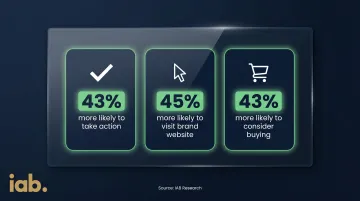
That conversion lift is measurable. IAB research found that consumers exposed to ads in news environments are:
- 43% more likely to take action
- 45% more likely to visit the brand's website
- 43% more likely to consider buying
Frequently Asked Questions
What is a paid editorial called?
Paid editorial content is most commonly called an advertorial (a blend of "advertisement" and "editorial"). It may also appear under labels like sponsored content, branded content, paid content, or native advertising depending on the publication and format.
What are examples of editorial content?
Editorial content examples include news articles, opinion columns, thought leadership features, newsletter editions, and informational guides. These are produced by journalists or editors without brand payment and are distinguished from paid editorial by their independent origin.
How much do sponsored articles cost?
Pricing varies based on publication reach, audience size, and engagement. Newsletter advertising typically costs $15-$30 CPM for healthy newsletters, with luxury or high-value audiences commanding $100+ CPM. Newsletter CPC typically works out to $1-$5, compared to Facebook's average CPC of $0.97 and LinkedIn's $5.26.
How do I get an article written about my company in a newspaper?
Two paths exist: earned media (pitching a journalist with a newsworthy angle — free but not guaranteed) and paid editorial placement (purchasing a sponsored content slot, which guarantees placement but requires disclosure and budget).
Is paid editorial content the same as native advertising?
The terms overlap, but native advertising is broader — it includes in-feed social ads and programmatic placements. Paid editorial content specifically means brand-funded content hosted within a publication's editorial environment with a disclosed sponsorship label.
How do D2C brands measure the ROI of paid editorial content?
Key metrics include UTM-tagged click-through rates, post-read conversion rates, time on site, and downstream purchase attribution. Because editorial content produces a longer consideration cycle, set your measurement window to 14-30 days rather than the 1-7 days typical for direct response ads.