Introduction
D2C brands are competing in a digital space where traditional advertising is losing ground fast. Over 93% of consumers skip or block ads, and Meta CPMs hit $14.19 in 2025 while ROAS hovers at just 1.86x.
Nearly 3 in 10 internet users now run ad blockers, costing publishers $54 billion in lost revenue. Paid advertising is becoming less effective and more expensive every quarter — and the structural reasons behind that trend aren't going away.
That cost pressure is pushing D2C brands toward branded content marketing — an approach built on storytelling and useful, relevant content that earns attention rather than interrupting it. This article defines branded content marketing, explains why D2C brands specifically benefit from it, and walks through how they're using it to build loyal customer bases rather than chase one-time conversions.
Key Takeaways
- Branded content delivers value through storytelling or education without direct sales pitches—93% of consumers skip traditional ads
- D2C brands rely on it to replace lost retail touchpoints as digital ad costs climb ($14.19 Meta CPM in 2025)
- Top formats — video series, branded podcasts, UGC, and newsletter sponsorships — build audiences ads can't reach
- Newsletter placements deliver 2.62% CTR vs. 0.46% for display ads—a 5.7x advantage
- Brand recall runs 59 points higher for branded content than display advertising
What Is Branded Content Marketing?
Branded content marketing is content created or funded by a brand that builds connection with audiences through entertainment, storytelling, or education—without making a direct sales pitch. The value delivered to the audience is the primary goal, not immediate conversion. It reflects what modern consumers actually want: content that respects their attention rather than interrupts it.
Traditional ads interrupt audiences and push a product. Branded content earns attention by offering something useful or engaging. When 93% of consumers skip or block ads, that distinction stops being academic—it's survival.
What branded content is NOT:
- Product placement — a character drinks Coca-Cola in a film; the brand didn't make the story
- Sponsored content — editorial tied to a publisher's existing audience and format
- Content marketing — informational guides, how-tos, or blog posts built around search queries
Branded content is broader in narrative scope and more emotionally driven than all three. It tells stories aligned with brand values rather than explaining product features.
Formats Branded Content Takes
Common formats include:
- Episodic video series or mini-documentaries exploring themes adjacent to the product category
- Branded podcasts built around audience interests, not product features
- Long-form editorial articles published in media outlets or newsletters
- Sponsored newsletter integrations woven into curated publications
- Creator-produced content that reflects brand identity without reading like an ad
The format should match where your target audience spends quality time. In every format, the brand's voice and values show up naturally—the content just never reads like an ad.
Why D2C Brands Specifically Need Branded Content
D2C brands lack physical retail touchpoints, meaning every customer relationship must be built digitally. Branded content fills the trust gap that a store shelf or sales associate would otherwise create. With Meta CPMs rising to $14.19 and ROAS at 1.86x, paid ads alone are no longer sufficient for sustainable growth.
The Ad-Blocker Reality
Approximately 29.5% of internet users worldwide use ad-blocking tools—representing 1.77 billion users across desktop and mobile. Regional adoption varies: Indonesia reaches 40.1%, the USA 32.5%, and males aged 16-24 approach 40% adoption. This ad-blocking behavior costs publishers $54 billion annually in lost revenue.
For D2C brands that rely heavily on digital advertising, this represents a structural problem. D2C brands end up paying more to reach fewer attentive consumers. Ad blockers don't affect newsletter content, making email-based branded content one of the few channels immune to this trend.
Differentiation Through Identity
When competing products look similar at first glance, a brand's story becomes its competitive advantage. Branded content is the vehicle for telling that story consistently.
The data makes the stakes clear:
- 75% of brands could disappear and consumers would not care
- Meaningful brands see 86% repurchase intent versus just 6% for non-meaningful ones
The Connection to Customer Lifetime Value
D2C brands succeed not on first-purchase economics but on repeat purchase behavior. Branded content that builds emotional connection increases the likelihood of repeat purchase:
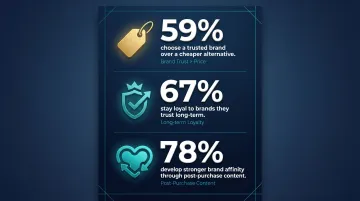
- 59% of consumers will choose a trusted brand over a cheaper alternative
- 67% stay loyal to brands they trust long-term
- 78% develop stronger brand affinity through post-purchase content and engagement
For D2C brands, every piece of content is either building that trust or failing to. Display ads rent attention. Branded content earns it.
How D2C Companies Use Branded Content
Founder and Origin Storytelling
D2C brands often have compelling founding narratives—a problem the founder experienced, a product they couldn't find, a mission that drove them. Turning this into branded editorial content humanizes the brand and gives customers something to believe in beyond the product.
These stories work because they're authentic. When a founder shares the journey from problem to solution, readers connect with the struggle and the persistence. That emotional connection translates into loyalty that product features alone rarely produce.
Video Series and Mini-Documentaries
D2C brands use episodic video content to explore themes adjacent to their product category. An outdoor gear brand might produce a documentary series about sustainability in adventure travel. The brand's values are showcased without the content becoming a product demo.
Viewers know there's a brand behind the content — but they keep watching because the content itself is worth their time. That's what separates branded documentaries from glorified ads.
User-Generated Content Campaigns
D2C brands turn their existing customers into content creators through UGC campaigns that invite real customers to share stories, photos, or videos aligned with the brand's identity.
Apple's "Shot on iPhone" is the most cited example of UGC at scale:
- Over 70 million interactions on Instagram
- More than 16 million UGC posts using #shotoniphone
- iPhone sales reached record highs during the campaign
- Won Cannes Lions Grand Prix and multiple other awards
The data behind UGC's effectiveness is hard to ignore:
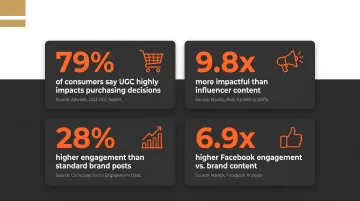
- 79% of consumers say UGC highly impacts purchasing decisions
- UGC is 9.8x more impactful than influencer content
- UGC posts generate 28% higher engagement than standard brand posts
- Facebook UGC sees 6.9x higher engagement versus brand content
Smaller D2C brands don't need Apple's budget to run this playbook — a simple prompt, a branded hashtag, and an engaged customer base are enough to start generating authentic content at scale.
Newsletter Editorial Integrations and Media Partnerships
D2C brands partner with niche publishers, newsletters, and media properties to place branded editorial content in front of highly targeted audiences. This differs from banner advertising — editorial-style content in a newsletter reaches readers in a high-attention context with no visual clutter competing for focus.
Newsletter placements offer three structural advantages over most digital channels:
- No ad blockers: Inbox placements reach subscribers directly, bypassing browser-level filtering entirely
- Active attention: Readers who open a newsletter have chosen to engage — they're not passively scrolling
- Inherited trust: Editorial integrations carry some of the credibility readers already extend to the publication
Premium newsletter placements — such as those available through networks like House of Summary, which serves global executives, finance professionals, and business decision-makers — offer D2C brands direct access to high-intent audiences with click-through rates significantly exceeding typical digital advertising benchmarks.
Influencer and Creator Co-Productions
The branded content version of influencer marketing isn't a product review or affiliate post. It's a creator-produced piece of content that tells a story aligned with the brand's values. The content has to earn attention on its own terms — if it only works as an ad, it's an ad.
The strongest creator partnerships start with genuine affinity — a creator who actually uses the product and has the freedom to tell that story in their own voice. Audiences can tell the difference between a collaboration and a paid placement reading from a brief.
How to Build a Branded Content Strategy for Your D2C Brand
Start with Audience Values, Not Demographics
Effective branded content begins by understanding what your target customer cares about beyond your product: their lifestyle values, interests, and the stories they find meaningful. Demographics tell you who they are. Values tell you what content will earn their attention.
Ask: What do they read? What podcasts do they listen to? What documentaries do they watch? What problems keep them up at night? The answers shape what kind of content will resonate.
Choose Format and Distribution Based on Audience Receptivity
Match content type to channel:
- Short-form video for social-native audiences
- Long-form editorial for email/newsletter subscribers
- Documentary-style content for YouTube
- Audio storytelling for podcast listeners
The channel should be chosen after the audience is understood, not before. Brands that reverse this order — picking a channel first, then hunting for content to fill it — typically produce content that fits the platform but misses the audience.
Measure What Actually Matters
Branded content success metrics go beyond clicks and impressions:
- Brand lift: Awareness and perception changes measured through surveys
- Engagement time: Time spent with the content (watch time, read time)
- Recall rate: Whether audiences remember the brand and message after exposure
- Downstream conversion: Impact on purchase intent and actual conversions over time
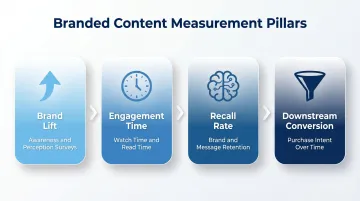
According to an IPG Media Lab and Forbes study, brand recall is 59 percentage points higher for branded content than display advertising — and purchase consideration is 9 percentage points higher. For D2C brands building long-term equity, these upper-funnel gains matter more than any single campaign's click-through rate.
Why Newsletter Branded Content Works for D2C Brands
The email inbox is a uniquely high-attention environment for branded content. Unlike social feeds, newsletters are actively opened by readers who opted in. There are no algorithms suppressing reach and no ad blockers stripping out the message. Readers arrive without distraction — which is exactly the condition branded content requires to work.
Performance advantages of newsletter-based branded content:
- Average email CTR: 2.62% (ecommerce average: 1.74%)
- Average display ad CTR: 0.46%
- Email delivers 5.7x higher engagement than display advertising
Premium newsletter placements offer direct access to high-intent audiences. House of Summary's network, for example, reaches over 500,000 subscribers—primarily decision-makers, executives, and high-income consumers across the USA (66%), UAE (18%), and UK (10%). These readers actively engage with editorial content in their inbox, making it a context where brand messages sit alongside content readers already trust and seek out.
The Credibility Transfer Effect
A branded article or sponsored editorial within a newsletter carries the trust of the publication it appears in. Readers who trust the newsletter extend some of that trust to the brands it chooses to feature—a credibility transfer that display advertising cannot replicate.
This is why editorial integrations outperform banner ads in the same environment. Where a banner ad interrupts, a sponsored editorial fits — it matches the format readers expect, which is why engagement rates follow suit.
Frequently Asked Questions
What is branded content in marketing?
Branded content in marketing is content created or funded by a brand to entertain, educate, or inspire audiences—without directly promoting a product. Its goal is to build emotional connection and brand affinity rather than drive an immediate sale. The content delivers value that audiences choose to engage with.
What are some examples of branded content?
Well-known examples include Red Bull's Stratos freefall documentary, Nike's Breaking2 film, and Apple's "Shot on iPhone" campaign. Newsletter editorial integrations where brands are featured in the context of expert journalism also qualify. Examples range from high-budget productions to simple founder stories published in niche media.
What is a branded content article?
A branded content article is a written piece—typically published in a media outlet, blog, or newsletter—that is created or funded by a brand but reads like editorial content. It tells a story or explores a topic of audience interest while naturally weaving in the brand's voice or values, with clear advertiser disclosure.
What is the 70 20 10 rule in content?
The 70-20-10 rule is a content strategy framework: 70% of content serves the audience's core interests, 20% is curated from other sources, and 10% is promotional or experimental. For D2C brands, this means the majority of branded content should deliver genuine value — not sell.
What are the 4 types of content?
The four commonly referenced content types are entertainment, educational, inspirational, and conversational. Branded content for D2C brands typically lives in the entertainment and inspirational quadrants, where emotional resonance matters more than information delivery.
What are the 5 C's of content marketing?
The 5 C's are Content, Context, Consistency, Channels, and Conversion. For D2C brands using branded content, Context and Consistency carry the most weight — knowing where your audience is receptive and showing up with a recognizable voice are what build trust over time.