
Introduction
Government impersonation scams are now among the most costly email threats in circulation. In 2025 alone, they generated 32,424 complaints and approximately $798 million in losses, according to the FBI's Internet Crime Complaint Center. Presidential-themed emails sit at the center of this problem — few triggers prompt faster action than an apparent message from political authority.
Executives and professionals who track global news are frequent targets. These attacks mirror real headlines, reference current policy events, and use language indistinguishable from official communications. When an email appears to carry government authority, most people instinctively treat it as credible — and that's exactly what fraudsters rely on.
This article covers why presidential themes work so effectively for fraud, the specific scam types circulating today, how to identify them before you click, and immediate steps to take if you've been targeted.
Key Takeaways
- Presidential email scams surged to $798M in losses during 2025, nearly doubling from the previous year
- Fraudsters anchor campaigns to real news events—elections, policy shifts, fund announcements—to appear credible
- Common scams include fake government grants, crypto giveaways tied to political figures, and IRS impersonation threats
- Check sender domains (legitimate government emails use .gov, not Gmail), decline urgent financial requests, and never share credentials
- Report incidents to IC3.gov and your bank immediately — prompt reporting drove a 58% fund recovery rate in 2025
Why Scammers Target Presidential and Political Email Themes
Presidential and government authority carries inherent trust — and scammers know exactly how to exploit it. Society conditions people not to question official-sounding communications, which means the critical guard drops before a recipient has even finished reading the subject line.
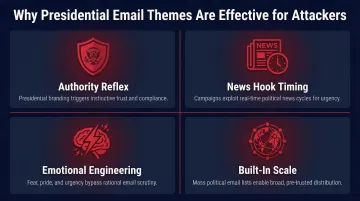
Four specific factors make political email themes unusually profitable for attackers:
- Authority reflex: Government framing triggers compliance over skepticism, bypassing the scrutiny readers would apply to ordinary cold outreach
- News hook timing: Scammers monitor real-world events — cabinet appointments, fiscal policy announcements, election cycles — and deploy templates almost in real time, making fabricated claims feel credible rather than random
- Emotional engineering: Fear of financial loss, excitement over unexpected windfalls, and urgency around political deadlines override rational evaluation and push impulsive responses
- Built-in scale: Because presidential names receive global news coverage, a single scam template reaches millions of inboxes with minimal customization — a high return on effort for minimal work
High-profile and polarizing figures generate the most scam activity. Microsoft's 2024 Digital Defense Report noted a surge in election-related homoglyph domains delivering phishing payloads during the U.S. election cycle, while domain registrations related to major political events can triple compared to normal periods. Scam volume, in short, follows the news cycle — and presidential themes sit at the top of that cycle almost year-round.
The Most Common Types of Presidential Email Scams
Government Fund Disbursement Scams
This scam claims you've been awarded a large sum from seized or reallocated government funds. The emails reference real, recent policy events—foreign aid freezes, fiscal reforms, anti-corruption initiatives—to establish false legitimacy. You'll see language like "Presidential Relief Fund," "Federal Grants Administration," or "Department of Treasury Disbursement Unit."
The mechanics are consistent: recipients reply to a provided address to "claim" their funds. Once contact is made, scammers collect personal identification documents, bank details, and demand upfront "processing fees" or "transfer taxes" before releasing the fabricated funds.
The U.S. Department of Health and Human Services issued alerts in 2023 about scammers offering fake HHS grants that require upfront processing fees — a tactic mirrored across dozens of fake agencies.
Political Crypto and Investment Scams
Fraudsters exploit public statements on cryptocurrency or economic policy to fabricate giveaways, token launches, or investment opportunities tied to political figures. In 2024, scammers impersonated the Trump-Vance Inaugural Committee using a spoofed email address, tricking a donor into sending $250,300 in USDT stablecoin.
Warning signs in crypto scam emails:
- Sender domains that don't match the claimed organization (e.g.,
@t47lnaugural.cominstead of the legitimate@t47inaugural.com) - Links leading to recently registered or free-hosted websites
- Coin or fund names that reference political movements or candidates
- Requests to connect wallets or transfer crypto "to verify eligibility"
Fear-Based Financial Spam
These emails weaponize presidential policy changes—currency reforms, sanctions, regulatory shifts—to frighten recipients into believing their savings or financial security are at risk. Scammers then pitch a "solution": a paid subscription, a financial product, or a click to a scam landing page.
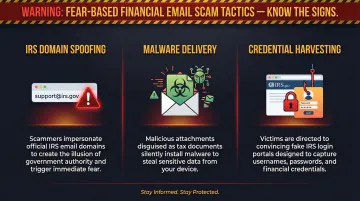
Researchers have documented this playbook in detail. Common tactics include:
- IRS domain spoofing: Check Point Research flagged a 2026 phishing campaign using domains like 2025irswebsiteislive[.]live to harvest Social Security numbers and banking data under the cover of tax refunds
- Malware delivery: Proofpoint tracked campaigns sending emails that appeared to be from the IRS — complete with real IRS phone numbers — but delivered remote monitoring malware upon opening
- Credential harvesting: Fake portals mimic official agency login pages to capture usernames, passwords, and financial account details
Red Flags: How to Spot a Fraudulent Presidential Email
Most fraudulent presidential emails share the same tells. Knowing what to look for takes seconds and can stop a scam before any damage is done.
Sender address: Legitimate government communications use .gov or .mil domains — never Gmail, Yahoo, or domains registered days ago. A single character off, like @whitehous.gov instead of @whitehouse.gov, is enough to confirm a fake.
Greeting: Fraudulent emails rarely know your name. "Dear Valued Citizen," "Dear Fund Beneficiary," or no greeting at all are immediate signals of a mass phishing attempt.
Urgency and reward: Real government communications don't include countdown timers, sudden windfalls, or 24-hour response deadlines. Any email pairing presidential authority with an implausible reward is almost certainly a scam.
Embedded links: Hover over any link before clicking to reveal the actual destination. Scam links frequently lead to:
- Free-hosted domains (Wix, WordPress.com, Google Sites)
- Recently registered websites
- URLs that resemble but don't match the claimed organization's real address
Information requested: No legitimate government body or established newsletter asks for crypto wallet credentials, passport scans, credit card numbers, or login details via email. Treat any such request as an immediate warning sign and do not respond.
Verified newsletters follow consistent, traceable patterns: transparent sender identities, fixed sending domains, and clear editorial formatting. Presidential Summary, published by House of Summary, operates this way — no requests for personal data, no financial solicitation, and no deviation from its editorial standards.
What Scammers Really Want From You
Attackers pursue two primary goals: extracting personal and financial data for identity theft or account takeover, and in some cases extracting money directly through fake fees or required deposits to "release" promised funds.
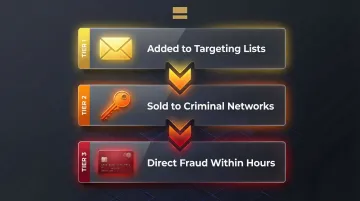
What makes these attacks effective is that even partial information has value. Each piece you give away serves a specific purpose:
- An email address confirms an active account and adds you to future targeting lists
- Stolen credentials get sold to other criminal networks — over 15 billion were in circulation on cybercriminal platforms as of 2020
- Financial details enable direct fraud within hours of exposure
Victims often don't realize the full extent of the damage until weeks later. By then, compromised credentials may have been used across multiple accounts, and financial losses can cascade through unauthorized transactions, new account openings, or loan applications filed in their name.
How to Protect Yourself from Presidential Email Fraud
Treat Unsolicited Political Emails as Suspect by Default
Any email referencing a political leader, government program, or sudden financial opportunity deserves verification through an independent news source before you act — regardless of how official it looks. The polish of a message is not proof of its legitimacy.
Lock Down the Technical Basics
Strong account security limits the damage even when a scam partially succeeds:
- Enable multi-factor authentication on all important accounts, using phishing-resistant methods such as security keys
- Use a password manager to ensure unique passwords across accounts
- Keep security software updated to catch known threats early
These steps won't stop every attempt, but they significantly narrow the window of exposure if credentials are ever compromised.
Get Political News from Verified Sources
Technical defenses work best alongside a reliable information habit. Instead of clicking through unverified emails for political updates, go directly to sources with clear editorial standards. House of Summary's newsletter network — covering global news, geopolitics, and city-level developments — delivers verified, human-written reporting straight to your inbox, with no sensationalism and no room for social-engineering lures to hide.
What to Do If You've Already Been Targeted
If you've already interacted with a fraudulent email, act fast. The steps below are organized by what you exposed — because the right response depends on what the scammer may have captured.
Immediate response steps by exposure type:
If you clicked a suspicious link:
- Change relevant passwords immediately
- Enable multi-factor authentication on affected accounts
- Run a security scan on your device
- Monitor bank accounts for unauthorized activity over the next 30 days
If you entered financial details:
- Contact your bank and card issuers immediately to flag and potentially freeze affected accounts
- Request replacement cards with new numbers
- Set up fraud alerts with credit bureaus
If you provided personal identification:
- Contact identity protection services or relevant national authorities (such as the FTC in the US via ReportFraud.ftc.gov)
- Consider placing a credit freeze with all three major credit bureaus
- Monitor credit reports for unauthorized accounts or inquiries
Once you've secured your accounts, report what happened — quickly.
Report the scam immediately. Prompt reporting is critical—the FBI's Recovery Asset Team achieved a 58% success rate in freezing fraudulent funds in 2025 when incidents were reported quickly. Forward fraudulent emails to:
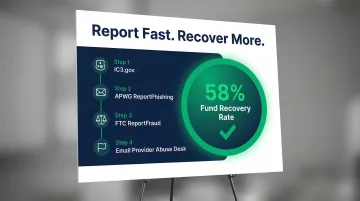
- FBI Internet Crime Complaint Center: IC3.gov
- Anti-Phishing Working Group: reportphishing@apwg.org
- Federal Trade Commission: ReportFraud.ftc.gov
- Your email provider's abuse desk
If the scam impersonates a specific government agency, notify that agency directly. Reporting creates a paper trail that investigators use to shut down active fraud operations and warn other potential targets.
Frequently Asked Questions
What makes presidential-themed email scams so effective?
Presidential authority and real news events create an automatic sense of legitimacy and urgency. Scammers exploit the brain's tendency to trust official-sounding sources and act quickly on high-stakes topics, skipping the skepticism most people would apply to any unsolicited message.
How do fraudsters use real news events in their scam emails?
Scammers monitor news cycles in real time and rapidly build fake emails around genuine policy events—aid freezes, executive orders, political appointments. This makes fabricated claims appear plausible and timely rather than random, increasing the likelihood recipients will engage before verifying.
How can I tell if a presidential news email is from a legitimate source?
Look for a verified sender domain (no Gmail or free webmail), no requests for personal or financial data, and a transparent editorial identity you can confirm independently. Legitimate publications like Presidential Summary never ask for credentials or payment details via email.
What should I do if I accidentally clicked a link in a suspicious political email?
Change passwords on any accounts sharing those credentials, enable multi-factor authentication, and run a device security scan. Monitor your bank accounts for unusual activity — speed matters here.
Are political donation emails safe?
Legitimate campaign donation emails come from verified campaign domains and link to known campaign websites. Always navigate directly to the official campaign site rather than clicking through an email link to donate safely—this eliminates the risk of spoofed donation pages.
How do scammers get my email address to send political fraud emails?
Email addresses are harvested through data breaches, public records, purchased lists, and prior website interactions. Mass fraud campaigns aren't personally targeted — they reach vast lists indiscriminately, which is why no inbox is immune.