Introduction
D2C advertising budgets are under constant pressure. Rising CPMs, intensifying competition, and platform algorithm changes mean format selection directly impacts customer acquisition cost (CAC) and return on ad spend (ROAS). Push ads and native ads are two of the most widely used formats, but most comparisons target affiliate marketers—not D2C brands.
The difference matters. D2C advertisers have fundamentally different goals: repeat purchases, lifetime value (LTV), brand equity, and customer retention—not just one-time CPA conversions. The question isn't which format is generically "better," but which format serves specific D2C campaign objectives better, and when to use each one.
The answer depends on where your customer is in the funnel—and what you're asking them to do next.
Key Takeaways
- Push ads deliver opted-in, notification-style messages directly to users' screens — ideal for time-sensitive offers and re-engagement
- Native ads match the look of editorial content, making them effective for awareness, acquisition, and product education
- Push typically generates higher CTRs (3%+ for retail); native produces higher conversion quality and purchase intent
- Optimal D2C strategy: native for top-of-funnel, push for retention downstream
- Neither format wins universally—choose based on product category, campaign goal, and customer journey stage
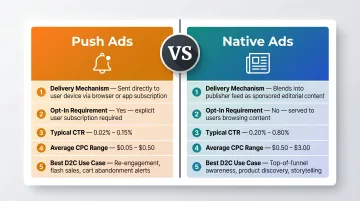
Push Ads vs Native Ads: Quick Comparison
| Attribute | Push Ads | Native Ads |
|---|---|---|
| Delivery Mechanism | Browser/app notification sent directly to screen | Sponsored content within editorial feeds |
| Opt-In Requirement | Yes (except in-page push variants) | No |
| User Intent Level | Medium (existing relationship) | High (actively consuming content) |
| Typical CTR Range | 2.25-3.01% (retail average) | 0.4%+ indicates strong performance |
| Average Cost (CPC) | $0.001-$0.01 | $0.10-$0.50 (content discovery networks) |
| Creative Format | Small icon + short headline + brief text | Full editorial format with images and long copy |
| Best D2C Use Case | Cart recovery, flash sales, retention | Cold acquisition, product education, brand building |
These benchmarks reflect general industry data. D2C performance will vary by vertical, creative quality, and targeting precision.
Push ads offer entry costs 10–50x lower than native placements and higher raw click rates — but native ads tend to attract more qualified traffic and suit longer consideration cycles. Which channel wins depends on where your customer is in the funnel.
What Are Push Ads?
Push ads are browser- or app-based notification messages delivered to users who have opted in to receive them, appearing on-screen even when the user isn't actively browsing. They look like system notifications—a small icon, a headline, and brief descriptive text.
In-page push is a variant that mimics push notifications but appears within a webpage, removing the opt-in requirement and enabling broader reach including iOS users (who have historically lower opt-in rates at 44% compared to Android's 91%).
How Push Ads Function for D2C
Once a user opts in on a brand's website or app, the brand can deliver time-stamped, targeted messages across mobile and desktop. The opt-in nature makes the audience already warm—they already have some relationship with the brand.
Push notifications achieve high visibility: 72.8% of all web push traffic originates from mobile devices, and retail-specific push ads average a 3.01% CTR—roughly 6-7x higher than traditional display ads.
Core Advantages for D2C Advertisers
- Immediacy: Messages are delivered in real time, ideal for urgency-based offers
- Low entry cost: CPC as low as $0.001-$0.005, dramatically cheaper than native
- High visibility: Notifications appear on lock screens and notification centers
- Direct delivery: No algorithm determines who sees your message
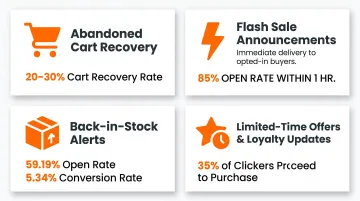
- Strong conversion rates: 35% of users who click a promotional push proceed to purchase, vs. 5% for campaign emails
Limitations for D2C Brands
Push ads face real creative constraints. The small icon + short headline + brief description format makes product storytelling nearly impossible. You can't explain complex features, demonstrate product benefits visually, or build brand narrative.
Audience fatigue compounds the problem: 46% of users opt out if they receive 2-5 push messages per week, and Android push opt-in rates dropped from 85% to 67% in a single year. Frequency management isn't a best practice—it's a baseline requirement.
The format is poorly suited for:
- Explaining premium or complex products
- Building trust with cold audiences
- Visual storytelling (fashion, home goods)
- Category education (supplements, healthcare)
Use Cases Where Push Ads Win for D2C
Abandoned cart recovery: Multi-channel sequences including push recover 20-30% of abandoned carts vs. 10-15% for email alone. One online pharmacy reported a 22% conversion rate on abandoned cart push notifications.
Flash sale announcements: When you have 48 hours to move inventory, push delivers immediate awareness to opted-in buyers.
Back-in-stock alerts: Omnisend data shows back-in-stock notifications achieve 59.19% open rates and 5.34% conversion rates.
Limited-time offers and loyalty updates: Time-sensitive promotions benefit from push's immediacy, and loyalty touchpoints—points balances, tier upgrades, member-only deals—perform well with audiences who already know the brand.
What Are Native Ads?
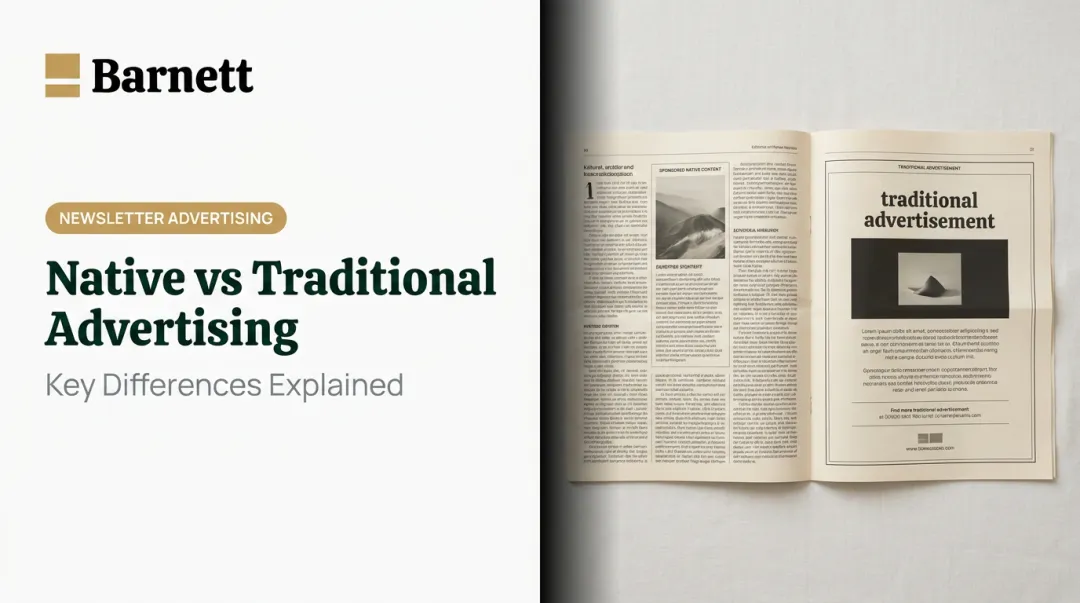
Native ads are paid placements that match the visual format and editorial tone of the platform they appear on, designed to feel like organic content rather than traditional advertising. They appear as sponsored articles in content feeds, "recommended for you" widgets on news sites, in-feed social placements, and branded content partnerships.
Native ads are typically bought programmatically through content discovery networks (Taboola, Outbrain) and placed alongside editorial content that aligns with the target audience's interests.
Newsletter-Sponsored Content: A Premium Native Variant
A premium variant operates on the same principle but delivers the ad inside a reader's inbox. Platforms like House of Summary place D2C brand messages inside specialized newsletters read by high-intent, engaged subscribers. This format bypasses ad blockers entirely, reaching readers in a distraction-free environment — House of Summary's network logs 254,866+ emails opened daily across 500,000+ subscribers.
Core Advantages for D2C Advertisers
Trust-building through context: Native ads generate 18% higher purchase intent than banner ads because they're viewed 53% more frequently. When your product appears next to editorial content readers already trust, credibility transfers.
Banner blindness resistance: 86% of consumers experience banner blindness, but native ads overcome this by matching the content format readers actively consume.
Editorial depth: Full format with images, long-form copy, and rich visuals gives you space to educate buyers — explain ingredients, demonstrate use cases, or build a brand narrative.
Contextual relevance: Native ads reach users already consuming content in your category, which means the mindset is receptive rather than interrupted.
Limitations
Native ads require higher investment on multiple fronts:
- Higher CPC: $0.10–$0.50 minimum, often exceeding $5.00 in competitive niches
- Content investment: Strong headlines, professional images, and optimized landing pages are mandatory
- Optimization time: Requires meaningful budget to accumulate sufficient data
- Less effective for urgency: The content-consumption context doesn't trigger immediate action like push notifications
Use Cases Where Native Ads Excel for D2C
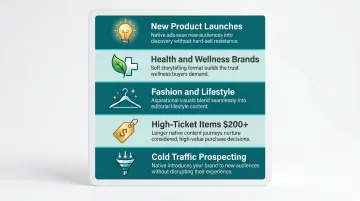
- New product launches: Category-creating products need space to explain what they are and why they matter — native delivers that.
- Health and wellness brands: Supplement and wellness brands benefit from editorial context that validates clinical claims and ingredient stories.
- Fashion and lifestyle: Luxury skincare, prestige fragrance, and premium home goods need visual space and narrative to convey quality.
- High-ticket items ($200+): Furniture, electronics, and skincare systems require consideration time that native formats support.
- Cold traffic prospecting: Content-forward ads generate higher-quality first impressions with audiences who've never heard of your brand.
Which Performs Better for D2C Advertisers?
By Campaign Objective
Customer acquisition (cold audience): Native ads consistently outperform push because they blend into the content experience users are already engaged with. Native ads are viewed 53% more than banners and generate 18% higher purchase intent—critical metrics when you're building awareness and trust from zero.
Retention and re-engagement (warm audience): Push ads dominate because they reach opted-in users directly without competing for attention. 85% of online stores now use push notifications, and they deliver 36x ROAS with an average ROI of 2,278%.
By D2C Product Type
Impulse-buy or low-consideration products (snacks, accessories, gadgets under $50): Push ads' immediacy aligns perfectly with spontaneous purchase decisions. The 3.01% CTR for retail push ads converts efficiently when friction is low.
High-consideration or subscription products (supplements, skincare regimens, furniture): Native ads provide the storytelling space these categories require. A supplement brand can't explain adaptogens, clinical studies, and ingredient sourcing in a push notification—but they can in a 500-word native article.
Key D2C Metrics: CAC, ROAS, and LTV
Average D2C CAC now ranges from $45–$175 and increased 40% between 2023 and 2025. Brands lose an average of $29 per new customer acquired. How each format affects those numbers depends on where the customer is in their journey.
| Metric | Push Ads | Native Ads |
|---|---|---|
| Best use case | Retargeting, cart recovery | Cold traffic, acquisition |
| CPC range | $0.001–$0.01 | $0.10–$0.50 |
| Purchase rate (post-click) | ~35% on retargeting | Higher intent, stronger affinity |
| CTR benchmark | ~3% (retail) | ~0.5–1% |
CTR alone misleads here. A 3% CTR delivering one-time buyers with 20% repeat rates loses to a 0.5% CTR that brings in subscribers with 65% repeat rates. Evaluate by downstream LTV, not click volume.
Budget Considerations
Budget shapes which format is viable, not just preferable:
- Push ads allow meaningful testing at $50–$150. CPC floors start as low as $0.001, making it accessible for early-stage brands validating product-market fit.
- Native ads require $500–$1,500 monthly minimums. Taboola recommends $50/day; Outbrain requires $20/day. You need sustained spend to build optimization data, so native makes sense once CAC targets are defined and creative assets are in place.
Situational Decision Guide
Choose push if:
- Running a 48-hour flash sale to existing subscribers
- Recovering abandoned carts (push recovers 20-30% vs. 10-15% for email alone)
- Re-engaging lapsed customers with urgency-based offers
- Testing new D2C channels with limited budget
- Selling impulse-buy products under $50
Choose native if:
- Launching a new product line to cold audiences
- Operating in content-rich verticals (health, beauty, home)
- Selling high-consideration products over $100
- Building brand equity and trust from scratch
- Advertising in brand-safe, premium editorial contexts
How D2C Brands Can Use Both Strategically
The strongest D2C brands treat push and native as complements, mapping each format to a distinct stage of the customer journey.
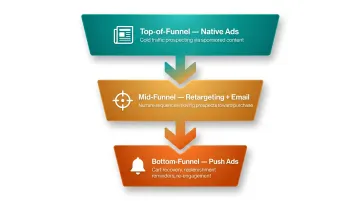
Sequential Deployment Across the Funnel
Top-of-funnel awareness (native ads): Use native placements for cold traffic prospecting. A sponsored article about sleep optimization introduces your premium mattress brand to readers consuming wellness content. They click through, browse, maybe add to cart.
Mid-funnel consideration (retargeting + email): Standard retargeting and email nurture sequences move prospects toward purchase decision.
Bottom-funnel conversion (push ads): When they abandon cart, a push notification delivers immediate recovery. After purchase, push handles replenishment reminders, loyalty program updates, and re-engagement.
The Compounding Effect
Full-funnel strategies consistently outperform single-stage marketing on ROI — a pattern documented across large-scale CPG campaign analyses.
When native ads establish brand trust first, push notifications from the same brand are more likely to be opened and acted on. The Mere-Exposure Effect demonstrates that repeated exposure increases liking and acceptance—brands that lead with native content before layering in push have reported significantly higher push open rates as subscribers become familiar with the brand.
Newsletter Advertising: The Hybrid Format
D2C brands seeking a format that combines native's content-first trust-building with push's direct-delivery performance should explore newsletter advertising. This channel places brand messages inside specialized newsletters read by high-intent subscribers — reaching readers directly in their inbox, where there are no algorithms filtering visibility and no ad blockers stripping the placement.
For D2C brands targeting affluent, professional audiences in wealth-concentrated metros (New York, Los Angeles, London, Dubai), newsletter placements deliver editorial context that builds credibility while maintaining the inbox-direct delivery that makes push effective. House of Summary, for example, gives advertisers access to 500,000+ executives and decision-makers across specialized publications — with a single ad per edition, brand messages appear in a distraction-free editorial context rather than competing for screen space.
Conclusion
Push ads perform better for D2C brands focused on retention, urgency, and re-engagement with warm audiences. Native ads perform better for acquisition, brand building, and converting cold audiences on considered purchases.
Your product category, funnel stage, and budget should drive the choice—not industry trend alone. A $25 impulse-buy snack brand and a $400 anti-aging supplement subscription require different format strategies.
The strongest D2C advertising strategies treat push and native as complementary channels, each deployed where they are structurally strongest. Start by auditing your funnel for the gaps that cost you most: where customers drop off, where CAC spikes, and where conversion quality deteriorates.
Match each channel to what it does best:
- Use native to fill awareness gaps and educate cold prospects who haven't encountered your brand
- Use push to recover abandoners and retain buyers already in your funnel
Start with the channel that addresses your biggest current gap. That's the one worth deploying next.
Frequently Asked Questions
What is a push ad?
Push ads are opt-in notification-style ads delivered directly to a user's screen via browser or app, even when they're not browsing. Users must opt in to receive them, so the audience is already receptive. Push ads appear like system notifications with a small icon, headline, and brief text.
What is an example of native ads?
Native ads include sponsored articles in news feeds (Forbes, Business Insider), "recommended for you" widgets on blogs, and branded placements inside newsletters. They match the look and editorial tone of surrounding content, making them far less disruptive than traditional banner ads.
Are push ads or native ads better for acquiring new D2C customers?
Native ads are generally better for cold audience acquisition because they blend into content environments users are actively consuming, generating higher-intent clicks and building trust. Push ads are more effective for re-engaging users who already know the brand and have opted in to receive messages.
Which ad format delivers a higher conversion rate for D2C brands?
Push ads typically achieve higher CTRs (3.01% for retail vs. 0.4%+ for native), but native ads often produce better conversion rates for considered-purchase D2C products. Native drives higher-intent traffic through contextual relevance; push excels at converting warm audiences with time-sensitive offers.
Can D2C brands run push and native ads simultaneously?
Yes — and it's the recommended approach. Use native for top-of-funnel prospecting to cold audiences and push for retargeting and retention lower in the funnel. Combined full-funnel strategies deliver up to 45% higher ROI than running either format alone.
How much budget does a D2C brand need to test push vs native ads?
Push ads allow meaningful testing at $50–$150 total spend, with CPC starting at $0.001. Native typically requires $500–$1,500 monthly — Taboola recommends $50/day, Outbrain $20/day minimum — making push the more accessible starting point for budget-conscious brands.