
For media buyers and marketing decision-makers, this creates a real problem: paying more for placements that register less.
One clarification before going further. Sponsored content is technically a form of paid media — you're paying a publisher for placement. The practical comparison here is between sponsored content (editorial-style placements in newsletters and publications) and traditional paid media (display ads, PPC, paid social). That distinction matters because the mechanics, audience receptivity, and performance profiles are genuinely different.
This article covers definitions, a side-by-side performance comparison, and a practical framework for deciding which channel fits which goal.
Key Takeaways
- Paid media buys guaranteed reach across search, social, and display — sponsored content earns attention inside trusted editorial environments
- Paid media delivers speed and scale; sponsored content delivers deeper engagement, trust, and higher-quality conversions
- 912 million active ad-blocking users worldwide make display campaigns structurally less reliable — newsletter-based sponsored content bypasses this entirely
- The right channel depends on your goal, audience type, and whether you need fast volume or high-quality engagement
- For brands targeting executives and decision-makers, newsletter sponsorships routinely beat broad paid media on engagement quality per dollar spent
What Is Sponsored Content?
Sponsored content is a paid placement where a brand's message is delivered in an editorial or content-native format — hosted by a publisher and distributed to that publisher's audience. The format matches the surrounding content rather than interrupting it. That's the defining difference from a display ad.
Core Formats
The main formats include newsletter sponsorships, sponsored articles, native ads within editorial feeds, and branded content partnerships. Of these, newsletter sponsorships are among the most effective — they land directly in the subscriber's inbox with no algorithm filtering the delivery, no ad blocker stripping the placement, and no competing visual clutter from adjacent ads.
When a brand message arrives inside a newsletter someone chose to receive, it's encountered in a different mental state than an ad interrupting a Google search or a social scroll.
Why It Works
Sponsored content earns attention rather than demanding it. Readers engage with content that feels relevant to what they're already reading — and when a sponsored piece fits that context, the brand message benefits from the editorial credibility surrounding it.
Readers of specialized, curated publications opted in specifically for that content. They're not a demographic segment an algorithm identified as vaguely similar to your existing customers — they're people who actively chose to receive this publication, regularly, because it's relevant to their lives.
Where Sponsored Content Fits in the Funnel
Sponsored content performs strongest in these situations:
- Moving warm audiences from awareness to consideration (mid-funnel trust-building)
- Reaching readers already engaged in a specific vertical — finance, global business, technology, luxury
- Generating leads where audience quality matters more than volume
House of Summary's network — Presidential Summary, Geopolitical Summary, Dubai Summary, and London Summary — reaches over 500,000 subscribers across these verticals, with 254,866+ emails opened daily.
The audience skews toward executives, founders, senior professionals, and high-net-worth individuals in New York, Los Angeles, London, and Dubai. For brands whose message requires credibility to land, that context matters.
What Is Paid Media?
Traditional paid media covers any format where brands pay for guaranteed placement across external channels:
- Search (PPC/SEM) — Google Ads, Bing Ads
- Paid social — Meta, LinkedIn, TikTok, X
- Display advertising — banner ads, programmatic placements
The practical distinction from sponsored content is format: traditional paid media uses standardized, interruptive placements rather than editorial-native ones.
The Core Advantage
A PPC campaign can go live within hours, and social platforms offer granular demographic, behavioral, and interest-based targeting that reaches millions. For product launches, time-sensitive promotions, or rapid awareness campaigns, nothing matches traditional paid media's ability to generate volume quickly.
Growing Limitations
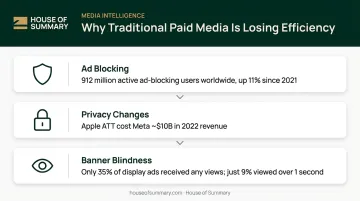
The efficiency picture has shifted. Three pressures are working against traditional paid media simultaneously:
- Ad blocking: 912 million active ad-blocking users worldwide as of Q2 2023, up 11% from Q4 2021
- Privacy changes: Meta disclosed Apple's App Tracking Transparency cost approximately $10 billion in 2022 revenue, reducing targeting precision across the ecosystem
- Banner blindness: Lumen research found only 35% of digital display ads received any views at all, with just 9% viewed for more than one second
Rising costs compound these attention problems. Google Search CPC rose another 7% year-over-year in Q4 2024 even as click growth slowed — meaning advertisers are paying more for the same or fewer clicks.
Where Paid Media Excels
Paid media still delivers clear value when the goal is volume, speed, or measurable short-term return:
- Top-of-funnel brand awareness at scale
- Retargeting warm audiences who've already visited your site
- Performance-driven campaigns where immediate ROAS measurement matters
- E-commerce, event promotions, and volume-dependent campaigns
Sponsored Content vs. Paid Media: Quick Comparison
| Dimension | Sponsored Content | Traditional Paid Media |
|---|---|---|
| Audience Trust | Benefits from editorial credibility of the host publication | Faces inherent skepticism; consumers identify it as advertising |
| Targeting | Contextual relevance within a defined, opted-in readership | Demographic and behavioral precision at scale |
| Measurability | Engagement quality, open rates, CTR, downstream conversions | Real-time click, conversion, and ROAS tracking |
| Ad Blocker Risk | Email delivery bypasses browser-based ad blockers entirely | Display and social placements vulnerable to blocking |
| Cost Structure | Typically flat placement fee; content retains residual value | Impression- or click-based; spend stops, exposure stops |
Of all the dimensions above, CTR is where the two formats diverge most sharply — and the data makes that clear.
The CTR Gap Is Material
GetResponse's analysis of 4.4 billion messages sent in 2023 found an average email CTR of 3.25%. The average Google Display Network CTR sits at 0.46%. That seven-fold difference reflects a structural gap in how these formats engage audiences, not a marginal one.
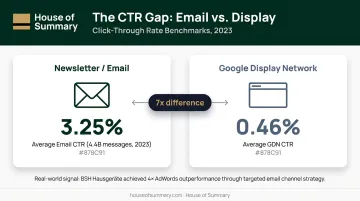
BSH Hausgeräte, advertising through House of Summary's Dubai Summary, reported click-through rates 4x higher than Google AdWords — a result that reflects what opted-in editorial audiences consistently deliver.
But "better CTR" doesn't mean "better for every campaign." A display campaign reaching 10 million impressions at 0.46% CTR might generate more total clicks than a newsletter sponsorship reaching 50,000 engaged subscribers at 3.25% CTR. The comparison is always goal-specific.
Which Channel Performs Better?
The honest answer: it depends what you're optimizing for.
Engagement Quality and Conversion Intent
Sponsored content typically leads on mid-to-bottom-funnel metrics. The reasons are structural:
- Opted-in audiences enter with higher baseline interest
- Editorial context lends credibility to adjacent brand messages
- No competing visual noise means undivided attention within the inbox
Kantar's U.S. Media Reactions 2024 research found consumers are less trusting of online ads and actively craving more "natural" advertising experiences — with trusted news environments ranking highest for both trust and relevance/usefulness. For high-ticket products, financial services, and B2B decisions — where skepticism runs high and a single conversion carries real value — that credibility gap matters.
Where Paid Media Still Leads
Paid media's advantages are real, particularly for:
- Volume and speed: No other channel matches programmatic's ability to generate top-of-funnel impressions quickly
- Retargeting precision: Paid social remains effective for re-engaging audiences who've already expressed intent
- Measurable optimization loops: A/B testing across creative variations at scale is something newsletter sponsorships simply can't match
Where Sponsored Content Has Real Limits
Sponsored content has genuine constraints worth understanding:
- Requires a publisher with genuinely engaged subscribers — not all newsletters deliver equal audience quality
- Harder to A/B test at scale across multiple creative variations simultaneously
- Doesn't deliver the raw impression volume that programmatic campaigns can
The two channels serve different jobs. Brands that need immediate reach at scale should lead with paid media — and use sponsored content to convert the audiences it generates.
When to Use Each Channel
Choose Sponsored Content When:
- Your audience is niche and high-intent — executives, finance professionals, business decision-makers
- Your message needs editorial context to land credibly (financial products, B2B services, luxury brands, premium consumer goods)
- Ad fatigue has degraded paid media performance in your category
- You're targeting geographically specific professional audiences (New York, London, Dubai)
Brands looking to reach engaged professionals through newsletter sponsorships can explore advertising opportunities with House of Summary's specialized publications — each newsletter delivers curated professional audiences in key financial and business centers globally.
Choose Paid Media When:
- Campaign goals require mass reach quickly
- Retargeting existing website visitors or warm CRM audiences
- You have the testing infrastructure to optimize across multiple creative variations at scale
- Campaign success is measured primarily by volume metrics (impressions, total clicks, reach)
Using Both Together
The most effective approach for many brands isn't choosing — it's sequencing. Paid media drives top-of-funnel awareness at scale. Sponsored content in trusted publications deepens engagement with the audiences most likely to act.
That sequencing logic shapes how experienced media buyers think about budget, too. Rather than splitting spend by formula, most treat newsletter sponsorships as a dedicated trust-building layer — especially in categories where purchase decisions are complex and buyer skepticism is a real barrier to conversion.
 sequencing strategy funnel from awareness to conversion](https://file-host.link/website/houseofsummary-bjb54o/assets/blog-images/65874b0c-d959-4631-ac83-66f6d788bb38/1780696277068528_a7198ecc9a194e7e8794f796f5a20b6e/360.webp)
Conclusion
Neither channel wins universally. Traditional paid media and sponsored content serve different roles in the buyer journey, and treating them as competitors rather than complements misses how each actually performs.
That balance is tilting, however. Rising search CPCs, growing ad-blocker adoption, and declining display engagement are eroding the efficiency of traditional paid media formats. In high-intent environments — particularly premium newsletters reaching executives and business professionals — sponsored content delivers the attention and credibility that display and social placements increasingly struggle to match.
For brands whose audiences demand trust before they'll act, the editorial context of a well-placed newsletter sponsorship isn't a soft metric. It's what separates a message that gets read from one that gets scrolled past.
Frequently Asked Questions
Is sponsored content paid media?
Yes — sponsored content is technically a subset of paid media because it involves a financial transaction with a publisher. In practice, "paid media" typically refers to interruptive formats like display, PPC, and social ads, while sponsored content describes editorial-native placements that match the host publication's content environment.
What is the difference between sponsored content and native advertising?
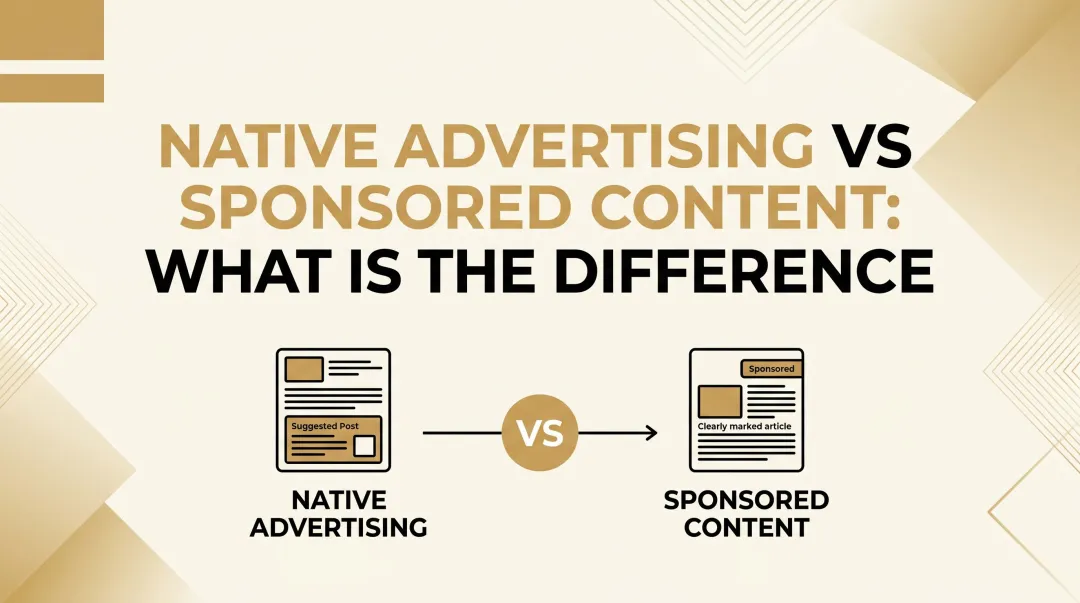
Native advertising broadly describes any ad formatted to blend visually and editorially with the platform it appears on — including in-feed social ads. Sponsored content more specifically refers to editorially formatted pieces, such as newsletter features or long-form articles, co-created with or hosted by a publisher.
Which channel delivers better ROI: sponsored content or paid media?
ROI depends on the goal and audience. Sponsored content tends to deliver stronger engagement and conversion quality with high-intent audiences, while paid media delivers better ROI for volume-driven, top-of-funnel campaigns where speed and scale matter more than depth.
How do you measure the performance of sponsored content?
Track sponsored content through engagement metrics (open rates, CTR, time-on-page), downstream conversion data (UTM parameters, landing page visits), and qualitative signals like brand lift — not impression-based metrics alone.
Does sponsored content work better than display ads for B2B brands?
For B2B audiences — especially executives and decision-makers — sponsored content in relevant publications tends to outperform display ads. It reaches readers in a high-attention context where editorial credibility replaces the friction of intrusive ad formats.
Are newsletter ads considered sponsored content or paid media?
Both. Newsletter ads are a paid placement by definition, but they appear within an editorial context inside a trusted publication — bypassing ad blockers and reaching readers who actively opted in to that content.