The problem is that most brands with genuine stories to tell are getting the communication wrong. Campaigns either rely on vague language that consumers no longer trust, or overclaim in ways that attract regulatory scrutiny and press backlash. Both outcomes are commercially damaging.
This guide is for marketing leads at fashion labels, media buyers, and independent brand teams who want a clear framework: what makes sustainable fashion campaigns work, what three real campaigns did right, and how to avoid the greenwashing trap that has tripped up brands far larger than yours.
Key Takeaways
- Specificity beats vagueness — concrete facts build trust; generic "green" language erodes it
- Radical transparency, including admitting what you haven't solved yet, outperforms polished perfection
- The strongest campaigns lead with genuine impact — real people, real outcomes, real materials — not eco-labels alone
- Channel selection shapes who sees your message and whether they're ready to act on it
- Greenwashing carries real legal and reputational risk — back every sustainability claim with evidence
Why Sustainable Fashion Marketing Campaigns Face Higher Stakes
Fashion is one of the most scrutinised industries on sustainability. UNEP estimates that fashion produces between 2% and 8% of global carbon emissions, while the Ellen MacArthur Foundation reports that the equivalent of a rubbish truck of clothes is burned or buried in landfill every second. Those numbers create a high bar for any brand making environmental claims.
The Say-Do Gap
Consumer sentiment data makes campaign design harder, not easier. Mintel's 2024 research shows that 67% of German consumers prioritise price over sustainability at the final point of purchase, while Kantar's 2025 data found that more than half of second-hand shoppers cited no sustainability motivation whatsoever.
This gap between stated values and purchasing behaviour has a direct implication for campaign strategy: messaging that appeals only to environmental values, without also addressing quality, price, or durability, will consistently underperform.
Effective sustainable fashion campaigns bridge this gap. They connect eco-credentials to things consumers already care about — longevity, craftsmanship, value — rather than substituting sustainability for a genuine product argument.
The Regulatory Environment
Consumer scepticism is only half the pressure. Legal exposure is rising just as fast:
- United States: The FTC Green Guides (16 CFR Part 260) prohibit unqualified claims like "eco-friendly" or "green" when they imply broad environmental benefits a brand cannot substantiate
- European Union: The Corporate Sustainability Reporting Directive (CSRD) requires large companies to disclose environmental impacts from financial year 2024. The proposed Green Claims Directive would further mandate science-based substantiation for voluntary environmental claims — and though it remains in negotiation, enforcement pressure is already building at the member-state level
- Lanham Act (US): False or misleading representations in commercial advertising can attract civil litigation
Campaigns with unverifiable green claims are now exposed to legal challenge, not just consumer scepticism.
The Building Blocks of Effective Sustainable Fashion Campaigns
Specificity Over Vague Green Language
Terms like "eco-friendly" and "sustainable" set expectations brands cannot always meet, and regulators are increasingly treating them as red flags without substantiation.
The contrast between a generic green claim and Patagonia's "Don't Buy This Jacket" ad from 2011 illustrates this precisely. While most brands were writing "made responsibly," Patagonia stated that manufacturing their R2 jacket consumed 135 liters of water, generated nearly 20 pounds of CO2, and involved a supply chain journey spanning nearly the full circumference of the globe — all while noting the jacket was made from 60% recycled polyester. The specificity is what made it credible.
Any headline sustainability claim needs a verifiable, quantified fact to back it up.
Know Which Consumer Segment You're Targeting
Not all sustainability-conscious consumers respond to the same message. Four broad personas shape campaign tone and depth:
- The Enthusiastic Expert — Prioritises whole-system thinking; wants supply chain data and life-cycle analysis
- The Inspired Innovator — Gen Z/millennial, values forward-thinking brand identity and innovation narratives
- The Considerate Conventionalist — Older audience, responds to transparency, education, and clear product proof
- The Reserved Rationalist — Price-driven; requires a quality or value argument before sustainability lands
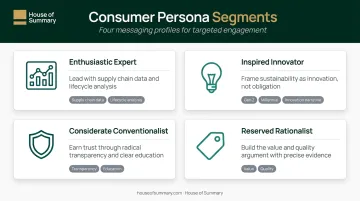
Targeting the Considerate Conventionalist with a TikTok-native campaign, or leading with price messaging for an Enthusiastic Expert, are both common mismatches that reduce campaign efficiency. Define your segment first; then build tone, channel, and message depth around them.
Human Storytelling Over Data-Only Communication
Research published in 2025 found that sustainable brand storytelling predicted purchase intention with a beta coefficient of 0.67, with ethical consumerism strengthening that relationship further. Narrative drives conversion in ways that data alone cannot.
Campaigns that center on workers, farmers, or artisans create emotional resonance that abstract environmental claims cannot replicate. Industry of All Nations built its brand around the people behind production rather than consumer guilt — an empowerment-framed approach that consistently outperforms shame-based messaging.
Shame-based campaigns tend to trigger defensiveness rather than action. Empowerment framing gives audiences something to participate in, not just feel bad about.
Consistent Brand Voice Across All Touchpoints
Brands with a clear, distinctive tone build stronger recall. Allbirds and Reformation use self-deprecating humour to make sustainability approachable. Ecoalf leads with earnest activism. Both work because they're consistent.
Tone inconsistency is a credibility problem. If your email campaigns read like environmental reports while your Instagram feels like a luxury lifestyle brand, audiences notice. Define your voice early and apply it across social, email, video, and any out-of-home placements.
Back Claims With Verifiable Proof
Certifications (B Corp, GOTS), third-party data, repair and recycling statistics, and documented supply chain transparency all function as credibility anchors. Without them, even well-intentioned campaigns are exposed.
Certifications alone are not sufficient. The FTC's guidance notes that third-party certification doesn't remove the obligation to substantiate all claims a campaign reasonably conveys.
Three Sustainable Fashion Campaigns That Worked
These three examples represent different approaches — radical transparency, community-powered purpose, and emotional storytelling — each with a replicable lesson.
Patagonia — "Don't Buy This Jacket" (2011)
What they did: On Black Friday — the year's highest-pressure retail day — Patagonia ran a full-page New York Times ad urging consumers not to buy their bestselling R2 jacket. The ad disclosed the jacket's precise environmental cost: 135 litres of water, nearly 20 pounds of CO2, a supply chain spanning the globe. It simultaneously promoted their Common Threads recycling initiative.
Why it worked: Patagonia had earned the right to make anti-consumerist claims because their actions already matched their words. The campaign reinforced trust among existing customers while attracting new audiences who valued accountability. The provocation — a brand telling you not to buy from them — generated substantial earned media coverage, multiplying reach well beyond the paid placement , making the friction itself the marketing strategy.
Ecoalf — #BecauseThereIsNoPlanetB
What they did: Ecoalf built their campaign around the "Upcycling the Oceans" project, which mobilizes fishing communities globally to recover marine debris that is converted into polyester yarn and garments. The hashtag and product line are inseparable — each purchase directly funds the ECOALF Foundation. To date, the project has recovered over 1,700 tonnes of trash, engaged more than 4,000 fishermen across 72 ports, and recycled over 275 million plastic bottles.
Why it worked: The campaign makes consumers participants in a tangible mission, not just an audience for one. Buying the product is the act of environmental contribution — the product itself is the proof of the campaign's claim. That structure removes the gap between brand promise and consumer action.
Adolfo Dominguez — "Old Clothes" (2020)
What they did: The Spanish brand featured models wearing customer-donated garments from 30 to 40 years earlier, each looking impeccable. Bold on-image text declared the garment's age. The tagline: "Buy clothes today that you will want to wear tomorrow."
Why it worked: The campaign made a powerful sustainability argument without once using the word "sustainable." It activated a universal experience — we all own clothes we keep returning to because they hold up — and connected that experience directly to the brand's quality proposition. Non-preachy, evidence-based through real heritage, and emotionally resonant without guilt.

What each campaign has in common — and what you can replicate:
- Ground claims in measurable proof (litres, tonnes, years) rather than broad sustainability language
- Make the consumer an active participant, not a passive recipient of a message
- Let the product or action carry the argument — reduce reliance on declared values alone
- Avoid the word "sustainable" when the evidence speaks clearly enough without it
The Greenwashing Trap: How to Stay on the Right Side
What Greenwashing Actually Looks Like
Greenwashing is rarely deliberate deception. More often, it happens when brands:
- Promote a "conscious collection" while overall Scope 3 emissions are rising
- Use terms like "sustainable" or "green" without substantiation
- Claim certifications without disclosing which specific claims those certifications cover
- Highlight one positive metric while omitting larger negative ones
The Lululemon "Be Planet" campaign illustrates the risk. Canada's Competition Bureau launched an investigation in May 2024 after Stand.earth alleged the campaign conflicted with Lululemon's rising Scope 3 emissions — from 471,100 tonnes in 2020 to 847,400 tonnes in 2022. The reputational exposure doesn't wait for legal conclusions. A separate US class action was dismissed in February 2025, and CBC reported no finding of wrongdoing at investigation launch — but the brand absorbed months of negative coverage either way.
The contrast with brands that get it right is instructive. Patagonia's social media framing around their Better Sweater reads: "Everything but the teeth in our Better Sweaters are made from recycled materials. (We're working on it.)" Acknowledging a limitation directly converts a vulnerability into a trust signal.
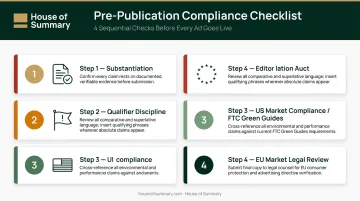
Four Pre-Publication Checks for Every Green Claim
Before any sustainability claim goes live, run these checks:
- Substantiation: Is every claim backed by third-party data, independent certification, or audited internal measurement? If not, it shouldn't publish.
- Qualifier discipline: Avoid superlatives — "most sustainable," "100% eco-friendly" — unless you have evidence that directly supports the comparative claim
- US market compliance: Cross-reference all environmental language against the FTC Green Guides before campaign launch
- EU market review: With the Green Claims Directive in flux, require legal review for any campaign targeting European markets and apply the substantiation standard regardless of final legislative status
The Reputational and Commercial Cost
H&M's experience with the Netherlands Authority for Consumers and Markets (ACM) in 2022 shows the concrete consequences. The ACM found that H&M used terms like "Conscious" without making specific sustainability benefits clear. The outcome: H&M committed to adjust or drop the unclear claims and donated €500,000 to sustainable clothing organizations. Scrutiny from a single regulator triggered coverage that ran longer — and cost more — than the campaign budget that caused it.
How and Where to Distribute Your Sustainable Fashion Campaign
Match Channel to Audience Intent
Distribution determines whether the right person sees your message in the right frame of mind:
- Instagram and TikTok — Visual storytelling, strong for younger demographics; algorithm dependency can suppress reach without paid amplification
- Out-of-home and editorial partnerships — Build brand legitimacy and press credibility for mid-funnel audiences
- Email and newsletter channels — Reach high-intent, already-engaged readers in a focused environment without algorithmic interference
The channel choice is not just a reach decision — it's a relevance decision. A sustainability message reaching someone mid-scroll in a social feed competes with dozens of other stimuli. The same message in an inbox reaches someone who opted in to receive curated information.
Newsletter Advertising for High-Intent Audiences
Newsletter advertising offers a structural advantage that social and display cannot match: messages arrive inside content the reader chose to receive, with no ad blockers, no competing visuals, and no algorithm deciding whether your message gets seen.
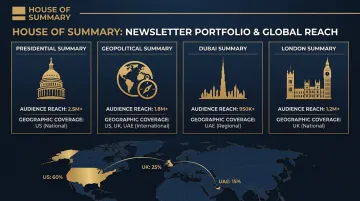
For sustainable fashion brands targeting business professionals, global executives, and premium consumers, this environment tends to produce higher engagement quality than broad-reach channels. That's particularly relevant for placements in focused editorial networks. House of Summary's portfolio — Presidential Summary, Geopolitical Summary, Dubai Summary, and London Summary — reaches 500,000+ subscribers across the US, UAE, and UK. The readership skews toward C-suite executives, founders, and high-net-worth individuals: the informed, globally-minded consumers who respond to substantive sustainability messaging rather than surface-level green claims.
Community, Influencers, and Earned Media
The most cost-efficient distribution for sustainable campaigns often comes from earned channels:
- Earned editorial coverage generated by genuinely provocative or transparent campaigns — Patagonia's "Don't Buy This Jacket" ad triggered widespread press coverage that no paid placement could have replicated
- Credible influencer partnerships — research confirms influencers can shift sustainable fashion behavior, but only when the influencer's own positioning is genuine, not performative
- Community co-creation — Levi's "Care to Air Design Challenge" in 2010 received nearly 140 design submissions from around the world, extending campaign reach by making customers the campaign
Authenticity in partner selection matters as much as reach metrics.
Frequently Asked Questions
What makes a sustainable fashion marketing campaign effective?
The combination of specific, verifiable claims, a compelling story, and consistency between what a brand says and what it actually does. Trust is the central currency — and specificity is what earns it. Vague claims actively undermine credibility with the audiences most likely to convert.
How do sustainable fashion brands avoid greenwashing in their campaigns?
Substantiate every green claim with data or third-party certification, avoid superlatives you can't prove, and frame sustainability as an ongoing journey rather than a solved problem. Honest acknowledgment of limitations — like Patagonia's zipper caveat — builds more trust than claims of perfection.
What channels work best for sustainable fashion marketing campaigns?
Channel fit depends on your audience. Social media works for younger demographics and visual storytelling; editorial and newsletter placements reach professional and premium audiences more effectively. High-intent channels — where readers are already engaged — tend to deliver better quality than broad-reach platforms for sustainability messaging.
How can a smaller sustainable fashion brand build an impactful campaign without a large budget?
Customer storytelling, user-generated content, and supply chain transparency are the lowest-cost starting points with the highest credibility payoff. Earned media through genuinely transparent or provocative positioning often outperforms paid reach — in this space, authenticity matters more than production value.
What role does storytelling play in sustainable fashion marketing?
Storytelling makes abstract environmental impact concrete and builds emotional connection in ways data cannot. The strongest sustainable fashion narratives center on people — workers, founders, long-term customers — rather than certifications alone. The Adolfo Dominguez "Old Clothes" campaign made a compelling sustainability case without using a single environmental statistic.
How do you measure the success of a sustainable fashion marketing campaign?
Go beyond impressions and clicks. Track brand sentiment shifts, conversion rates on sustainability-positioned products, customer retention rates, quality of earned media coverage, and engagement depth — comments and shares signal genuine resonance in ways view counts don't.