Introduction
Roughly 20% of global petroleum consumption and 25% of seaborne oil trade pass through the Strait of Hormuz. Gulf sovereign wealth funds collectively manage nearly $4 trillion — capital that moves markets in technology, infrastructure, and real estate worldwide. When the region shifts, portfolios and policy decisions shift with it.
Business professionals, investors, and executives face a real problem: there's no shortage of Middle East news, but most of it isn't usable. General-purpose outlets show up during crises and disappear after them. What they typically miss:
- Context behind the headlines
- Economic analysis alongside political reporting
- Consistent coverage that lets you track how situations develop over time
For serious readers, a curated, expert-written newsletter isn't a luxury — it's the only way to stay genuinely informed.
Key Takeaways
- Middle East geopolitics and finance are inseparably linked—oil markets, sovereign wealth funds, and trade route disruptions carry direct financial consequences.
- The best newsletters go beyond headlines, pairing verified reporting with financial context that explains what events actually mean for markets and money.
- This list includes five newsletters selected for editorial quality, regional depth, financial relevance, and publishing consistency.
- Broad geopolitical trackers and Gulf-specific publications serve different needs — pick based on whether you need global context or regional business depth.
- Each newsletter on this list is worth bookmarking — together, they cover the political, economic, and market angles that matter most.
Why Staying Informed on Middle East Geopolitics and Finance Requires More Than Breaking News
The Middle East is structurally different from other global regions when it comes to market sensitivity. The Strait of Hormuz alone handles approximately 20 million barrels per day of oil and roughly 20% of global LNG trade, making it the world's most critical energy chokepoint with limited pipeline alternatives. Gulf sovereign wealth funds—ADIA, PIF, KIA, and QIA—collectively manage more than $3.9 trillion in assets, deploying hundreds of billions into global markets. This concentration means regional political events trigger commodity price movements, often before physical supply is disrupted.
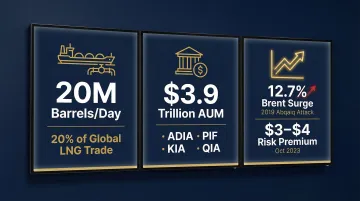
The problem with algorithmic news feeds and general-purpose outlets is episodic framing: events are reported in isolation, stripped of the historical and financial context professionals need to act on. When the IEA noted a $3–$4 per barrel risk premium after the October 7, 2023 attacks, or when Brent crude jumped 12.7% in a single day following the 2019 Abqaiq strikes, most outlets delivered crisis headlines and moved on.
What gets lost in that format matters:
- The upstream policy decisions that made those price moves predictable
- How Gulf sovereign wealth fund positioning shifted in response
- Cross-market contagion across diplomacy, trade, and energy infrastructure
- The difference between a temporary spike and a structural supply risk
The newsletters below were selected because they treat geopolitics and finance as inseparable — delivering the analysis that explains why markets move, not just that they did.
Top Newsletters for Middle East Geopolitics and Finance
These newsletters were selected based on editorial reliability, regional expertise, financial depth, publishing regularity, and usefulness to professionals tracking the MENA region.
Geopolitical Summary by House of Summary
Geopolitical Summary is a specialized newsletter built to deliver clear, verified international politics coverage with no noise or sensationalism, written by professionals who know the subject and care about accuracy. It operates within the House of Summary network, which prioritizes fact-checking and editorial judgment over algorithmic aggregation.
The editorial voice is built for high-intent readers who need to act on information, not just consume it. Complex geopolitical developments are distilled into usable summaries delivered directly to the inbox—no algorithmic filtering, no noise.
| Attribute | Details |
|---|---|
| Focus Area | International politics and geopolitics with consistent Middle East coverage, including regional power dynamics, diplomatic shifts, and conflict developments |
| Publishing Frequency | Monday through Saturday (six times per week) |
| Best For | Business professionals and executives who need clear, verified geopolitical context without editorial noise or partisan framing |
Semafor Gulf
Semafor Gulf is the regional Middle East vertical from global news outlet Semafor, covering the politics, economics, and social dynamics of Gulf states—written for readers who want more than crisis headlines. Launched in September 2024, it expanded rapidly to meet demand for substantive regional analysis.
The reporting assumes reader sophistication—covering business relationships, diplomatic maneuvers, and internal political pressures that rarely surface in mainstream Western coverage. In April 2026, Semafor announced expansion to five-day-per-week publishing to meet growing demand for Gulf-focused business and policy analysis.
| Attribute | Details |
|---|---|
| Focus Area | Gulf state politics, economics, and social dynamics with an emphasis on regional business relationships and diplomatic context |
| Publishing Frequency | Five days per week (expanded from thrice-weekly in 2024) |
| Best For | Readers who want substantive Middle East analysis beyond oil price headlines and want to understand the region's internal decision-making dynamics |
Foreign Policy World Brief
Foreign Policy World Brief is the flagship daily newsletter from one of the most respected publications in international relations, written with sharp analysis and deep regional expertise covering the full spectrum of global affairs including the Middle East. Its 860,000+ subscribers include senior analysts, policymakers, and finance professionals across the globe.
The coverage contextualizes why events matter, not just reports that they occurred—particularly useful for finance professionals tracking the policy environment shaping MENA markets.
| Attribute | Details |
|---|---|
| Focus Area | Global geopolitics with regular, substantive Middle East coverage including security, diplomacy, and economic policy analysis |
| Publishing Frequency | Monday to Friday |
| Best For | Senior professionals and analysts who need policy-level geopolitical context to inform investment and strategic decisions |
Axios Middle East (World Alerts)
Axios is known for its "smart brevity" format that distills complex regional developments into concise, clearly structured briefings covering politics, conflict, diplomacy, and economic developments. While Axios does not publish a standalone "Axios Middle East" newsletter, its World Alerts delivers periodic urgent global updates on diplomacy, conflict, and international affairs with consistent Middle East coverage.
The tight format works for time-constrained executives: enough context to grasp the significance of events, with particular focus on US-Middle East relations, Israeli-Arab dynamics, and Gulf economic developments that carry global financial implications.
| Attribute | Details |
|---|---|
| Focus Area | Middle East politics, conflict, and diplomacy with particular attention to US-regional relations and economic developments |
| Publishing Frequency | Periodic (urgent global updates) |
| Best For | Busy professionals who need fast, reliable Middle East briefings without sacrificing accuracy or analytical context |
Dubai Summary by House of Summary
Dubai Summary is a UAE-focused newsletter within the House of Summary network, covering UAE news, business developments, and lifestyle with clarity and factual reporting. Published weekdays, it covers the UAE as a global business hub with no filler and no noise.
It tracks regulatory developments, investment activity, and economic trends across Dubai and Abu Dhabi—giving readers with Gulf exposure the commercial context they need to stay ahead.
| Attribute | Details |
|---|---|
| Focus Area | UAE news, business, economic policy, and lifestyle—with coverage of Dubai and Abu Dhabi's role as regional financial and commercial hubs |
| Publishing Frequency | Monday through Friday (five times per week) |
| Best For | Investors, entrepreneurs, and professionals with direct exposure to UAE markets or interests in Gulf-based business and real estate activity |
How We Selected These Newsletters
These newsletters were assessed across five criteria:
- Editorial independence and fact verification standards – not just wire-fed aggregation
- Depth of regional expertise – written by professionals who understand the region continuously, not just during flashpoints
- Financial and economic relevance alongside geopolitical coverage – addressing the inseparable link between regional politics and global markets
- Publishing consistency – regular schedules that build context over time
- Practical readability for time-constrained professional audiences – clarity and brevity without sacrificing substance
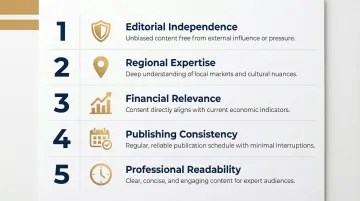
These criteria exist for a reason. The most common mistake readers make is reaching for general-purpose outlets that only cover the Middle East during crises, or subscribing to newsletters that are politically slanted without acknowledging it. Both produce an incomplete picture.
This list deliberately mixes broad geopolitical newsletters with Gulf-specific publications because no single source covers the full spectrum. Readers with active financial exposure to the region benefit from layering regional detail (Dubai Summary, Semafor Gulf) on top of broader geopolitical analysis (Geopolitical Summary, Foreign Policy World Brief).
That combination — macro strategic analysis alongside granular regional reporting — is where the clearest picture of this market actually forms.
Conclusion
The Middle East drives global energy markets, shapes investment flows, and sits at the center of geopolitical risk calculations. Professionals who read quality newsletters consistently can anticipate developments rather than scramble to catch up.
When Gulf sovereign funds deploy $55 billion into U.S. technology or Strait of Hormuz tensions trigger immediate risk premiums, readers with deep regional context already know how to respond. The newsletters covered in this list exist precisely to build that context.
Start with two or three newsletters from this list rather than subscribing to all at once, and read consistently over several weeks before adding more. Context accumulates over time, and regular reading of the right sources builds a mental model of the region that one-off searches cannot replicate.
Readers who want reliable, verified geopolitical and Gulf coverage delivered straight to their inbox — no noise, no sensationalism, no algorithmic distortion — can explore Geopolitical Summary and Dubai Summary from House of Summary.
Frequently Asked Questions
What makes a Middle East newsletter different from general geopolitics coverage?
Region-specific newsletters go beyond crisis reporting to cover the structural dynamics—energy policy, sovereign wealth activity, Gulf diplomacy, and trade routes—that shape the region continuously, not just during flashpoints. That thematic consistency lets readers track OPEC+ quotas, sovereign wealth strategies, and shipping logistics even when the region isn't dominating headlines.
Are the newsletters on this list free to subscribe to?
Subscription models vary. Geopolitical Summary and Dubai Summary are free to all subscribers. Semafor Gulf operates without a hard paywall, offering free sign-up. Foreign Policy World Brief is free to subscribe, though full magazine access requires a paid subscription. Axios World Alerts is free. Several offer free tiers with premium options for deeper access.
How often should I read Middle East news newsletters to stay meaningfully informed?
Daily or near-daily reading is recommended for professionals with active financial or strategic exposure to the region. At least weekly is advisable for those tracking it as a macro risk factor. Understanding how events connect over weeks and months is what turns news consumption into actionable intelligence.
Which newsletters on this list are best for tracking Gulf investment and sovereign wealth topics?
Dubai Summary and Semafor Gulf are the most regionally specific options for Gulf business and investment coverage, with Semafor Gulf's editorial mandate to cover the region's capital and economic transformation. Foreign Policy World Brief provides broader strategic context on sovereign behavior and macro-geopolitical dynamics that shape Gulf state decision-making.
Can a newsletter subscription replace a professional geopolitical risk briefing?
Newsletters are complementary tools, not substitutes. They build the daily situational awareness that makes bespoke risk briefings more focused, delivering strong practical value at a fraction of the cost for most business professionals.