Introduction
Wellness now shapes purchasing decisions across almost every consumer category. Someone purchasing a protein supplement is likely also buying athletic wear, functional beverages, skincare, and sleep aids—often in the same week, driven by the same lifestyle mindset. That convergence is creating a clear opening for wellness brands: collaborative partnerships that let you reach new audiences through trust someone else already spent years building.
According to the Global Wellness Institute's 2024 Monitor, the global wellness economy reached $6.3 trillion in 2023 and is projected to grow at 7.3% annually to nearly $9 trillion by 2028. The brands capturing that growth aren't doing it alone.
This guide breaks down how to get there. It covers the different collaboration structures, how to vet and pitch the right partner, how to structure the agreement, and how to measure whether the partnership actually moved the needle.
Key Takeaways
- Wellness consumers don't separate health, beauty, fitness, and lifestyle—your partnerships shouldn't either
- The best collaborations are cross-category, values-aligned, and built for longevity
- Partner selection should start with audience and behavioral overlap, not follower counts
- A strong pitch answers one question: what can these two brands create together that neither could alone?
- Measure conversion and repeat purchase rate—not just impressions
Why Wellness Brand Partnerships Are Worth Pursuing Right Now
The wellness market's size alone isn't what makes partnerships so attractive—it's the consumer behavior underneath it. McKinsey's 2024 research found that Gen Z and millennial consumers are buying wellness products and services across health, sleep, nutrition, fitness, appearance, and mindfulness simultaneously—more so than any previous generation. Brands that position themselves within that full-spectrum lifestyle have a structural advantage over those operating in a single lane.
The Trust Problem Partnerships Solve
Traditional advertising is facing an authenticity gap. Nielsen data shows 88% of global consumers trust recommendations from people they know more than any other channel. Meanwhile, Edelman's 2026 health report found a 10-point year-over-year drop in consumer confidence making health decisions—meaning brands that rely on self-promotional messaging are fighting an uphill battle.
Partnerships sidestep this entirely. When a brand a consumer already trusts introduces them to something new, the new brand inherits a portion of that trust immediately. No paid media budget can manufacture that transfer—it only happens through genuine association.
Cross-Category Pairings Are Already Working
Recent deals show how far these pairings have traveled beyond traditional sponsorship:
- Liquid I.V. became the Official Electrolyte Partner of The BRIT Awards 2026
- C4 Energy signed a multiyear deal as the Official Energy Drink Partner of the NBA in Europe, covering France, Germany, Italy, and the UK with courtside integrations and digital content
Both are functional beverage brands using entertainment and sports platforms to build credibility with audiences that would be expensive to reach any other way.
Types of Wellness Brand Partnerships and Collaborations
Not all wellness partnerships look the same. Choosing the wrong structure for your goals is one of the most common—and costly—mistakes brands make.
Influencer and Creator Collaborations
Influencer partnerships remain the most common entry point. Wellness brands partner with creators in fitness, nutrition, mental health, or beauty to promote products through content that feels organic rather than transactional.
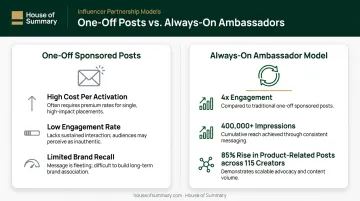
The critical distinction is between one-off sponsored posts and long-term ambassador programs. Care/of's shift from high-cost macro-influencer campaigns to an always-on ambassador model illustrates the difference: the always-on approach generated 4x engagement, 400,000+ impressions, and an 85% rise in product-related posts across 115 creators.
What makes influencer partnerships work specifically in wellness:
- Supplement and lifestyle products need time to show results—12 to 18 months minimum outperforms short campaigns
- Creators who integrate products into their actual routines generate more authentic engagement than dedicated brand posts
- Behavioral alignment (do they actually live this way?) matters more than audience size
Cross-Brand Product Collaborations
Co-branded products work when the combination expands the product's cultural meaning—not just its distribution. HERMOSA, a luxury protein brand, partnered with Michelin-starred chef Miller Prada for a limited-edition shake served exclusively at Barry's. Humantra collaborated with Represent 247 streetwear on a co-branded electrolyte flavor combining 0g sugar, monk fruit, and pink Himalayan sea salt.
In both cases, the partner's credibility transferred directly to the product — giving it cultural positioning that neither brand could have built independently.
Experiential and Event Partnerships
In-real-life touchpoints generate media coverage, user-generated content, and brand memory that digital campaigns can't replicate. Examples include:
- 111SKIN at Four Seasons Philadelphia — exclusive facial treatments and retail, launched September 2024
- Liquid I.V. at The BRIT Awards — national cultural reach for a functional hydration brand
- Elevate x Dr. David Jack — a co-branded smoothie described as a "facial in a smoothie" that drove consistent sell-outs and social visibility
Experiential partnerships create moments people want to share. That earned content keeps circulating well after the event closes — extending reach without additional spend.
Affiliate and Media Partnerships
Affiliate programs give both sides a financially aligned incentive. Mountain Rose Herbs' structured affiliate program—10% commission, 30-day cookie window—attracts creators who are genuinely motivated to convert rather than just mention.
Newsletter partnerships represent an underused but high-performing channel. Unlike social ads that compete with algorithms and ad blockers, inbox placements reach readers who have already opted in and are actively engaged with the content in front of them. For wellness brands that need space to explain ingredients, cite evidence, or position a lifestyle — a newsletter gives them that room in a context where readers are paying attention.
How to Find and Vet the Right Wellness Brand Partner
The most common reason wellness partnerships fail isn't poor execution—it's poor partner selection. Brands prioritize aesthetics or follower counts when they should be evaluating audience behavior and values alignment.
Start with Behavioral Overlap
Demographic overlap tells you who the audience is. Behavioral overlap tells you how they buy—and that's what actually predicts whether a partnership will convert.
A luxury protein brand and a luxury ski-wear brand look unrelated on paper. But they share the same aspiration: moving the body well and recovering from it. That shared behavioral context is what makes a partnership resonate with both audiences instead of confusing them.
Tools for assessing overlap include:
- Social listening platforms like Cision — useful for sentiment tracking and audience segmentation
- Affiliate data showing which partner audiences already convert on wellness products
- Audience surveys asking directly where else customers shop and what they prioritize
Apply a Values Filter
Wellness consumers are attuned to inauthenticity—and the data backs this up. McKinsey found 50% of US and UK respondents now prioritize clinical effectiveness over natural ingredients when evaluating wellness products. The "clean brand" aesthetic alone isn't enough. Consumers want proof.
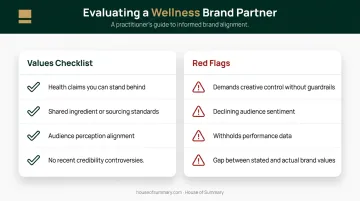
Before committing to any partnership, run through this checklist:
- Does the partner make health claims you can stand behind?
- Do they share your ingredient or sourcing standards?
- Would your existing customers feel this partnership makes sense?
- Has this brand faced any recent credibility controversies?
Watch for Red Flags
Some partners will cost you more than they deliver:
- Wanting creative control without agreeing to brand guardrails
- Declining audience sentiment (check comments, not just follower counts)
- Unwillingness to share performance data post-collaboration
- A gap between their stated brand values and how they actually operate publicly
How to Structure and Pitch Your Wellness Partnership
Most collaboration opportunities fail not because the partnership was wrong, but because the pitch was weak. The pitch needs to answer one question before anything else: What does this partnership create that neither brand could create alone?
Frame the pitch around a consumer insight or cultural moment—not around the product or a discount offer. A smoothie bar and a skincare brand aren't collaborating on a beverage; they're creating a ritual around skin health from the inside out. That narrative is what press and customers actually respond to.
What a Well-Structured Agreement Covers
Once a partner is interested, the agreement should define:
- Roles — who creates content, who funds production, who owns IP from co-created assets
- Revenue terms — commission structures, revenue splits, or flat fees
- Exclusivity windows — category exclusivity and duration
- Approval processes — especially important for health claims and regulated language
- Performance benchmarks — with defined review clauses (typically at the 6-month mark)
- Exit provisions — what happens if targets aren't met
Timeline Reality
For monthly editorial publications, outreach needs to start at least three months before launch. Event-based partnerships require even more lead time.
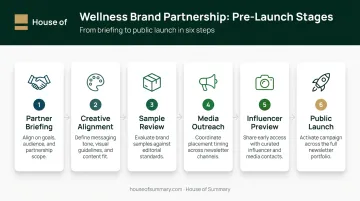
A simplified pre-launch sequence:
- Partner briefing — align on goals, audiences, and creative direction
- Creative alignment — finalize look, language, and messaging guardrails
- Sample or prototype review — especially critical for co-branded products
- Media outreach — lead with the narrative angle, not just the product
- Influencer preview — give trusted creators early access for unscripted first impressions
- Public launch — coordinated across both brands' channels simultaneously
The Limited-Edition Model
Limited editions generate the highest short-term PR value—but scarcity needs to feel earned. The strongest examples in wellness—co-branded drops between skincare and lifestyle brands—drive that response through elements consumers can't get anywhere else:
- Custom packaging designed specifically for the collaboration
- A product ritual or routine built around the combined offer
- Exclusive first access tied to a specific event or location
- A storyline that connects both brands' audiences to a shared value
Low inventory alone doesn't create urgency. The experience around the product does.
Amplifying Your Wellness Partnership for Maximum Reach
Launching a partnership is only half the work. Where and how you distribute the story determines whether it reaches beyond your existing audiences.
Multi-Channel Amplification Playbook
- Press outreach — lead with a narrative angle (the "why together" story), not just a product announcement
- Co-branded social content — both brands publish simultaneously to maximize combined reach
- Earned media leverage — use coverage from one outlet as a credibility signal when pitching the next
The Newsletter Advantage
Social media reaches passive scrollers. Search ads reach active searchers. Newsletter placements reach engaged, self-selected readers who explicitly opted in: no algorithm controls what they see, and no ad blocker filters it out.
For wellness brands whose messaging requires nuance—clinical evidence, ingredient sourcing, lifestyle context—this format consistently outperforms interruptive channels.
House of Summary's network of specialized newsletters (Presidential Summary, Geopolitical Summary, Dubai Summary, London Summary) reaches 500,000+ subscribers, concentrated among executives, founders, and high-income professionals in the US, UK, and UAE. One advertiser reported CTRs 4x higher than Google AdWords on House of Summary placements, because inbox context delivers undivided attention that algorithmic feeds simply can't match.
For wellness brands targeting affluent, health-conscious professionals, inbox-first placements deliver both the reach and the reading environment that trust-dependent messaging requires. Inquiries about wellness brand placements can be directed to sales@houseofsummary.com.
Encouraging User-Generated Content
Partnerships that create genuinely novel experiences naturally generate organic content from customers who weren't paid to post. Three ways to put that content to work:
- Share UGC to owned channels with added commentary or context
- Feature it in follow-up press pitches as third-party validation
- Use high-performing UGC as creative for paid amplification—it typically outperforms brand-produced creative because it reads as a real person's experience
Measuring the Success of Your Wellness Partnership
Most brands track the wrong metrics. Media mentions and social impressions tell you about reach. They don't tell you whether the partnership attracted the right people or changed how they behave.
The Metrics That Actually Matter
| Metric | What It Tells You |
|---|---|
| New customer acquisition rate from partner's audience | Whether the partnership reached genuinely new buyers |
| Conversion rate on collaboration-specific pages or codes | Whether the messaging drove action |
| Repeat purchase rate within 90 days | Whether the partnership attracted aligned customers or curious one-time buyers |
| Earned media value from press coverage | The partnership's amplification beyond your own channels |
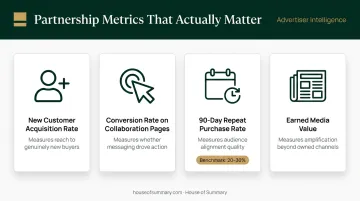
Klaviyo notes that a healthy repeat purchase rate is typically 20% to 30% for ecommerce brands. If your 90-day repeat rate from partnership-sourced customers falls well below that, the partnership may have attracted people who were curious about the product rather than genuinely aligned with the brand.
Set Up Tracking Before Launch
Measurement infrastructure needs to be in place before the first post goes live:
- UTM parameters on every collaboration touchpoint—partner social posts, press coverage links, event pages
- Dedicated landing pages or promo codes specific to the collaboration
- Affiliate link tracking if commission-based
High traffic with low conversion points to a specific problem: the partner's audience was exposed but not convinced. That's a content or offer issue, not a reach one.
Add Sentiment Analysis
Comments, reviews, and social mentions reveal something conversion data can't: whether the partnership is shifting how people think about a category.
Look for language indicating behavioral change — customers adopting new routines, referencing the partnership in their own posts, or using vocabulary that reflects your brand narrative. When that happens, you're not just measuring a sale. You're measuring a shift in how someone sees the category.
Frequently Asked Questions
Who are the biggest wellness influencers?
Wellness influencers span multiple niches—fitness, nutrition, mental health, skincare, and functional medicine—so "biggest" depends entirely on your brand's category and audience. High engagement and category credibility matter more than raw follower count; a creator with 80,000 deeply engaged biohacking followers will outperform a 2-million-follower generalist for most supplement brands.
What brands are easy to collaborate with?
Smaller wellness brands and founder-led companies—smoothie bars, supplement startups, functional food brands—are the most accessible—decisions move quickly and founders are often directly involved. Brands with existing affiliate or ambassador programs, like Mountain Rose Herbs, offer structured entry points that make the process even more straightforward.
What are the top wellness brands in the US?
Leading US wellness brands span several categories: supplements (AG1/Athletic Greens), fitness (Peloton), functional beverages (Liquid I.V.), and recovery tech (Therabody). Identifying brands whose audiences already overlap with yours will drive more value than chasing the largest names in the space.
How do I approach a brand for a wellness collaboration?
Lead with audience alignment and mutual value—not what you want from the deal. Research their existing partnerships, then draft a short pitch answering "what we create together that neither of us can create alone." Reach out via the brand's partnerships or marketing contact email, and anchor your message in a specific consumer insight.
What makes a wellness brand partnership successful?
Successful collaborations share three traits: genuine audience overlap (not just aesthetic similarity), long-term commitment that gives trust time to develop, and a clear shared narrative that gives press, influencers, and customers something worth talking about.
How do you measure the ROI of a wellness brand collaboration?
Track new customer conversion rate from the partner's audience via UTM parameters and affiliate links, repeat purchase rate within 90 days, and earned media value from press coverage generated. Impressions and follower growth are secondary metrics.