Most D2C wellness brands today are fighting for attention on overcrowded social feeds while burning through ad budgets on platforms that reward whoever bids highest — not whoever communicates best. Native took a different path. This article breaks down the specific advertising decisions Native made — from its negative-ingredient messaging to its community-first approach to its eventual TV debut — and translates them into lessons any D2C wellness brand can act on.
TLDR:
- Native built a $100M brand by leading with what the product doesn't contain — no aluminum, no parabens — when competitors relied on vague "natural" claims
- The brand grew through community feedback loops and word-of-mouth before spending heavily on ads, reducing customer acquisition costs
- Native matched channels to buyer intent: performance ads for high-intent consumers first, then podcasts and TV for legitimacy
- Newsletter advertising offers D2C wellness brands a high-intent, opted-in audience with 4x higher CTRs than Google AdWords
The Native Deodorant Blueprint: What Made This Brand Different
Native launched in 2015 as a direct-to-consumer brand with a clear value proposition: a clean deodorant that actually worked, free of aluminum and parabens, sold online before the "clean beauty" category had a name. Founder Moiz Ali started the company with minimal venture funding — approximately $500,000 from firms including Azure Capital Partners — and built the brand primarily through performance marketing and community engagement.
In November 2017 — just two years after launch — Procter & Gamble acquired Native for approximately $100 million in cash. The acquisition was widely interpreted as P&G's response to activist investor Nelson Peltz, who had argued the consumer goods giant needed brands that appealed to millennials. Native had achieved what many D2C brands aspire to: building significant consumer trust and business value in under three years.
Unlike traditional CPG advertising, Native didn't lead with lifestyle imagery or celebrity endorsements. It led with ingredients and transparency — a direct response to buyers already burned by mainstream brands making vague "natural" claims without proof.
Native's messaging was built on specifics:
- No aluminum — named explicitly, not buried in fine print
- No parabens — called out as a specific concern, not a general talking point
- No harmful ingredients — framed as a promise, not a category platitude
In a market full of ambiguous wellness positioning, that specificity was the differentiator. Consumers didn't just understand what Native was selling — they trusted it.
Lesson 1: Make "No" Your Loudest Yes — The Power of Negative-Ingredient Messaging
The "No Is Our Whoa" Campaign
Native's first broad-reach TV campaign, "No Is Our Whoa," launched in October 2020 and was built entirely around what the product does not contain. The 30-second spot celebrated the word "no" — no aluminum, no parabens, no harmful ingredients — turning absence into a brand promise. This was a deliberate bet in a category where competitors relied on feel-good emotional narratives about confidence, freshness, and freedom.
Leading with what you don't use, rather than what you do, was a calculated bet on consumer skepticism. Grace Smith, Native's Retail Marketing Director, positioned the brand as sitting "somewhere in the middle, pairing the effectiveness of the big brands with the gentle ingredients of the natural alternatives." The campaign wasn't preachy or fear-driven — it was upbeat and celebratory, which made the ingredient-avoidance message accessible to mainstream audiences, not just existing believers.
Why Ingredient Transparency Resonates
Wellness buyers are already skeptical. According to a 2024 NSF survey of 1,000 Americans, 74% consider organic ingredients important in personal care products, and 65% want a clear ingredient list to identify potentially harmful ingredients. More revealing: only 9% of Americans "completely trust" voluntary labels on personal care products.
This skepticism shows up directly in purchasing behavior. Acosta Group research from 2025 found that 58% of shoppers read labels "all or most of the time" before purchasing a new item, rising to 87% for health-focused shoppers. Half of all shoppers are worried about health risks from artificial ingredients, chemicals, and preservatives.
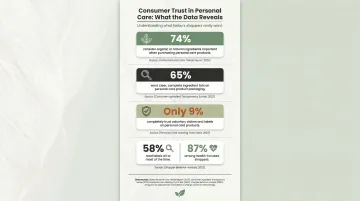
That's the opening "no bad stuff" messaging exploits directly — it addresses the exact concern already driving consumers to flip the package over.
Contrast with Traditional CPG Advertising
Legacy brands tend to use emotional lifestyle narratives in wellness advertising — think of how Dove sells confidence or Old Spice sells masculinity. Native anchored messaging in specificity instead. This shift matters because specificity builds trust faster in the wellness category, where vague "natural" or "clean" claims have already eroded trust.
The market numbers reflect this shift. Grand View Research estimated the global clean beauty market at $10.49 billion in 2025, projected to reach $35.30 billion by 2033 at 16.8% annual growth. Brands that back transparency claims with specifics are the ones capturing that expansion.
Actionable takeaway: Audit your own messaging — does it clearly say what the product avoids, in plain language? Vague terms like "clean" or "natural" are losing their persuasive power. Specificity is the new differentiator.
Lesson 2: Community Is the First Channel — Build the Audience Before the Ad
How Native Grew Before TV
Native built a highly engaged online community of health- and environmentally-conscious consumers who gave constant feedback, shared the product organically, and felt like co-creators rather than customers. Until mid-2018, 80-90% of Native's marketing spend went to Google and Facebook. Moiz Ali personally managed Facebook Ad Manager in the early stages, learning what messaging resonated before scaling spend.
This tight feedback loop between the brand and its buyers generated valuable intelligence that informed product development, not just marketing copy. The community wasn't a nice-to-have — it was the product R&D engine.
The Plastic-Free Packaging Example
In 2020, Native introduced plastic-free paper packaging directly because of overwhelming customer feedback. The company had been tracking customer requests for sustainable packaging since late 2018, and those requests increased by more than 900% over the following period. Native committed to offering its entire portfolio in sustainable packaging by 2023.
This is a concrete example of how treating community input as product R&D builds lasting loyalty and creates earned media on its own terms. The packaging change became a story covered by advertising and marketing trade publications — amplifying the brand's reach without a dollar of additional ad spend.
The Compounding Effect of Community in D2C
That earned media effect scales. When customers feel heard, they don't just stay loyal — they recruit. Research from ReferralCandy shows word-of-mouth marketing delivers 2-3x higher ROI than paid ads, with referred customers 16% more valuable on average and 18% more likely to stay.
For D2C wellness brands, the acquisition cost math makes this urgent:
- CAC in beauty and personal care runs $90-$130, with paid social often hitting $50-$70 per customer
- Referral conversion rates reach 3-5% for median programs and 8%+ for top-quartile programs
- Ad click conversion rates rarely exceed 1%
- CPMs for DTC brands rose 27% year-over-year according to ReferralCandy
Community engagement before campaign launch also means a brand already knows the language its buyers use, the objections they raise, and what they care most about. That pre-validated message makes paid media spend work harder from day one.
Actionable takeaway: Treat post-purchase touchpoints — email, reviews, social DMs — as a strategic listening channel, not just a customer service function. Build community feedback loops before scaling ad spend.
Lesson 3: Match Your Channel to Your Buyer's Mindset
Native's Channel Evolution
Native's channel strategy evolved deliberately. The brand started with performance marketing on Facebook and Instagram, targeting high-intent health-conscious consumers who were already searching for cleaner alternatives. Then it graduated to podcast sponsorships and influencer partnerships before eventually moving to broad-reach TV. Each stage matched the channel to the buyer's current buying stage.
By mid-2019, Ali stated that digital and social tools had "largely been tapped out" as sole acquisition drivers. Native diversified into Connected TV, traditional cable, podcasts, and direct mail. TV investment began in late 2018, initially in major metros like New York and Los Angeles to test effectiveness before scaling nationally.
Why Channel-Fit Matters More Than Channel Popularity
The D2C space is full of brands chasing the same platforms — Instagram, TikTok — regardless of whether that's where their buyer makes decisions. This creates saturation and rising costs. Instagram organic reach has declined to approximately 2-3%, and Facebook brand pages now reach only 1-2% of followers. Meta, TikTok, Snapchat, and YouTube CPMs all increased in Q1 2025, with TikTok seeing 15.6% year-over-year growth.
Following the crowd is expensive — channel-fit, matching where your ad appears to how ready the buyer is to hear your message, matters more than channel popularity. Native's own playbook shows what that looks like in practice.
The High-Intent Channel Argument
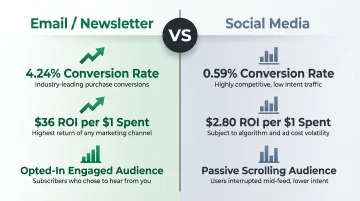
Native's early success was built on reaching buyers who were already looking for a solution — not interrupting passive scrollers. For D2C wellness brands, channels that deliver content to an engaged, opted-in audience tend to produce higher conversion rates than broad-reach display or social.
This is where newsletter advertising becomes strategically relevant. Readers who choose to receive curated content are already in a receptive mindset, unlike passive social media scrollers. Email achieves a 4.24% conversion rate versus 0.59% from social media — email traffic converts to purchases at over 7 times the rate of social media. Email ROI hits $36 in revenue per $1 spent versus $2.80 for social media.
For wellness brands targeting affluent, health-conscious professionals, newsletter networks that reach opted-in executives and decision-makers offer a direct path to purchase-ready buyers. House of Summary's Presidential Summary and Geopolitical Summary, for example, reach over 500,000 subscribers with 254,866+ daily opens — and advertisers have reported click-through rates 4x higher than Google AdWords, according to BSH Hausgeräte CEO Faik Serkan Ergun.
Health and wellness brands spend over $420 million annually on podcast ads, targeting affluent, educated audiences with high ad recall. Newsletter and podcast advertising share a common advantage: they reach audiences who have opted in, creating a brand-safe, attention-rich environment ideal for category education and storytelling.
Native's TV Move as a Legitimacy Signal
When Native launched its first TV campaign in 2020, the goal wasn't just awareness — it was category legitimacy. Appearing on TV signals mainstream credibility to consumers who weren't yet in the brand's existing community. Meng Li, VP of Marketing at Native, stated the brand pursued broader advertising "now that it has grown into multiple sales channels like Target and Walgreens" following the P&G acquisition.
TV wasn't the first channel — it was the validation channel, used after the brand story had been proven through high-intent channels.
Map your ad channels to buyer intent stages. Use high-intent, low-noise channels — search, newsletter, podcast — for conversion and trust-building. Reserve broad-reach channels like TV and social video for awareness expansion, and only once the brand story is tight enough to survive without precise targeting.
Lesson 4: Scale Without Losing the Voice That Built You
The Risk Native Navigated Post-P&G
Acquisition by a legacy CPG company often dilutes the direct, ingredient-focused brand voice that built the D2C community in the first place. Native navigated this risk by maintaining operational independence. As of June 2019, manufacturing remained independent of P&G facilities, and over 50% of revenue still came from the brand's own website.
That operational independence held the messaging in place. The "No Is Our Whoa" campaign in 2020 reinforced the same ingredient-exclusion positioning that defined Native pre-acquisition. The follow-up "Your One & Done" campaign in 2021 maintained the brand voice while expanding reach to cable TV, Hulu, YouTube, and social platforms.
The "Brand Soul" Problem for Scaling Wellness Brands
As D2C wellness companies grow and invest in broader media, messaging often drifts toward generic wellness tropes — soft lighting, vague empowerment language, "you deserve to feel good" headlines. This drift happens because teams grow, agencies change, and multiple stakeholders gradually dilute the original founder's voice.
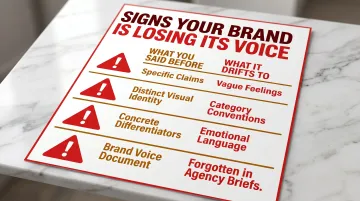
The warning signs are consistent across failed scaling efforts:
- Taglines shift from specific claims to vague feelings ("feel your best")
- Visual identity softens to match category conventions, not brand personality
- Product copy drops concrete differentiators in favor of emotional language
- Agency briefs stop referencing the original brand voice document
Dollar Shave Club, acquired by Unilever for $1 billion in 2016, is the clearest cautionary tale. Brand strategist Tanner Bachelor documented how a post-acquisition rebranding erased the irreverent visual identity that built the company's subscriber base — trading a distinctive voice for a polished, forgettable one.
Actionable takeaway: Document the brand's voice and core message claims early — the exact words, the specific promises, the non-negotiables — so that as ad channels and team sizes expand, every creative execution passes through the same filter. Native's "no aluminum, no parabens" is a message that survived TV, social, and print because it was a factual anchor, not a feeling.
Frequently Asked Questions
What's the deal with Native deodorant?
Native is a D2C personal care brand founded in 2015 that sells aluminum- and paraben-free deodorant. It built a loyal following through ingredient transparency and direct community engagement before being acquired by Procter & Gamble in 2017 for $100 million.
Who is in the Native deodorant commercial?
Native's first TV campaign cast diverse, everyday people rather than celebrities — a deliberate choice that matched its community-first identity. Later campaigns brought in talent like DJ-duo Coco & Breezy while keeping the same inclusive approach.
Does Native deodorant support LGBTQ+?
Native has published Pride Month messaging and earned a 111 GEM score from SeeHER for gender equality representation in its advertising. For D2C wellness brands, this kind of consistent values signaling — not just seasonal campaigns — is what builds lasting credibility with younger buyers.
How did Native grow so fast before running any TV ads?
Native's early growth relied on word-of-mouth, performance marketing on Facebook and Google, and a tight feedback loop with its online community. Brands with a clear, specific message and an engaged community rarely need mass media to gain traction — Native reached $100 million in revenue before its first TV spot.
What made Native's advertising different from traditional deodorant brands?
While legacy brands relied on lifestyle imagery and celebrity endorsements, Native anchored its advertising in specific ingredient claims — no aluminum, no parabens. This spoke directly to health-conscious consumers who were already skeptical of traditional CPG messaging.
What channels should D2C wellness brands use for advertising?
Start with high-intent channels — search, newsletters, and podcasts — where buyers are already seeking solutions and conversion rates are highest. Expand to social video and TV only once the brand story is proven and can hold up without granular targeting.