Introduction
Luxury advertising has always demanded precision and prestige, but in 2025, the platforms, formats, and targeting methods have fundamentally changed. The digital playbook that worked two years ago is already obsolete. Broad-reach display campaigns that once built brand awareness now risk diluting the exclusivity that defines luxury.
Storied houses from Paris to Milan are rethinking where and how they spend their online ad budgets. Three forces are driving the shift: third-party cookie deprecation, ad-blocker adoption among affluent users, and a younger generation of luxury buyers who discover brands on TikTok before ever stepping into a boutique.
The shift is toward intentional, high-context placements that reach affluent audiences without compromising brand perception. Luxury brands can no longer treat digital advertising as a volume game. The brands pulling ahead are those willing to abandon legacy tactics in favor of surgical targeting, long-term creator relationships, and premium media environments. This article breaks down exactly how they're doing it.
Key Takeaways
- Precision targeting across premium channels has replaced broad digital reach in luxury advertising
- Influencer partnerships are evolving from one-off celebrity deals to long-term, values-aligned creator relationships
- Inbox-based formats like newsletter sponsorships bypass ad blockers and algorithm suppression entirely
- Shoppable social formats and AI-driven personalization are shortening the path from discovery to purchase
- The most effective luxury advertisers treat every digital placement as brand-building, not just a conversion tool
Hyper-Targeted Paid Social and Programmatic Ads
In the luxury context, hyper-targeting means using first-party data, behavioral signals, and premium programmatic inventory to reach verified affluent audiences—not just anyone in the right age bracket. Brand perception is on the line with every impression, making broad demographic targeting unacceptable.
Luxury brands are using Meta and Google's advanced audience tools — lookalike audiences built from CRM data of existing high-value customers — to serve ads only to users who match the profile of likely buyers. This moves beyond surface-level demographics (age, gender, location) to behavioral and psychographic targeting: people who have purchased luxury goods before, engage with premium content, or show high-intent signals.
Examples from the field:
- Leading luxury houses now run platform-differentiated campaigns: polished editorial content for Instagram audiences, behind-the-scenes AR filters for TikTok users, and retargeting via Meta Conversions API for previous website visitors
- Brands shifting 30% of ad spend to first-party data campaigns achieved 2.9x ROAS within six months, according to a 2024 IAB study
- High-performing marketing teams use AI to activate first-party data 3x more than underperformers (68% vs. 21%), per Salesforce data
The move toward contextual programmatic buying is accelerating due to third-party cookie deprecation. Luxury brands are shifting away from cookie-based retargeting toward contextual placements on premium publisher environments—financial media, travel publications, curated news—where audience quality is pre-qualified by editorial context. When an ad for a Cartier watch appears alongside an article about wealth management in the Financial Times, the context elevates the brand rather than commoditizing it.
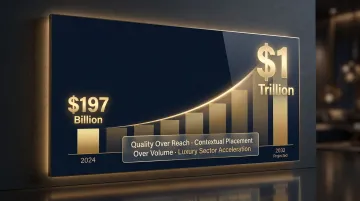
The scale of this shift is hard to ignore: the U.S. programmatic advertising market reached USD 197 billion in 2024 and is projected to surpass USD 1 trillion by 2032. Luxury represents a fraction of that total, but the sector is moving faster than most — prioritizing quality over reach, and contextual placement over volume.
Influencer and Creator Partnerships Get More Selective
One-off celebrity mega-deals are losing favor. Luxury brands in 2025 are building long-term, relationship-based partnerships with creators whose personal brand genuinely overlaps with the house's values. Single-campaign endorsements risk misalignment—especially when a celebrity's next deal contradicts the brand's positioning entirely.
That shift is pushing luxury advertisers toward a different tier of creator entirely.
The rise of micro and niche macro influencers:
- Luxury brands are partnering with creators who have smaller but highly engaged, affluent audiences in categories like travel, finance, culture, and design
- These audiences convert better for luxury advertisers than mass-reach celebrity audiences
- Nano-influencers (1K-10K followers) on Instagram see engagement rates of 5-8%, while mega-influencers see just 0.5-1.5%
Why the shift matters:
- 94% of organizations report that creator content drives more ROI than traditional digital advertising
- 74% of enterprise brands saw creator marketing ROI increase year-over-year
- Brands spending $1M+ annually on creator marketing reported 3x ROI or higher (71%)
Examples of selective partnerships:
- Charlotte Tilbury runs a full-funnel influencer strategy including traditional influencer programs, affiliate partnerships (15% follower discount), and product seeding. The brand's partnership with Bella Hadid in 2023 targeted Gen Z, achieving 450,000 average monthly searches and 1.3 billion TikTok views globally
- Stella McCartney's Summer 2024 campaign starring Cara Delevingne emphasized sustainability as a core brand value, positioning the collection as the "most sustainable to date"
- Burberry's portfolio approach segments customers into four archetypes (The Investor, The Conservative, The Hedonist, The Aspirational) and selects creators accordingly
Across all of these examples, one principle holds: the brand must remain the star. Luxury houses now establish clear creative frameworks and firm "red lines" before signing any creator deal. The partnership should feel curated, not sponsored.
That's reflected in how brands actually choose creators. Follower count ranks as the least important selection factor at just 8%, while creator suitability (22%), campaign fit (17%), and aesthetic alignment (14%) lead the list — a clear signal that reach alone no longer justifies the partnership.
Premium Newsletter Advertising Reaches Affluent Inboxes
The inbox is one of the last advertising environments where brands receive undivided attention. No algorithms decide who sees your message. No ad blockers strip it from the page. That combination makes newsletter advertising uniquely suited for premium messaging that requires context and consideration.
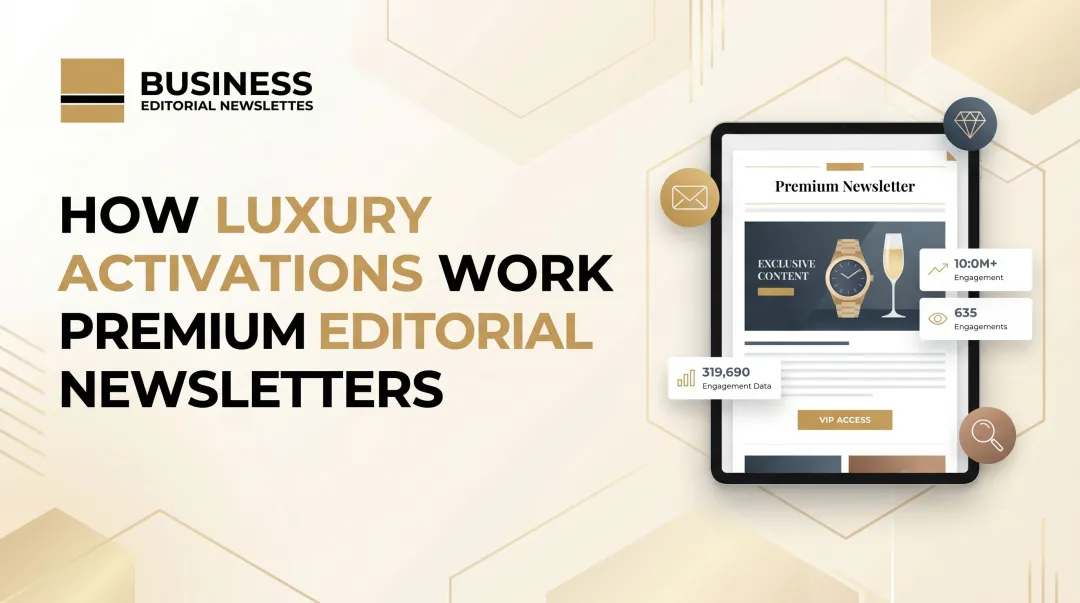
Luxury brands run sponsored placements within curated, topic-specific newsletters read by executives, finance professionals, business leaders, and frequent travelers — demographics that index highest for luxury purchasing. Networks like House of Summary, whose publications cover geopolitics, finance, and international affairs, give luxury advertisers direct access to serious readers already in a high-focus mindset.
The engagement numbers reflect that attention gap clearly:
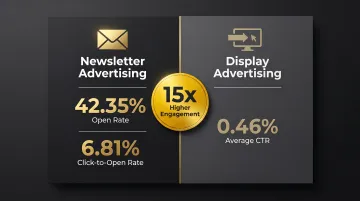
- Average email open rate across industries: 42.35% in 2025
- Average click-to-open rate: 6.81% in 2025, up from 5.63% in 2024
- Google Display Ads average CTR: 0.46% across industries
- Newsletter advertising delivers roughly 15x higher engagement than standard display advertising
Those numbers matter even more when you consider who's using ad blockers. 38% of users earning $50,000–$99,999 block ads, with higher-income brackets showing even greater adoption. Among 18–24-year-olds the rate hits 45%; among 25–34-year-olds, 38% — both prime luxury buyer cohorts. Newsletter advertising bypasses all of it.
Those stats translate directly into brand impact. When a luxury watch brand sponsors a newsletter covering global business or international affairs, the placement reinforces its association with sophistication and achievement. The reader chose to open that email — they're focused, not scrolling through a feed.
Shoppable and Social Commerce Ad Formats
Shoppable ads on TikTok, Instagram, and YouTube are collapsing the traditional luxury discovery-to-purchase funnel. Ads now allow users to browse, customize, and complete purchases without ever leaving the platform, removing friction that historically caused drop-off for high-ticket items.
The numbers show how quickly social has become the primary luxury entry point:
- 66% of first-time luxury buyers cite social media as their entry point, ahead of traditional offline media
- 70% of TikTok's luxury audience have spent over £1,000 on a single fashion item
- 15% of TikTok users have purchased a luxury item directly after seeing it on the platform
- 38% discover luxury brands via user-generated content; 32% via creator videos
In practice, Burberry has become a reference point for this approach. The brand uses AR filters on TikTok letting users virtually try on its signature trench coat and accessories — and built a 539-square-meter "Social Retail Store" in Shenzhen integrated with a WeChat mini-program for in-app bookings and exclusive content. The underlying behavior supports the strategy: 64% of consumers report making a purchase after watching a brand's short-form video.
Why This Format Works for Luxury Buyers
The demographic shift explains the format's staying power:
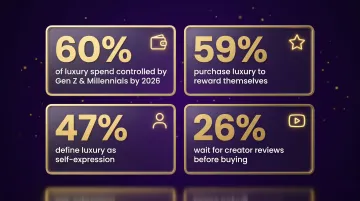
- Gen Z and Millennials are on track to control 60% of luxury spend by 2026
- 59% of luxury shoppers on TikTok purchase to "reward themselves" — emotional, not aspirational
- 47% now define luxury as "self-expression" rather than "status"
- 26% wait for creator reviews before buying, making influencer placement a purchase driver, not just an awareness tool
Live shopping events extend this logic further. Brands broadcast real-time product reveals with embedded purchase links, turning passive viewership into immediate transactions. For Millennial and Gen Z buyers who already treat their feed as a discovery tool, the step from watching to buying has never been shorter.
AI-Driven Ad Personalization and Dynamic Creative
AI is changing the mechanics of luxury digital advertising in 2025. Brands use machine learning tools to generate dynamic ad creative that adapts in real time to individual viewer signals—browsing behavior, location, device, and past purchase history—so the same campaign feels personally curated to each recipient.
Practical applications:
- AI tools generate multiple versions of ad copy and visual formats for A/B testing at scale
- Predictive audience segmentation identifies users most likely to convert before they've engaged with the brand
- LVMH operates MAJA, an internal AI think tank that trains employees to integrate AI
- Louis Vuitton's "1 client = 1 bag = 1 story" initiative puts AI-powered personalization at scale into practice
- Burberry uses predictive AI for inventory management, analyzing weather patterns, social media trends, and celebrity placements. The brand won the 2025 DataIQ Award for "Most Innovative Use of AI (Global)" for its Penguin tool, a generative AI-powered discovery platform
- Cartier uses augmented reality for virtual try-on of high-end jewelry
The opportunity is clear — but so is the risk. AI personalization backfires when it feels intrusive rather than intuitive, directly undermining the discretion and exclusivity that defines luxury.
The Tension Luxury Brands Must Navigate
Consider the numbers:
- 69% of consumers feel manipulated when brands use AI for advertising without disclosing it
- 72% of consumers are more likely to trust companies transparent about data use
- Luxury shoppers "crave tailored experiences" but remain "wary of sharing personal information—especially images—due to concerns about data breaches and misuse"
The Rule Emerging in 2025
AI should make ads feel more relevant, not more surveilled. Privacy-first try-ons using avatars or model surrogates are gaining traction as the preferred workaround for skeptical high-end consumers. The stakes are real: the first-ever CCPA enforcement action resulted in a $1.2 million settlement with a beauty retailer for failing to disclose data sales.
Cautionary Tale
In February 2026, Gucci posted AI-generated ad images that users called "tacky" and "cheap". Experts framed it as a deliberate strategic move, but the backlash makes the point plainly: AI must elevate brand perception, not compromise it.
Frequently Asked Questions
What are the latest trends in online advertising?
The latest trends in 2025 include hyper-targeted programmatic buying using first-party data, AI-driven dynamic creative that personalizes ads in real time, increased selectivity in influencer partnerships favoring long-term relationships over one-off deals, and the growth of inbox-based formats like newsletter advertising that bypass ad blockers and algorithm suppression.
Who is the target market for luxury brands?
Luxury brands target high-net-worth individuals across generations — affluent Millennials and Gen Z now make up a significant share of luxury spending alongside established older buyers. Digital targeting reaches these groups through premium environments: financial media, curated newsletters, and contextual programmatic placements.
What age group spends the most on luxury fashion in the US?
Millennials (roughly 25-40 years old) currently represent the dominant spending cohort for luxury fashion in the US. However, Gen Z and Millennials combined are on track to control 60-75% of global luxury spend by 2025-2026, with Gen Z projected to surpass Millennials' spending by 2030 according to NielsenIQ data.
What is the future of luxury brands?
Luxury brands are moving toward a model where precision digital advertising, personalized storytelling, and experience-led campaigns must work alongside heritage and exclusivity. Brands that balance AI-powered personalization with privacy-first approaches — while treating every placement as brand-building — will outpace those optimizing for impressions alone.
How are luxury brands using social media to advertise?
Luxury brands use shoppable ad formats on Instagram and TikTok, long-term partnerships with niche creators, live shopping events, and AR-enabled try-on ads — all designed to maintain the curated, aspirational feel their audiences expect.
Why is newsletter advertising effective for luxury brands?
Newsletter placements reach affluent, high-intent readers in a distraction-free inbox — no ad blockers, no algorithm interference, and engagement rates roughly 15x higher than web display or social ads. For luxury brands that need context and attention rather than raw impressions, that environment is hard to replicate elsewhere.