Introduction
Most luxury real estate agents make the same mistake: they take standard property marketing and scale it up. Better photos, bigger budgets, the same portals. The result is a premium property buried in a high-volume system built for entirely different buyers.
That approach has a real cost for sellers. Affluent buyers don't respond to the same triggers as the general market — they're not scrolling listing portals on their lunch break. They make deliberate, research-intensive decisions across multiple markets, often with advisors involved, and they expect every marketing touchpoint to signal the same caliber as the property itself.
This guide covers the creative, precision-driven strategies that actually work in the luxury segment:
- Visual storytelling that matches the property's caliber
- Bespoke in-person experiences designed for serious buyers
- Targeted digital channels that reach high-net-worth decision-makers
- Offline tactics that still generate genuine interest among affluent buyers
Key Takeaways
- Luxury marketing shapes perception and sells a lifestyle—not just a property.
- Affluent buyers are selective, research-driven, and often active across multiple markets simultaneously.
- High-quality visuals, story-first narratives, and precision advertising outperform volume-driven campaigns.
- Reaching HNW buyers means placing your brand in the trusted, established media environments where they already pay attention.
What Sets Luxury Real Estate Marketing Apart
Standard real estate marketing chases volume — more listings, more impressions, more leads fed into a CRM until something converts. That logic doesn't translate to the luxury segment, where the buyer pool is small, expectations are high, and a single transaction can represent years of relationship-building. Luxury marketing starts from a different premise: perception has to come before visibility.
Defining the Market
Both Knight Frank and Coldwell Banker Global Luxury define luxury property by local percentile rather than a universal price floor—Knight Frank uses the top 5% by value in a given location, while Coldwell Banker uses the top 10% of sales in the listing ZIP code. In practice, what qualifies as luxury in Phoenix looks very different from what qualifies in Manhattan.
The buyers in this segment treat property as a strategic decision. According to Knight Frank's 2024 Wealth Report, 22% of ultra-high-net-worth individuals planned to purchase a home in 2024—and these are buyers who already own multiple properties, consult financial and legal advisors, and typically spend months evaluating before committing.
Three Core Challenges
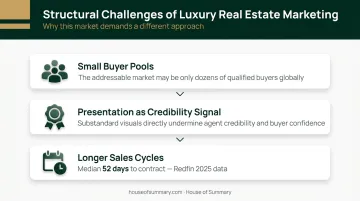
Agents new to the luxury segment routinely underestimate what makes it structurally different:
- Small buyer pools — The entire addressable market for a given listing may be a few dozen people globally. Relationship-based outreach isn't a preference; it's the only viable strategy.
- Presentation as a credibility signal — Substandard visuals or generic copy don't just underwhelm; they tell buyers the agent doesn't match the property. Quality of marketing is itself part of the pitch.
- Longer sales cycles — Redfin reported the typical U.S. luxury home took a median 52 days to go under contract as of September 2025. Sustained visibility matters more than short bursts.
Creative Strategies for Showcasing Luxury Properties
Story-First Property Narratives
Every luxury home has something worth telling: a significant architectural provenance, a view that changes the way you move through a space, a neighborhood with a character no square footage number can convey.
The best luxury listings start with that story and build everything else around it. Before writing a word of copy or briefing a photographer, identify the home's most compelling identity—its history, its design lineage, the lifestyle it enables—and let that inform every asset created.
That narrative then threads through the entire marketing stack:
- Listing copy and email subject lines carry the same emotional register
- Video scripts open with the story before the tour
- Social captions reference the identity, not just the features
- Print materials use the same language the property website uses
When a buyer is comparing six properties at a similar price point, the home with a coherent identity is the one they remember.
High-Quality Visuals That Go Beyond Photography
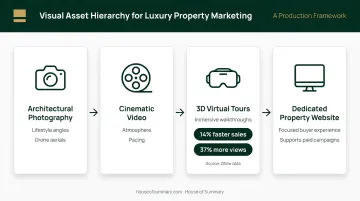
The visual standard in luxury real estate has moved well past professional photography—that's now a baseline, not a differentiator. What buyers expect:
- Architectural photography — Wide lifestyle angles, interior compositions that show flow and light, aerial drone shots that establish context and privacy
- Cinematic walkthrough video — Not a slideshow with music; a film with pacing and atmosphere
- 3D virtual tours — Essential for international and out-of-state buyers. Zillow's data shows listings with 3D tours sold 14% faster and received 37% more views than those without
- Dedicated property websites — A standalone microsite keeps buyers focused on one property, allows the story and visuals room to breathe, and supports targeted paid advertising campaigns
Zillow's 2024 Showcase listings study found they were 20% more likely to receive an accepted offer within 14 days and sold for 2% more on average—for a typical seller, that's over $9,000 in additional proceeds.
Lifestyle Marketing Over Listing Marketing
Affluent buyers aren't purchasing rooms and square footage. They're buying a version of daily life—and the visuals that communicate that life are what convert interest into offers.
That means marketing the context as much as the home itself:
- Highlight the neighborhood's Michelin-starred restaurants and walkable amenities
- Film the view at 6am, not just midday when it looks like every other listing
- Show the privacy the grounds provide, not just the square footage of the lot
- Connect the home's indoor-outdoor flow to the local climate and how it's actually used
This content creates emotional connection that a floor plan never will. It positions the property as aspirational rather than transactional—and that distinction is what justifies the price point.
Digital Channels and Precision Advertising
Targeted Social and Paid Advertising
Broad campaigns don't work here. Running a luxury listing to a general audience wastes budget and dilutes perception—it signals that the property isn't reaching the right people through the right channels.
Precision targeting narrows the field. Instagram, Facebook, and LinkedIn let advertisers filter audiences by income indicators, geographic location, professional profile, and behavioral data. Retargeting campaigns—showing ads specifically to people who already visited the property website—extend visibility with a warm audience over a long sales cycle without wasting spend on cold prospects.
For Google Ads, the strategy is search-intent targeting. High-specificity keywords like "waterfront estates in Palm Beach" or "luxury condos in Manhattan" reach buyers deep into their research process. Pair each campaign with a dedicated landing page so the click leads directly to a high-quality, relevant experience—not a generic agent homepage.
Newsletter and Email Marketing as a Precision Channel
Unlike social feeds governed by algorithms or web display ads that get blocked, email lands directly in front of an opted-in reader. For luxury real estate, this matters because serious, high-intent buyers read their inbox deliberately. The key is segmentation—dividing a database into investor prospects, relocation buyers, and past luxury clients allows for messaging that feels personal rather than promotional.
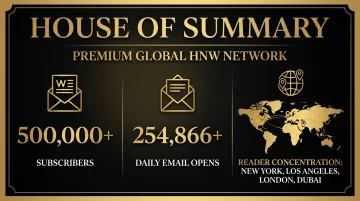
Advertising within premium specialized newsletters offers a direct path to the same audience. House of Summary's network—covering global news, geopolitics, Dubai, and London—reaches 500,000+ subscribers with 254,866+ emails opened daily, with readers concentrated in New York, Los Angeles, London, and Dubai. That's a footprint that maps closely onto where luxury real estate transactions are concentrated.
For agents and developers targeting internationally mobile HNW buyers, the Dubai Summary and London Summary are particularly relevant. Available formats include:
- Native editorial placements within regular issues
- Sponsored content that mirrors the newsletter's editorial tone
- Full-issue takeovers for maximum share of voice
All placements appear within human-written editorial content, which signals brand safety and builds reader trust.
Best practices for luxury email campaigns:
- Personalize subject lines to reference the recipient's area of interest or previous engagement
- Lead with off-market opportunities or early access—exclusivity is the hook
- Always include a strong visual anchor: a hero property image or a link to the 3D tour
- Never send the same message to your entire list
Offline and Experiential Tactics That Still Convert
Private Events and Invite-Only Experiences
Standard open houses work against luxury marketing. They create volume, not exclusivity — open access signals to serious buyers that the property isn't curated.
Private showings and invite-only previews communicate that access is earned, that the seller is selective, and that the agent operates at a certain level. They also let the agent control the atmosphere entirely.
That means a wine tasting paired to a home's cellar, an evening event that uses entertainment spaces the way they were designed, or a broker preview for a curated network of high-end agents.
Beyond any single property, these events signal to prospective sellers that this agent knows how to command attention — and protect a listing's perceived value from the first showing.
Premium Print and Direct Mail
Print isn't dead in this segment. Ipsos research shows print readership skews significantly higher among ultra-affluent consumers with $250K+ household incomes. A double-page full-color spread in the right glossy publication—architecture, design, city lifestyle—carries a weight that a social ad can't replicate.
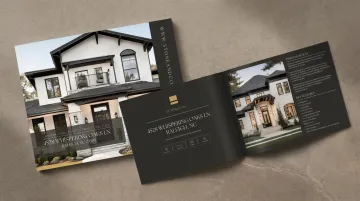
Direct mail follows the same principle, with one non-negotiable: production quality must match the audience. Think heavy paper stock, restrained design, large-format photography. The mailer should look like a luxury publication excerpt, not a promotional flyer. Targeted distribution to specific zip codes or HNW household lists builds name recognition over time.
Networking Within Affluent Circles
Referrals drive a disproportionate share of luxury transactions, and the best referral sources aren't other real estate agents—they're the advisors already in the room when affluent buyers make major decisions.
Build relationships with:
- Private bankers and wealth managers
- Estate attorneys and accountants serving HNW clients
- Family office advisors
Show up where their clients spend discretionary time — charity galas, art gallery openings, private club events, cultural fundraisers. Trust forms in those rooms, and so do referrals.
Frequently Asked Questions
How do you advertise luxury real estate?
Luxury real estate advertising works best through precision digital targeting: social platforms, Google search, and newsletter placements in publications HNW buyers already read. Pair that with high-quality visual content on dedicated property pages and offline exposure through premium publications and curated events. Place your message where your buyers already spend their attention.
What is the 3-3-3 rule in real estate?
The 3-3-3 rule is a follow-up framework: contact a prospect within 3 minutes of inquiry, follow up at 3 days, then again at 3 weeks. In the luxury market, where decisions unfold over months, it helps agents stay visible without applying pressure.
What is the hardest month to sell a house?
Residential sales typically slow in December and January due to holidays and weather, but in the luxury market, timing is more nuanced. International buyers and relocating executives operate year-round, and some of the most motivated luxury buyers search precisely when inventory is thinner and competition lower.
What is the 80/20 rule for Realtors?
The Pareto principle holds that roughly 80% of results come from 20% of inputs. In luxury real estate, most meaningful transactions trace back to a small number of high-value relationships and high-impact channels—investing deeply in a few well-chosen strategies consistently outperforms spreading effort thin.
How do you connect with luxury real estate buyers?
Connecting with affluent buyers means building presence in the spaces they already trust: private events, referral networks through financial and legal professionals, premium editorial environments, and carefully produced digital content. Mass advertising and general listing portals cast too wide a net—in the luxury segment, broad reach translates to very little relevant reach.