
Introduction
Most people scroll past banner ads without a second thought. They skip pre-roll videos, install ad blockers, and develop an almost reflexive immunity to anything that looks like a promotion. Yet certain branded content still earns genuine attention — people read it, share it, and remember it.
The format is what separates content that gets ignored from content that gets results: advertorial or advertisement.
According to eMarketer, over 52% of consumers across 48 global markets have installed or used an ad blocker. With audiences this resistant to traditional placements, the format you choose isn't a minor tactical decision — it shapes whether your message lands or disappears entirely.
What follows breaks down how each format works, where it performs best, and which one belongs in your next campaign.
Key Takeaways
- Advertorials are editorial-style branded content — paid placements written to inform and engage rather than interrupt
- Traditional advertisements are explicit, visually distinct promotional units: banners, display ads, social ads, print placements
- Branded content drives 2.5x more active attention and is twice as memorable as display ads (Forbes/IPG Media Lab)
- Advertorials build credibility and depth; traditional ads deliver reach and frequency
- Both require disclosure: the difference is presentation, not intent
Advertorial vs. Advertisement: At a Glance
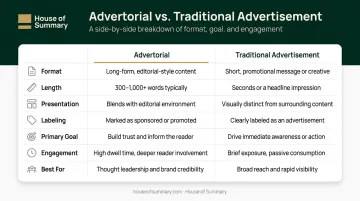
Here's how advertorials and traditional ads compare across the dimensions that matter most to media buyers and marketers.
| Dimension | Advertorial | Traditional Advertisement |
|---|---|---|
| Format | Long-form editorial (article, feature, sponsored post) | Short-form visual unit (banner, display, social ad, print) |
| Length | 500–1,500+ words | Headline + visual + CTA |
| Presentation | Matches publication's tone and editorial style | Clearly separated from editorial content |
| Labeling | "Sponsored Content" or "Advertisement Feature" | Immediately identifiable as paid placement |
| Primary Goal | Build trust, educate, persuade through narrative | Drive awareness, clicks, or direct-response actions |
| Engagement | Deep — reader spends time with the brand story | Broad — relies on frequency and visual interruption |
| Best For | Complex products, skeptical audiences, long purchase cycles | Mass reach, simple messages, retargeting |
What Is an Advertorial?
The word "advertorial" is a portmanteau of "advertisement" and "editorial" — Merriam-Webster traces its first known use to 1917. The format has been part of publishing for over a century, but it has become especially relevant as digital audiences develop sharper instincts for ignoring traditional ads.
An advertorial is a paid piece of content designed to look and read like editorial journalism — an article, column, or feature story — while serving the brand's marketing objectives. The brand pays for placement in a publication, and the content is written in that publication's tone and style, covering topics the audience already cares about, with the product or service woven naturally into the narrative.
The Three Main Types
- Image advertorials — build positive brand perception through storytelling without making a hard product pitch
- Advocacy advertorials — explain a brand's position on an issue, establishing authority and alignment with reader values
- Journalism advertorials — generate media attention or frame how a subject is covered, particularly effective for thought leadership
Why Advertorials Work
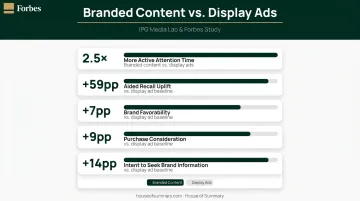
A 2016 study by IPG Media Lab, Forbes, and Syracuse University's Newhouse School found that branded content consistently outperforms traditional display advertising:
- Consumers spent 2.5x more time actively looking at branded content than traditional display ads
- Branded content produced a +59 percentage point increase in aided recall vs. display ads
- Brand favorability was +7 percentage points higher
- Purchase consideration was +9 percentage points higher
- Intent to seek more brand information was +14 percentage points higher
Advertorials overcome ad blindness by leading with value. They borrow credibility from the publication they appear in — readers engage because the content is genuinely useful, not because they were interrupted.
The Newsletter Context
Newsletter placements have become one of the highest-performing environments for advertorial-style content. Readers opt in, open intentionally, and engage without algorithmic interference or ad blockers — email bypasses them entirely.
House of Summary's network of specialized newsletters (Presidential Summary, Geopolitical Summary, Dubai Summary, and London Summary) offers this environment at scale. Sponsored editorial content is written in each newsletter's voice, integrated within the reading flow, and reaches over 500,000 subscribers with 254,866+ emails opened daily. The audience skews heavily toward executives, decision-makers, and high-income professionals across the US, UAE, and UK.
Where Advertorials Work Best
Advertorials are most effective when:
- The product or service requires explanation before a purchase decision
- The audience is premium or skeptical of interruptive advertising
- The campaign goal is long-term trust-building rather than immediate conversion
- The brand needs content that continues generating value after publication
One example: Airbnb partnered with The New York Times' T Brand Studio for a paid post titled "Via an Island of Hope, a New Home" — connecting Airbnb hosts to Ellis Island's hospitality history. The piece worked because it delivered genuine editorial value while naturally integrating the brand's identity around belonging and community.
What Is a Traditional Advertisement?
A traditional advertisement is a paid, explicitly branded message placed in a clearly designated advertising space. Audiences recognize it instantly as a promotion — there's no editorial wrapper, no storytelling disguise.
This includes:
- Digital display and banner ads
- Social media ads (feed, stories, sponsored posts)
- Search ads (paid search placements)
- Print ads in magazines and newspapers
- TV commercials and radio spots
What Traditional Ads Do Well
Traditional ads are purpose-built for reach and speed. They can put a brand in front of millions of people quickly, reinforce brand recognition through repetition, and drive direct-response actions through clear CTAs. Metrics like impressions, CTR, CPM, and CPC are trackable in real time, which makes performance easy to evaluate.
For straightforward messages — a product launch, a seasonal sale, a brand awareness push — traditional ads are efficient and easy to scale.
The Core Problem: Ad Blindness
Nielsen Norman Group's eye-tracking research puts the problem in sharp relief: a right-rail banner occupying 25% of a page's visual area received just 0.8% of user attention. Users have trained themselves to ignore anything that looks like an ad.
With Statista reporting 912 million ad blocker users worldwide in 2024, the reach problem compounds further. A display campaign that can't be seen doesn't build awareness — it disappears into the blocked-ad void.
Key Differences Between Advertorials and Advertisements
Content Format and Length
Advertorials are long-form — typically 500 to 1,500+ words — structured like an article or feature piece. Traditional ads operate in seconds: a headline, a visual, and a CTA designed for instant consumption. The format difference isn't just aesthetic; it determines the depth of message a reader can absorb.
Trust and Credibility
Advertorials borrow authority from the publication they appear in. When a respected newsletter or magazine publishes sponsored content, readers extend some of their trust in the publication to the brand. Traditional ads trigger immediate recognition as paid promotions, which activates skepticism — especially in premium, skeptical, high-attention audiences.
Audience Engagement
That trust gap shows up in measurable outcomes. IPG and Forbes research found branded content generates 2.5x more active attention than display ads, is twice as memorable, and drives 3x higher purchase consideration scores. Display ads compensate for low individual impact through repetition. Advertorials earn impact through time spent — longer reads translate directly into stronger brand recall.
Disclosure and Transparency
Both formats require clear disclosure under advertising regulations:
- FTC (US): Native advertising and sponsored content must carry disclosures that are clear, prominent, close to the ad, and understandable. Acceptable labels include "Ad," "Advertisement," "Paid Advertisement," and "Sponsored Advertising Content." Labels like "Promoted" may be insufficient.
- ASA/CAP (UK): Marketing communications must be obviously identifiable. "Advertisement Feature" is specifically cited as appropriate for advertorial content.
The difference: an advertorial carries a "Sponsored Content" label while mimicking editorial style. A traditional ad is visually self-evident as a paid placement. Higher compliance risk sits with advertorials precisely because they resemble editorial content — disclosure must be conspicuous, not buried.
Production and Cost
| Factor | Advertorial | Traditional Ad |
|---|---|---|
| Production | Editorial writing, content strategy, publication fees | Creative design, media buying |
| Cost model | Often flat-fee placement; higher upfront | CPM/CPC-based; scalable spend |
| Content lifespan | Longer — evergreen potential, SEO value | Shorter — campaign-bound |
| Measurement | Engagement, time spent, brand lift | Impressions, CTR, conversions |
Which Format Should You Choose?
The right choice depends on four factors: campaign objective, audience trust level, message complexity, and budget.
Choose an Advertorial When:
- Your product needs explanation before a purchase decision makes sense
- You're targeting premium or skeptical audiences who tune out interruptive ads
- The campaign goal is building credibility over time, not generating immediate clicks
- You want content that keeps generating value after the campaign ends — through SEO, shareability, or evergreen reach
- You're entering a new category and need to establish authority before asking for consideration
Choose a Traditional Advertisement When:
- The goal is rapid mass awareness with a simple, visual message
- Retargeting or high-frequency exposure is central to the strategy
- Budget constraints favor scalable, performance-based pricing
- The message is a clear offer with a strong call-to-action
The Strongest Campaigns Use Both
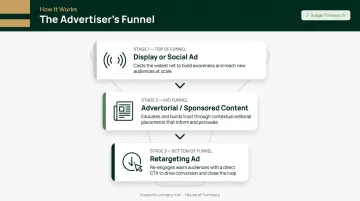
The most effective media strategies layer both formats across the funnel:
- Top of funnel: A traditional display or social ad creates initial brand awareness at scale
- Mid-funnel: An advertorial deepens engagement, pulling in the audience that noticed the brand and giving them a reason to stay
- Bottom of funnel: Retargeting ads close the loop with direct-response messaging
This funnel model works particularly well in newsletter environments, where the same opted-in audience can receive both formats in a single send. House of Summary, for example, offers both display banner placements and editorial-style sponsored content within the same edition. A brand can run an awareness placement alongside a narrative placement in one send — no algorithms, no ad blockers, same high-intent readers for both.
Frequently Asked Questions
What is the meaning of advertorial in advertising?
An advertorial is a paid piece of content that blends editorial journalism format with advertising intent — written to inform or entertain while promoting a brand, product, or service. It is typically labeled "sponsored content" or "advertisement feature" while reading like a standard article or column.
What is the difference between an advertorial and an article?
A standard editorial article is written independently by a journalist with no commercial agenda. An advertorial is paid for by a brand and serves a promotional purpose — even if both look and read similarly, the advertorial's content direction is controlled by the advertiser, not the editor.
Are advertorials more effective than traditional ads?
It depends on the objective. The IPG Media Lab/Forbes study found branded content generates 2.5x more active attention and is twice as memorable as display ads. For engagement and trust-building, advertorials outperform — but for mass reach and direct response, traditional ads are more efficient.
Do advertorials need to be labeled as advertisements?
Yes. In the US, the FTC requires clear and conspicuous disclosure for all native advertising and sponsored content. In the UK, the ASA specifies that "Advertisement Feature" is appropriate labeling for advertorial placements. Failure to disclose properly can result in regulatory action and reputational damage.
What are some examples of successful advertorials?
Airbnb's partnership with The New York Times' T Brand Studio produced a sponsored piece connecting Airbnb hosts to Ellis Island's tradition of hospitality. It worked because it delivered genuine editorial value while grounding the brand's identity in community and belonging.
Can advertorials be used in email newsletters?
Newsletter-based advertorials are one of the fastest-growing placements for this format. They reach opted-in audiences directly in the inbox, bypassing ad blockers and the visual clutter of a web page, making them especially strong for brands targeting high-intent professional readers.