Building a healthcare app that patients actually use is hard. Building the advertising strategy that gets them to download, trust, and return to it is harder. Unlike promoting a retail app or a game, healthcare app advertising operates under layers of compliance requirements, audience skepticism, and sensitivity constraints that most performance marketers have never navigated.
This guide covers the most effective advertising channels for healthcare mobile apps, what HIPAA and FDA rules mean for your campaigns, how to optimize your App Store presence as a free acquisition channel, and which metrics actually tell you if your strategy is working.
Key Takeaways
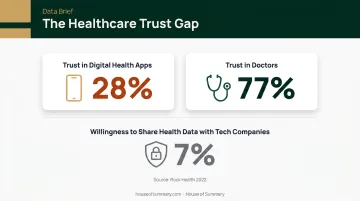
- Only 28% of U.S. adults trust digital health apps versus 77% for doctors — trust-building is as critical as promotion
- The strongest channels: paid search, app store optimization, paid social, and newsletter advertising
- HIPAA and FDA rules apply to how you advertise the app, not just how the app handles data
- Cost per install, 30/60/90-day retention, and task completion rate matter more than clicks alone
- Multi-channel campaigns combining paid acquisition with organic trust-building outperform single-channel approaches
What Makes Healthcare App Advertising Different
Healthcare app advertising operates under constraints most other categories never face — and the trust gap is where it starts.
Rock Health's 2022 consumer survey of 8,014 U.S. adults found that trust in digital health apps sits at 28%, compared to 77% for doctors. Willingness to share health data with tech companies? Just 7%. That means an ad that feels vague, pushy, or over-promising will trigger more resistance in healthcare than it would in almost any other consumer category.
Three Dynamics That Shape Every Healthcare App Campaign
1. The compliance overlay
Every word of every ad must account for regulatory constraints that simply don't exist in retail or entertainment. Healthcare app ads must avoid unverified medical claims, respect HIPAA-safe messaging boundaries, and — depending on what the app does — may fall under FDA guidance on health software. These requirements directly shape creative decisions, copy, targeting, and channel selection — not just legal review.
2. Audience fragmentation
Healthcare app users aren't a monolith. The audience spans:
- Elderly patients managing chronic conditions
- Caregivers coordinating family health appointments
- Young adults tracking fitness or mental wellbeing
- Professionals using employer-provided health platforms
Each segment needs different messaging, different channels, and different creative approaches. A single campaign approach doesn't work here.
3. Context and placement sensitivity
A poorly timed mental health or chronic disease ad can feel invasive in a way that a streaming service ad simply doesn't. Advertisers must think carefully about where an ad appears, what surrounds it, and what emotional state the viewer is likely in. Placement decisions carry real weight here — the wrong context doesn't just underperform, it damages trust.
The Best Advertising Channels for Healthcare Mobile Apps
Paid Social: Meta Platforms
Facebook and Instagram offer granular demographic and interest-based targeting that healthcare app advertisers can use to reach caregivers, health-conscious adults, and specific age and income brackets. The challenge is working within Meta's policy constraints.
Meta's Personal Attributes policy bars ads that imply knowledge of a user's medical condition, health status, or disability. Its Health and Wellness policy restricts ads that imply negative self-perception, and weight-loss and reproductive health ads generally require 18+ targeting restrictions.
In practice, this means targeting on behaviors and demographics — not on implied conditions. "Adults aged 55+ interested in wellness" is compliant. An ad that appears to know someone has diabetes is not.
Paid Search: Google Ads and Apple Search Ads
Search captures users at the moment of active intent — someone searching "appointment booking app" or "ADHD management app" is already looking for a solution. That intent signal makes conversion rates in search generally stronger than in social.
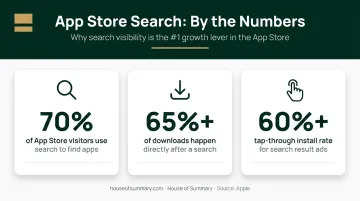
Apple's own data shows strong search behavior across the App Store:
- 70% of App Store visitors use search to find apps
- 65%+ of downloads happen directly after a search
- Search results ads carry a tap-through install rate above 60%
Google's healthcare and medicines ad policies require location-specific compliance and, in some cases, advertiser certification — worth confirming before launch.
App Install Campaigns: Google UAC and Apple Search Ads Advanced
Platform-native app install campaigns automate creative testing and bid optimization across search, display, and video placements simultaneously. For healthcare advertisers focused on driving qualified installs efficiently, allocating a portion of budget to these campaigns makes sense — once you have enough conversion data for the platform's machine learning to optimize toward quality installs rather than just volume.
Newsletter and Email Advertising
Newsletter advertising reaches readers directly in their inboxes — no algorithmic feed competition, no ad blockers, no banner blindness. The audience has opted in and is already engaged when the ad appears, which is harder to replicate in display or social.
Health, wellness, and professional-focused newsletters offer audience alignment that display advertising rarely matches. House of Summary's newsletter network reaches 500,000+ subscribers, with 254,866+ emails opened daily — 66% based in the US, concentrated in New York and Los Angeles. The network specifically supports healthcare, telehealth, and digital health brand advertising.
Readers skew toward executives, high-income professionals, and decision-makers: a demographic that maps well to premium healthcare app adoption. Native ads and sponsored editorial placements appear inline with content, bypassing ad blockers and the credibility gap that banner ads carry.
Healthcare app advertisers who need compliance-friendly placements with clear editorial context will find newsletters worth a serious budget allocation.
Influencer and Provider Partnerships
Healthcare professionals, patient advocates, and credible wellness creators offer something paid ads cannot: established trust. An endorsement from a practitioner or patient advocate the audience already follows converts at a higher rate precisely because the trust transfer is real, not claimed. This channel works best as a complement to paid acquisition, not a replacement for it.
App Store Optimization as Your Healthcare App's Built-In Ad Platform
Unlike paid campaigns that stop the moment budgets run out, ASO keeps working in the background. When a patient searches the App Store or Google Play for a health management tool, organic ranking is shaped by keyword relevance, download velocity, ratings, and metadata — all of which can be systematically improved.
Key ASO Levers for Healthcare Apps
- Keyword strategy: Use patient language, not clinical jargon. "Appointment reminder app" outperforms "ambulatory scheduling software" for consumer-facing apps
- Screenshots: Show real use cases — booking an appointment, tracking a medication schedule, accessing test results — rather than generic UI screens
- Description: Lead with patient benefits, then include security and compliance credentials (HIPAA compliance, data encryption) clearly. These aren't just trust signals; they're search-relevant terms
- Category selection: Choose the most specific relevant category; health and fitness is competitive, but subcategory precision can improve organic visibility
The Ratings and Reviews Loop
Patient reviews serve two functions simultaneously: they're an ASO ranking signal, and they're a trust signal for every prospective user reading the listing. Neither function works without volume.
The practical fix is triggering in-app review prompts after positive interactions — a completed appointment booking, a successful prescription refill, a resolved support query. This systematically captures feedback from satisfied users, rather than leaving the review pool to those who only write when something goes wrong.
Even with proactive prompting, negative reviews will appear. Responding to them professionally is part of the advertising strategy, not just customer service. A thoughtful reply to a one-star review signals to prospective patients that the organization is responsive and accountable — and in healthcare, where trust directly affects whether someone chooses your app over a competitor's, that signal carries real weight.
Staying Compliant: What HIPAA and FDA Rules Mean for Your Ads
Many healthcare app advertisers stay careful inside the app itself, then create compliance exposure through the advertising around it.
HIPAA and Tracking Technologies
HHS/OCR guidance explicitly states that tracking technologies embedded in mobile apps — pixels, SDKs, event tracking — can collect protected health information. A diabetes management app collecting glucose information, for example, creates PHI the moment a regulated entity processes it alongside a device identifier.
What this means for advertising:
- Passing condition, treatment, or appointment data to ad platforms as retargeting signals is high risk
- Retargeting and lookalike audience workflows built from in-app behavior require a HIPAA compliance review before launch
- The FTC's updated Health Breach Notification Rule extends breach obligations to health apps that aren't covered by HIPAA, meaning non-HIPAA apps still face legal exposure if they share health data with advertising platforms without user consent
FDA Jurisdiction Over App Advertising
HIPAA governs how you handle data. The FDA governs what you claim. The FDA's 2022 guidance on device software functions focuses oversight on software that meets the medical device definition and poses patient-safety risk if it doesn't function as intended. Apps focused on administrative functions — booking, record access, patient communication — generally fall outside FDA device scope.
The risk is in the advertising claims. Claims about diagnosis, treatment, mitigation, cure, or prevention can move an otherwise administrative app into medical device territory from a regulatory standpoint. What you say in an ad can change your regulatory risk profile.
What Compliant Ad Messaging Looks Like
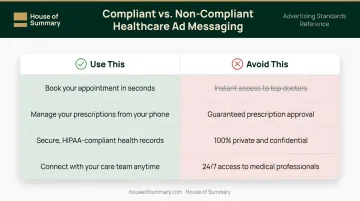
Safe advertising in healthcare focuses on features and convenience rather than clinical outcomes:
| Compliant phrasing | Avoid |
|---|---|
| "Book your appointment in seconds" | "Improve your health outcomes" |
| "Manage your prescriptions from your phone" | "The app that helps you beat diabetes" |
| "Secure, HIPAA-compliant health records" | "Clinically proven to reduce symptoms" |
| "Connect with your care team anytime" | "Guaranteed results" |
The FTC's Health Products Compliance Guidance applies on top of all of this: health claims must be truthful, not misleading, and supported by competent scientific evidence. Testimonials must disclose generally expected results — and "results not typical" disclaimers are usually insufficient on their own.
Measuring Healthcare App Ad Campaign Performance
The Right KPIs
Standard digital metrics — impressions, CTR — don't tell you whether the app is actually delivering value to patients. The metrics that matter:
- Cost per install (CPI): Your primary acquisition efficiency metric
- Day 1, Day 7, Day 30 retention: Whether users return after the initial download
- Session frequency: How often users open the app in a given period
- Task completion rate: Did the user actually book an appointment, refill a prescription, or complete the action the app is designed for?
Adjust's data on health and fitness tracker apps found Day 1 retention at 23% and Day 7 retention at 12% in early 2023 — useful directional benchmarks, though fitness trackers and regulated medical apps are different categories. No universally agreed-upon healthcare medical app retention benchmark exists in public data, which means establishing your own baseline early is essential.
The Attribution Challenge
Healthcare patients take longer to convert than users in most other categories. They see an ad, research the app, read reviews, check privacy policies, and may download weeks after first exposure.
Last-click attribution in this environment systematically undervalues upper-funnel channels — newsletter sponsorships, social awareness campaigns, influencer mentions — that did the trust-building work before the search that preceded the install.
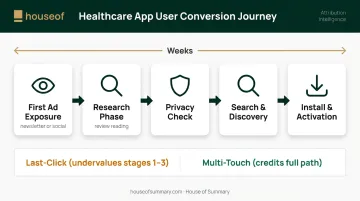
Multi-touch attribution models distribute credit across all touchpoints in the conversion path. For healthcare apps where the journey from first ad exposure to active user can span weeks, this is the only attribution approach that reflects reality.
That full-path view of attribution is what makes a campaign feedback loop functional in the first place.
The Analytics Feedback Loop
Campaign data should feed back into creative, targeting, and channel decisions:
- High install rate but low 30-day retention → likely an audience mismatch or misleading creative, not a channel problem
- Strong retention but high CPI → consider organic channels (ASO, partnerships) to reduce paid dependence
- Low task completion despite active users → onboarding or UX issue, not an advertising issue
Each signal points to a different fix. Knowing which lever to pull prevents ad budget from compensating for problems that live in the product, not the campaign.
Frequently Asked Questions
What is mobile app advertising?
Mobile app advertising covers paid and organic strategies to drive downloads and increase user engagement. Channels include search ads, paid social, app store optimization, and in-app placements, each serving different stages of the user acquisition funnel.
Does the FDA regulate mobile health apps?
The FDA regulates mobile health apps that function as medical devices or make diagnostic, treatment, or clinical claims. Apps focused on general wellness or administrative functions like appointment booking typically fall outside FDA device jurisdiction — but advertising claims that imply clinical outcomes can shift that analysis.
What advertising channels work best for promoting a healthcare mobile app?
The most effective channels are paid search, app store optimization, paid social, and newsletter advertising. Paid search captures high-intent users; newsletters reach health-conscious audiences in a compliance-friendly inbox environment where ad blockers don't apply.
How does HIPAA apply to healthcare app advertising?
HIPAA affects advertising when health-related behavioral data collected inside the app (condition information, appointment history, medication data) is used for ad targeting or retargeting. Advertisers must audit their tracking pixels, SDKs, and data partners before launching any retargeting or lookalike audience campaign.
What metrics should healthcare app advertisers track?
Prioritize cost per install, user retention at 30/60/90 days, session engagement frequency, and in-app task completion rates. Clicks and impressions indicate reach, but only retention and task completion confirm whether the app is delivering real value to patients.
How much does it cost to advertise a healthcare mobile app?
CPI varies by platform, audience specificity, geography, and app category. Healthcare generally runs higher than consumer entertainment due to targeting precision requirements, so diversifying across channels — search, social, newsletters, and ASO — typically improves overall cost efficiency.