
Introduction
Most brands treat sponsored content distribution as an afterthought. They invest time crafting a piece, then scramble to figure out where it should go — defaulting to whatever channel feels familiar rather than what the audience uses.
That approach wastes budget. Without a deliberate distribution strategy, even well-crafted sponsored content generates little measurable return. The channel you choose shapes results as much as the content itself.
This guide covers what you need to build a distribution strategy that performs:
- The four main channels for sponsored content — and how to choose between them
- How to build a strategy around your audience, not assumptions
- What separates content that earns genuine engagement from content that gets ignored
- Which metrics actually tell you what's working
Key Takeaways
- Channel selection is a strategic decision — choose placements deliberately based on audience, not habit
- The four main distribution channels are owned media, paid media, earned media, and direct publisher or newsletter placements
- Define your target audience before selecting any channel; alignment drives performance
- Sponsored content matched to a publication's editorial tone consistently outperforms generic brand messaging
- Measure CTR, time-on-page, conversion rate, and cost per acquisition — impressions alone tell you nothing
What Sponsored Content Distribution Is (And Why It Stands Apart)
Sponsored content distribution is the strategic placement of brand-funded content through channels where an audience already exists and is actively engaged. It differs from general content marketing, which builds an audience gradually through SEO and organic sharing. With sponsored content, you're renting access to someone else's established relationship with their readers.
Unlike organic content, placement decisions for sponsored content are made before publishing and cannot be easily revised once a campaign is live. Getting the channel right upfront determines whether a campaign reaches the right audience — or burns budget on the wrong one.
The trickiest part is editorial fit. Nielsen's Global Trust in Advertising research found that 61% of consumers trust brand sponsorships, compared to 42% for online banner ads. That trust advantage disappears immediately if sponsored content feels out of place — intrusive or off-brand placements actively damage credibility. Well-matched placements, by contrast, can significantly outperform traditional display.
The data from IPG Media Lab and Sharethrough makes the stakes concrete:
- Consumers look at native ads 53% more frequently than display ads
- Native formats drive an 18% higher lift in purchase intent
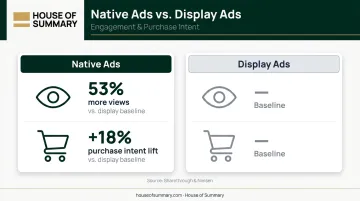
Context isn't a nice-to-have — it's what makes the format work.
The Four Main Channels for Sponsored Content Distribution
The classic paid/owned/earned framework from Forrester applies to sponsored content, but experienced media buyers recognize a fourth layer: direct publisher and newsletter placements. Here's how each breaks down:
| Channel | What It Is | Key Trade-Off |
|---|---|---|
| Owned | Your blog, website, social channels | High control, limited reach beyond existing audience |
| Paid | Social ads, programmatic display | Fast scale, but faces ad fatigue and blockers |
| Earned | Press coverage, organic shares | Highly credible, but unpredictable |
| Direct Publisher/Newsletter | Premium editorial networks, inbox placements | Pre-qualified audience, no algorithm interference |
Why the Fourth Channel Deserves Separate Attention
The ad avoidance problem is real. eyeo reported 912 million active ad-blocking users worldwide in Q2 2023, up 11% from the prior year. A separate Gartner survey found 81% of US consumers actively try to ignore ads and 52% block ads or pay for ad-free experiences.
Newsletter-based placements sidestep this entirely. Ad blockers don't apply to email — the content arrives inside a reading environment the subscriber deliberately opted into, with no algorithms deciding who sees what and no visual clutter fighting for attention.
Owned channels and paid social still serve a purpose — nurturing existing audiences and scaling reach. But when the goal is to reach executives, finance professionals, or policy decision-makers, the channel mix shifts. Direct publisher placements offer a cleaner signal: a pre-qualified reader, no intermediary algorithm, and an inbox that the subscriber chose to open.
How to Build a Sponsored Content Distribution Strategy
Step 1: Define Your Audience with Precision
Vague targeting wastes budget. Effective sponsored content distribution starts with a tightly defined audience profile — not just broad demographics, but behavioral and contextual signals:
- What publications do they trust?
- What topics do they actively seek out?
- What problems are they trying to solve right now?
A B2B brand targeting CFOs needs different channel logic than a consumer brand targeting millennials. The audience definition drives every decision that follows.
Step 2: Select Channels Based on Where Attention Already Exists
The principle here is attention-first channel selection. Instead of defaulting to the biggest platforms, identify where your target audience spends deliberate, focused attention.
Forrester's B2B trust research puts the gap in sharp relief. B2B buyers trust coworkers and management at 82%, current vendors at 79%, and independent experts at 66–72%. Social media influencers score just 44%. For executive and professional audiences, curated editorial environments consistently outperform social feeds as a distribution channel.
Step 3: Match Content Format to Channel Requirements
Each channel has a native format. Mismatches consistently underperform:
- Social platforms favor short, visual, scroll-stopping content — a 900-word sponsored piece fails here
- Premium newsletters favor editorial-style, substantive copy — a carousel ad feels out of place
- Programmatic display works for visual brand recall, not nuanced storytelling
Brands that repurpose the same creative across every channel without adaptation leave performance on the table. Adapting format to channel isn't optional — native-feeling content earns attention; mismatched content gets ignored.
Step 4: Establish a Distribution Calendar
Timing and pacing have a direct impact on results. Key considerations:
- Too frequent: Audiences disengage; frequency caps in paid placements exist for this reason
- Too sparse: Campaigns lack momentum and brand recall fades between placements
- Consistent scheduling in newsletter placements builds familiarity with a recurring audience
Plan send dates before the campaign launches, not after content is approved.
Step 5: Plan for Amplification
A single placement rarely maximizes ROI. The smarter approach layers distribution:
- Anchor with a newsletter or editorial placement (high-intent, engaged audience)
- Amplify through owned social channels with a teaser or link
- Support with a blog post or resource on your own site
- Follow up via your own email list if the audience overlaps
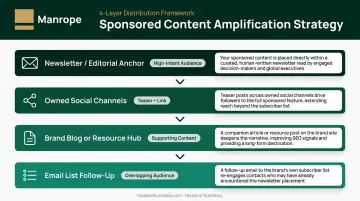
Cross-channel amplification multiplies reach without proportionally increasing cost.
What Makes Sponsored Content Drive Real Engagement
Editorial Alignment Comes First
Sponsored content placed in a publication whose tone and readership naturally intersect with the brand's message outperforms mismatched placements — regardless of budget. A finance brand appearing in a business and geopolitics newsletter reaches readers already in an information-seeking, high-intent mindset. That same brand placed in a lifestyle platform reaches a very different attention state.
Lead with Value, Not the Pitch
Sponsored content that opens with useful information — an insight, a data point, a framing of a real problem — consistently earns higher engagement than content that leads with the product. The structural difference is significant:
- Hard-sell ad: Opens with the brand claim, asks for the sale immediately
- Well-crafted sponsored piece: Opens with something the reader finds genuinely useful, then connects it to what the brand offers
Readers don't resist the latter — they finish it.
One CTA, Not Several
Sponsored content loses conversion potential when it asks readers to do multiple things simultaneously. Campaign Monitor data shows that emails with a single CTA receive 371% more clicks than emails with multiple CTAs.
The same principle applies to sponsored editorial. One clear next step — visit a landing page, download a resource, request a demo — outperforms a menu of competing options. Place the CTA where it follows naturally from the content's conclusion, not forced in mid-read.
Where that CTA lands matters just as much as how it's written — and the channel delivering the content shapes whether readers ever reach it.
The Inbox Environment vs. the Social Feed
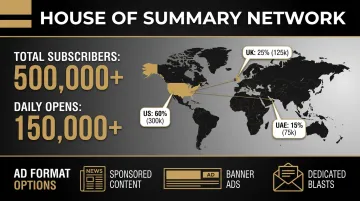
House of Summary's newsletter network illustrates why placement environment matters so much.
Brands advertising in vertically focused newsletters — covering global news, geopolitics, UAE business, or London markets — reach readers who self-selected around those exact topics. The message arrives in an active reading context, not a passive scroll.
The network reaches over 500,000 subscribers with 254,866+ emails opened daily, with primary audience concentration among executives, decision-makers, and high-income professionals in the US, UK, and UAE. Ad formats include sponsored content, native editorial ads, display banners, and full-newsletter takeovers — all landing in an inbox environment where ad blockers don't apply and attention is already present.
FTC Compliance Is Non-Negotiable
Sponsored content in the US must be clearly labeled. The FTC's guidelines require disclosures to be clear, prominent, and in plain language — terms like "Ad," "Advertisement," "Paid Advertisement," or "Sponsored Advertising Content" all qualify.
Non-disclosure carries real legal and reputational exposure. The FTC's Endorsement Guides were revised in 2023, tightening requirements around material connections. Transparent labeling isn't a conversion barrier — it's the baseline for running sponsored content responsibly.
Tracking the Performance of Your Sponsored Content
The Metrics That Actually Matter
| Metric | What It Reveals |
|---|---|
| Click-through rate (CTR) | How many readers took action beyond reading |
| Time-on-page / content engagement rate | Whether readers actually consumed the content |
| Conversion rate | How many landing page visitors completed the desired action |
| Cost per acquisition (CPA) | Total campaign cost relative to qualified outcomes |
Impressions and reach show how many people could have seen the content. CTR, time-on-page, and conversion rate show how many actually engaged. These are not interchangeable measurements. Optimizing for impressions alone is a reliable way to spend budget without generating returns.
Attribution Is More Complex Than It Looks
CMI's 2025 B2B research found 56% of B2B marketers struggle to attribute content ROI and an equal share struggle to track customer journeys. That's not a failure of measurement tools — it reflects the reality that sponsored content typically operates mid-funnel, between awareness and purchase intent.
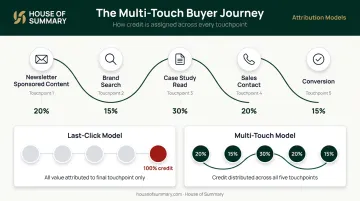
A reader who encounters a sponsored piece in a newsletter may not convert immediately. They may search for the brand later, read a case study, then contact sales. Last-click attribution misses this entirely. Multi-touch attribution models — which assign value to each touchpoint across the buyer journey — give a more accurate picture of what sponsored content is actually contributing.
Build in a Review Cycle
Treat each campaign as a data source, not just a spend. After each placement or campaign cycle, review:
- Which audience segment responded?
- Which channel delivered the most qualified engagement?
- Which message or format earned the best CTR?
Apply those findings before the next campaign launches. The brands that improve fastest aren't running better ads — they're running better feedback loops.
Frequently Asked Questions
What are the 4 distribution strategies?
The four main sponsored content distribution strategies are owned media (publishing on your own channels), paid media (buying placements through ads or sponsorships), earned media (gaining organic coverage or shares), and direct publisher placements (sponsoring content in premium newsletters or editorial outlets). Each offers a different trade-off between control, reach, credibility, and cost.
What is the 5-3-2 rule for social media?
The 5-3-2 rule is a social content-mix guideline: for every 10 posts, 5 should be curated content from others, 3 should be original branded content, and 2 should be personal or humanizing posts. The same balance logic applies when planning how sponsored content fits alongside organic posts in your channel mix.
What is the 3-3-3 rule for marketing?
The 3-3-3 rule refers to capturing attention in the first 3 seconds, delivering the core message within 3 sentences, and driving to a single action within 3 steps. It's a useful test to run before any sponsored placement goes live, particularly in editorial environments where you're competing for reader attention.
Does newsletter-based sponsored content avoid ad blockers?
Yes — email-based advertising is technically outside the scope of browser-based ad blockers. When a subscriber receives a newsletter, the ads arrive as part of the content they opted in to receive. This is distinct from web display advertising, which is what most ad-blocking software targets.
How do I know if my sponsored content strategy is working?
Track CTR, time-on-page, and cost per acquisition as your primary signals, and layer in multi-touch attribution to capture mid-funnel influence. Review results after each campaign cycle and adjust before the next placement begins — changes made mid-campaign rarely move the needle.