

Introduction
Marketing a digital therapeutic is unlike marketing anything else in healthcare. Most providers have never prescribed one. Most patients have never heard of one. You're simultaneously convincing two audiences through two entirely different channel strategies — before either group has a frame of reference for what you're offering.
The stakes are real. According to MarketsandMarkets, the global DTx market is projected to grow from $6.1 billion in 2023 to $21.9 billion by 2028 — a 29.1% CAGR. That growth is drawing more products into a market where audience confusion and regulatory complexity make generic advertising approaches costly.
This guide covers the specific strategies that work:
- How to reach and persuade healthcare providers through specialty targeting and EHR placements
- How to reach patients through contextual and education-first channels
- How to choose ad formats that suit the DTx category
- How to build a compliant channel mix that serves both audiences without running afoul of FDA or FTC rules
Key Takeaways
- Target providers with clinical evidence and patients with category education — each audience needs its own channels and messaging strategy
- NPI-based HCP targeting and EHR placements reach clinicians at the point of prescribing decisions
- Contextual targeting is the safest and most effective patient-reach strategy as behavioral health targeting faces mounting privacy restrictions
- Native and newsletter advertising formats suit DTx because the category requires explanation before conversion
- Prescription DTx (PDTs) follow pharma-like promotional standards; over-the-counter DTx falls under FTC substantiation rules
Why DTx Advertising Requires Its Own Playbook
Digital therapeutics occupy an unusual position: they're clinically validated software, regulated as medical devices, but delivered through an app. That dual identity creates a dual-audience problem that generic health advertising strategies aren't built to handle.
The Two-Audience Problem
Providers and patients need fundamentally different things before they'll act:
- Providers want published trial outcomes, FDA clearance status, and peer-reviewed evidence. Brand messaging is irrelevant until trust in the science is established
- Patients need to understand what a digital therapeutic actually is before they can evaluate whether it's right for them — most don't know the category exists, let alone how it differs from a wellness app
The channels, proof points, and messaging required for each audience don't overlap much. An HCP campaign running through EHR placements requires clinical language and evidence summaries. A patient campaign running through contextual health content needs plain-language education and empathetic framing.
That audience split is complicated further by a regulatory layer that governs what you can say to either group — and how.
The Regulatory Overlay
Before any campaign launches, DTx marketers need to identify which regulatory framework governs their product:
- Prescription DTx (PDTs) — cleared by FDA as Software as a Medical Device (SaMD) — must follow promotional standards similar to pharmaceutical advertising, including requirements around fair balance and claims that stay consistent with FDA-cleared labeling
- Non-prescription or OTC DTx falls under FTC oversight, where health-benefit and safety claims require competent and reliable scientific evidence, including randomized, controlled human clinical testing
The FTC's 2023 action against GoodRx — a $1.5 million civil penalty for sharing sensitive health data with advertisers — is a useful reminder that enforcement covers both what you claim and how you handle patient data in the process.
Reaching Healthcare Providers: HCP Targeting Strategies
Specialty-Level Targeting and EHR-Integrated Outreach
DTx products are indication-specific, so HCP campaigns should be too. NPI-based targeting lets advertisers reach verified prescribers filtered by specialty — psychiatrists for a DTx addressing depression, diabetologists for a glucose management product, neurologists for an ADHD app.
Platforms like Doceree and Doximity make this precise:
- Doximity reaches 85% of U.S. MDs and 50% of NPs and PAs through its verified HCP network
- Doceree operates as a HIPAA-certified programmatic platform with deterministic HCP identity across EHR, e-prescribing, and telehealth workflows
EHR-integrated placements are the highest-value touchpoint in HCP advertising because they reach providers while they're actively making treatment decisions. Veradigm's analysis of EHR media campaigns found that providers with greater EHR exposure were more likely to prescribe the corresponding medication — vendor-reported pharma data, but applicable for DTx products entering the same prescribing workflow.
Education-First Messaging for Skeptical Clinicians
Most physicians have never prescribed a digital therapeutic. HCP campaigns that lead with brand messaging or product features before establishing clinical credibility will be ignored.
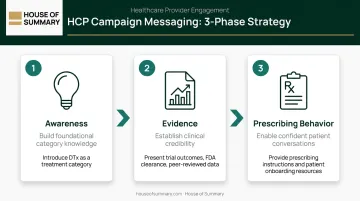
Sequencing addresses this by building credibility before asking for behavior change:
- Awareness phase — introduce DTx as a treatment category, not just a product
- Evidence phase — present published trial outcomes, FDA clearance status, and peer-reviewed data that match the cleared indication
- Prescribing behavior phase — provide step-by-step prescribing instructions and patient onboarding resources
Conference-adjacent placements and medical journal digital advertising are worth adding to any HCP campaign. Clinicians in a continuing education mindset are more receptive to new therapeutic categories than those receiving unsolicited outreach.
Reaching Patients: DTC Advertising Strategies for DTx
Health-Intent Contextual Targeting
Contextual advertising places DTx ads alongside condition-specific content — articles about insomnia, anxiety management, diabetes, or chronic pain — reaching patients actively researching their condition rather than being identified through behavioral health data.
The performance case is strong. PulsePoint's research found contextual targeting made consumers 83% more likely to recommend a product, increased purchase intent by 63%, and improved brand favorability by 40% compared to non-contextual targeting.
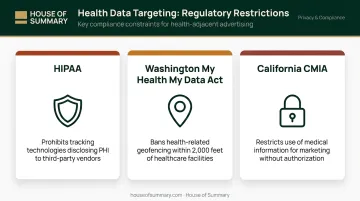
Contextual targeting has also become the privacy-compliant default for health advertising — and for good reason. Behavioral health targeting carries legal exposure that contextual placement avoids:
- HIPAA prohibits tracking technologies that impermissibly disclose protected health information to third-party vendors
- Washington's My Health My Data Act bans health-related geofencing within 2,000 feet of healthcare facilities
- California's CMIA restricts use of medical information for marketing without patient authorization
Stigma-Aware and Education-Led Patient Messaging
Many DTx products treat conditions that carry stigma — mental health disorders, substance use disorder, insomnia. Patient advertising in these areas needs to clear two hurdles before it can make a product case:
- Destigmatize help-seeking — ad tone should feel supportive, not clinical, and avoid language that implies the reader has something wrong with them
- Explain the category — most patients don't know what a digital therapeutic is. Ads that skip straight to product claims produce high bounce rates because the conversion logic is missing
The "educate before you sell" sequence matters most for patients who've already tried medication or therapy without full relief. They're open to alternatives — but they need to understand that software can function as a treatment before they'll consider a specific product.
DTx products also have a natural fit for underserved patient populations that conventional healthcare advertising misses:
- Patients in rural areas with limited provider access
- Those avoiding in-person care due to stigma
- People who prefer privacy in their treatment journey
Mobile-first and inbox-delivered channels reach these groups directly — no appointment required.
Ad Formats That Work for Digital Therapeutics
Not all ad formats carry equal weight for a category that requires patient education and provider trust-building before conversion.
Native Advertising
Native ads — editorial-style content that educates readers about a condition or treatment approach before introducing a brand — suit DTx better than almost any other format. The IAB/IPG Media Lab and Sharethrough found consumers viewed native ads 53% more frequently than standard display ads, with 25% more consumers looking at in-feed native placements.
For DTx, the format's editorial structure provides the space to explain the category, build comprehension, and earn the conversion ask. A display banner can't explain what a prescription digital therapeutic is. A native article can.
Healthcare-Specific Programmatic DSPs
Programmatic display offers scale, but DTx advertisers should use healthcare-specific demand-side platforms rather than general programmatic networks. Platforms like DeepIntent and Doceree apply built-in compliance controls for condition-targeting, operate within verified publisher environments, and handle HIPAA-relevant data handling requirements that general platforms don't address.
Newsletter Advertising
Email newsletter advertising is one of the most compliance-friendly channels available to DTx brands. Ads delivered to opted-in subscribers bypass ad blockers entirely, arrive in an uncluttered reading environment, and reach audiences that have self-selected into specific content categories.
For DTx brands targeting health-conscious patients and healthcare decision-makers, specialized newsletter networks offer a high-intent alternative to programmatic. House of Summary's network, for example, reaches 500,000+ subscribers across executives and decision-makers and has delivered click-through rates 4x higher than Google AdWords, according to advertiser results. Native editorial placements and sponsored content formats give DTx brands the space to educate before asking for a conversion.

Social and Video Platform Limitations
Social and video platforms present real constraints for DTx advertising:
- Google restricts targeting based on health and medical conditions
- Meta prohibits ads that assert or imply personal attributes including physical or mental health conditions
- TikTok requires regulatory compliance for healthcare and pharmaceutical ads by market
These platforms work better for brand awareness campaigns for OTC DTx products or disease-awareness content that avoids product-specific therapeutic claims. For prescription DTx, they're a poor fit for anything beyond top-of-funnel reach.
Navigating Compliance in DTx Advertising
Know Your Regulatory Framework
The compliance requirements differ based on product type:
| Product Type | Regulator | Key Requirement |
|---|---|---|
| Prescription DTx (PDT) / FDA-cleared SaMD | FDA | Claims must align with cleared labeling; fair balance required for efficacy claims |
| Non-prescription / OTC DTx | FTC | Health claims require competent, reliable scientific evidence (typically RCT-level) |
| Both | FTC + state laws | Patient health data used in advertising requires privacy review |
Practical Compliance Steps
Before any campaign launches:
- Confirm which regulatory framework applies to your specific product
- Ensure all efficacy claims match the exact language in your FDA clearance or are substantiated by RCT-level evidence
- Have regulatory or medical affairs teams review ad copy before placement — not after
- Avoid language that conflates a cleared DTx with a general wellness app; this creates both regulatory and audience confusion
Even when teams follow these steps carefully, campaigns can still go sideways. The most common compliance failure in DTx advertising is overclaiming: implying efficacy or indications broader than what the cleared label supports. Broad programmatic placements amplify this risk, because ad copy runs without surrounding editorial content to frame the claim.
Building a Channel Mix That Works for Both Audiences
Run HCP and Patient Campaigns in Parallel
The most effective DTx programs coordinate both campaigns so they reinforce each other. When a patient arrives asking about a product they saw advertised, and the provider has already been primed with clinical evidence through specialty-targeted placements, conversion rates improve across the board.
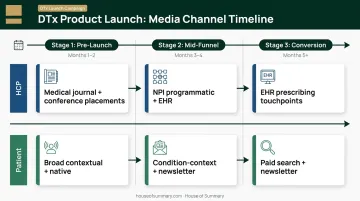
A product launch cadence might look like this:
- Pre-launch (months 1-2): Broad contextual and native placements build category awareness; medical journal and conference-adjacent placements introduce the clinical evidence base to HCPs
- Mid-funnel (months 3-4): NPI-filtered programmatic and EHR placements for HCPs; condition-context targeting through health publishers and newsletter networks for patients
- Conversion stage (months 5+): EHR touchpoints with prescribing information for providers; high-intent paid search for condition queries and newsletter advertising for patients ready to learn more
Budget Allocation by Stage
| Campaign Stage | HCP Channels | Patient Channels |
|---|---|---|
| Awareness | Medical journal digital, conference adjacency | Broad contextual, native editorial |
| Mid-funnel | NPI-targeted programmatic, Doximity | Condition-context programmatic, newsletter placements |
| Conversion | EHR/CDS placements, specialty eRx | Paid search, newsletter advertising, landing page retargeting |
One channel that performs across all three stages: newsletter advertising. Because newsletters reach readers directly in the inbox — no algorithms, no ad blockers — they work for both awareness and conversion. Health-engaged patients and clinical decision-makers are active newsletter readers, making them a reliable complement to programmatic and paid search at any budget allocation.
Frequently Asked Questions
Who uses prescription digital therapeutics (PDTs)?
PDTs are prescribed by licensed healthcare providers, including psychiatrists, primary care physicians, and neurologists, for patients managing conditions such as depression, insomnia, substance use disorder, and ADHD. Patients fill the prescription digitally and access treatment through a smartphone app or connected device.
Where are digital therapeutics commonly used?
DTx products are most widely deployed in behavioral health, diabetes management, chronic pain, and substance use disorder — areas where software-based interventions complement pharmacotherapy and app-based delivery extends patient access beyond in-person care.
What is the market outlook for digital therapeutics?
The global DTx market is projected to grow from $6.1 billion in 2023 to $21.9 billion by 2028 at a 29.1% CAGR, according to MarketsandMarkets. Growth drivers include increasing FDA clearances, expanding pharmaceutical partnerships, AI integration, and rising patient demand for remote, accessible treatment options.
What is an example of a digital therapeutic?
Somryst is an FDA-cleared PDT (510(k) K191716) that treats chronic insomnia in adults through a 9-week computerized behavioral therapy program including CBT-I and sleep restriction techniques. EndeavorRx (De Novo DEN200026) is another well-known example, treating inattentive or combined-type ADHD in children ages 8-12 through an adaptive video-game experience.
How should digital therapeutics be advertised compliantly?
PDTs must follow pharma-like promotional standards: claims must align with FDA-cleared labeling, and efficacy statements require fair balance. Non-prescription DTx must substantiate health claims under FTC standards, typically requiring RCT-level evidence. All DTx ad copy should be reviewed by regulatory or medical affairs teams before launch.
What is the difference between HCP and patient advertising for digital therapeutics?
HCP advertising leads with clinical evidence, trial outcomes, and prescribing information through specialty-targeted channels like EHR placements and medical journals. Patient advertising uses education-first content in contextual and inbox-delivered environments, building category awareness before prompting any action.