Introduction
The best luxury collaborations don't just generate buzz — they solve a real strategic problem. In 2026, with the global luxury market stabilizing at approximately €1.44 trillion and growth projected in the low single digits, partnerships offer a critical volume lever for brands seeking to expand without relying solely on price increases. Around 80% of luxury market growth between 2023 and 2025 came from price hikes rather than volume gains — a strategy with a hard ceiling.
These collaborations matter beyond the headlines. They expand audiences, test new categories, and redefine brand relevance in an attention economy where consumers are fatigued by generic partnerships. The ones that work deliver complementary brand equity, reach new audience segments, and produce something neither brand could have made alone. Here are the ten that did exactly that in 2026.
Key Takeaways
- Luxury brand collaborations in 2026 span fashion, tech, sport, and lifestyle—moving well beyond traditional category limits
- Successful partnerships are built on shared values, complementary audiences, and cultural timing — not name recognition alone
- This list covers 10 collaborations selected for creative boldness, business outcomes, and influence on the broader luxury market
- Each entry explains what the collaboration involved and what made it strategically effective
- Brand professionals tracking the luxury space will find actionable takeaways throughout
What Makes a Luxury Brand Collaboration Work in 2026
Not all collaborations deliver equal value. Many generate short-term buzz but erode brand equity if the partnership lacks strategic alignment. The core tension between reach and prestige defines the challenge: expand too broadly and you dilute cachet; stay too narrow and you miss growth opportunities.
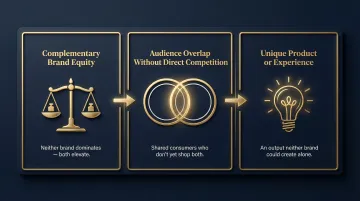
Three conditions consistently underpin successful luxury collaborations in 2026:
- Complementary brand equity — Neither brand should dominate or dilute the other; both must bring distinct, respected assets
- Audience overlap without direct overlap — Target consumers who know both brands but don't yet shop both
- Unique product or experience — Create something neither brand could have produced independently
Beyond these conditions, collaborations are now experiential and IP-driven, moving beyond co-branded products into shoppable events, limited-edition narratives, and cultural moments.
The 10 Best Luxury Brand Partnerships & Collaborations in 2026
These collaborations were selected across fashion, tech, sport, and lifestyle for their commercial impact, creative ambition, and strategic clarity.
Louis Vuitton x Takashi Murakami
Twenty-two years after the original collaboration, Louis Vuitton revived its partnership with Takashi Murakami in a re-edition spanning over 200 SKUs. The collection brought back Cherry Blossom motifs, Monogram Multicolore, and Superflat Panda designs across core bags (including Speedy and Capucines), ready-to-wear, shoes, perfume, and accessories. House Ambassador Zendaya anchored the campaign, connecting the archive to a new generation.
What made it work: The partnership demonstrated restraint in revisiting rather than replicating the archive. The timing aligned perfectly with early-2000s nostalgia cycles—search interest for the collaboration on resale platforms surged 1,119% year-over-year. The campaign generated $7.4 million in Media Impact Value in its first week, proving that a legacy collaboration can be renewed without becoming self-referential.
Hermès x Apple
Active since 2015, this ongoing collaboration merges Apple's technology with Hermès's artisanal craftsmanship. The partnership offers exclusive leather Apple Watch bands and special edition hardware—including the Series 11 and the first-ever Apple Watch Hermès Ultra 3—designed around Hermès's codes. Collections include Kilim and Twill Jump bands, exclusive digital watch faces, and engraved hardware, priced from $1,249 to $1,949.
What made it work: Both brands occupy dominant premium positions in different categories. The product addresses a real lifestyle need for their shared affluent consumer: the desire to carry technology without sacrificing aesthetic sophistication. Neither brand compromised its identity—Apple maintained its design minimalism while Hermès preserved its leather craftsmanship heritage.
Dior x Jordan
Kim Jones's fusion of Dior's menswear craft with Jordan's sporting heritage redefined the boundary between sport and haute couture. The Air Jordan 1 High OG Dior debuted at the Dior pre-fall show in Miami, with production strictly limited to 8,500 individually numbered high-top pairs. Five million people registered for a chance to buy them, with pairs retailing for $2,000 and reselling for upwards of $25,000.
What made it work: The collaboration legitimized streetwear-luxury crossovers at the highest level. It attracted a younger male luxury consumer who might never have considered Dior menswear, and created cultural credibility that straightforward advertising could not replicate. The scarcity model preserved brand equity while driving massive demand.
SKIMS x Fendi
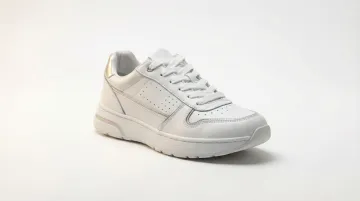
Launched in November 2021, Kim Jones identified the SKIMS drop moment as a cultural signal, leading to a co-designed collection that merged SKIMS's body-first design with Fendi's luxury codes. The capsule included shapewear, lingerie, swimwear, hosiery, and ready-to-wear — including a $4,200 leather dress.
Reported figures included a 300,000-person waitlist and $1 million in revenue within the first minute.
Why it resonated: The collaboration combined the frenzy mechanics of direct-to-consumer drops with the prestige of a heritage house. It spoke directly to a demographic that both brands individually only partially owned—women who valued both functional shapewear and luxury fashion. SKIMS brought its direct-to-consumer reach while Fendi supplied the archival luxury codes.
Gucci x The North Face
Launched in late 2020, this collaboration merged Gucci's maximalist visual language with The North Face's performance outerwear functionality. The collection featured a joint logo combining TNF's half-dome with Gucci's Web stripe, and a campaign featuring A$AP Rocky and Billie Eilish. The initial launch generated $15.3 million in MIV within four months, and media reported the Gucci website crashed for 10 minutes due to traffic spikes.
What made it work: The combination of loud luxury aesthetics with technical utility offered something genuinely new. The partnership attracted the "gorpcore" consumer who sees outdoor performance gear as lifestyle rather than purely functional. Campaign talent reinforced credibility with a younger, culture-forward consumer base who values both brands.
Prada x Adidas
Prada's minimalist precision design applied to Adidas sports silhouettes produced a footwear and accessories collection merging functional sportswear DNA with Prada's luxury codes. Beginning in 2019, the partnership expanded in 2022 with the "adidas for Prada Re-Nylon" collection — ready-to-wear, bags, and Forum High/Low silhouettes made from infinitely recyclable Re-Nylon.
It extended further into digital space with a user-generated NFT art project.
What made it work: The partnership gave Adidas a premium halo without sacrificing its athletic identity, while giving Prada a point of entry into the active luxury consumer who sees sport as lifestyle. The Re-Nylon innovation added substance to style, addressing sustainability concerns that resonate with younger luxury consumers.
Moncler x Valentino
As part of the 2018 Moncler Genius project, Valentino creative director Pierpaolo Piccioli designed a capsule collection combining Moncler's technical outerwear expertise with Valentino's haute couture aesthetic. The result: elevated winter pieces that operated at the intersection of function and high fashion, including padded, full-length evening dresses and capes inspired by early Renaissance paintings.
The strategic logic: Both brands are Italian, operate in adjacent luxury segments, and the collaboration found a genuine product white space — performance outerwear with runway-level design — that resonated with the premium travel and resort market. The collection proved that technical functionality and haute couture weren't mutually exclusive.
Crocs x Swarovski
Released in May 2025, this collaboration featured Swarovski crystals hand-placed across Crocs' signature silhouettes — clogs and platform styles — transforming a mass-market comfort shoe into a jewellery-adjacent fashion object. The collection included crystal-embellished Classic Clogs and Bae Clogs, alongside limited-edition Jibbitz charms, priced from $250 for charms to $1,200 for the Bae Clog.
What made it work: The contrast between Crocs' democratic accessibility and Swarovski's crystal prestige created a conversation-driving tension. The collaboration leaned into confidence rather than irony, which elevated both brand perceptions. It proved that the high-low mix could work when executed with craft and conviction.
Versace x Onitsuka Tiger
Unveiled for the Spring/Summer 2026 collection, Versace's bold visual identity — including Medusa motifs and signature print codes — was applied to Onitsuka Tiger's heritage Japanese athletic silhouettes. The collaboration reimagined the classic TAI-CHI trainers with double stitching on the Tiger stripes and Versace's Medusa symbol in studded embellishments on the tongue, priced around $750–$795.
What drove the demand: The partnership opened Versace to the Asian luxury consumer through a culturally respected local brand, while giving Onitsuka Tiger international fashion credibility it would struggle to build independently. The collaboration bridged Italian luxury and Japanese sportswear in a way that honored both heritages.
Roberto Cavalli x SKIMS
Launched in June 2025, the collaboration channelled Cavalli's archive of animal prints and early-2000s maximalism into SKIMS's sculpting swimwear and cover-up silhouettes. The focused, body-forward capsule included one-pieces, bikinis, chiffon cover-ups, and accessories featuring Cavalli's archival exotic animal prints — zebra, tiger face, flora, and fauna motifs.
What made it work: SKIMS brought its existing audience and e-commerce reach that Cavalli currently lacks, while Cavalli supplied the archival aesthetic depth that differentiated the collection from SKIMS's usual output. The partnership revived Cavalli's commercial relevance by connecting archival glamour to contemporary body-conscious design.
How We Selected These Collaborations
Each collaboration was evaluated against three criteria:
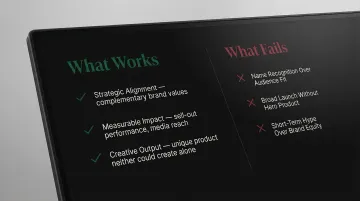
- Strategic alignment — complementary brand values, not competing ones
- Measurable impact — sell-out performance, media reach, site traffic, or waitlist volume
- Creative output — work that neither brand could have produced independently
Many collaboration evaluations fall apart for predictable reasons:
- Prioritizing partner name recognition over actual audience fit
- Launching too broadly without a focused hero product
- Mistaking short-term hype for lasting brand equity
The collaborations featured here avoided each of these traps through precise product focus, targeted audience strategy, and preserving both brand identities intact.
That same discipline shaped category selection. The list spans fashion-tech, luxury-sport, luxury-luxury, and luxury-mass pairings — a deliberate reflection of how the 2026 collaboration landscape has moved well beyond traditional fashion-house territory.
Conclusion
The pattern across all 10 collaborations is consistent: the most effective luxury partnerships in 2026 are those where both brands bring something the other genuinely lacks—whether that's distribution, cultural access, technical expertise, or a new audience segment.
For brand professionals and marketing decision-makers, evaluate any collaboration against long-term brand equity — not just launch-day metrics. The collaborations that endure share three qualities:
- Scalability — the model can grow without diluting either brand
- Audience authenticity — the partnership reaches real shared customers, not just press coverage
- Product integrity — the output reflects both brands' standards, not a compromise of either
Luxury brand strategy moves fast. The deals announced today shape the market positioning you'll be responding to next quarter. For executives and marketers who track these shifts across fashion, lifestyle, and business strategy, House of Summary's network of specialized newsletters covers exactly this — verified, clearly written, and delivered directly to your inbox.
Frequently Asked Questions
How to collaborate with luxury brands?
Approaching luxury brands requires demonstrating complementary value—shared audience profile, aligned brand prestige, and a specific product or experience that benefits both parties. Cold outreach rarely works; partnerships typically originate through creative directors, licensing divisions, or industry introductions.
What brands are commonly associated with luxury?
The most recognized global luxury houses span fashion (Louis Vuitton, Chanel, Hermès, Gucci, Prada), jewelry (Cartier, Tiffany & Co., Bulgari), automotive (Ferrari, Rolls-Royce, Bentley), and watchmaking (Patek Philippe, Rolex, Audemars Piguet).
Can you give an example of a strategic brand partnership?
Hermès x Apple illustrates it well: both brands dominate their categories, serve a shared affluent consumer, and the Apple Watch band partnership created a product that addressed a genuine lifestyle need without either brand diluting its identity.
How much do influencers get paid for brand partnerships?
Mega influencers with millions of followers can command six-figure fees per post for luxury brands, while micro-influencers in niche verticals typically earn flat fees or product-plus-commission arrangements. Luxury brands increasingly prioritize engagement quality over follower volume.
What is the difference between a brand partnership and a brand collaboration?
A brand partnership is an ongoing commercial relationship — co-marketing, sponsorship, or licensing — while a collaboration is a time-limited co-creation of a specific product or experience. In luxury, the terms are often used interchangeably, though collaborations tend to be more drop-focused.
Why do luxury brands collaborate with non-luxury brands?
Luxury brands collaborate with non-luxury partners to access new demographics, generate cultural relevance, and create the contrast that drives desirability. The unexpected pairing (Gucci x The North Face, Crocs x Swarovski) creates more media attention and audience crossover than two equally prestigious brands working together.