
Introduction
Brands face a paradox in modern media: they need reach and credibility, but audiences have learned to tune out anything that smells like a sales pitch. The editorial vs sponsored content distinction matters more now than ever because trust has become the scarcest resource in digital media.
Both formats appear on the same pages, share similar structures, and can look nearly identical to a casual reader. The difference is functional: editorial content earns its place through independent judgment, while sponsored content earns its place through payment. That distinction shapes how audiences receive each one.
Understanding when to pursue each format—and how to combine them—determines whether a brand builds genuine authority or just adds to the noise.
This article covers the core differences between these formats, how disclosure shapes reader trust, and a practical framework for deciding which belongs in your content strategy.
Key Takeaways
- Editorial is independently produced journalism where the brand earns its mention — sponsored is paid placement where the brand co-creates the piece
- Editorial builds credibility through third-party endorsement; sponsored gives you message control and predictable outcomes
- Only 7-17% of readers identify native ads as advertising, but when they do, clear labeling matters
- Neither format is universally superior—the right choice depends on your goal: trust-building or targeted conversion
- The strongest strategies use both: editorial earns authority, sponsored scales it to new audiences
Editorial vs Sponsored Content: A Quick Comparison
Purpose and Intent
Editorial content exists to inform, investigate, or educate without commercial obligation. The writer's job is to serve the reader, not the brand. Sponsored content exists to promote—whether that means generating leads, driving conversions, or shaping brand perception within a specific audience.
Control and Ownership
Publications own editorial decisions entirely. Brands cannot dictate tone, message, or timing. With sponsored content, brands co-create within the publisher's editorial guardrails, shaping the narrative while maintaining the publication's voice.
Disclosure and Reader Perception
Editorial rarely requires disclosure because no commercial relationship exists. Sponsored content must carry labels like "Sponsored," "Promoted," or "Paid Partnership" per FTC guidelines and platform policies.
That labeling has a measurable impact: only 7-17% of viewers successfully identify native advertising as sponsored content. When disclosures are explicit and prominent, recognition jumps sharply—readers are seven times more likely to identify content as an ad when labels say "Advertising" or "Sponsored Content" rather than vague terms like "Presented by."
Distribution and Cost
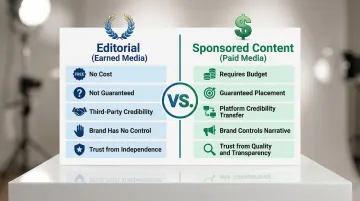
The two models operate on opposite ends of the media equation:
- Editorial (earned media): Free, but not guaranteed — a brand cannot compel coverage
- Sponsored content (paid media): Guaranteed placement with measurable reach, but requires budget and ongoing investment
Trust Signal
Editorial carries implicit third-party credibility. Readers assume the publication vetted the brand and found it worthy of coverage. Sponsored content's trust depends heavily on two factors: the publisher's reputation and the quality of the content itself.
What is Editorial Content?
Editorial content is journalism produced by independent writers or editors whose job is to inform, not to sell. This is earned media—brands appear because they're genuinely newsworthy, expert, or relevant to the publication's audience.
Core Editorial Standards
Editorial content earns trust through specific standards:
- Accuracy: Facts are verified before publication
- Fairness: Multiple perspectives are considered
- Independence: No advertiser can influence the story
- Verification: Claims are backed by evidence
Readers inherently extend trust to editorial content because no money is exchanging hands to shape the narrative. The publication's credibility is on the line with every article.
Common Forms
Editorial content takes many shapes:
- Product or brand reviews: Independent assessment of features, performance, and value
- Industry analysis: Trends, market shifts, and strategic insights
- Expert Q&As: Interviews with company founders, CTOs, or subject matter specialists
- News features: Coverage of product launches, funding rounds, or market entries
- Startup profiles: Deep dives into a company's origin, mission, or approach
Each format places a brand inside an industry conversation it didn't pay to enter — which is precisely why readers pay attention.
Use Cases of Editorial Content
Editorial coverage delivers the most value when a brand is:
- Building thought leadership in a new or competitive category
- Entering a new market where credibility must be established from scratch
- Nurturing skeptical buyers who conduct extensive research before vendor contact
That skepticism is structural. The typical B2B buying decision involves 13 internal stakeholders and 9 external influencers, each looking for objective sources to justify or challenge vendor choices.
The data reflects it: 53% of B2B buyers rely on analyst reports, and 34% use review sites. 83% of software buyers alter their initial vendor shortlist after conducting research, with third-party reviews cited as the most influential source.
The Key Limitation
Brands cannot control timing, tone, or message with editorial content. A publication may write about a brand, but it may also publish something critical or unflattering. This trade-off is what gives editorial its credibility—and why brands cannot manufacture it on demand.
What is Sponsored Content?
Sponsored content is a paid media placement where a brand funds or co-creates content published on a third-party platform—written in that platform's editorial style. Unlike traditional display ads, sponsored content is storytelling, not interruption.
Quality and Platform Matter Enormously
When done well—on a trusted publication, with real editorial polish, and genuine reader value—sponsored content inherits some of the platform's credibility. When done poorly, it reads as obvious marketing and erodes trust for both the brand and the publisher.
Key Formats
Sponsored content appears across several formats, each suited to different goals and audience contexts:
- Long-form articles: Deep dives, explainers, or thought leadership pieces published on premium editorial sites
- Video features: Documentary-style storytelling or brand-funded series that mirror the publisher's video content
- Newsletter placements: Sponsored sections or dedicated emails sent to highly engaged, opt-in audiences
- Branded explainers: Educational content that positions a brand as a category expert
- Interactive content: Quizzes, calculators, or data visualizations that engage readers while promoting a brand message
Newsletter placements like those offered by House of Summary are particularly effective at reaching decision-makers: with over 912 million ad-blocking users worldwide (31.5% penetration in major markets), the inbox is one of the few channels that reaches engaged readers without algorithmic filters or ad blockers in the way.
Disclosure Requirements
Ethically and legally, sponsored content must be labeled. The FTC mandates clear, prominent, and persistent labels such as "Sponsored," "Ad," or "Paid Advertisement." Vague terms like "Promoted" or "Presented by" are considered potentially misleading.
Clear labeling can actually build trust rather than undermine it—when the content delivers genuine value, readers respond better to transparency than to ambiguity. Readers are more skeptical of unlabeled native ads than clearly disclosed sponsored content that delivers real value.
Use Cases
Sponsored content works best when a brand needs:
- Guaranteed visibility for a product launch within a specific editorial context
- Precise targeting to a defined audience segment
- Measurable conversion paths for lead generation
- Full control over narrative, timing, and calls-to-action
Real-World Examples
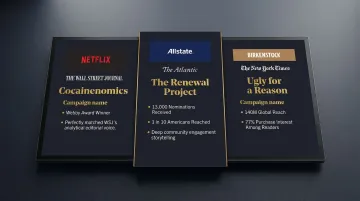
| Campaign & Brand | Publisher | What Made It Effective |
|---|---|---|
| "Cocainenomics" (Netflix) | WSJ Custom Studios | Interactive deep-dive on the cocaine trade to promote Narcos—matched WSJ's analytical voice; won a Webby Award for Best Branded Editorial Experience |
| "The Renewal Project" (Allstate) | The Atlantic | Multi-channel ecosystem with live summits, awards generating 13,000 nominations, and awareness among 1 in 10 Americans |
| "Ugly for a Reason" (Birkenstock) | NYT T Brand Studio | 3-part documentary series on foot health reached 140M people globally; 77% expressed purchase interest |
Each campaign succeeded by matching the publisher's editorial focus and delivering genuine reader value, not just brand promotion.
The Key Advantage
Control and predictability. Brands can shape the narrative, include CTAs, align content with buyer journey stages, and measure results—outcomes that editorial content cannot promise.
Editorial vs Sponsored Content: Which Should You Use?
Core Decision Factors
What is the primary goal?
- Trust-building and category authority → Editorial
- Direct engagement and lead generation → Sponsored
How much control do you need?
- Full control over message and timing → Sponsored
- Willing to accept independent perspective → Editorial
What is the timeline?
- Need guaranteed placement by a specific date → Sponsored
- Can wait for the right editorial opportunity → Editorial
What is the budget?
- Limited or no budget for media placement → Editorial (earned)
- Budget allocated for guaranteed reach → Sponsored
Situational Guidance
Choose editorial-first when:
- Your brand is new to a market and needs credibility
- You're trying to build category authority with skeptical buyers
- Third-party validation is more valuable than message control
Choose sponsored content when:
- You need guaranteed visibility for a product launch or campaign
- You have a defined audience and want to reach them directly
- You need measurable outcomes tied to specific business goals
Why the Best Strategies Combine Both
Editorial content earns credibility and builds awareness. Sponsored content captures that intent and converts it into action.
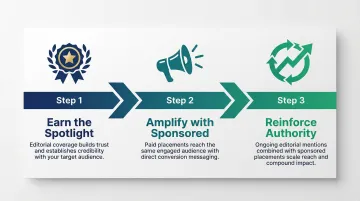
Practical sequencing approach:
- Earn the spotlight through editorial coverage that establishes credibility
- Amplify with sponsored placements that target the same audience with conversion-focused messaging
- Reinforce authority with ongoing editorial mentions while scaling reach through sponsored newsletter placements or native ads
The Trust Paradox with Sponsored Content
Readers know sponsored content is paid, but they'll still engage—and even share—if it genuinely helps them.
Native ads capture 53% more visual attention and drive an 18% higher purchase-intent lift compared to standard display ads. 32% of respondents would share a native ad with others, versus only 19% for display ads.
While FTC-mandated disclosures activate consumer skepticism, high-quality sponsored content on trusted platforms still vastly outperforms traditional advertising.
Publisher Selection Drives Performance
The more trusted and specialized the publication, the more trust transfers to the brand. A niche newsletter with an engaged, opt-in readership offers a fundamentally different trust environment than a general interest site with high bounce rates. House of Summary's specialized newsletters — each written by field experts for high-intent readers — are built around exactly this model.
Newsletter sponsorships deliver direct inbox access to readers who have explicitly opted in, bypassing the ad-blocking and algorithm suppression that plague web-based content.
Conclusion
Editorial and sponsored content are not opposites—they are complementary tools that serve different functions in a brand's trust-building journey. Neither is inherently better; what matters is alignment between the format, the platform, and the goal.
That alignment matters more now than it did even a few years ago. Reader skepticism has sharpened, and audiences have grown skilled at detecting content that prioritizes volume over accuracy. Both editorial and sponsored formats earn their place when executed with integrity — when the message is honest, the placement is transparent, and the audience is genuinely respected. That combination is what builds authority that lasts.
Frequently Asked Questions
What is a sponsored editorial?
A sponsored editorial is content funded by a brand but written in the editorial style of the host publication. It looks and reads like an article but is paid for and typically labeled as "Sponsored" or "Promoted."
What does editorial mean in advertising?
In advertising, "editorial" refers to independently produced content from a publication—not paid or controlled by an advertiser. Brands earn editorial coverage by being genuinely newsworthy or expert, not by paying for placement.
Can sponsored content be trusted?
Trust in sponsored content depends on the quality of the content, the credibility of the publisher, and clear disclosure. Well-produced sponsored content on a reputable platform can be just as informative and trustworthy as editorial.
What are the rules for sponsored content?
Sponsored content must be clearly labeled (e.g., "Sponsored," "Promoted," or "Paid Partnership") under FTC guidelines and platform policies. Failing to disclose violates FTC guidelines and exposes brands to legal liability.
What are some examples of sponsored content?
Recognizable examples include Netflix's "Cocainenomics" with The Wall Street Journal, Allstate's "The Renewal Project" with The Atlantic, and Birkenstock's "Ugly for a Reason" with The New York Times. What they share: deep editorial investment, clear brand alignment, and disclosure that doesn't undermine credibility.
Where can I find a publisher sponsor?
Start with publishers whose audience matches your target customer, then check engagement metrics and editorial credibility before reaching out via their media kit or advertising contact. Niche newsletters and industry publications tend to offer the most targeted reach at competitive rates.