

Introduction
Most marketing budgets are burning money on ads nobody sees. Banner blindness is real: display ad click-through rates have fallen below 0.1%, yet brands keep buying inventory that audiences have learned to ignore. Sponsored placements work differently — they embed brands directly into the content environments where audiences are already engaged and actively seeking information.
Unlike traditional banner ads that interrupt or distract, sponsored placements appear within the natural flow of what users are consuming: search results, product listings, editorial feeds, and email newsletters. This guide breaks down what sponsored placements are, where they perform best, how pricing works, and what to look for when choosing the right channel.
Key Takeaways
- Sponsored placements embed brand messages into content, search results, or platform listings—not banner ads competing for attention
- Channels include retail platforms, travel sites, social media, and newsletters
- High engagement stems from contextual relevance and high-intent audiences
- Pricing models—CPC, CPM, and flat-rate—suit different budgets and campaign goals
- Newsletter placements bypass ad blockers and reach opted-in audiences with far less competition
What Are Sponsored Placements?
Sponsored placements are paid advertisements embedded within an existing content environment—such as search results, product listings, editorial feeds, or newsletters—typically labeled "sponsored" or "promoted." Unlike banner ads that sit alongside content, sponsored placements blend into the native flow of what users are already viewing, making them contextually relevant rather than interruptive.
Key distinctions within the category:
- Sponsored listings: Appear inside marketplace results on platforms like Amazon and eBay, targeting buyers at the point of search
- Sponsored content: Brand-funded editorial placed within a publisher's existing article format
- Sponsored posts: Paid placements in social media feeds, formatted identically to organic posts
- Newsletter sponsorships: Paid messages delivered inside email publications to opted-in subscribers
Why the "Sponsored" Label Matters
Regulators require clear disclosure to prevent consumer deception. The FTC's 2023 Endorsement Guides mandate "clear and conspicuous" labels like "Ad," "Paid ad," or "Sponsored" at the start of content. The UK's ASA requires similar upfront disclosure.
Transparency does not hurt performance. A 2025 meta-analysis in the Journal of Academy of Marketing Science found no significant negative effects of sponsorship disclosure on marketing outcomes. Data from the Influencer Marketing Trade Body confirms disclosed posts drive stronger engagement.
Market Scale
Search advertising dominates digital ad budgets. Global search ad spend reached $102.9 billion in 2024—a 15.9% year-over-year increase—capturing 39.8% of total internet advertising revenue. Total digital ad revenue hit a record $258.6 billion in 2024.
The Main Types of Sponsored Placement Channels
Sponsored placements span multiple channel types, each with distinct audiences, cost structures, and strengths. Choosing the right channel depends on who you're targeting and what action you want them to take.
Search and Retail Platforms
Amazon Sponsored Products, Google Shopping ads, and similar retail media formats allow brands to bid on keywords or product categories, appearing at the top of search results. These placements capture high-intent users actively searching to buy.
Amazon's dominance: Amazon's ad revenue hit $56.2 billion in 2024, with 77.3% of US digital retail media ad spend.
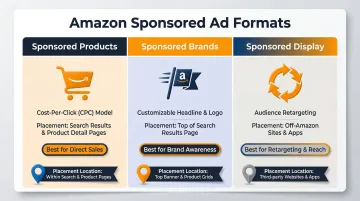
Amazon offers three core ad formats:
- Sponsored Products: CPC ads promoting individual listings, appearing in search results, product pages, and select off-Amazon sites
- Sponsored Brands: Customizable ads with brand logo, headline, and multiple products, appearing at the top of search and product pages
- Sponsored Display: Retargeting-style formats appearing on Amazon product pages, shopping results, and third-party websites and apps
Google maintains almost 60% of global search ad revenues, with Shopping ads displaying product photos, prices, and store names on the Shopping tab, Google Search, and Google Images.
Travel and Review Platforms
TripAdvisor reaches 150 million unique users across its platform, allowing hotels, restaurants, and experience providers to bid for higher positions in destination search results.
How it works:
- Strictly CPC-based pricing with no fixed fees—advertisers only pay when travelers click
- Automatic targeting matches ads to users actively searching for the advertiser's area, available dates, and amenities
- Effective for new properties, competitive markets, or businesses without enough reviews to rank organically
TripAdvisor reports an average 17% uplift in unique property page visits for Sponsored Placements customers.
Social Media Sponsored Posts
Facebook, Instagram, and LinkedIn insert sponsored posts into feeds, stories, and professional timelines. Unlike search placements, these intercept users who may not be actively seeking a product, making them better for awareness and consideration goals.
Challenges facing social ads:
- Declining organic reach: Instagram's reach rate dropped 12% year-over-year to 3.50% in 2025, while Facebook fell to just 1.65%
- Ad fatigue: 66% of Southeast Asian consumers ignore repetitive ads shown on a single platform
- Ad blocker use increasing on desktop
Newsletter Sponsored Placements
Newsletter sponsorships place brand messages directly inside email newsletters that land in subscribers' inboxes. Unlike web or social ads, newsletter placements:
- Cannot be blocked by browser-based ad blockers
- Are not filtered by algorithms
- Appear in an environment readers actively chose
Engagement rates tend to run higher than social or display because readers choose to open the email — there's no algorithm deciding whether they see the content. House of Summary, for example, delivers sponsored placements to global executives and business professionals through a network of specialized publications, with click-through rates 4x higher than Google AdWords. Readers arrive at the inbox with intent, not by accident.
Why Sponsored Placements Outperform Traditional Advertising
Context and Intent Drive Performance
Sponsored placements work because they align with the reader's current interest or goal. When a placement appears while someone searches for running shoes, reads about geopolitics, or browses hotel options, the brand message feels relevant—not intrusive.
Native and contextual ads receive 53% more visual attention than display ads, and deliver an 18% higher lift in purchase intent and 9% lift in brand affinity.
The Ad Blocker Problem
Traditional web display ads face growing resistance. Global ad blocker adoption reached 1.77 billion users in 2025—29.5% of all internet users. Adoption is highest among high-income, tech-savvy audiences (37% on desktop in the US).
Sponsored placements within native environments—and especially within email—bypass this problem entirely. Newsletter placements land in the inbox with no browser-side interference, ensuring reliable delivery and visibility.
Engagement Advantage of Opted-In Audiences
When someone subscribes to a newsletter, follows a brand, or uses a retail platform, they signal active interest. Ads in these environments reach people who want to be there—a different dynamic entirely from interrupting someone mid-video or mid-scroll.
Click-Through Rate Benchmarks (2025):
| Channel | Average CTR | Source |
|---|---|---|
| Google Search Ads | 6.66% | WordStream, 2025 |
| Email/Newsletters (B2B) | 3.20% | Quimby Digital, 2025 |
| Email/Newsletters (Global) | 2.09% | MailerLite, 2026 |
| Meta (Facebook/Instagram) | 1.50% | Quimby Digital, 2025 |
| LinkedIn (B2B) | 0.50%-1.00% | Quimby Digital, 2025 |
| Google Display Ads | 0.46% | Quimby Digital, 2025 |
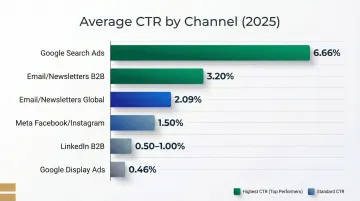
Newsletter sponsorships deliver 4x to 6x higher engagement than standard display ads.
Measurement Advantage
Those engagement numbers are only part of the story. Modern sponsored placement channels also offer detailed reporting that makes budget decisions straightforward:
- Impressions and CTRs — know exactly how many people saw and clicked your placement
- Conversion tracking — connect ad exposure directly to sign-ups, purchases, or leads
- ROAS reporting — measure return on every dollar spent, not just estimated reach
Traditional media—TV, print, outdoor—offers limited attribution and significantly higher CPMs, with no reliable way to connect spend to outcome.
How Sponsored Placement Pricing Works
Pricing structures for sponsored placements vary significantly by platform, audience type, and campaign goal. Understanding the three dominant models helps you choose the right format before comparing platform-specific costs.
Three Dominant Pricing Models
Cost-Per-Click (CPC): Advertisers pay only when a user clicks — no click, no charge. This makes it the default model for direct response campaigns where conversions matter more than visibility. Most common in search and retail media environments like Amazon and Google.
Cost-Per-Mille (CPM): Advertisers pay per 1,000 impressions, regardless of clicks. This model suits brand awareness campaigns where reach and frequency drive the goal. It's the standard in display advertising and most newsletter sponsorships.
Flat-Rate Sponsorships: Advertisers pay a fixed amount per placement, regardless of subscriber count or engagement. Common in premium editorial environments where publishers control placement quality.
Each model has a different risk profile for advertisers. CPC shifts risk to the publisher; CPM and flat-rate shift it to the advertiser. Knowing which platforms use which model helps set realistic budget expectations.
Platform-Specific Costs
Amazon PPC costs vary widely:
| Amazon Ad Format | 2025 Average CPC (USD) |
|---|---|
| Overall Amazon Average | $1.00–$1.10+ |
| Sponsored Products | $0.85–$1.10 |
| Sponsored Brands | $1.10–$2.50 |
| Sponsored Display | $0.95–$1.60 |
| Electronics Category | $1.20+ |
| Health & Personal Care | $1.10–$1.50 |
| Home & Kitchen | $0.80–$1.20+ |
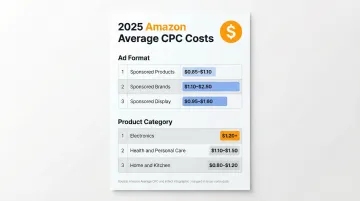
Source: SellerMetrics, 2025
Amazon operates on a self-serve, second-price auction with no minimum spend requirement. Advertisers set maximum daily budgets and control their own bids.
Newsletter CPMs vary by audience quality:
- B2B/Finance/Tech: $50–$100+ CPM
- Broad Consumer: $15–$35 CPM
- Large newsletters (50k+ subscribers): Flat rates from $3,000 to $20,000+ per placement
Budget size alone doesn't determine performance. A $3,000 newsletter sponsorship reaching 10,000 B2B decision-makers can outperform a $15,000 display campaign reaching 500,000 unqualified users. The metric that matters is cost per qualified outcome — not total spend.
Choosing the Right Sponsored Placement for Your Brand Goals
Map Channel to Marketing Objective
Different channels serve different stages of the buyer journey. Match your placement to where your audience's head is at — not just your budget.
| Channel | Best For | Audience Mindset |
|---|---|---|
| Search & Retail (Amazon, Google Shopping) | Capturing existing demand | Actively shopping |
| Social Media | Awareness, top-of-funnel reach | Browsing, not buying |
| Newsletter Sponsorships | Direct access to a defined professional audience | Focused, undistracted reading |
Audience Quality vs. Audience Size
Mass platforms offer scale but lower concentration of relevant prospects. Niche editorial platforms—including specialized newsletters—offer smaller but far more targeted audiences.
For luxury brands, B2B marketers, finance products, and premium consumer goods, a placement in front of 50,000 engaged professionals often outperforms a campaign reaching 2 million casual social media users.
Real-world proof:
- Luxury: Cozy Earth used premium newsletter sponsorships in travel and home publications, achieving a 0.45% CTR and 10% lift in ROAS
- Finance: A finance firm using highly targeted Google Search Ads achieved a 14% conversion rate, generating 329 conversions at $37.45 per conversion
Practical Decision Framework
Before buying any sponsored placement, ask three questions:
- Is this audience already interested in what I'm selling?
- Is this an environment where my audience gives their full attention?
- Can I measure the result clearly?
If all three answers are yes, the placement is worth testing.
Frequently Asked Questions
What are sponsored placements?
Sponsored placements are paid promotions embedded within an existing content or listing environment—such as search results, newsletters, or travel platforms—where the brand's message appears alongside organic content, labeled "sponsored" or "promoted."
What is a sponsored product listing?
A sponsored product listing is a format used on retail and marketplace platforms (Amazon, eBay, Walmart) where sellers pay to have their product appear higher in search or browsing results than its organic rank would place it.
Where do sponsored product ads appear?
Sponsored product ads appear at the top and within search results pages, in "related products" sections, on product detail pages, in homepage carousels, and in email or newsletter formats.
Where are Amazon sponsored display placements?
Amazon Sponsored Display ads appear on product detail pages, shopping results on Amazon, and off-Amazon on third-party websites and apps—making them a retargeting-style format that follows potential customers beyond the Amazon platform.
How much does Amazon PPC cost?
According to SellerMetrics' 2025 benchmark data, average costs range from $0.85–$1.10 per click for Sponsored Products, $1.10–$2.50 for Sponsored Brands, and $0.95–$1.60 for Sponsored Display. Costs vary by category and competition. There is no minimum spend requirement.
Are TripAdvisor ads worth it?
TripAdvisor sponsored placements can be effective for hotels, restaurants, or attractions in competitive markets where organic ranking is low. ROI depends heavily on review volume, property quality, and how prominently TripAdvisor features in your audience's booking process.