

Why Pediatric Practice Marketing Requires a Different Approach
Choosing a pediatrician ranks among the most consequential decisions parents make for their family — and they do their homework. According to Tebra's 2025 patient survey, 79% of patients read online reviews before choosing a healthcare provider, and 53% won't even consider a provider rated below 4 stars. With millennials now accounting for the majority of parents in the U.S., that online research behavior is only intensifying.
Marketing a pediatric practice means meeting parents where they already are — with the credibility and approachability that earns their trust before they ever call your office. The strategies below cover how to build that presence: from your digital foundation and content to community relationships and tracking what drives real growth.
Key Takeaways
- Optimize your Google Business Profile and website first — that's where most parent searches begin.
- Build trust through educational content, email newsletters, and short videos that answer real questions.
- Community partnerships with schools, parent groups, and referring physicians generate lasting referrals.
- Paid ads accelerate visibility but only pay off with proper targeting and conversion tracking.
- Ask every new patient how they found you — this single habit is your most valuable marketing insight.
What Makes Pediatric Marketing Uniquely Challenging
Most healthcare practices market to one audience. Pediatric practices market to at least three simultaneously.
The Dual-Audience Reality
Parents are the decision-makers, but they're choosing care for someone else — their child. That dynamic shapes everything. Your messaging needs to:
- Reassure parents who are anxious, time-pressed, and drowning in conflicting health information online
- Signal warmth that makes children feel safe before they've ever met you
- Build credibility with referring physicians who recommend you based on clinical reputation
- Connect with the community through schools, new parent groups, and local organizations
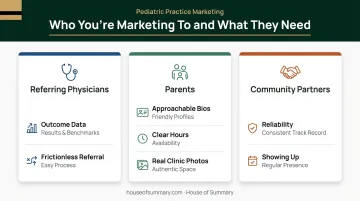
Each audience responds to different trust signals. Physicians want outcome data and a friction-free referral process. Parents want approachable bios, clear hours, and real photos of your clinic. Schools want reliable partners who show up.
The Emotional Stakes
Parents aren't shopping for a commodity. They're choosing someone to trust with their child's health for years. That emotional weight means your marketing must balance genuine clinical expertise with human warmth — no overpromising, no corporate distance.
For pediatricians uncomfortable with self-promotion: effective marketing isn't selling, it's communication. It's making sure anxious parents can find you, understand what you offer, and feel confident enough to book. It also counters health misinformation — which serves your patients directly.
Build a Strong Digital Foundation
Optimize Your Google Business Profile
Your Google Business Profile is often the first thing a parent sees — before your website, before your reviews, before anything else. Tebra's 2025 data shows that 56% of patients begin new-provider research on Google, ahead of practice websites (41%) and health directories like WebMD (38%).
A complete, active profile includes:
- Accurate name, address, phone number, and hours (including holiday hours)
- Current photos of your clinic interior, exterior, and staff
- Service descriptions written in plain language
- Regular posts — vaccine reminders, seasonal health tips, extended hours announcements
Responding to every review within 48 hours matters more than most practices realize. A thoughtful, professional response to a negative review often does more for your reputation than the five-star reviews beside it — prospective families notice when a practice takes criticism seriously and responds with care rather than defensiveness.
Create a Mobile-Friendly, Parent-First Website
Once a parent finds you on Google, your website is where trust gets built or lost. 65% of patients would switch providers for better digital features, and 16% would consider leaving if a provider's website looks outdated. That's not a margin most practices can afford to ignore.
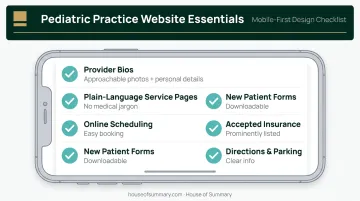
Every pediatric practice website should include:
- Provider bios with approachable photos and a few personal details (not just credentials)
- Service pages written in plain language, not medical jargon
- Online scheduling — if it's not easy to book, families move on
- Downloadable new patient forms
- Accepted insurance plans, prominently listed
- Clear directions and parking information
The AAP recommends that practices understand their community's specific demographics and health needs — that same principle should shape which educational content and resources you prioritize on your website.
Win Local Search with SEO and Directory Listings
Local SEO is how parents find you when they search "pediatrician near me" or "children's doctor [your city]." Three fundamentals drive most of the results:
- Use your city and neighborhood names naturally throughout website content
- Create individual service pages (well-child visits, sports physicals, developmental screenings)
- Keep your name, address, and phone number (NAP) identical across every online listing
Key directories to maintain: Healthgrades, Vitals, Zocdoc, and Yelp. Inconsistent listings confuse Google and reduce your ranking confidence. Audit these listings every few months — hours, phone numbers, and addresses change, and outdated information erodes both rankings and patient trust.
An analysis of national health survey data found that 80% of smartphone users have used their phone to look up health or medical information. Local search and mobile optimization aren't separate strategies — parents who find you in a "near me" search are almost always on a phone, so a slow or hard-to-navigate site ends the conversation immediately.
Create Content That Earns Parent Trust
Publish Educational Content Parents Are Already Searching For
Content marketing works for pediatric practices because parents are constantly searching for health information — and they tend to trust the source that gave them useful answers.
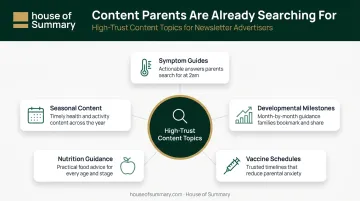
High-impact content topics that drive traffic and trust:
- Common symptom guides: when to worry about a fever, rash, or persistent cough
- Age-specific developmental milestones
- Vaccine schedules with clear safety context
- Nutrition guidance for toddlers, school-age kids, and teens
- Seasonal content: back-to-school physicals, allergy season management, flu shot availability
Link out to credible sources like the AAP and CDC within your content. It signals that you're confident in the evidence and not trying to keep parents dependent on a single source.
Use Email Newsletters to Stay Top of Mind
Email reaches your patients directly, bypassing any algorithm deciding whether your post gets seen. In healthcare, Campaign Monitor's benchmarks show average email open rates of 23.7%, compared to Facebook engagement rates of just 1.9% for healthcare organizations. That's a meaningful gap.
An effective pediatric newsletter includes:
- Seasonal health reminders (flu season, summer safety, back-to-school)
- Practice updates: new providers, updated hours, new services
- Well-child visit schedule reminders by age group
- Links back to educational content on your website
Segment your list by patient age. Newborn parents need very different information than parents of teenagers. A single generic newsletter serves no one particularly well.
Consistent newsletters also build what marketers call effective frequency: parents need to see information about extended hours, new services, or immunization clinics multiple times before it registers and prompts action.
For practices looking to reach families not yet in their patient list, newsletter advertising is one of the more direct options available. House of Summary's network of specialized newsletters places brand messages straight into subscribers' inboxes — no algorithms, no ad blockers — reaching over 500,000 subscribers, with 66% based in the U.S. Practices targeting U.S. parents in key metro areas can reach their advertising team at sales@houseofsummary.com.
Make Short Videos That Humanize Your Providers
A parent who watches your provider explain a topic clearly and calmly will arrive at their first appointment already feeling like they know you. No written content moves that needle as quickly as video does.
Keep videos under two minutes, film in natural lighting, and always include captions — accessibility matters and captions significantly boost watch completion rates. High-performing topics:
- When to call the office vs. when to go to urgent care
- What to expect at a 2-year-old well-child visit
- Common fever questions answered directly
- How to prepare an anxious child for their first appointment
These don't require production budgets — a smartphone, good lighting, and a knowledgeable provider are enough.
Grow Your Practice Through Community and Referrals
Partner with Schools, New Parent Groups, and Local Organizations
School nurses are one of the most underutilized referral sources in pediatric marketing. They interact with hundreds of children weekly and frequently recommend pediatricians to parents who call in worried. Teachers and administrators do the same.
Practical partnership tactics:
- Offer to speak at parent meetings about vaccine requirements, sports physicals, or common school-age illnesses
- Provide printed resources for school nurses with your practice's contact information
- Sponsor wellness events or health fairs at local schools
These relationships develop slowly. Don't expect immediate results. But the referrals they generate are trust-based and highly consistent.

New parent groups represent a different opportunity. Prenatal classes, hospital maternity ward partnerships, and mommy-and-me programs introduce your practice to families before their baby arrives.
Relationships with lactation consultants and doulas are particularly valuable. They're trusted advisors who speak with new parents constantly, and a mutual referral arrangement costs almost nothing to establish.
Build a Physician Referral Network
Parents follow their doctor's recommendations. That makes referring physicians — OBs, specialists, urgent care physicians, ERs — among your most powerful referral sources.
What makes physician referral marketing work:
- Make the referral process genuinely frictionless (a single phone number, fast response times)
- Share relevant clinical updates or case insights that demonstrate your approach
- Stay visible on LinkedIn with provider-focused updates about new services, team additions, or clinical research
Staying professionally visible means you become the natural recommendation when a family needs a trusted pediatrician.
Ask Directly for Referrals and Reviews
Satisfied families don't automatically tell friends. They often mean to — then forget. A small prompt makes all the difference.
- Keep referral cards at checkout with your practice name, phone, and website
- During genuinely positive visits, mention that you're accepting new patients and would appreciate a referral
- Send follow-up emails after visits with a direct link to your Google or Healthgrades review page
Thank families who refer new patients. A handwritten note or quick acknowledgment goes a long way toward building that loyalty.
Reach New Families with Paid and Social Media
Paid Google Ads and Facebook Ads put your practice at the top of search results immediately. SEO takes months to build momentum; paid ads fill that gap. The trade-off is cost — poorly targeted campaigns burn through budget quickly with little to show for it.
Google Ads
Target keywords like "pediatrician near me," "children's doctor [city name]," and "best pediatrician [neighborhood]." Use geographic radius targeting, send clicks to dedicated landing pages (not your homepage), and set up conversion tracking so you know which ads generate actual calls and appointments.
Facebook and Instagram
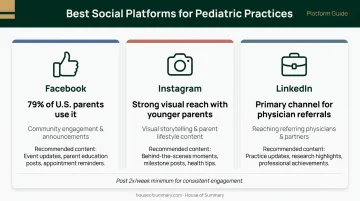
According to a CDC analysis of social media use among U.S. parents, 79% of U.S. parents use Facebook, and 87% of mothers use it — making it the strongest platform for reaching parent audiences. Instagram works well for visual storytelling and younger parents. LinkedIn is valuable specifically for reaching referring physicians.
Content that performs well on social:
- Quick health tip graphics designed for easy sharing
- Behind-the-scenes photos of your team
- Seasonal reminders (flu shots, sports physicals, school forms)
- Community event highlights
Hootsuite's 2025 healthcare benchmarks show that healthcare organizations posting just 2 times per week on Instagram achieve engagement rates comparable to those posting 8+ times weekly. Consistency beats volume.
Start with a modest paid budget and scale only campaigns that demonstrably convert. Track cost-per-appointment, not just cost-per-click.
Measure What Works and Adjust
No marketing strategy is complete without measurement — and most practices skip this step entirely.
Key metrics to track:
- New patient source — ask every new family how they found you (this is free and irreplaceable)
- Website traffic and page engagement via Google Analytics
- Google Business Profile views and call volume (available in your GBP dashboard)
- Social media engagement rates per platform
- Email open and click-through rates per newsletter
"How did you hear about us?" is the single highest-value question your front desk can ask. It reveals which channels deserve more investment and which can be deprioritized. No analytics tool gives you this with the same accuracy.
Once you're collecting that data consistently, put it to work. Review your channel mix quarterly — marketing assumptions go stale quickly, and the channel that drove referrals last year may not be where families are finding you today.
Frequently Asked Questions
How do you promote a pediatric practice?
Start with your Google Business Profile and website, then build from there. Collect and respond to reviews, publish educational content, grow relationships with schools and new parent groups, and maintain consistent messaging across every channel where parents might find you.
How much should a pediatric practice spend on marketing?
Tebra reports that 62% of medical practices spend 1-5% of revenue on marketing. Start with free and low-cost tactics — Google Business Profile, email, content — before committing budget to paid advertising.
How do I get more patients for my pediatric practice?
Optimize your local SEO, collect Google reviews consistently, build referral relationships with schools and maternity programs, and ask satisfied families to recommend you. These four actions, done consistently, drive the most reliable new patient growth.
What social media platform works best for pediatricians?
Facebook reaches the broadest parent demographic and suits community engagement and announcements. Instagram works well for visual storytelling and younger parents. LinkedIn is the right platform for building relationships with referring physicians.
How long does pediatric practice marketing take to show results?
Paid advertising generates visibility within days. Local SEO takes several months to show measurable ranking improvement. Email newsletters and social media build gradually over 6-12 months of consistent effort, and that steady compounding is what makes them the most durable channels long-term.
Can a small pediatric practice compete with large health systems?
Yes, and often on the things families value most. Independent practices offer continuity of care, personal relationships, and genuine community connection that large systems cannot easily replicate. Parents notice when their child sees the same trusted provider every visit — and that consistency is what keeps families loyal.