This guide explores why the 55+ audience is one of digital advertising's most undervalued segments, why newsletters outperform every other channel for reaching them, and how brands can structure campaigns that actually convert.
Key Takeaways
- Adults 55+ control 72% of U.S. wealth, making them high-value targets for financial services, travel, healthcare, and premium brands
- Newsletter ads deliver 4x higher click-through rates than Google AdWords and bypass ad blockers entirely
- Email is the primary digital communication tool for 93% of internet users aged 45-64
- Ad copy that's clear, relevant, and free of condescension consistently outperforms creative that underestimates this audience
- Track click-through rate, conversion rate, and offline attribution (promo codes, phone calls) to capture full campaign ROI
Why the 55+ Audience Is Undervalued in Modern Advertising
The advertising industry systematically underinvests in reaching adults over 55, driven by a youth-focused workforce and outdated assumptions about digital engagement. 74.6% of marketers are between 26 and 45, creating a "Youth Mirror" effect where campaigns naturally skew toward the demographics agencies know best—not the ones controlling the most spending power.
The Financial Profile
The numbers behind this demographic are hard to ignore:
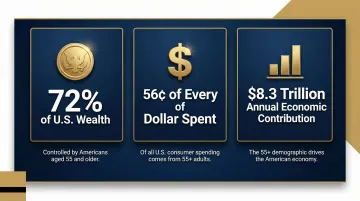
- Adults 55+ hold 72% of U.S. wealth
- 56 cents of every dollar spent in the U.S. comes from someone 50 or older — projected to reach 61 cents by 2050
- The demographic contributes $8.3 trillion to the U.S. economy annually, representing 40% of GDP
This is not a segment winding down. Many are at peak household net worth, with assets built across retirement accounts, property, and decades of compounding investments.
Brand Loyalty and Customer Lifetime Value
Older consumers demonstrate stronger brand loyalty once trust is established, reducing churn and extending customer lifetime value. Adults over 55 are approximately 10 percentage points more likely than average consumers to remain loyal to everyday brands, and that loyalty compounds over time.
That said, loyalty isn't unconditional. 77% will switch to brands that mirror their personal values — meaning authentic, values-aligned messaging can open doors that generic campaigns cannot.
The Myth of Disengagement
"Active 55+" doesn't mean retired and passive. The labor force participation rate for adults 55 and over was 37.2% as of March 2026. Meanwhile, 64% of adults 50+ expect to travel in 2026, with an average trip budget exceeding $7,200.
This is a demographic actively making major purchases, consuming premium products, and engaged in digital channels — the kind of audience advertisers consistently underprice and underestimate.
Why Newsletters Are the Most Effective Channel to Reach This Demographic
High Email Adoption
Email is the primary digital communication channel for older adults. 93% of U.S. internet users aged 45–64 and 86.5% of those 65+ use email, compared to uneven adoption of social platforms. Pew Research found that similar shares of Americans across all age groups get news from email newsletters, a pattern notably different from most digital news platforms that skew younger.
The Ad Blocker Advantage
Ad blocker usage is heavily skewed toward younger demographics: 41% of 18–24 year olds use them, compared to just 24.8% of 55–64 year olds and 15.6% of those 65+. Newsletter ads bypass this barrier entirely. While 33.33% of digital display ads go unseen due to viewability issues, newsletter placements land directly in the inbox with guaranteed delivery.
Superior Click-Through Performance
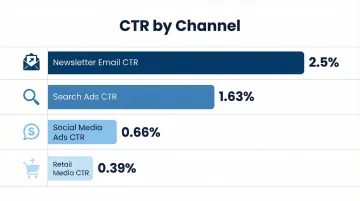
The 55–64 age group has the highest email open rate of any demographic at 25.7%. More importantly, the average email CTR across industries is 2.5%—significantly outperforming worldwide search ad CTRs (1.63%), social media ad CTRs (0.66%), and retail media CTRs (0.39%).
Intentional Attention vs. Social Distraction
Newsletters are consumed deliberately. Readers opt in, open by choice, and engage without the cognitive distraction of competing content feeds or autoplay videos. Peer-reviewed research confirms that readers retain and process information more deeply when it arrives via email newsletter than through a social media feed, where multitasking hinders comprehension.
Social media news exposure tends to be accidental and passive. Newsletter subscriptions, by contrast, reflect deliberate intent — and that intent translates directly into higher engagement for advertisers.
That distinction matters for brands. Unlike social or display ads, newsletters don't rely on platform algorithms. Advertisers get guaranteed delivery to known subscribers — not probabilistic reach estimates. House of Summary's newsletter network puts brand messages directly in front of engaged, niche audiences — with click-through rates 4x higher than Google AdWords and no algorithms standing in the way.
What Types of Brands Perform Best with Senior Newsletter Advertising
The 55+ demographic allocates spending differently than younger cohorts. In 2023, consumer units headed by someone 65+ spent an average of $60,087 annually, with the largest categories being housing ($21,445), transportation ($9,033), food ($7,714), and healthcare ($8,027).
Top-Performing Categories:
- **Financial services and wealth management** — Peak earning years and accumulated assets make this audience ideal for investment products, retirement planning, and insurance
- Travel and hospitality — 86% of adults 50+ prioritize travel, with an average annual spend exceeding $7,200. 65% of U.S. cruise passengers are 55 or older, and luxury resorts and international tours see strong engagement
- Healthcare and wellness — The highest spenders of any age group on healthcare, this audience actively seeks products addressing mobility, chronic condition management, and preventive wellness. 71% of older adults now use health-tracking apps
- Home improvement and aging-in-place products — Housing represents the largest spending category, with demand for accessibility modifications, smart home technology, and property upgrades
- Premium consumer goods — High discretionary income supports luxury purchases, curated subscription services, and premium goods with longer purchase cycles
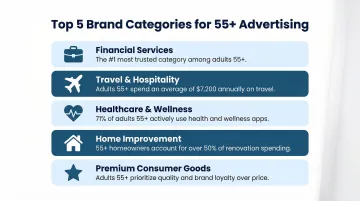
Brands whose products directly address the priorities of active 55+ readers — independence, health, financial security, leisure, family — consistently see stronger response rates. Direct response offers, event and product launches, and financial products with longer consideration cycles are particularly well-suited to newsletter formats.
How to Craft Ad Creative That Resonates with 55+ Readers
58% of Americans 55+ feel "not at all" represented in marketing and advertising, and those who feel misrepresented are nearly three times as likely to state they are not brand loyal. Poor creative isn't just ineffective—it actively damages conversion.
The good news: the fix is straightforward. Ads that treat this audience as intelligent adults, lead with clear value, and match the editorial environment they're reading in consistently outperform generic creative.
Tone Principles
Treat 55+ readers as intelligent, capable adults. Avoid patronizing language, overly simplified copy, or heavy reliance on age-related clichés. This audience has decades of experience filtering promotional content and rewards directness and clear value.
Clarity and Readability
- Lead with the core value proposition in the first line
- Use plain language over jargon
- Keep headlines specific and benefit-focused
- Make CTAs unambiguous and action-oriented
- Maintain 70% contrast between text and background for accessibility
Visual and Structural Considerations
Native-style placements outperform generic banner insertions. The best-performing ads feel like they belong—like a trusted recommendation, not an interruption. To achieve that:
- Mirror the newsletter's voice, reading level, and formatting style
- Avoid visual clutter; clean layouts perform better with this demographic
- Match the editorial quality of the publication hosting the ad
Choosing the Right Senior-Focused Newsletter for Your Campaign
Total subscriber count is a vanity metric. Engagement quality is what actually drives results — and that starts with knowing what to evaluate.
Evaluate Audience Fit:
- Open rate and click rate matter more than list size — a smaller, engaged list in the right category outperforms a large, disengaged one
- Match newsletter content to your product's natural context: a global news or geopolitics newsletter draws intellectually active, financially literate readers; a local bulletin draws an entirely different crowd
- Confirm the newsletter's readership aligns with your target buyer demographics and psychographics before committing budget
Specialized vs. General-Interest Publications:
General-interest senior publications reach broad audiences but lack precision. Specialized newsletters focused on specific interests—business, international affairs, finance, luxury lifestyle—deliver higher-intent readers who are predisposed to engage with relevant offers.
House of Summary publishes a network of specialized newsletters covering global news, geopolitics, and regional business intelligence. Each publication is written for readers who follow world events closely — making them a natural fit for brands targeting financially independent, active 55+ audiences.
Measuring the Success of Your Senior Newsletter Ad Campaign
Start by tracking the metrics that actually reflect campaign health — not just the ones that look impressive in a report.
Core Performance Metrics
| Metric | What It Measures | Benchmark Range |
|---|---|---|
| Open Rate | List health and subject line effectiveness | 28.5% - 40% (varies by industry) |
| Click-Through Rate | Primary engagement signal | 2.5% - 3.3% average |
| Conversion Rate | Landing page or offer effectiveness | Category-specific |
| Cost Per Acquisition | Campaign efficiency | Compare to lifetime value |
Note: Apple's Mail Privacy Protection has artificially inflated open rates. Prioritize click-through rate and conversion rate as truer engagement signals.
The Offline Attribution Challenge
55+ readers frequently convert offline after digital exposure. They may read an email, then call a phone number, visit a store, or type a URL directly into a browser — never clicking a tracked link. Standard digital attribution will undercount actual campaign impact.
Offline Attribution Solutions
- Dedicated landing pages with unique URLs
- Promo codes exclusive to the newsletter campaign
- Call tracking numbers tied to specific placements
- In-store redemption codes
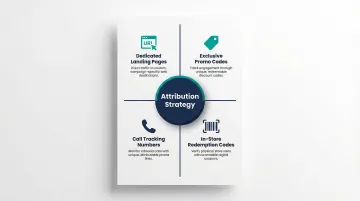
Build at least two of these into every campaign before it launches — retrofitting attribution after the fact is far harder than setting it up upfront.
Frequently Asked Questions
What are the 8 basic parts of a newsletter?
Most newsletters include eight core elements: header with branding, subject line, preheader text, editorial introduction, main content body, advertising or sponsored section, calls to action, and a footer with contact and unsubscribe details.
Is the 55+ demographic worth targeting through digital advertising?
Adults 55+ control 72% of U.S. wealth and drive 56% of consumer spending, with stronger brand loyalty and longer customer lifetime value than younger cohorts. They're high-value prospects for financial, travel, healthcare, and premium brands.
How does newsletter advertising compare to social media for reaching older adults?
Email and newsletters have higher adoption and trust among 55+ audiences (93% of 45-64 year olds use email) compared to social platforms. Newsletter ads avoid algorithm suppression and ad blockers, delivering more consistent and measurable reach.
What should ad copy targeting 55+ audiences focus on?
Effective copy leads with a clear, specific benefit relevant to the reader's life stage. Keep the tone respectful — avoid condescension, jargon, and generic age-related stereotypes. The simpler and more direct, the better.
How many ads should a newsletter include per issue?
No more than 1-2 ad placements per issue to protect editorial integrity and reader trust. Fewer, more relevant ads generate higher engagement than high ad volume, which dilutes attention and damages the reader experience.
What metrics should I use to evaluate a senior newsletter ad campaign?
Click-through rate, conversion rate, and cost per acquisition are primary metrics. Also use offline attribution methods — promo codes and dedicated phone lines — to capture conversions that happen outside tracked digital links.